
An upcoming exhibition at the Museum of Cycladic Art in Athens will place a monumental Jeff Koons sculpture face to face with one of humanity’s earliest artistic symbols.
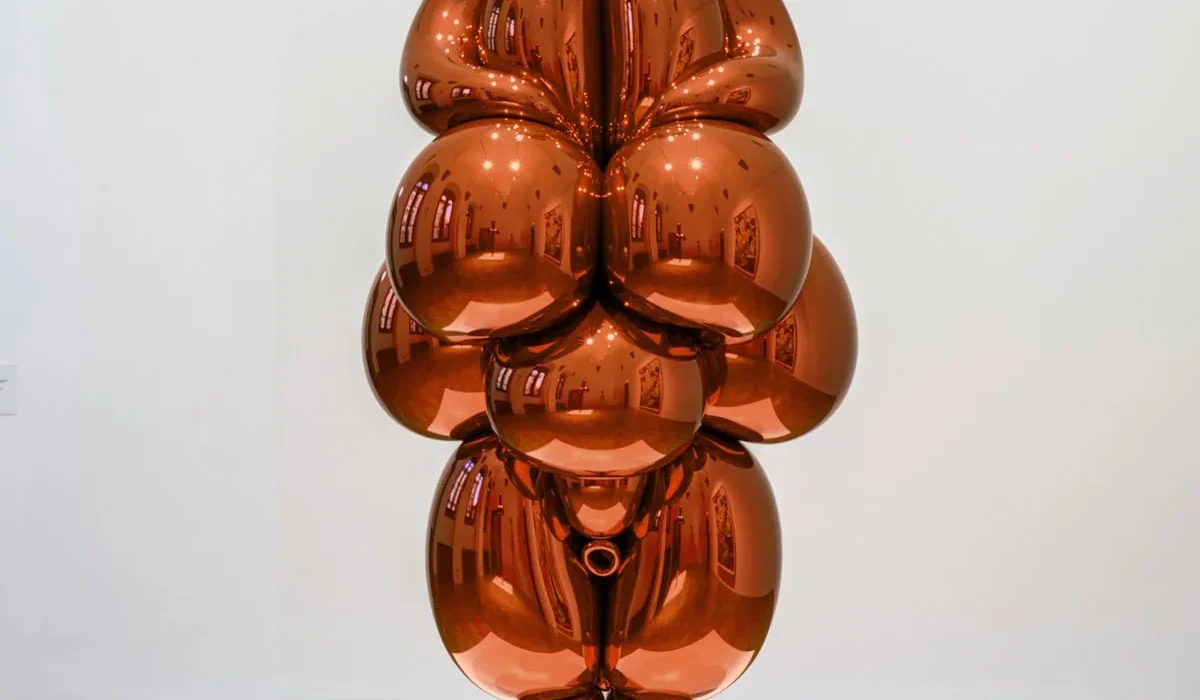
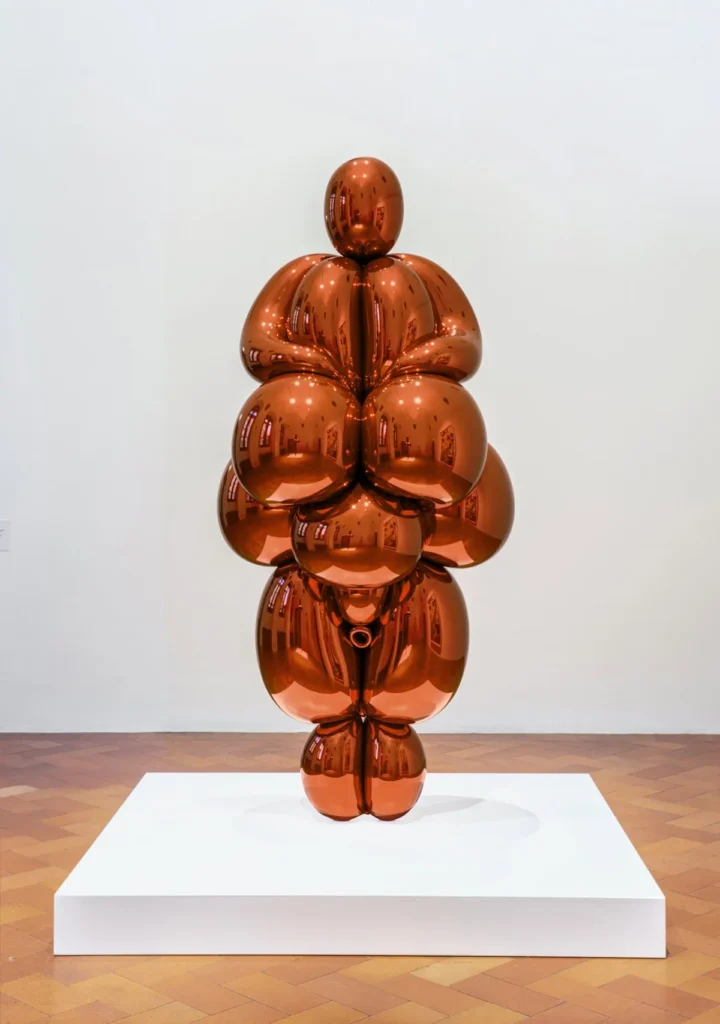
From 19 March to 31 August 2026, the Museum of Cycladic Art presents Jeff Koons: ‘Venus’ Lespugue, marking the first public display in Greece of Balloon Venus Lespugue (Orange). The exhibition will take place at the museum’s Stathatos Mansion, bringing contemporary art into direct dialogue with prehistoric imagery that predates written history by tens of thousands of years.
At the centre of the exhibition is Koons’ towering, mirror-polished sculpture, inspired by the Venus of Lespugue, a Paleolithic figurine carved from mammoth tusk approximately 28,000 years ago. The original, discovered in southern France and now held at the Muséum national d’Histoire naturelle in Paris, is widely known for its abstract form and exaggerated curves—features often associated with fertility, survival, and continuity.



From Paleolithic Ivory to Stainless Steel
Jeff Koons has been influenced by the Venus of Lespugue since the late 1970s. His long-standing engagement with the figure culminated in the Antiquity series, which he began in 2008. Through this body of work, Koons explores how ancient forms can be translated into contemporary visual language.
Balloon Venus Lespugue (Orange), produced between 2013 and 2019, transforms the small prehistoric figurine into a monumental sculpture made of mirror-polished stainless steel with a transparent colour coating. While its balloon-like appearance suggests lightness and play, the work’s proportions echo the mass and volume of the original ivory carving.
Koons’ interpretation draws on a wide range of art-historical references—from Botticelli and Titian to Duchamp, Brancusi, and Giacometti—placing the Venus figure within a long tradition of artists grappling with ideas of beauty, abstraction, and form.
A Rare Gathering of Prehistoric Venus Figurines
Alongside Koons’ sculpture, the exhibition will present ten replica Venus figurines from the Upper Paleolithic era, each loaned from museums that house the immovable originals. Among them is a replica of the Venus of Lespugue, which served as the direct source of inspiration for Koons’ work.
These small, portable figurines are considered among humanity’s earliest aesthetic expressions. Through abstraction and emphasis on form, they conveyed ideas of fertility, survival, and continuity. Displayed next to Koons’ large-scale sculpture, they invite comparisons across time, material, and cultural context.
Why Athens Is a Fitting Setting
The exhibition gains additional resonance through its location at the Museum of Cycladic Art. The museum’s renowned collection of Cycladic figurines—celebrated for their abstraction and influence on modern artists—provides a natural framework for exploring how early visual languages continue to shape contemporary art.
In Athens, where ancient heritage and modern life coexist daily, the exhibition offers a reflection on how symbolic forms persist, even as materials and artistic contexts change.
Collection, Research, and Publication
Balloon Venus Lespugue (Orange) is part of the Homem Sonnabend Collection, owned by Antonio Homem Sonnabend and Phokion Potamianos Homem. The collection spans works from the Renaissance to contemporary art, including significant examples of African and Oceanic art, Pop Art, Arte Povera, and postwar practice.
The exhibition will be accompanied by a new publication, featuring an essay by Jeff Koons and leading scholars detailing new research into the Paleolithic period in Greece and abroad.


ABOUT JEFF KOONS
Internationally recognized artist Jeff Koons (b. 1955, York, Pennsylvania) is renowned for sculptures like Rabbit and Balloon Dog , as well as floral installations such as Puppy and Split-Rocker . His work, often using everyday objects, explores themes of self-acceptance and transcendence.
Since his first solo exhibition in 1980, Koons has showcased his art in major institutions worldwide, including a significant retrospective at the Whitney Museum of American Art in 2014, which also traveled to the Centre Pompidou and Guggenheim Bilbao.
Koons has received numerous honors, including being named Officier de l’Ordre National de la Légion d’Honneur by President Chirac and receiving the U.S. Department of State’s Medal of the Arts. He served as the first Artist-in-Residence at Columbia University’s Mind Brain Behavior Institute and is a board member of The International Centre for Missing & Exploited Children. Additionally, he co-founded the Koons Family Institute to address child abduction and exploitation.
Koons lives and works in New York City, continuing to redefine contemporary art.
Exhibition Information
- Exhibition: Jeff Koons: ‘Venus’ Lespugue
- Dates: 19 March – 31 August 2026
- Venue: Stathatos Mansion, Museum of Cycladic Art, 1 Irodotou Street, Athens, 106 74, Greece
- Featured work: Balloon Venus Lespugue (Orange) (2013–2019)
- Artist: Jeff Koons (b. 1955, York, Pennsylvania)
- Also on display: Ten Venus figurine replicas from the Upper Paleolithic era, including a copy of the Venus of Lespugue from the Muséum national d’Histoire naturelle in Paris
- Collection: Homem Sonnabend Collection
- Accompanying publication: New scholarly volume with an essay by Jeff Koons