

1945: The End of the War — Revisiting a Pivotal Year
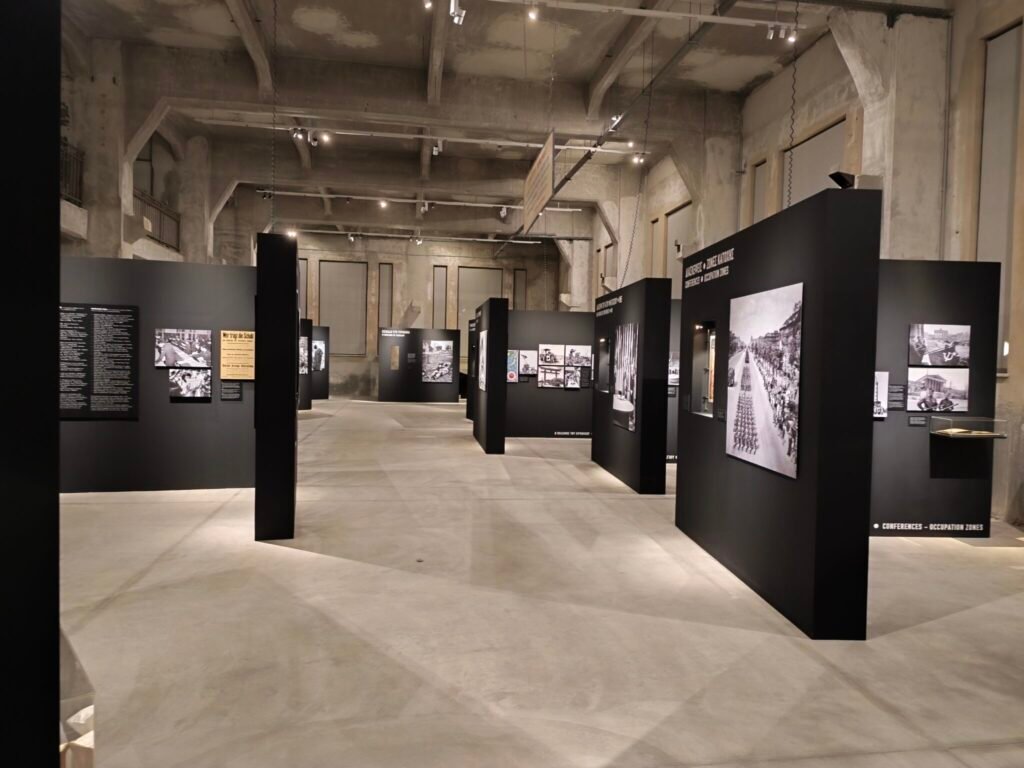
Eighty years after the guns of World War II fell silent, the Hellenic Parliament Foundation invites visitors to revisit the year 1945. In this context, the exhibition “1945: The End of the War” is hosted at the Hellenic Parliament Library (former Public Tobacco Factory).
Curated after months of research in Greek and international archives, public institutions, and private collections, the exhibition unfolds as a dense historical journey.
It explores a year that reshaped humanity’s political, moral, and geopolitical landscape.
Between Ruin and Renewal
1945 was a year of extremes. On the one hand, it marked the revelation of the full scale of Nazi atrocities, the liberation of concentration camps, and the devastation left behind by a global conflict. On the other, it brought the collapse of totalitarian power, the victory of the Allied forces, and the fragile emergence of hope. As a result, within a single year, the world stood face to face with both its darkest capacity for destruction and its determination to rebuild.



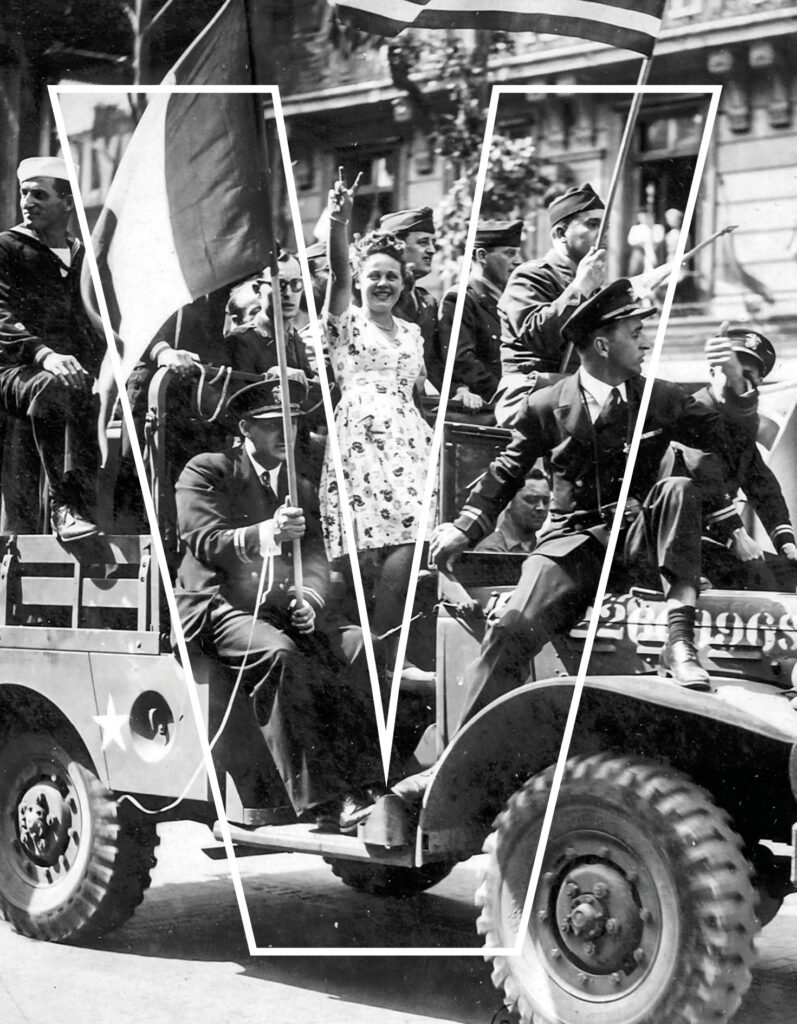
Humanitarian Aid and Everyday Survival

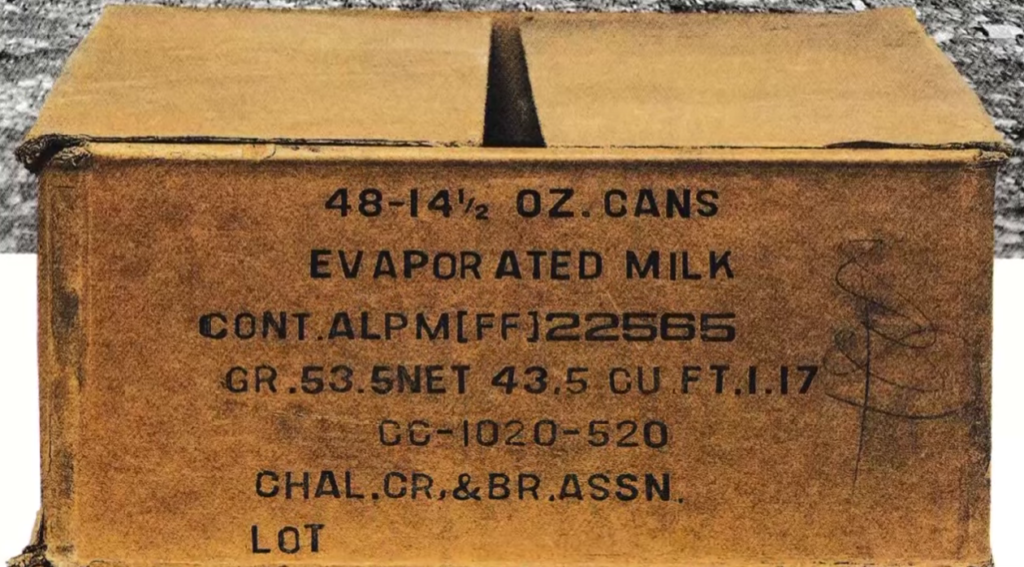
Mid-20th century. This vintage shipping cardboard box, designed to hold 48 cans of evaporated milk , is on display in the exhibition “1945: The End of the War.” Remarkably well preserved, it offers rare insight into wartime and post-war supply logistics.
The box is displayed courtesy of the American School of Classical Studies at Athens and was originally sent to Greece as part of humanitarian food aid, in response to the severe food crisis that struck Europe — and Greece in particular — in the aftermath of World War II.

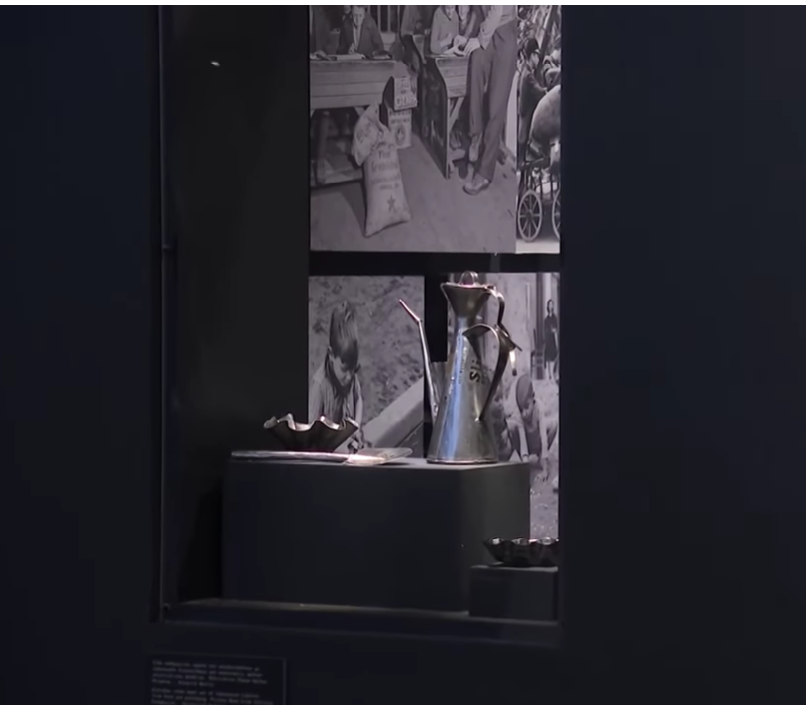
Post-war Greece.
In a Europe left devastated by war, raw materials were scarce and precious. As a result, everyday survival depended on ingenuity. Used tinplate from food cans was carefully collected and repurposed into practical household items.
The objects displayed here — including the oil container shown in the photograph — were crafted from recycled cans. Even today, one can still read the original brand name of the canned product on the surface of the object, a visible trace of its former life and a powerful reminder of scarcity, resilience, and adaptation in the aftermath of World War II.
Tracing the End of the War — and the Birth of a New Order
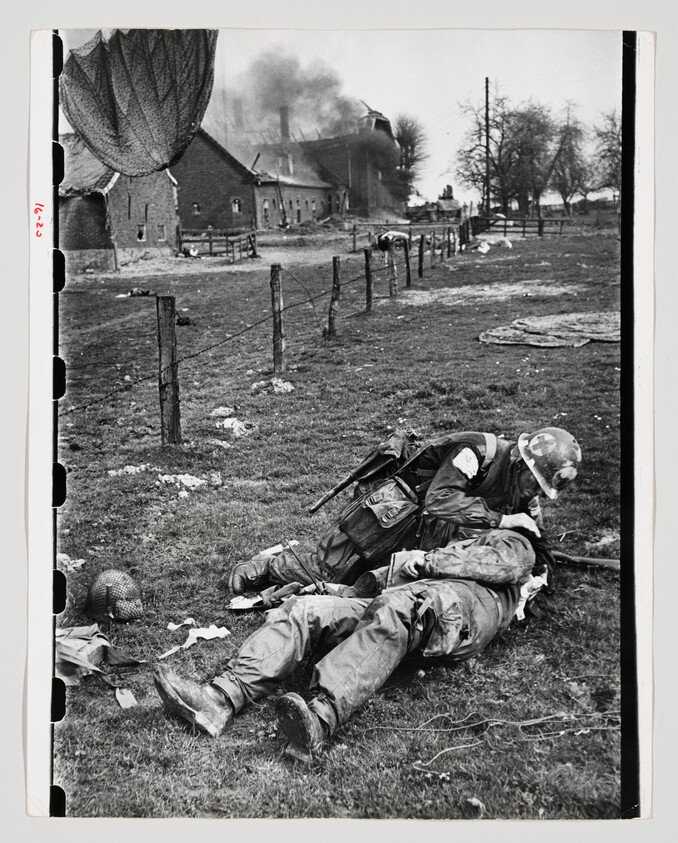
Through rare photographic material — much of it presented in Greece for the first time — the exhibition traces the dramatic sequence of events that brought World War II to a close. From the Allied advance into Germany and the fall of Berlin to Hitler’s suicide, Germany’s surrender, the Pacific War, and the atomic bombings of Hiroshima and Nagasaki, history unfolds at striking speed. Diplomatic milestones, including the conferences at Yalta and Potsdam, stand beside the founding of the United Nations and the Nuremberg Trials. These moments signal the first attempts to construct a new international order.
Why 1945 Still Matters
Rather than offering a simple historical overview, “1945: The End of the War” invites visitors to reflect on the moral weight of that year and its enduring relevance. As the exhibition subtly suggests, today’s era of global uncertainty makes this return to the past especially relevant. Revisiting the conditions faced by humanity eight decades ago feels less like an academic exercise and more like a necessary act of understanding.
Exhibition: “1945: The End of the War”
Dates: Through July 2026
Venue: Hellenic Parliament Library
(Former Public Tobacco Factory)
Address: Lenorman 218, Athens 104 43
Opening hours:
Monday–Friday: 09:00–15:00
Saturday–Sunday: 10:00–15:00
You might also find these articles interesting:
Frida Kahlo | Beyond the Icon | The Immersive Experience in Athens
Alexis Akrithakis exhibition Athens 2026: A Must-See Cultural Event for Expats in Greece
Jeff Koons’ Balloon Venus Comes to Athens in a Dialogue Across 28,000 Years
Current Exhibitions at EMST: What to See Before They Close