

The International Baccalaureate (IB) Diploma Programme is recognised across Europe as a demanding and internationally accepted qualification for university admission. For students aiming to study Medicine, academic excellence is necessary but not sufficient; universities in each country supplement IB results with subject prerequisites, competitive selection processes, age expectations, and in many cases, significant tuition fees. This comprehensive overview explains the academic thresholds and typical costs for Medicine programmes in the United Kingdom, Ireland, Italy (including the Catholic University in Rome), the Netherlands, Sweden, and Cyprus.
United Kingdom
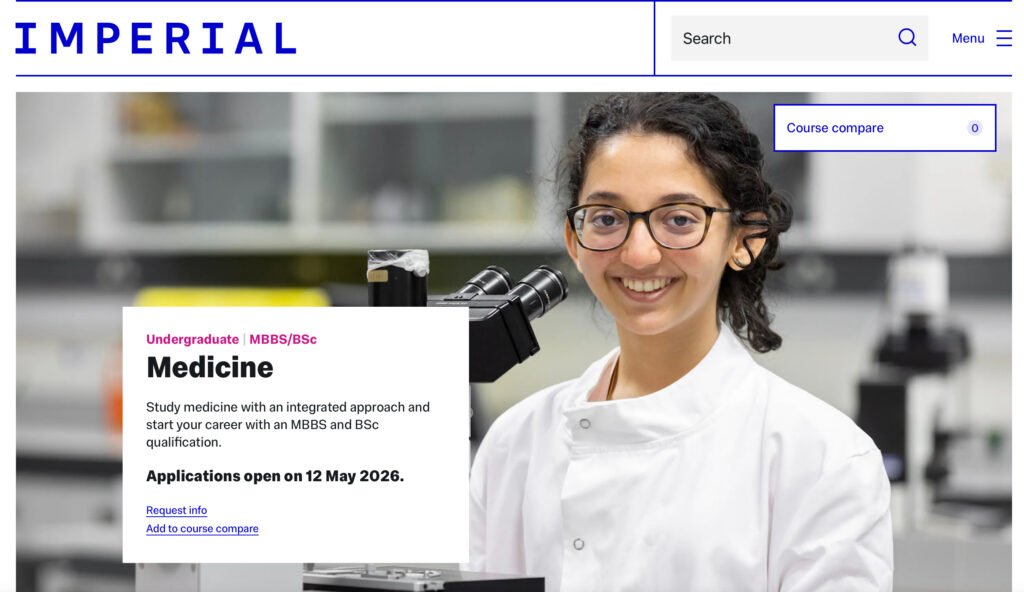
In the United Kingdom, prestigious medical schools such as University of Oxford, University of Cambridge, Imperial College London, and King’s College London require exceptionally high IB scores. Applicants generally need between 36 and 40 or more points, with Higher Level Chemistry mandatory and Biology usually required. Mathematics is expected at either Standard or Higher Level, and top institutions commonly make offers in the 38+ point range. Prospective students must also sit the University Clinical Aptitude Test (UCAT) and perform well in interviews, often conducted in multiple mini-interview formats.
In addition to academic and test requirements, UK medical schools have age expectations; students are normally expected to be eighteen by the beginning of the course year, although some universities may admit applicants slightly younger if they turn eighteen early in the academic year. Applicants may apply to up to four Medicine courses per UCAS cycle, with no formal lifetime cap on attempts, though repeat applicants are increasingly expected to demonstrate improved academic or test performance.Some universities do not strongly favour multiple resits of the IB Diploma, and predicted grades often play a decisive role in interview selection, making sustained academic performance throughout the IB essential.
Tuition in the UK is generally substantial. For example, at Queen’s University Belfast, medical students from outside the UK pay approximately £39,200 per year, with an additional clinical placement levy charged in later years of study. Some universities, such as Newcastle, list international medical tuition fees of around £47,000 per year, illustrating the high cost of medical education for non-home students. These fees are frequently higher than those in many continental European countries.
Applicants to Medicine in the United Kingdom must be aware of several procedural and professional expectations that significantly affect their competitiveness. All Medicine applications must be submitted through UCAS by 15 October of the year preceding entry, an earlier deadline than most other undergraduate courses. This means IB students must complete the UCAT during the summer before Year 2, secure strong predicted grades early in the academic year, finalize their personal statement in advance, and obtain references before mid-October. Furthermore, successful candidates must pass an enhanced Disclosure and Barring Service (DBS) check, meet occupational health and vaccination requirements before enrollment
Three Particularly Important UK Supercurricular Activities
- Structured Clinical Exposure with Reflection
Meaningful hospital, GP, or care home experience accompanied by thoughtful reflection on patient care, teamwork, ethical challenges, and communication. - Engagement with Medical Literature and Ethical Debate
Independent reading of medical texts or journal articles and the ability to critically discuss themes such as end-of-life care, consent, or public health policy. - Long-Term Service or Care-Based Volunteering
Sustained commitment to supporting vulnerable individuals, demonstrating empathy, resilience, responsibility, and understanding of caregiving environments.
Ireland
Ireland offers internationally respected medical education through institutions such as Trinity College Dublin, Royal College of Surgeons in Ireland, University College Dublin, University College Cork and University of Galway. The International Baccalaureate Diploma is recognised for entry; however, Medicine remains one of the most competitive programmes within the Irish higher education system.
Applicants typically require the equivalent of approximately 36 to 40 IB points, with Higher Level Chemistry mandatory and Biology strongly recommended or required. In addition to academic achievement, Irish and EU applicants must sit the HPAT-Ireland (Health Professions Admission Test), a computer-based examination assessing logical reasoning, non-verbal reasoning and interpersonal understanding. The HPAT is usually taken in February of the year of entry, with results released in late June. Final university offers are issued through the Central Applications Office (CAO) in August, once secondary school results and HPAT scores have been combined into a single ranking score. For highly competitive programmes, the combined points total required for admission is typically well above the minimum eligibility threshold.
For EU students, tuition is structured under Ireland’s Free Fees Initiative, provided the applicant meets nationality, residency and first-degree criteria. Under this scheme, the Irish State covers the core tuition cost for undergraduate degrees, including Medicine. Eligible students are instead required to pay a student contribution charge, which is currently approximately €3,000 per year, alongside smaller administrative and registration fees. Students from lower-income households may qualify for financial assistance through the Student Universal Support Ireland (SUSI) grant system, which can significantly reduce or cover the student contribution charge.
EU applicants who do not meet Free Fees eligibility criteria may be required to pay EU-level tuition fees, which for Medicine can range approximately between €6,000 and €10,000 per year depending on the institution. In contrast, non-EU international students face substantially higher tuition fees, commonly between €40,000 and €60,000 annually.
Beyond tuition, students must carefully consider the cost of living. Annual living expenses in Ireland generally range from approximately €10,000 to €16,000, depending on location and lifestyle. Costs are typically highest in Dublin, where accommodation demand is significant, while smaller cities may offer moderately lower housing costs. Living expenses include accommodation, utilities, food, transport, health insurance and personal expenditure, and are additional to tuition and contribution charges.
While Ireland offers a comparatively subsidized route to medical education for eligible EU students, the combination of competitive HPAT performance, high academic standards and significant living costs requires early planning and financial preparation.
Italy
Italy has emerged as an increasingly attractive destination for international students seeking English-taught medical education at comparatively moderate tuition costs. Public institutions such as Sapienza University of Rome, University of Milan, University of Bologna and University of Padua offer six-year Medicine and Surgery programmes accessible to holders of the International Baccalaureate Diploma.
Italian public universities operate two parallel Medicine tracks: traditional Italian-taught programmes and designated English-taught programmes. The English-taught programmes are specifically designed for international applicants and are accessed through the International Medical Admissions Test (IMAT). Applicants who apply via the IMAT English track undertake their academic instruction in English throughout the pre-clinical years. By contrast, students entering through the Italian national entrance examination follow the Italian-language program.
Although the academic teaching of English-track programmes is delivered in English, clinical training typically occurs within Italian hospitals. As a result, functional Italian language skills are strongly recommended and may become essential for effective patient communication during clinical placements. Many universities offer introductory Italian language support to international students during the course of study.
Admission requirements for English-taught public programmes require completion of a full IB Diploma. Unlike the United Kingdom or Ireland, Italy generally does not impose extremely high IB point thresholds; scores in the mid-20s to low-30s range often satisfy basic eligibility requirements. However, admission is determined primarily by performance in the IMAT. The examination, usually held in September, assesses logical reasoning, general knowledge, biology, chemistry, physics and mathematics. Final admission depends entirely on national ranking lists based on IMAT scores rather than IB performance alone.
Italy distinguishes between EU and non-EU applicants through separate seat allocations and ranking lists. EU candidates compete within a broader European pool, while non-EU applicants compete only for a limited quota of seats reserved at each university. This distinction significantly influences competitiveness depending on nationality.
One of Italy’s principal advantages lies in its comparatively moderate tuition fees at public universities. Annual fees typically range from approximately €1,000 to €4,000, often adjusted according to declared family income and residency status. These figures are substantially lower than those in the United Kingdom or Ireland. However, tuition fees do not include living expenses, accommodation, health insurance or personal costs.
Living expenses vary by city. In major centres such as Rome, Milan and Bologna, students should budget approximately €9,000 to €14,000 per year for accommodation, food, transport and general living costs. Housing represents the largest expense, and early planning is advisable due to demand in larger urban areas.
The English-taught Medicine programme at Università Cattolica del Sacro Cuore operates independently of the national IMAT system. The university is affiliated with Fondazione Policlinico Universitario Agostino Gemelli IRCCS, one of Italy’s leading teaching hospitals.
Applicants must hold the full IB Diploma and sit the university’s internal entrance examination. Selection is competitive and determined primarily by performance in this internal test rather than through national IMAT ranking.
As a private institution, tuition fees are considerably higher than those at public universities and generally range between approximately €15,000 and €20,000 per year. Living costs in Rome must be added to this figure, increasing overall annual expenditure.
Cyprus
Cyprus has developed into a notable destination for international students seeking English-taught medical degrees within the European Union. Institutions such as University of Nicosia and European University Cyprus offer six-year undergraduate Medicine programmes (MBBS or MD equivalent) taught entirely in English.
Medical programmes in Cyprus are delivered in English from the pre-clinical years through to clinical training. Clinical placements are conducted in affiliated teaching hospitals in Cyprus and, in some cases, in partner hospitals abroad. As programmes are English-medium, knowledge of Greek is not typically required for admission; however, basic communication skills in the local language may be beneficial during clinical exposure depending on placement location.
The structure generally follows a six-year model: early years focus on biomedical sciences and foundational clinical skills, followed by integrated clinical rotations in later years.
IB applicants typically require between 32 and 36 IB points, although specific thresholds vary by institution. Higher Level Biology and Chemistry are strongly preferred and may be required depending on the university. Mathematics and English proficiency must also meet institutional standards.
Unlike Italy’s national IMAT system, Cyprus does not operate a centralised entrance examination. Admission decisions are generally based on academic performance, review of transcripts, and in some cases an interview or internal assessment. Some institutions may consider predicted grades and conduct rolling admissions.
Applicants are normally expected to be at least eighteen years old at the start of the program.
Cyprus is a private-sector driven higher education environment, and tuition fees for Medicine are comparatively high relative to Southern European public universities. Annual tuition at institutions such as the University of Nicosia is approximately €22,000 per year. Over six years, total tuition costs may therefore exceed €130,000, excluding living expenses.
Fees may increase annually, and additional clinical or administrative charges may apply in later years of study. The estimated annual cost of living in Cyprus generally ranges between €10,000 and €14,000, depending on lifestyle and accommodation choices. Nicosia, as the capital city, may be slightly more expensive than other areas. Expenses typically include rent, utilities, food, transportation, health insurance and personal costs.
Accommodation represents the largest expense, and universities often provide guidance on student housing options.
Cyprus is a member of the European Union, and medical degrees awarded by accredited institutions are recognised within the EU framework, subject to national registration requirements in each country. Graduates seeking to practice in other jurisdictions (such as the UK or Ireland) must satisfy local licensing and professional registration standards.
Poland
Poland is one of the most established destinations in Central Europe for fully English-taught undergraduate Medicine (MD/MBBS equivalent). Public medical universities such as Medical University of Warsaw, Jagiellonian University Medical College, Poznan University of Medical Sciences and Medical University of Gdańsk have long-running English-language programmes primarily designed for international students.
Admission typically requires completion of secondary education with strong performance in Biology and Chemistry (IB Higher Level subjects are strongly preferred). While minimum IB thresholds vary by institution, competitive applicants often present results equivalent to approximately 30–36 IB points, with solid science grades. Unlike Italy’s IMAT system, Poland does not operate a national entrance exam; instead, universities may assess applicants through academic transcript evaluation, entrance examinations in science subjects, or structured interviews conducted in English.
The programme structure follows a six-year model, beginning with pre-clinical biomedical sciences and progressing into clinical rotations in affiliated teaching hospitals. Importantly, although the academic programme is delivered in English, students are required to learn basic Polish during the degree in order to communicate effectively with patients during clinical placements.
Tuition fees in Poland are significantly lower than in the United Kingdom or Ireland but higher than in public Italian universities. Annual tuition for English-taught Medicine generally ranges between approximately €11,000 and €16,000 per year, depending on the university. Over six years, total tuition may therefore fall between €66,000 and €96,000.
Living costs in Poland are comparatively moderate. Students typically budget between €7,000 and €10,000 per year for accommodation, food, transport and personal expenses, with cities such as Warsaw and Kraków being slightly more expensive than smaller academic centres.
Polish medical degrees awarded by accredited universities are recognised within the European Union framework, subject to national licensing requirements in the country of intended practice. Graduates seeking to work in the UK, Ireland or other EU states must comply with local professional registration processes.