

Europe’s oldest known wooden tools, dating back around 430,000 years, have been uncovered at Marathousa 1, a Middle Pleistocene site in the Megalopolis Basin of Arcadia, central Peloponnese, Greece. These discoveries reveal a remarkable level of technological skill and innovation among early humans, offering rare insight into behaviors that rarely survive in the archaeological record. The research, published on January 26, 2026 in the journal PNAS (Proceedings of the National Academy of Sciences), was led by Annemieke Milks, Maria Ntinou, Stylianos Koutalis, and Katerina Harvati.
What Was Found at Marathousa 1
Among the finds are two wooden tools deliberately shaped and used by early humans.
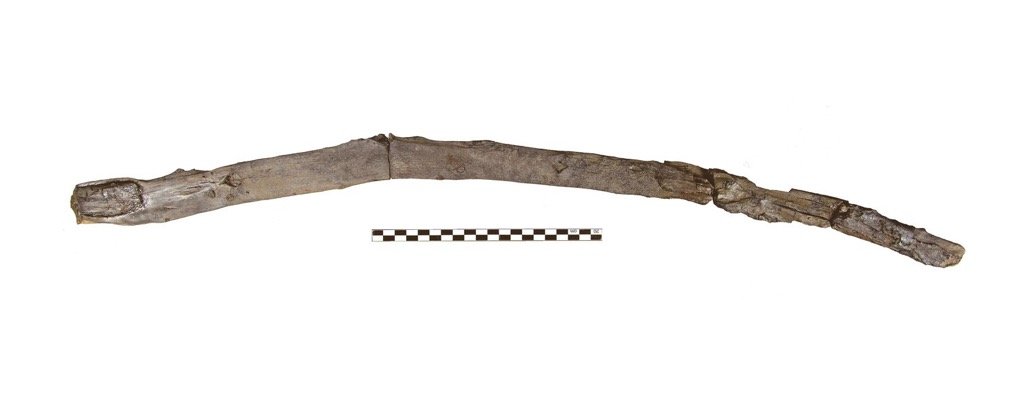
- The first, a large alder-wood stick (Specimen Marathousa ID 39), was likely a multifunctional implement for digging, extracting plants, or removing bark. Its thicker “handle” end and thinner working tip show clear evidence of repeated use, suggesting careful design and purpose.
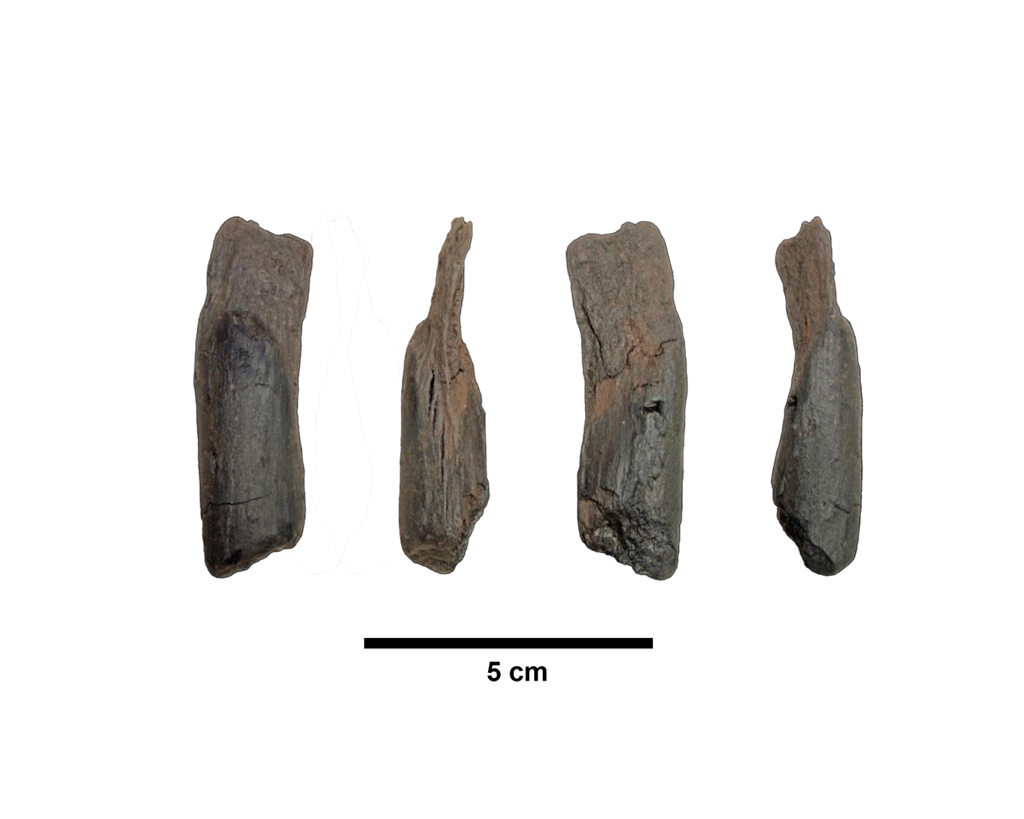
- The second tool, a tiny willow or poplar artifact (Specimen Marathousa ID 13), represents a previously unknown type of wooden implement. Measuring just 5.7 cm, it bears signs of shaping and possible use, perhaps for retouching or working stone tools, though its exact function remains uncertain.
A third alder-wood fragment, initially considered human-made, was later identified as bearing deep claw marks from a large carnivore—likely a bear rather than hominin modifications.
These wooden tools were discovered alongside stone tools, worked bone artifacts, and the butchered remains of a straight-tusked elephant and other fauna. Together, this assemblage indicates that Marathousa 1 served as a site for butchering and other hominin activities along the shores of an ancient lake.
Why This Discovery Is So Important
The Marathousa 1 finds provide rare, direct evidence of early humans using plant materials for technological purposes—a behavior usually invisible to archaeologists because wood and other organic materials typically decay over time. The large alder stick demonstrates purposeful shaping and repeated use, while the small willow or poplar tool reveals fine workmanship on a microscopic scale.
Before this discovery, most knowledge of Middle Pleistocene technology came from stone tools. Marathousa 1 shows that early humans were not only making simple implements like digging sticks but were also capable of manipulating small wooden objects with precision, highlighting a broader and more sophisticated technological repertoire than previously recognized.
Humans and Carnivores: Life on the Shores of an Ancient Lake
Marathousa 1 also sheds light on the complex ecosystems in which early humans lived. Cut marks on elephant bones confirm that hominins accessed the carcass, while claw marks on nearby wood indicate competition with large carnivores. These interactions reveal a dynamic landscape where cooperation, planning, and competition with other species were integral to survival.
A Window into Early Human Behavior
The exceptional preservation conditions in the Megalopolis Basin allow us to glimpse aspects of early human life that normally vanish over time. The Marathousa 1 tools demonstrate that early humans were innovative, adaptable, and capable of using both stone and organic materials to solve practical challenges.
For modern residents of Greece—especially those interested in its deep past—Marathousa 1 offers a striking reminder: human history in this region extends far beyond classical antiquity, reaching back into some of the earliest chapters of technological and behavioral evolution.
Sometimes, the most transformative discoveries are not monumental or visually striking. In this case, small, carefully worked pieces of wood fundamentally reshape how we understand the ingenuity and adaptability of our distant ancestors.
The research at Marathousa 1 was carried out by an international team led by researchers from the University of Reading, the University of Tübingen, and the Senckenberg Nature Research Society. There were contributions from the Aristotle University of Thessaloniki, the University of Ioannina, the Hellenic Ministry of Culture, and the American School of Classical Studies at Athens.
The project was supported by funding from the European Research Council (ERC) and the German Research Foundation (DFG).
Sources
Cited Research Paper:
Milks, A., Ntinou, M., Koutalis, S., Michailidis, D., Konidaris, G.E., Giusti, D., Thompson, N., Tsartsidou, G., Panagopoulou, E., Tourloukis, V., Karkanas, P., & Harvati, K. (2026). Evidence for the earliest hominin use of wooden handheld tools found at Marathousa 1 (Greece). PNAS. https://doi.org/10.1073/pnas.2515479123
The research paper and visual material referenced in this article were shared with xpat.gr by the University of Reading.
You might also like:
Discover the Face of a Mycenaean Royal Woman: Advanced Technology Revives Greece’s History
A Journey Through Time: The Royal Tombs and the New Central Museum Building of Aigai in Vergina