
At the southern tip of the Peloponnese, the Mani Peninsula has long stood apart from the rest of mainland Greece. Defined by harsh terrain, limited access, and a powerful sense of local identity, it is a place where history seems unusually present. Now, new genetic research suggests that Mani’s distinctiveness runs deeper than landscape or architecture—and is reflected in the DNA of deep Maniot Greeks.
According to a peer-reviewed study published on 4 February 2026, in Communications Biology, the inhabitants of Deep Mani stand out as a highly distinctive genetic population within the European landscape. The findings indicate that centuries of geographic and social isolation allowed ancient Greek lineages to persist in the region, with many paternal lines tracing back to the Bronze Age, Iron Age, and Roman periods.
Where is Deep Mani—and why it matters
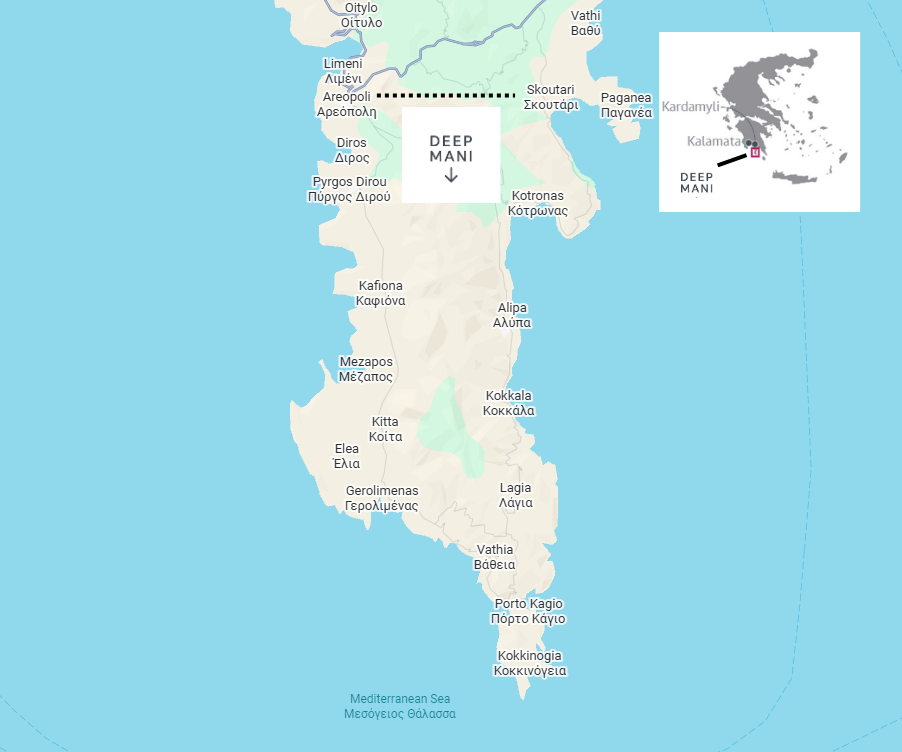
Deep Mani (also known as Inner or Mesa Mani) lies at the very southern tip of mainland Greece, roughly south of a line connecting Areopolis in the west to Skoutari in the east. For centuries, this rugged and difficult terrain limited access, discouraged settlement by outsiders, and fostered a strong local identity. Historical sources already hinted that Deep Mani followed a different path from much of the Balkans; genetics now confirms it.
What the study examined
The research team analysed Y‑chromosome (paternal) and mitochondrial DNA (maternal) from 102 individuals with confirmed Deep Maniot ancestry. Using high‑resolution genetic sequencing, their data were compared with more than one million modern genetic profiles worldwide and thousands of ancient DNA samples from Greece, the Balkans, and the wider Mediterranean.
This approach allowed the researchers to trace lineages across millennia and to test whether Deep Maniots were significantly affected by the migrations that reshaped much of Greece after the 6th century CE.
A rare case of long‑term continuity
The results are striking. Deep Maniots overwhelmingly descend, on the paternal side, from lineages already present in Bronze Age, Iron Age, and Roman‑era Greece. Genetic markers commonly associated with later Slavic, Germanic, Aromanian, Albanian, or Western European migrations—frequent elsewhere in mainland Greece—are almost entirely absent.
The study identifies strong founder effects dating to approximately the 4th–8th centuries CE, a turbulent period marked by plague, warfare, and regional instability. More than half of present‑day Deep Maniot men descend from a single paternal lineage that emerged during this era, suggesting that the local population was once reduced to very few families who endured and rebuilt in isolation.
Landscape, architecture, and DNA
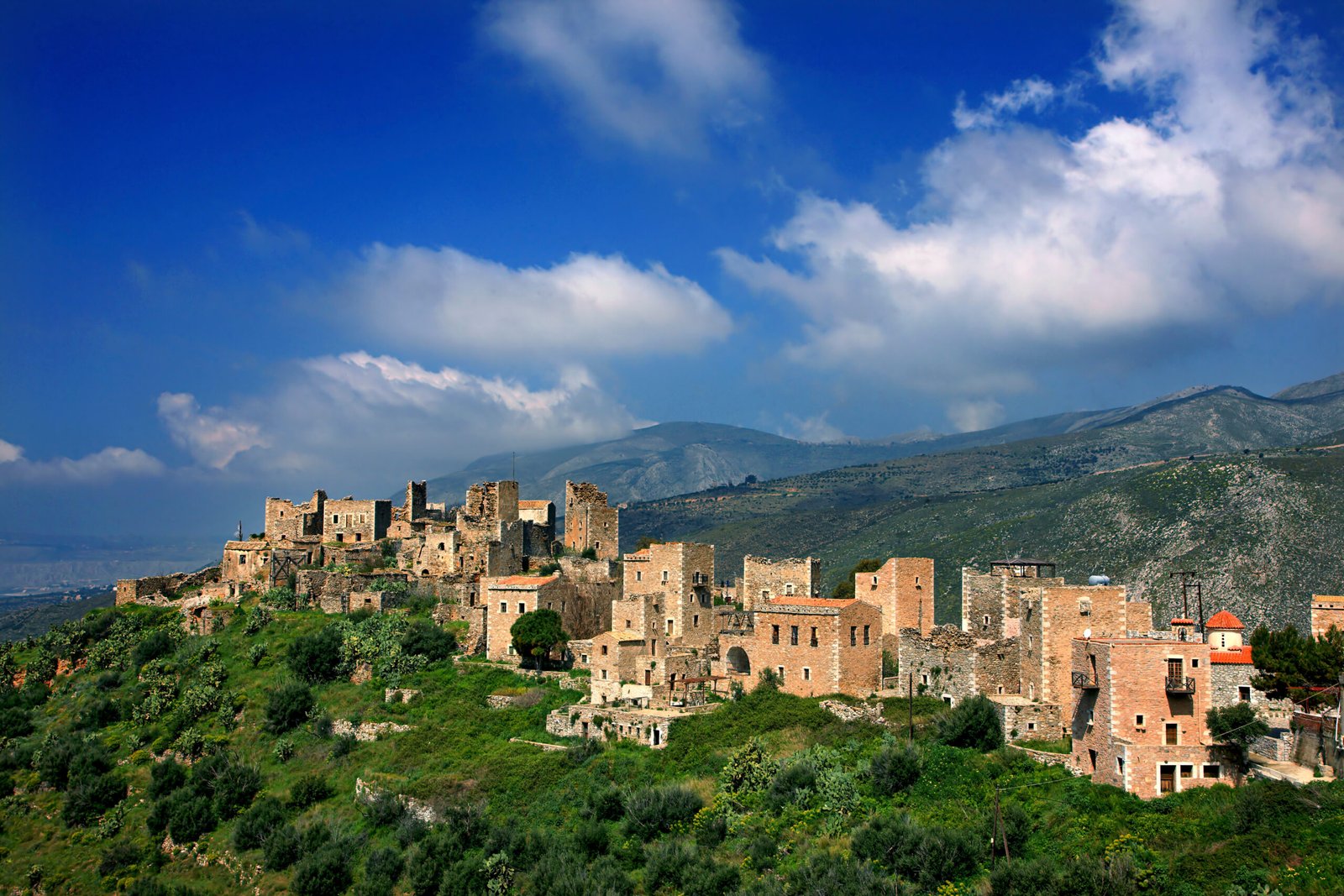
One of the most compelling aspects of the research is the close alignment between genetics and material culture. The geographic distribution of Deep Maniot lineages mirrors the area’s distinctive megalithic tower houses and religious structures—an architectural tradition found exclusively in Deep Mani and dating to late antiquity and the early Christian period.
This correspondence strongly suggests that today’s inhabitants descend from the same communities that built and inhabited this dramatic landscape more than 1,400 years ago.

Clan society and social structure
Deep Mani’s isolation also shaped its social organisation. In the absence of strong central authority, the region developed a complex, patrilineal clan system governed by customary law. Genetics confirms that this structure left a lasting biological imprint: paternal lines remained remarkably stable over centuries, while maternal ancestry tells a more diverse story.
Maternal lineages point to limited but notable connections with the wider Mediterranean, including the Balkans, the Levant, western Europe, and North Africa. The researchers interpret this pattern as consistent with a strongly patriarchal society, in which male lines stayed rooted locally while a smaller number of women from outside communities were incorporated over time.
History meets science
Byzantine sources already hinted at Deep Mani’s exceptional trajectory. The 10th‑century emperor Constantine VII Porphyrogenitus famously noted that the inhabitants were not descended from Slavs but from the ‘Romans of old’, whom he associated with the Hellenes. He also remarked—uniquely—that pagan practices survived in the region long after Christianity had taken hold elsewhere.
The new genetic evidence strongly supports these historical observations, showing that Deep Mani remained largely insulated from the population movements that transformed the rest of the Peloponnese and the Balkans.
Why this matters today
Deep Mani provides a rare window into deep historical continuity in a region better known for migration and cultural change. The study demonstrates how geography, social organisation, and historical circumstance can preserve ancient patterns long after they have disappeared elsewhere.
In an age of growing interest in ancestry and identity, Deep Mani stands as a living archive—where history, landscape, and genetics converge to tell a remarkably long and coherent story.
Source
Uniparental analysis of Deep Maniot Greeks reveals genetic continuity from the pre-Medieval era.
Leonidas-Romanos Davranoglou*; Athanasios Petros Kofinakos*; Anargyros D. Mariolis; Göran Runfeldt; Paul Andrew Maier; Michael Sager; Panagiota Soulioti; Theodoros Mariolis-Sapsakos; Alexandros Heraclides.
Communications Biology, Volume 9, Article 157, Open Access, published 04 February 2026.
DOI: 10.1038/s42003-026-09597-9.