

Greek History Explained: A Clear Timeline for Expats & Foreign Residents
If you are an expatriate or a foreign resident in Greece, learning the country’s rich history is one of the most rewarding ways to understand the place you live in and the people you share it with.
In Greece, history is not only found in museums and textbooks. It shapes everyday language, national holidays, local traditions, religious life, political conversations, and the way many Greeks understand identity. Once you recognize the layers—Antiquity, Byzantium, Ottoman rule, and the modern state—you start noticing history everywhere: in city centers, village churches, family stories, and even food culture.
Knowing a country’s past helps you appreciate its culture more deeply: why certain events remain emotionally powerful, why heritage sites matter so much, and why the landscape itself often feels “inhabited by memory.” The sections below offer a structured timeline—from prehistory to contemporary Greece—to help you make sense of the big picture.
Read on to explore how Greece’s layered past continues to shape the country you experience today.
Table of Contents
- Click on the Table of Contents below to jump to the section that interests you.
- Greek Antiquity
- Stone and Bronze Age (2 million BCE – 3,200 BCE)
- Aegean Islands (c. 5000–1100 BCE)
From Neolithic Settlements to Bronze Age Civilization - Minoan Crete (c. 3,000 – 1,450 BCE)
- Mycenaean Greece (1600–1100 BCE)
- Geometric Period (1100–700 BCE)
- Archaic Period (700–480 BCE)
- Classical Period (480–323 BCE)
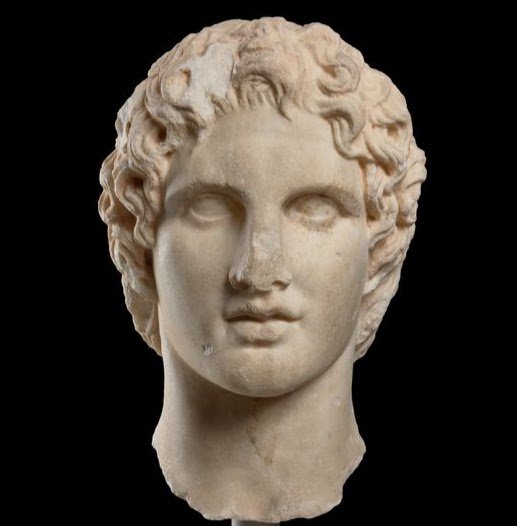
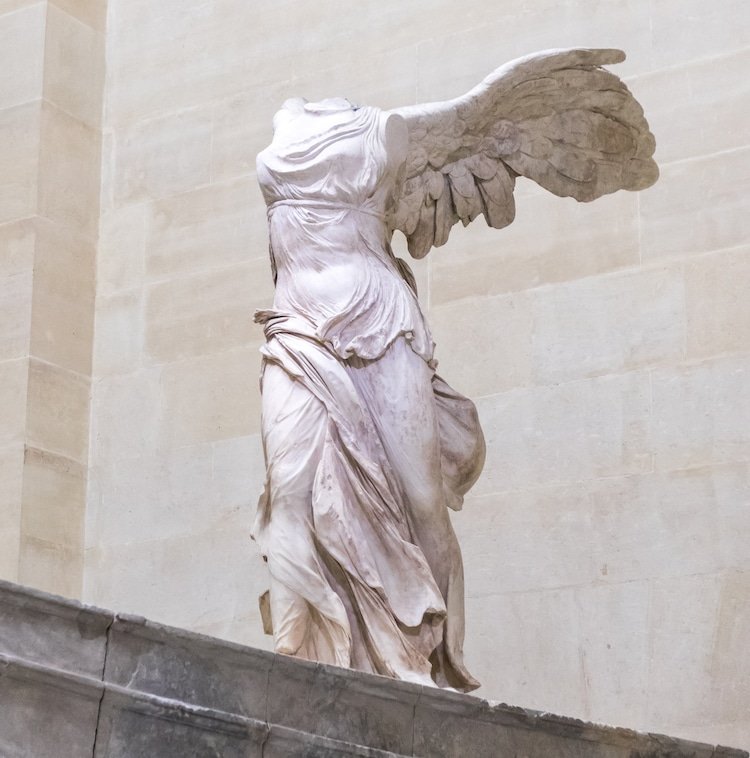
- Hellenistic Period (323–146 BCE)
- Roman Period (146 BCE – 330 CE)
- Byzantine Era
- Early Byzantine Era (330–610 CE)
- Middle Byzantine Era (610–1204 CE)
- Late Byzantine Era (1204–1453 CE)
- Ottoman Era (1453–1830 CE)
- Greek War of Independence of 1821 (1821–1830)
- Modern Greece
- Formation of the Greek State (1830–1897 CE)
- Territorial Integration (1897–1922 CE)
- Interwar Period and WWII (1923–1945 CE)
- Contemporary Greece (1945–2026 CE)
- Did You Know?
Greek Antiquity
Greek antiquity is not one “ancient world,” but a sequence of transformations—from scattered prehistoric communities to powerful palaces, from city-states to kingdoms, and eventually to life inside the Roman Empire. Political forms changed again and again, but cultural continuities—language, seafaring, local identities, shared sanctuaries—kept evolving rather than disappearing.
Timeline: Prehistory → Minoan → Mycenaean → Geometric → Archaic → Classical → Hellenistic → Roman
Stone and Bronze Age (2 million BCE – 3,200 BCE)
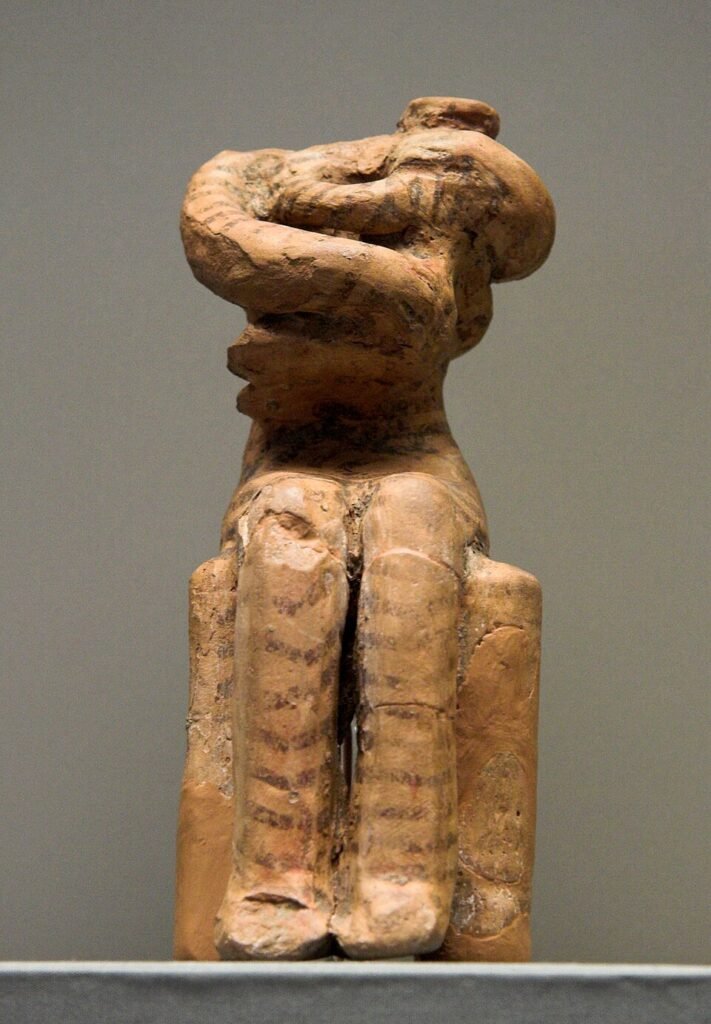
The Greek Stone and Bronze Age stretches from around 2 million BCE to 3,200 BCE, covering a vast span of human prehistory divided into the Palaeolithic, Mesolithic, and Neolithic periods.
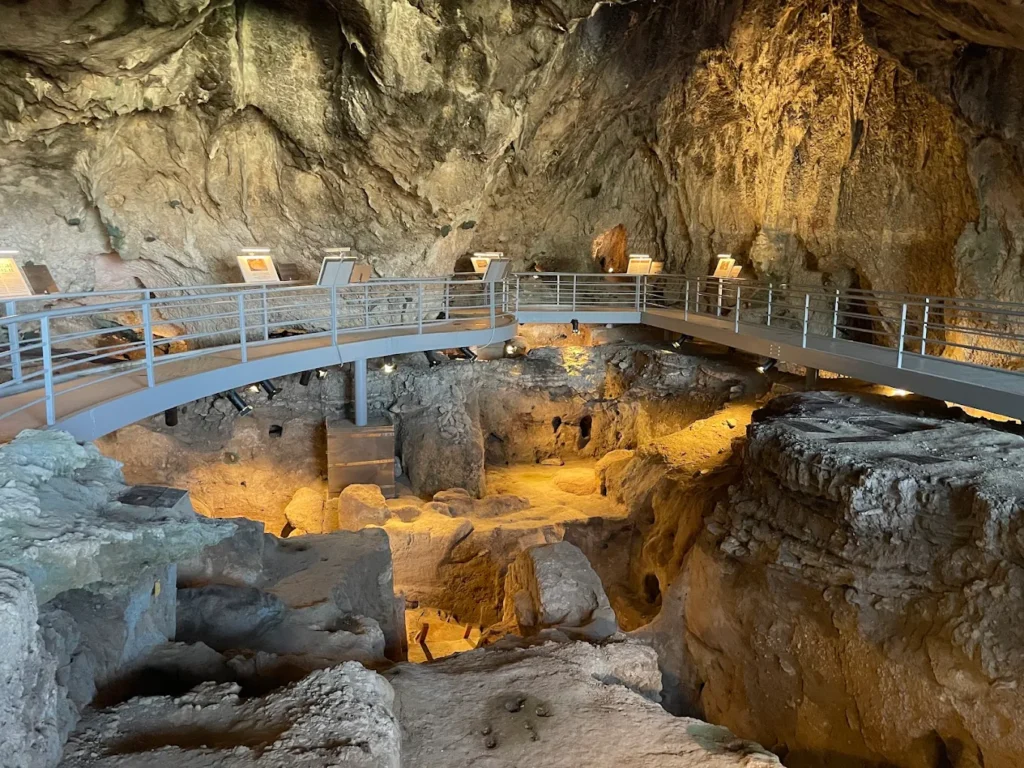
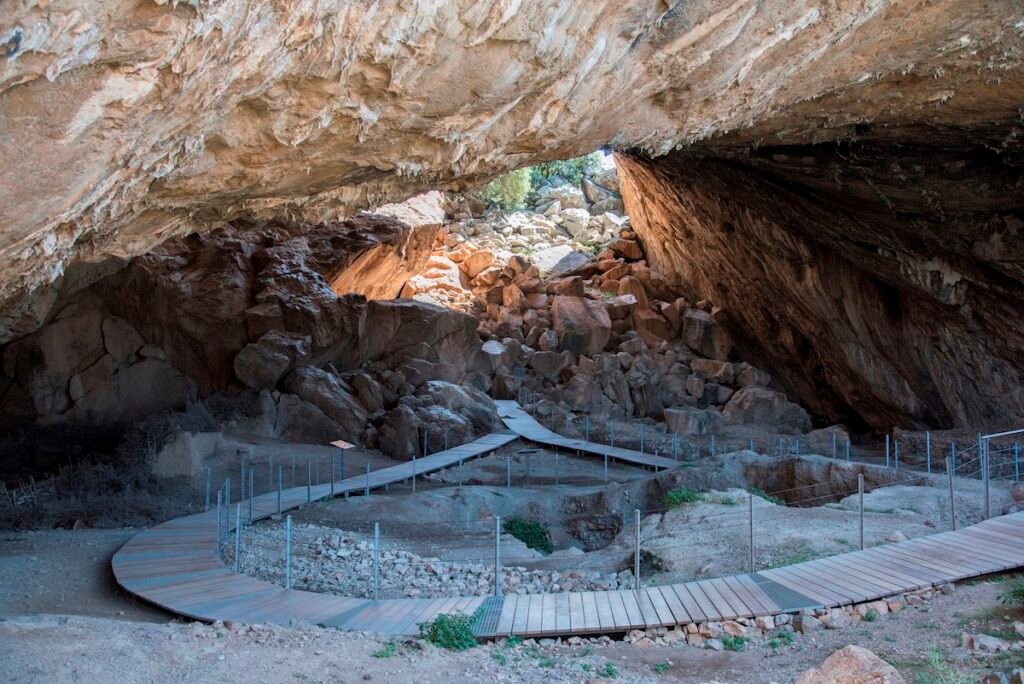
During the Palaeolithic period (c. 2 million–11,000 BCE), humans adapted to major climatic and geological shifts in the Greek-Aegean area. At Marathousa 1 in the Megalopolis Basin of Arcadia, archaeologists have uncovered some of the oldest known wooden tools found in Europe, dating to approximately 430,000 years ago, offering rare evidence of early human technological skill in Greece. Other important evidence of early human presence includes the Petralona skull in Chalkidiki, and archaeological finds show that people inhabited caves, rock shelters, and open sites. While lower Palaeolithic sites are rare, Middle and Upper Palaeolithic remains, such as those at Theopetra Cave in Thessaly and Franchthi Cave in the Peloponnese, demonstrate long-term human habitation.
The Mesolithic period (11,000–6,800 BCE) coincides with the Holocene, when climate stabilized. People shifted toward coastal sites like Franchthi, Sidari, and
Maroulas, emphasizing fishing, navigation, and early resource trade, such as obsidian and volcanic stones. Evidence of early permanent settlements, cemeteries, and stone foundations emerges in this period, hinting at the beginnings of organized communities.
The Neolithic period (6,800–3,200 BCE) marked a major leap: humans transitioned fully to farming, stock-rearing, pottery, and trade, building permanent settlements in Thessaly, Macedonia, the Peloponnese, the Cyclades, and Crete. Archaeologists like Christos Tsountas and later teams documented hundreds of sites, revealing the evolution of culture, settlement patterns, and economy. By the Late Neolithic, communities were technologically sophisticated, socially organized, and artistically expressive.
In everyday terms, this is where the most basic rhythms of later Greek life begin: settled villages, farming cycles, shared storage, craft production, and coastal mobility—patterns that will keep reappearing for thousands of years.
Why it matters today: Walking through sites like Franchthi Cave or Sesklo, you can see where humans first shaped the land, domesticated plants and animals, and began building communities.
Aegean Islands (c. 5000–1100 BCE)
From Neolithic Settlements to Bronze Age Civilization
The Aegean islands (c. 5000–1100 BCE) offer a remarkable window into prehistoric life, revealing how early communities adapted to island environments from the Neolithic period through the Bronze Age. Archaeologists study these islands not in isolation but as part of a wider maritime network, uncovering early systems of trade, cultural exchange, and seafaring that connected the Aegean to mainland Greece, Crete, and Asia Minor.
Permanent settlements began to appear in the Late Neolithic period, on islands such as Andros, Naxos, Antiparos, Santorini, and Rhodes. Early inhabitants relied heavily on the sea for communication and subsistence, while fertile valleys supported farming and livestock. Sites such as Koumellos Cave on Rhodes show both temporary and long-term habitation, with pottery, stone tools, and hearths illustrating everyday life. The Cyclades in particular became major centers for obsidian trade from Milos and early metallurgy, linking the islands to wider Aegean exchange networks.
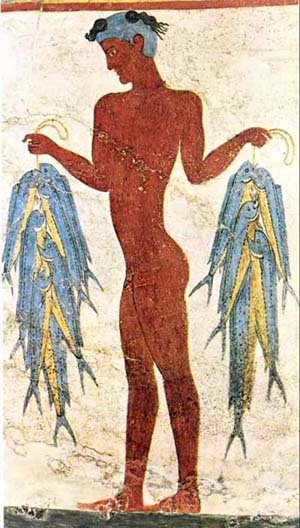
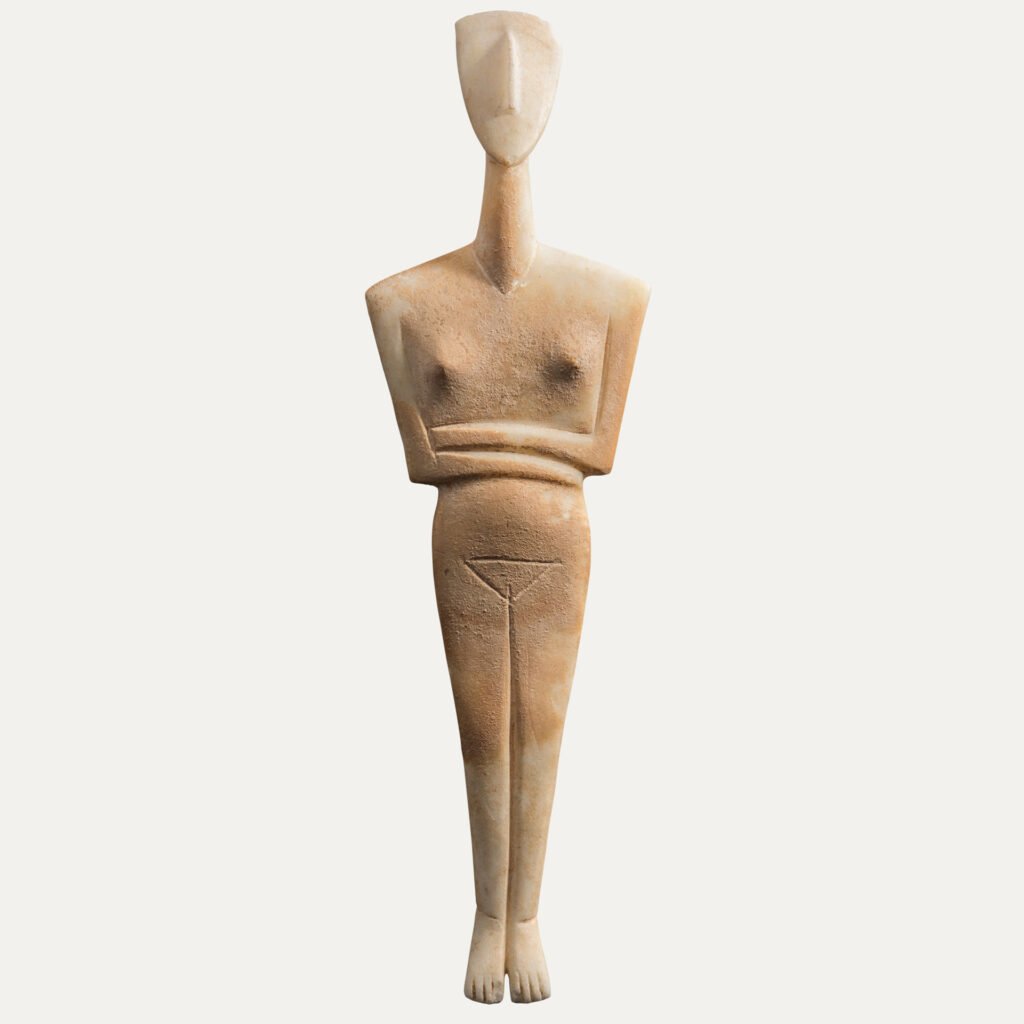
By the Early Bronze Age, the islands witnessed the rise of Cycladic civilization, known for its advanced seafaring, metallurgy, and distinctive marble sculpture. Settlements such as Skarkos on Ios and Chalandriani on Syros were densely organized, with multi-storey buildings, drainage systems, and clear evidence of specialized craft production and trade. Akrotiri on Santorini developed into an early urban center with sophisticated town planning, drainage channels, wall paintings, and imported goods from Crete, Cyprus, and Egypt, reflecting extensive maritime connections.
During the Middle and Late Bronze Age, many island communities came under the influence of Minoan and later Mycenaean culture, while maintaining their distinct insular character. Fortified settlements, shrines, and administrative centers indicate societies capable of organizing production and long-distance trade. Sites such as Phylakopi on Milos and Agia Irini on Kea demonstrate organized settlement planning, water-management systems, and sustained cultural interaction across the Aegean.
Daily life revolved around sea routes, craft workshops, storage facilities, and seasonal movement, creating an island rhythm that still feels familiar today in the harbors and markets of the Aegean.
Why it matters today: Walking through the ruins of Strofilas on Andros or Akrotiri on Santorini, you step into a world of early island communities that built complex societies in close relationship with the sea. For foreign residents in Greece, these sites provide essential context for understanding the Aegean’s maritime culture, the origins of trade and innovation, and the enduring Greek connection to island life and navigation.
Minoan Crete (c. 3,000 – 1,450 BCE)
A sophisticated Bronze Age civilization began to flourish on Crete in the early third millennium BCE and reached its peak in the 16th–15th centuries BCE.
It was later named the Minoan civilization after the legendary King Minos of Knossos, a figure associated with sea power and lawgiving in Greek myth.
Crete’s position between the Aegean and the great cultures of the Eastern Mediterranean brought the island into early contact with the East, and the Minoans absorbed new techniques and ideas—adapting them to local needs before spreading influences across the wider Aegean.
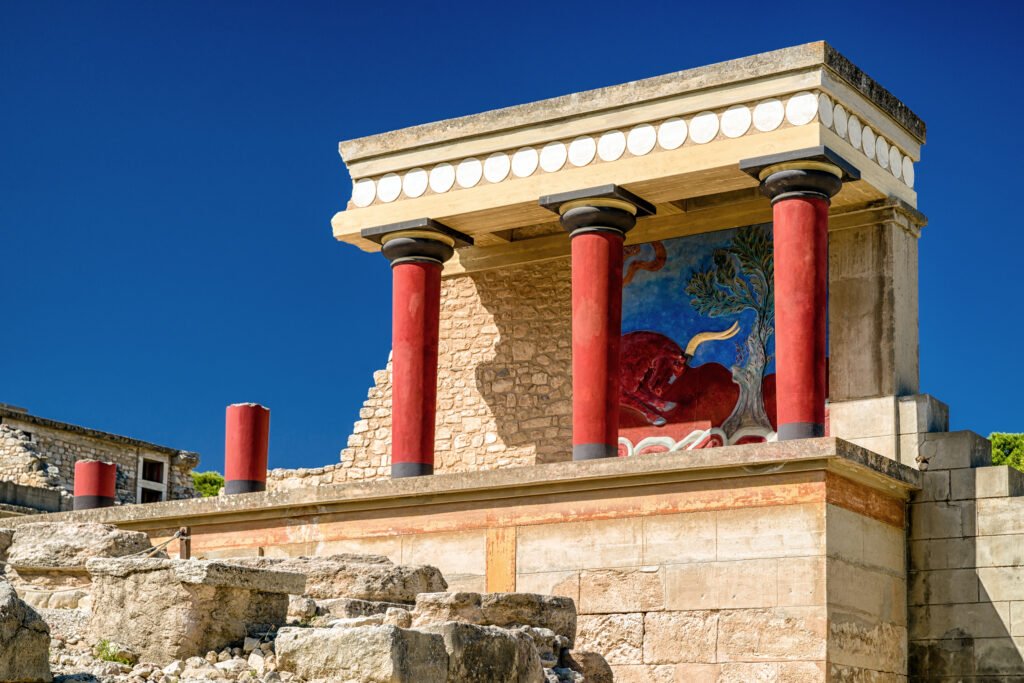
What archaeologists uncovered at Knossos—first systematically excavated by Sir Arthur Evans—and at other major palatial centers such as Phaistos, Malia, and Zakros, reveals a highly organized and prosperous society with strong trade connections throughout the region.
The rise of the palaces marks the formation of a palatial society and economy, reshaping administration, social structure, and everyday life.
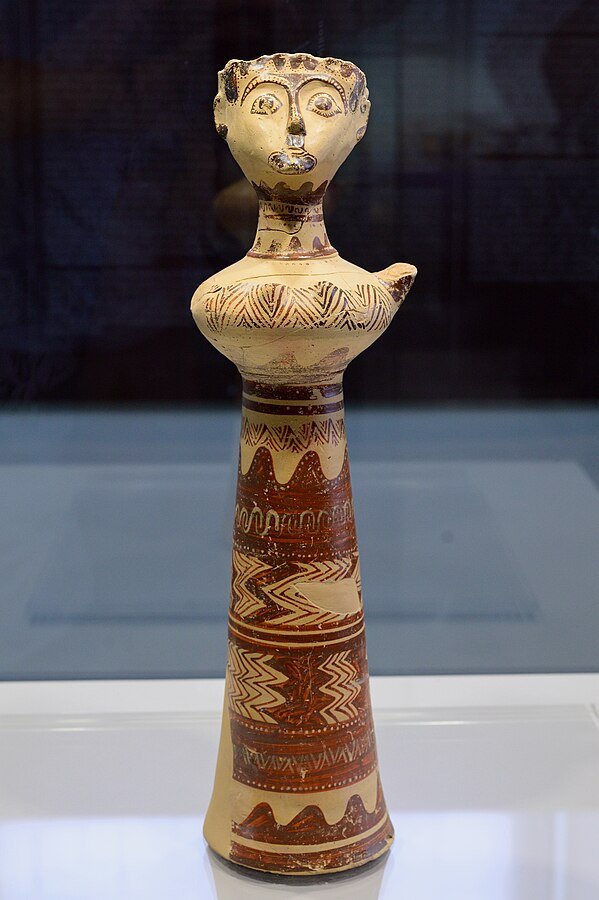
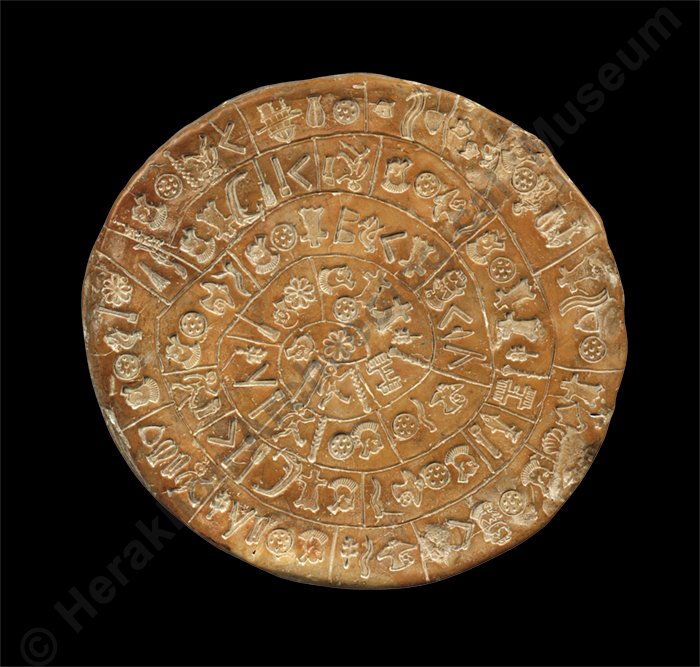
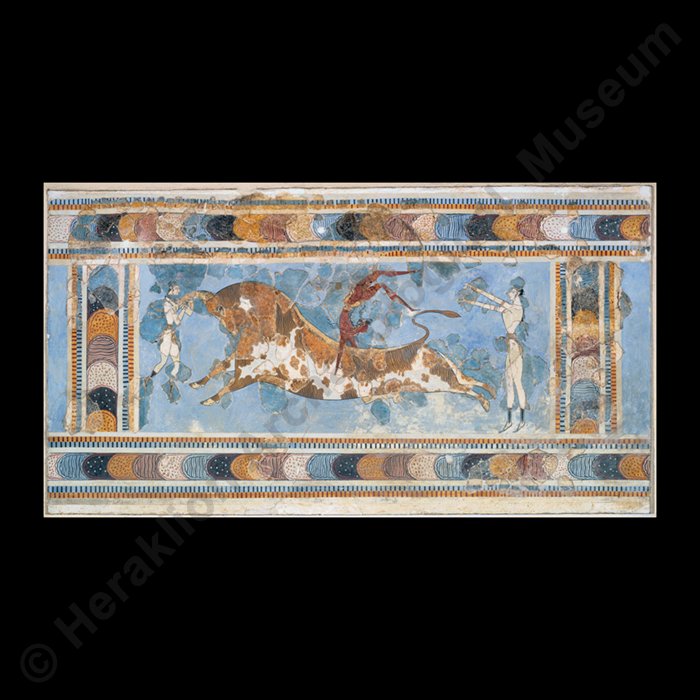
The civilization’s high level is also reflected in its writing systems—Cretan hieroglyphic and Linear A (still undeciphered)—and in its exceptional art, from architecture and fresco painting to pottery and figurines.
In everyday terms, this was a world of storerooms and seals, ship traffic and workshops, ceremonial gatherings, and carefully managed agricultural surplus—one reason the Minoan palaces feel less like fortresses and more like living administrative “centers of society.”
The end of Minoan dominance came around the 15th century BCE, for reasons still debated, after which Mycenaeans established control on Crete.
Why it matters today: Visiting Knossos (or seeing Minoan artifacts in museums) feels like stepping into a world that shaped the first advanced civilization of the prehistoric Aegean—and many of the myths that still color how we imagine ancient Greece.
Mycenaean Greece (1600–1100 BCE)
The Mycenaean civilization (1600–1100 BCE) was the first advanced society on mainland Greece and the dominant power of the Late Bronze Age. Centered on fortified palace citadels such as Mycenae, Tiryns, Pylos, and Thebes, Mycenaean rulers controlled surrounding territories through organized administration, warfare, and long-distance trade across the eastern Mediterranean.
Mycenae, described by Homer as “Mycenae rich in gold,” and known in myth as the kingdom of Agamemnon, was the most important and wealthy palatial center of Late Bronze Age Greece. Because of its political and economic importance, the civilization that flourished on the Greek mainland between 1600 and 1100 BCE came to be known as the Mycenaean civilization.
This civilization formed the historical background of the Homeric epics, and legendary figures such as Odysseus, Agamemnon, Achilles, and Theseus may preserve distant memories of real Mycenaean elites. The period also produced the earliest written form of the Greek language, preserved in Linear B tablets, and early forms of religious traditions that continued into classical antiquity.
Its rise is linked to the wealthy shaft graves of Mycenae (17th–16th centuries BCE), which reveal a powerful warrior aristocracy connected to Minoan Crete through trade and artistic exchange. During the 14th–13th centuries BCE, palace centers flourished as administrative, economic, military, and religious hubs, organized around a central hall known as the megaron. The Mycenaeans adopted Minoan administrative practices and developed a highly structured palace economy.
Mycenaean centers were heavily fortified with massive Cyclopean walls, which impressed even the ancient Greeks. Across the Aegean, scholars identify a cultural unity often called the “Mycenaean koine,” visible in shared architecture, burial customs, and artistic styles. Trade networks linked the Mycenaean world with Egypt, the Levant, and Anatolia, exporting oil, wine, and fine pottery.
Around 1200 BCE, a wave of destructions affected nearly all major palace centers. The causes remain debated — including warfare, internal unrest, earthquakes, and wider Mediterranean disruptions — but the result was the collapse of the palatial system. Writing disappeared, centralized authority fragmented, and Greece entered the period traditionally called the Greek Dark Age, setting the stage for the later emergence of the polis (city-state).
Why it matters today:
The Mycenaean world stands at the crossroads of myth and history, where epic heroes, the early Greek language, and the Olympian gods first take recognizable form, shaping Greek cultural memory for more than three millennia.
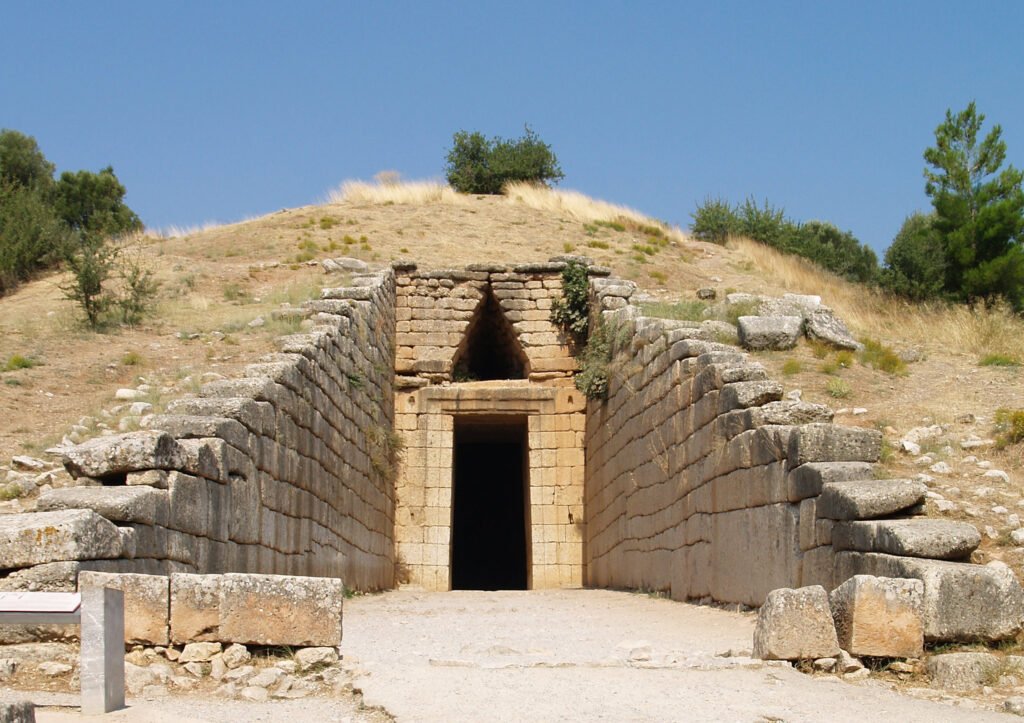
A monumental Mycenaean tholos tomb traditionally associated with the legendary king Agamemnon. In 1876, Heinrich Schliemann believed he had discovered the tombs of Agamemnon and his family, although the monument dates to an earlier period. Place: Mycenae, Argolis, Greece
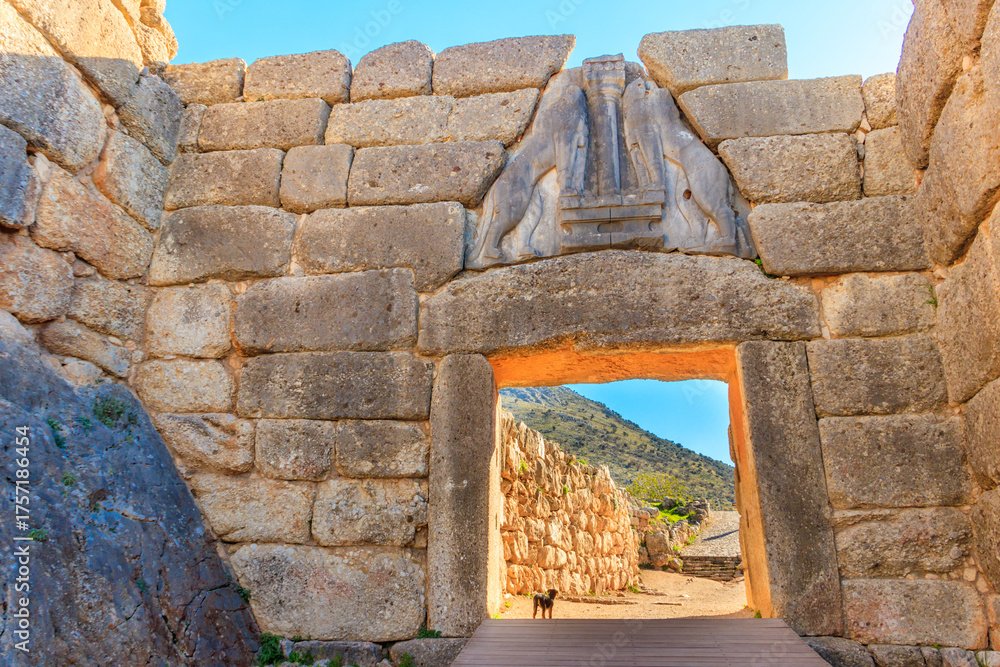
The main entrance to the Bronze Age citadel of Mycenae, named after the relief of two lions in a heraldic pose above the gate. It is the earliest known example of monumental sculpture in Europe and a symbol of Mycenaean power.
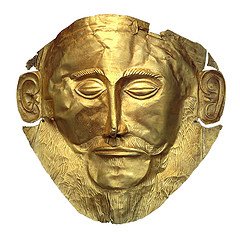
This famous gold death mask, was believed to represent the legendary king Agamemnon, although it dates several centuries earlier. The mask was placed over the face of a Mycenaean ruler and reflects the wealth and power of the early Mycenaean elite. National Archaeological Museum, Athens
Geometric Period (1100–700 BCE)
From Collapse to Reorganization
The Geometric Period (c. 1100–700 BCE) marks the long transitional era that followed the collapse of the Mycenaean palatial system (c. 1200–1100 BCE). With the destruction of the great palaces, centralized administration disappeared, Linear B writing fell into disuse, and large settlements declined. Political authority fragmented, and mainland Greece entered a phase of decentralization and restructuring.
The early centuries of this period are often described as the Greek Dark Age or Early Iron Age — not because civilization vanished, but because written sources are absent. Archaeology, however, reveals adaptation rather than collapse. Iron replaced bronze as the dominant metal for tools and weapons, reshaping agriculture and warfare. Communities reorganized around smaller settlements, and authority shifted to local aristocratic leaders known as basileis — chieftains who exercised power through landholding, kinship ties, and personal prestige rather than centralized bureaucracy.
Important evidence for this transitional society comes from Lefkandi (Euboea), particularly the monumental Heroon at Toumba (c. 1000 BCE). The elite burial discovered there, accompanied by Near Eastern luxury goods, demonstrates that long-distance trade and social hierarchy persisted even during this so-called “dark” phase. Greece was not isolated; it was reorganizing.
From the 9th and especially the 8th century BCE, recovery accelerated. Population levels increased, craft production expanded, and maritime connections intensified. During this period, population movements often referred to as the First Greek Colonization (11th–9th centuries BCE) reshaped the eastern Aegean. Ionian, Aeolian, and Dorian groups settled the islands of the Aegean and the western coast of Asia Minor, creating new communities that preserved linguistic and cultural ties to the mainland while developing distinct regional identities. These migrations helped form the ethnic and dialectal landscape of the Greek world.
The period takes its name from its distinctive artistic style. Large funerary vessels — such as the monumental kraters from the Dipylon Cemetery at Kerameikos, Athens — display intricate geometric decoration including meanders, triangles, and concentric circles. Stylized human and animal figures appear in narrative scenes depicting funerary rites and martial processions. These works reflect growing social stratification and elite identity.
One of the most transformative developments of the late Geometric era was the adoption of the Greek alphabet (8th century BCE). Adapted from the Phoenician script and expanded to include vowel notation, this new writing system replaced Linear B and allowed literacy to extend beyond palace administration. Alphabetic writing reshaped communication, law, religion, and cultural memory, laying foundations for later literature and political organization.
During the same era, mythological tradition assumed a more structured and widely shared form. Heroic narratives associated with Achilles, Odysseus, and Heracles circulated across regions, reinforcing collective memory. In the late 8th century BCE, the epic poetry attributed to Homer — the Iliad and the Odyssey — crystallized these traditions. Rooted in memories of the Mycenaean world, the epics unified mythic storytelling and embedded shared ideals of honor, fate, divine intervention, and communal identity into Greek cultural consciousness.
Religious life also assumed a broader panhellenic dimension. Sanctuaries such as Olympia emerged as important meeting points for communities across the Greek world. The Olympic Games (traditionally dated to 776 BCE) became a recurring institution that reinforced shared identity despite political fragmentation.
In everyday life, society remained largely village-centered. Farming, herding, craft production, and kinship networks structured economic and social organization. Yet by the end of the Geometric Period, the essential foundations of later Greek civilization were firmly in place: iron technology, alphabetic literacy, expanding maritime networks, shared sanctuaries, consolidated mythic tradition, and the early structural formation of the polis (city-state).
The Geometric Period was therefore not merely recovery after collapse. It was the critical bridge between the Bronze Age palace world and the politically dynamic, outward-looking society of the Archaic Period.
Why It Matters Today: The Geometric Period explains how Greece moved from centralized Mycenaean kingdoms to independent city-states. It marks the transition from oral memory to written tradition, from fragmented communities to emerging political structures, and from regional contraction to renewed Mediterranean connectivity.
Without this era of experimentation and reorganization, the political, artistic, and intellectual achievements of the Archaic and Classical periods would not have been possible.
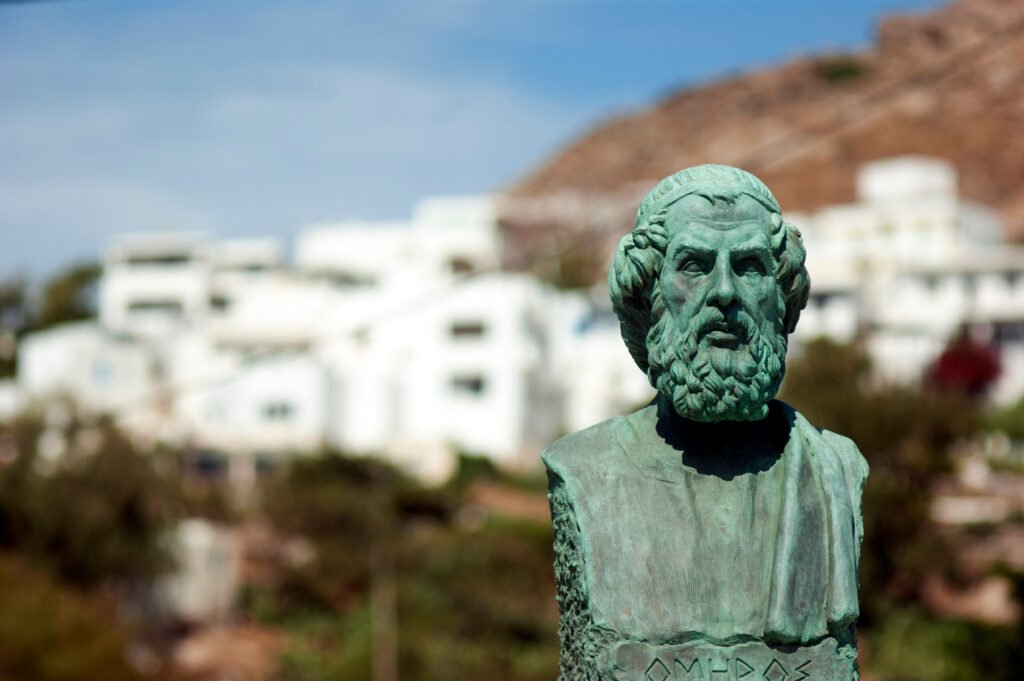
Homer was the ancient Greek poet credited as the author of the Iliad and the Odyssey, two epic poems that are foundational works of Greek literature. His poetry preserved the heroic traditions of early Greece, and he is considered one of the most influential poets in world history.
Image: Orichalc bronze bust of Homer at the port of Ios, Cyclades, Greece.
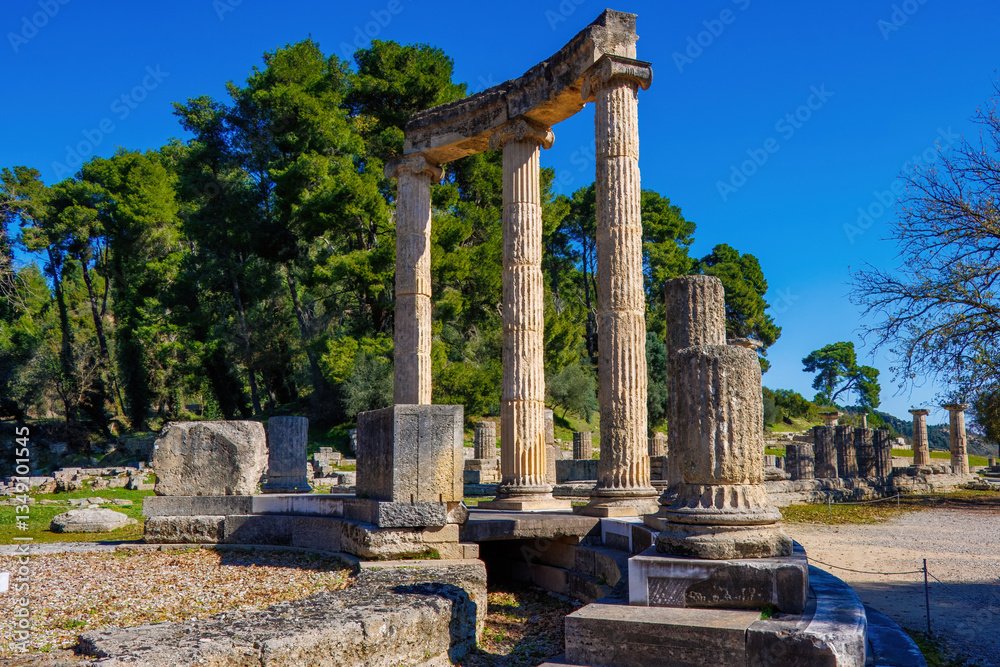
The cradle of the Olympic Games, which were held from 776 BCE until 393 CE, and the site of the sanctuary of Zeus. Today, the Olympic Flame Lighting Ceremony takes place here, continuing a tradition that connects the modern Games with their ancient origins.
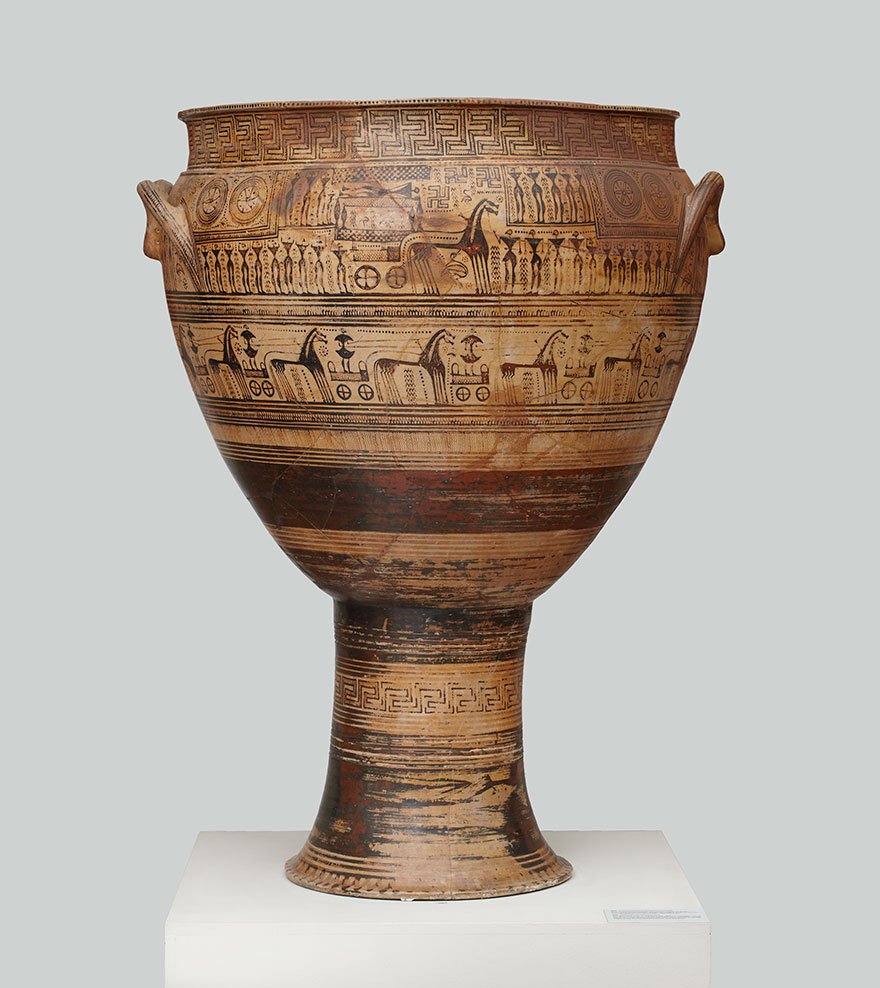
An Attic Geometric funerary krater decorated with scenes of a funeral procession. It was discovered in the Kerameikos cemetery (Dipylon area) in Athens, where it originally marked a grave. Height: approx. 1.23 m. National Archaeological Museum, Athens.
Archaic Period (700–480 BCE)
The Archaic Period (700–480 BCE) marks the era when Greece begins to feel recognizably “Greek.” Building upon the foundations laid in the Geometric age, a shared sense of being Hellenes—the name Greeks still use for themselves, and the origin of the word Hellas for Greece—grew stronger across the Aegean world. Linked by common language, mythological traditions, and religious practices, this emerging identity coexisted with intense loyalty to the polis (city-state). The dynamic tension between panhellenic identity and fierce civic pride would become one of the defining characteristics of Greek history.
Politically, the rise of the polis transformed social organization. Communities moved away from kinship-based aristocratic structures toward formal institutions, written law codes, and emerging concepts of citizenship. In Athens, the harsh legal code of Draco (late 7th century BCE) represented one of the earliest attempts to codify law publicly. The reforms of Solon (early 6th century BCE) addressed debt slavery, reorganized political participation, and mitigated social tensions. By the end of the period, Cleisthenes (508/507 BCE) introduced sweeping reforms that reorganized tribal structures and strengthened participatory governance, laying crucial foundations for Classical democracy.
Periods of tyranny also shaped the era. In cities such as Corinth and Samos, rulers like Cypselus, Periander, and Polycrates consolidated authority. In Athens, Peisistratos (r. 546–527 BCE) and his sons sponsored public works, religious festivals, and artistic patronage. Archaic tyrants were not always purely oppressive; many fostered economic development, strengthened civic identity, and weakened entrenched aristocratic monopolies.
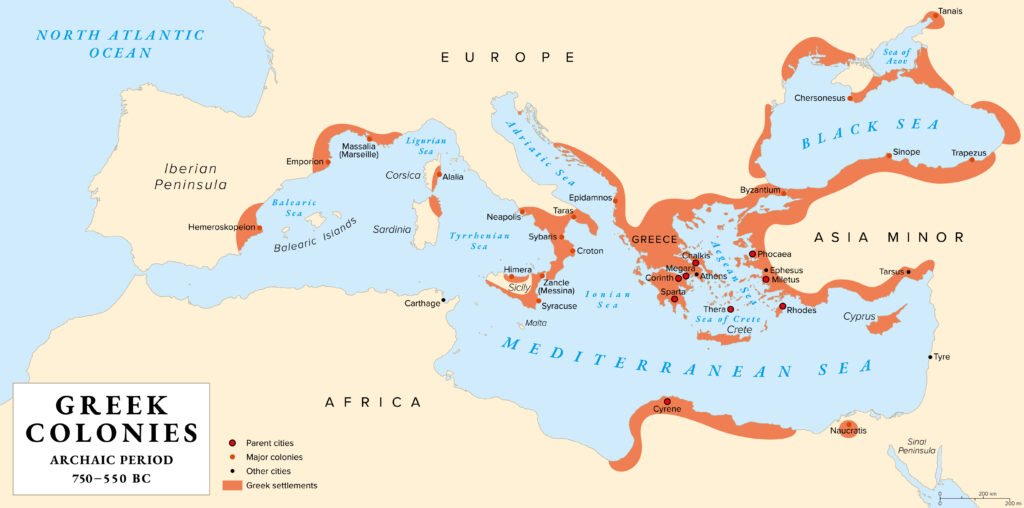
Economically, the Greek world expanded dramatically through waves of colonization. New settlements were established in Magna Graecia (Southern Italy), Sicily, along the coast of Asia Minor, around the Black Sea, and as far west as Massalia (modern Marseille). These colonies created extensive trade networks, spread Greek culture, and reinforced a shared linguistic and religious identity. The adoption and spread of coinage (7th–6th century BCE) further accelerated economic exchange, marking a shift toward a more interconnected Mediterranean economy.
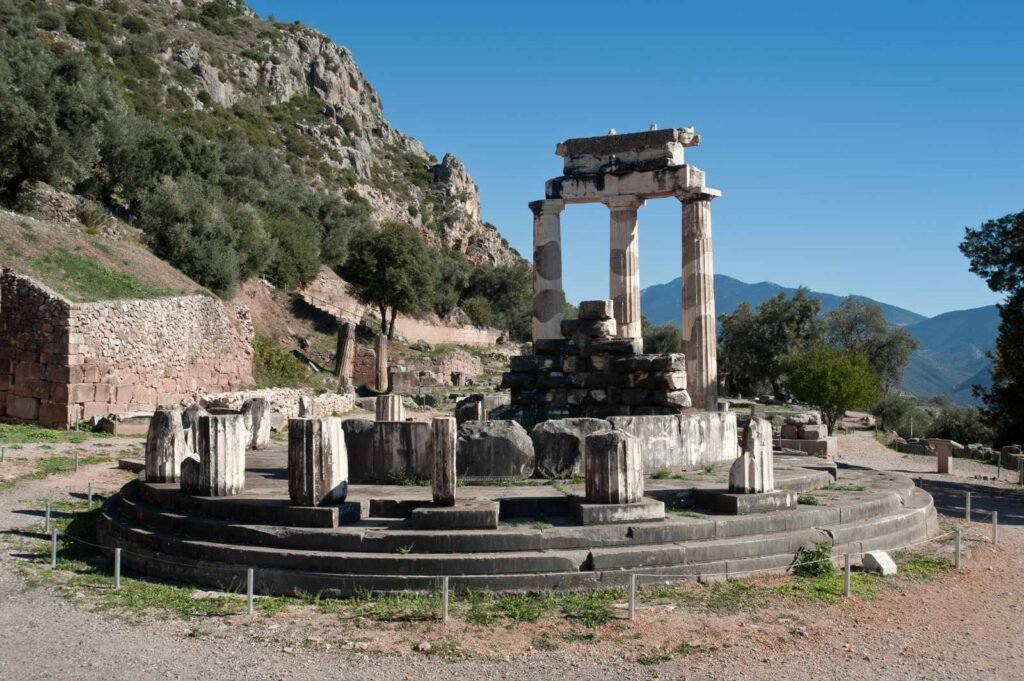
Religion during the Archaic Period assumed increasingly organized and monumental form. The worship of the Twelve Olympian gods—Zeus, Hera, Athena, Apollo, Artemis, Demeter, Poseidon, Ares, Aphrodite, Hephaestus, Hermes, and Hestia—was expressed through sacrificial rituals, civic festivals, and the construction of permanent stone temples. Religion was inseparable from public life: political decisions, warfare, and communal celebrations were embedded within sacred frameworks. Each polis honored its patron deity—Athena in Athens, Apollo in Delphi, Hera in Samos—linking divine protection to civic pride.
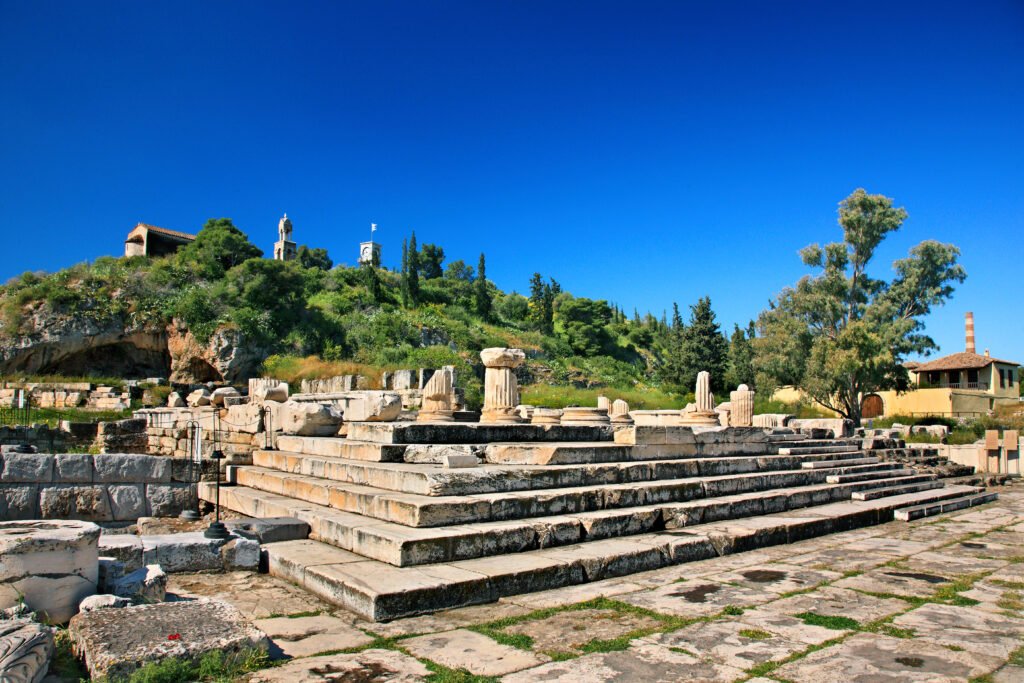
Among the most significant religious institutions were the Eleusinian Mysteries, sacred rites dedicated to Demeter and Persephone at Eleusis. Open to initiates from across the Greek world, these rites promised spiritual insight and hope for the afterlife, reinforcing both civic cohesion and a shared religious imagination. Panhellenic sanctuaries such as Delphi and Olympia functioned as shared sacred spaces where diverse city-states gathered to consult oracles, make dedications, and participate in festivals and athletic competitions.
Culturally, monumental temple architecture began to take recognizable Doric and Ionic forms, signaling advances in stone construction and artistic expression. Sculpture evolved from rigid kouroi and korai figures toward increasing naturalism and anatomical awareness. Literary production flourished: while the Homeric epics remained central to education and identity, Hesiod explored themes of justice, divine order, and human labor in Theogony and Works and Days. Lyric poets such as Sappho, Alcaeus, and Tyrtaeus gave voice to personal emotion, civic duty, and martial valor, expanding the expressive range of Greek literature.
Intellectual curiosity increasingly shifted from mythological explanation toward rational inquiry. In Ionia, early thinkers such as Thales of Miletus, Anaximander, and Pythagoras sought natural principles underlying the cosmos. These investigations marked the beginnings of systematic philosophical and scientific thought in the Greek world.
By the late Archaic Age, tensions among city-states and the expanding ambitions of the Persian Empire intensified. These pressures would culminate in the Persian Wars (490–479 BCE), marking the threshold of the Classical Period and ushering in a new era of political and cultural confidence.
Why it matters today: The Archaic Period forged the institutional and cultural architecture of Greek civilization: the polis, codified law, colonization networks, organized civic religion, monumental temple design, lyric poetry, and the earliest forms of philosophical inquiry. It transformed the foundations laid in the Geometric age into the structured political and cultural systems that would reach maturity in the Classical era.
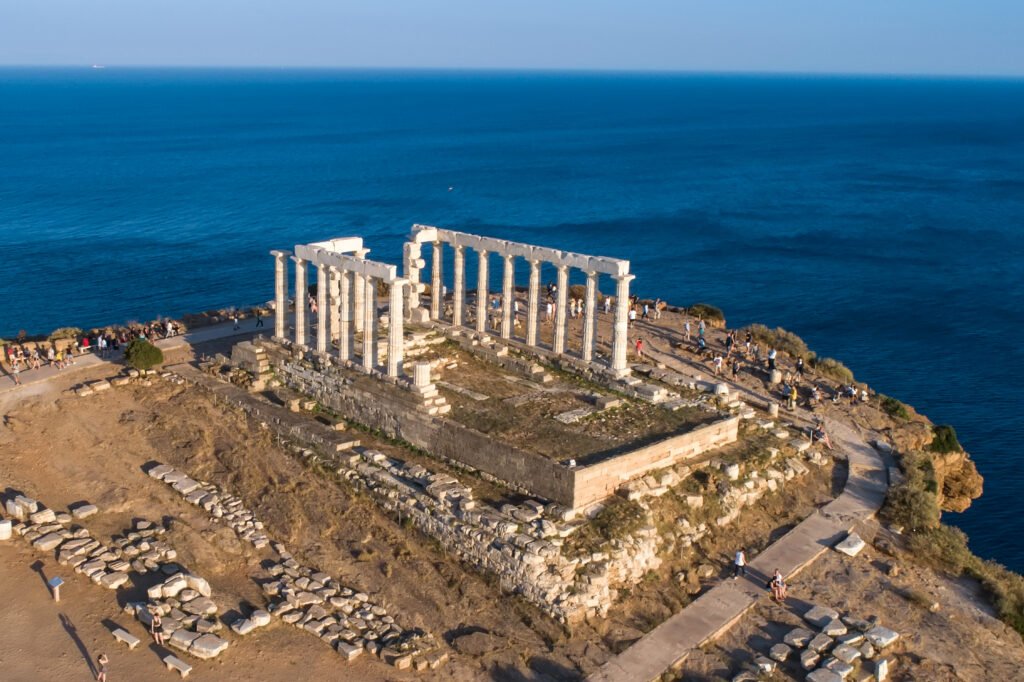
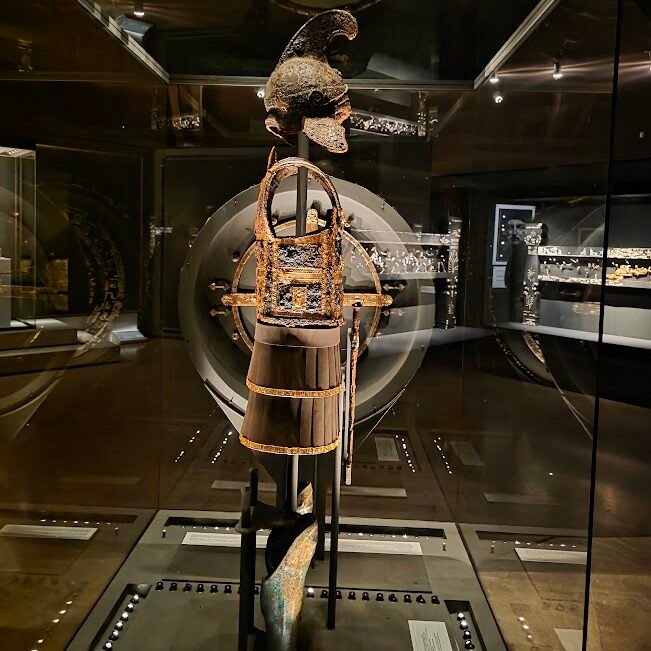
Classical Period (480–323 BCE)
Hellenistic Period (323–146 BCE)
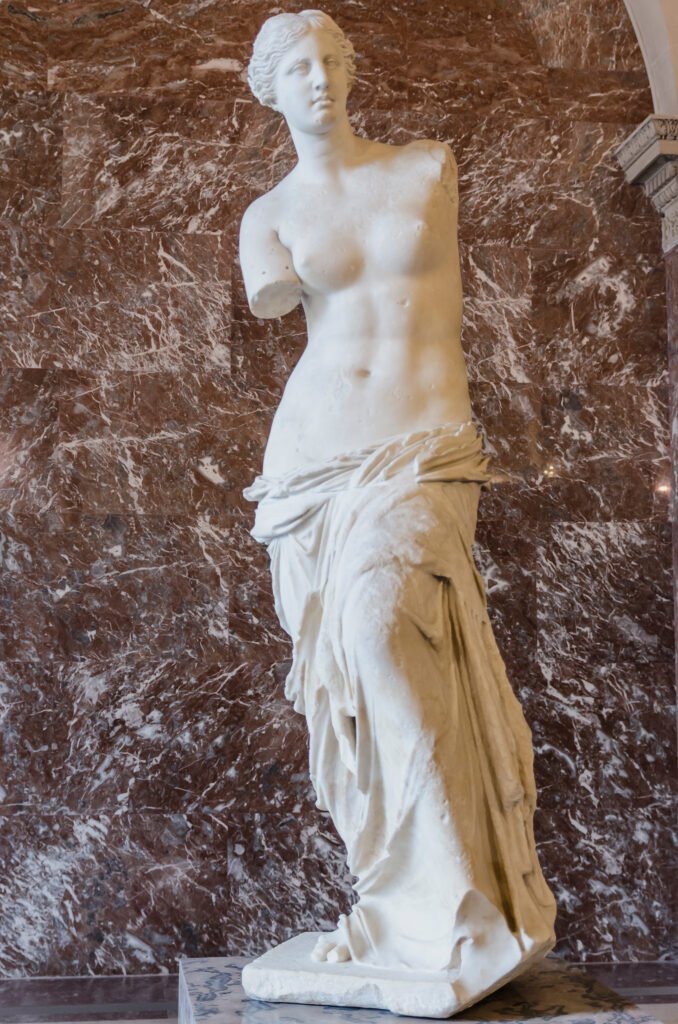
Roman Period (146 BCE – 330 CE)
The Roman era in Greek history began decisively with the Battle of Corinth (146 BCE), when Roman forces defeated the Achaean League and destroyed the city of Corinth, marking the formal end of Greek political independence. Although Rome had already weakened Macedon during the Macedonian Wars, culminating in the Battle of Pydna (168 BCE), the events of 146 BCE established clear Roman dominance over mainland Greece.
In 27 BCE, Augustus reorganized the region as the Roman province of Achaea, with Corinth as its administrative center. Under the Pax Romana, Greece experienced relative political stability and economic recovery. Rather than suppressing Greek culture, Rome actively admired and absorbed it. Greek language, philosophy, literature, and educational models profoundly shaped Roman elite identity. In fact, Greek remained the dominant language of the eastern Mediterranean, and bilingualism became common among educated Romans.
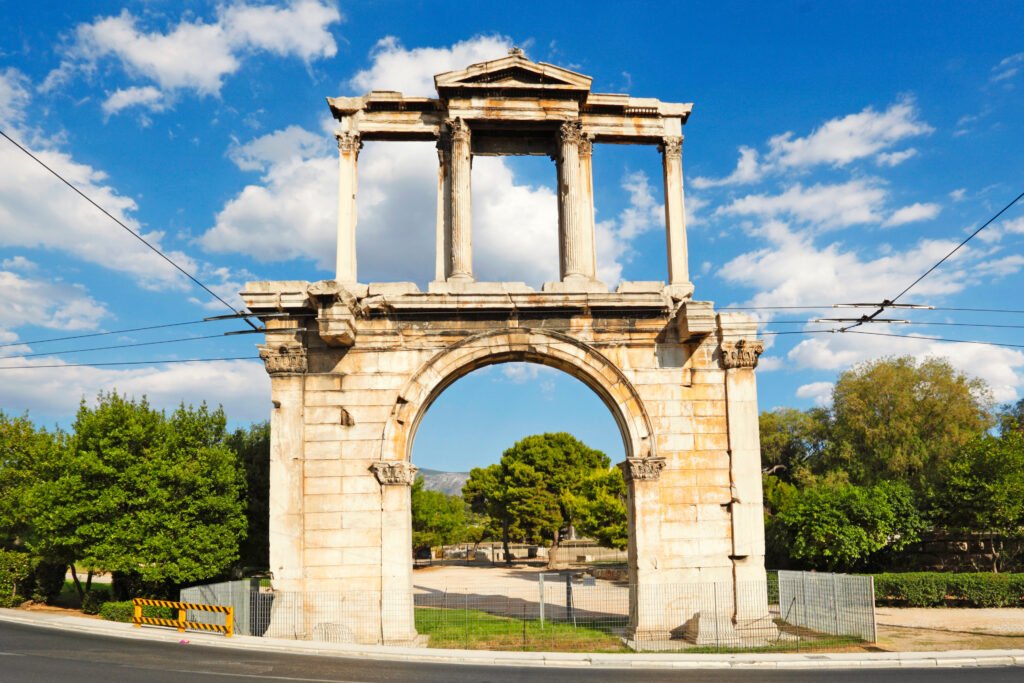
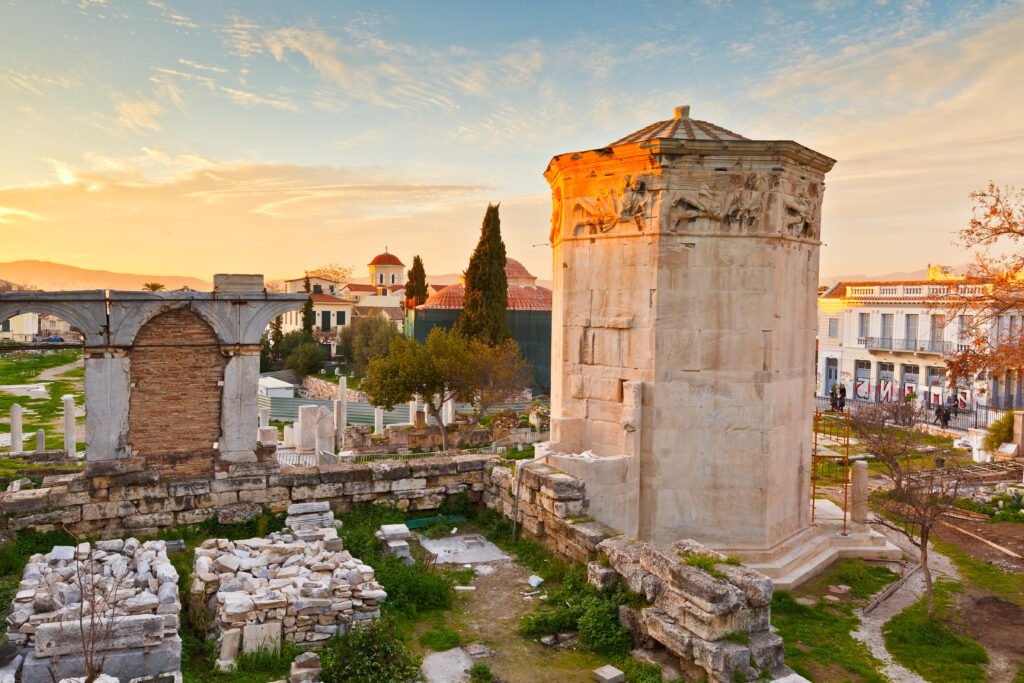
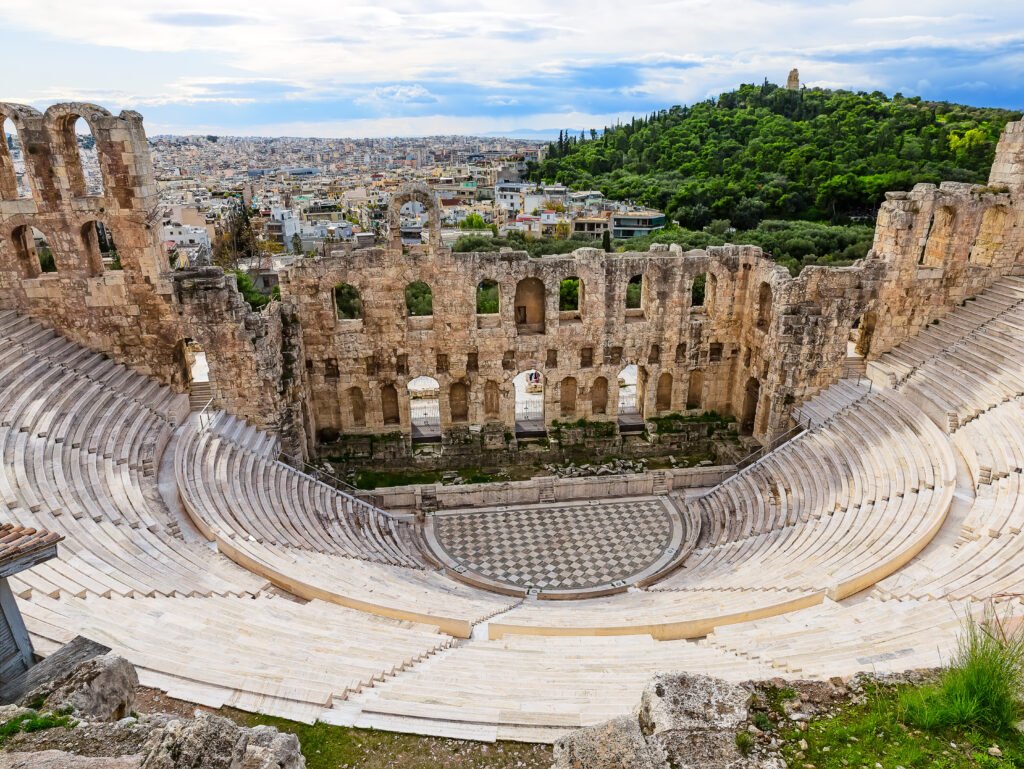
Athens flourished as a prestigious center of higher learning, attracting students from across the empire. The emperor Hadrian (r. 117–138 CE) demonstrated particular admiration for Greek culture: he completed the monumental Temple of Olympian Zeus, built the Library of Hadrian, and sponsored urban renewal projects that reshaped the city. His reign symbolized the close cultural partnership between Rome and Greece.
At the same time, a transformative religious development was unfolding. Christianity spread throughout the Greek world in the 1st century CE, with the Apostle Paul preaching in cities such as Philippi, Corinth, Athens, and Thessalonica. Greek became one of the primary languages of early Christian texts and theological expression, further reinforcing its cultural importance.yh
A decisive turning point came in 330 CE, when Constantine I, aka Constantine the Great, inaugurated Constantinople as the new imperial capital. Although the empire remained officially Roman, its center of gravity shifted eastward into a predominantly Greek-speaking and Christian Mediterranean world. This transition marks the threshold of what we call the Byzantine era.
Why it matters today: Greek culture did not disappear under Roman rule—it expanded and adapted. Politically subordinate yet culturally influential, Greece became the intellectual heart of the eastern Mediterranean and a vital bridge between the classical world and the emerging Christian and Byzantine civilizations.
Byzantine Era
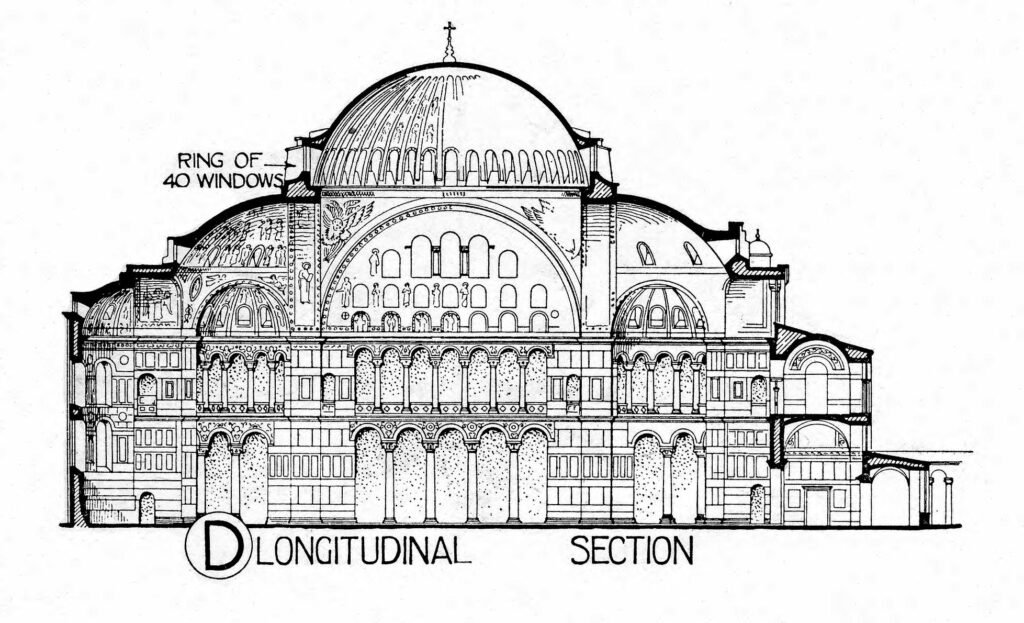
The Byzantine centuries are often described as “medieval Greece,” but they are also the long continuation of the Roman Empire in the East.
The people we call “Byzantines” considered themselves Romans (Rhomaioi)—and Greece sits at the heart of that world.
Early Byzantine Era (330–610 CE)
Middle Byzantine Era (610–1204 CE)
Late Byzantine Era (1204–1453 CE)
The Late Byzantine period (1261–1453 CE), also known as the Palaiologan period, began when Michael VIII Palaiologos recaptured Constantinople in 1261, ending the Latin occupation that followed the Fourth Crusade and restoring Byzantine rule. It concluded with the Ottoman conquest of Constantinople in 1453, a defining event that marked the end of the Byzantine Empire and the beginning of a new historical chapter in the Greek world.
Although these centuries were characterized by political fragmentation, economic strain, and territorial shrinkage, they witnessed a remarkable cultural and artistic revival often described as the Palaiologan Renaissance. Scholars reengaged deeply with classical Greek antiquity, studying ancient philosophy, science, and literature. Byzantine intellectuals played a crucial role in preserving and transmitting classical knowledge—contributions that would later influence the Italian Renaissance. At the same time, artistic expression became more refined, emotional, and introspective, especially in icon painting and church decoration.
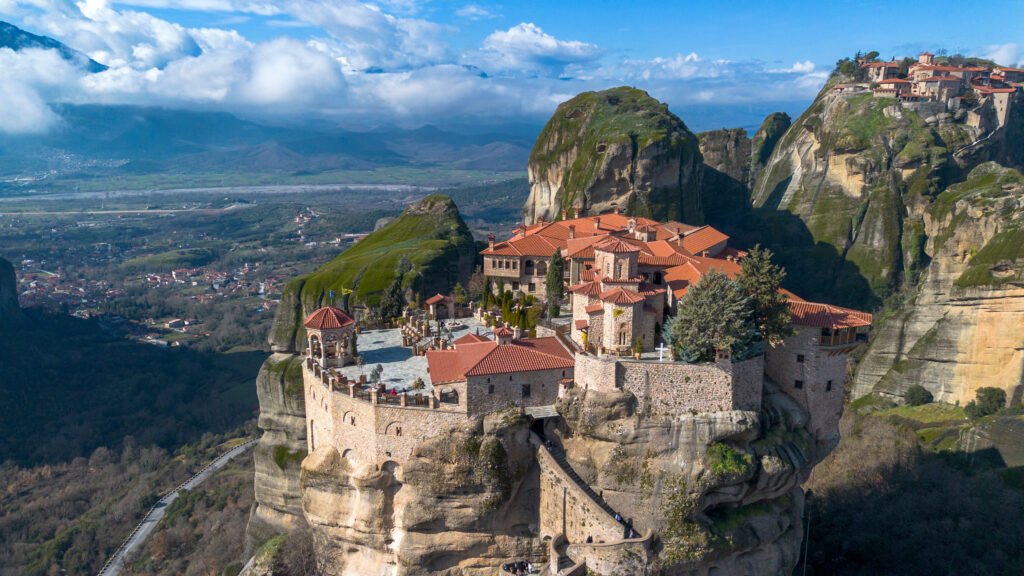
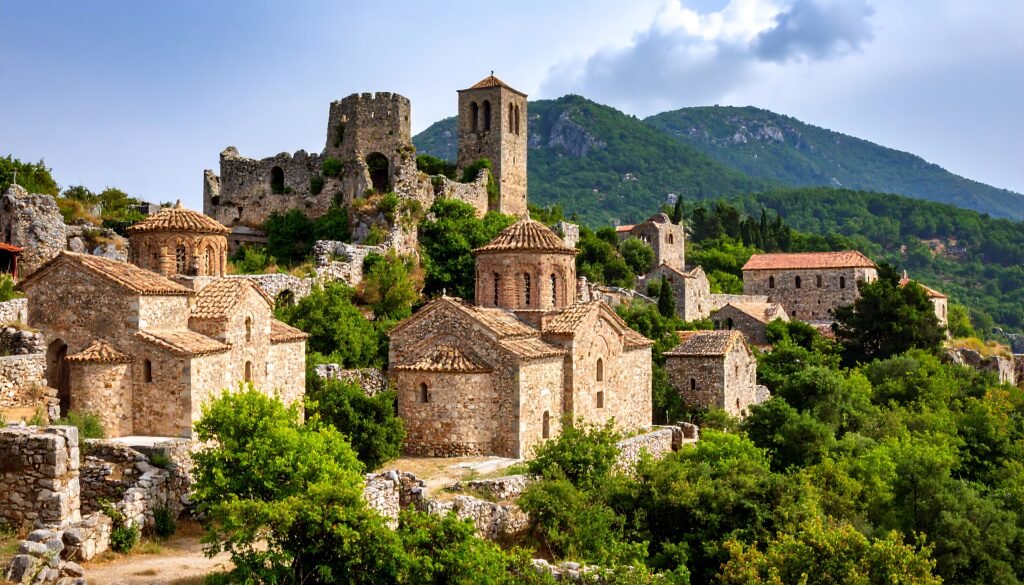
Within the Greek territories, Mystras, near ancient Sparta, emerged as a major intellectual and artistic center. It became a hub of scholarship, theological reflection, and artistic production, attracting thinkers and church leaders. Meanwhile, Meteora developed into one of the most striking monastic landscapes in Europe, where monasteries were built atop dramatic rock formations. There, sacred architecture and natural grandeur fused into a powerful expression of spiritual devotion and monastic resilience.
For ordinary people, these were uncertain and often precarious centuries. Shifting frontiers, fortified towns, foreign interventions, and economic pressures shaped daily life. Yet despite instability, Greek language, Orthodox religious life, and artistic production remained resilient. Community structures and ecclesiastical institutions provided continuity, carrying cultural identity forward into the Ottoman era.
Why it matters today: Visiting Mystras or Meteora is not merely sightseeing—it is an encounter with the final flowering of Byzantine civilization. The spiritual traditions, sacred art, theological scholarship, and architectural forms developed during these centuries helped preserve Greek cultural and religious continuity right up to the transition into Ottoman rule.
Ottoman Era (1453–1821 CE)
Four Centuries of Endurance
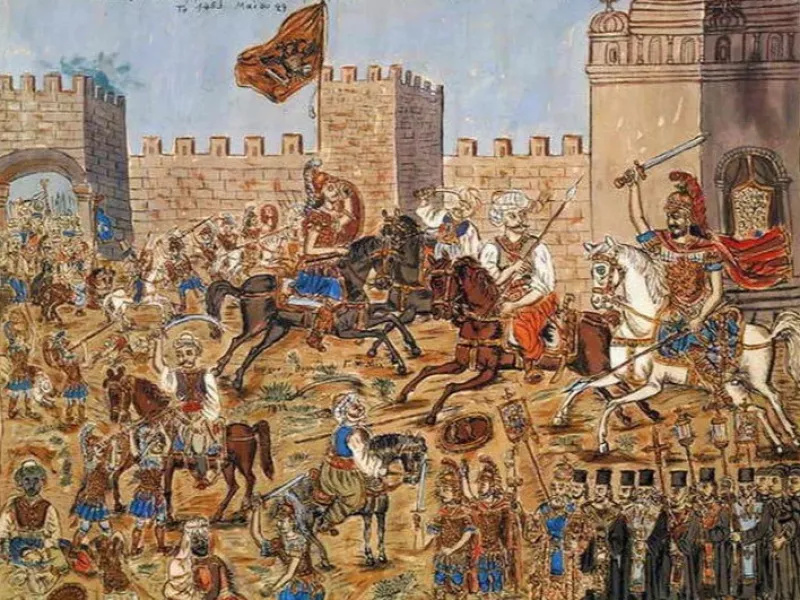
The Ottoman period in Greek history began with the Fall of Constantinople in 1453, marking the end of Byzantine political sovereignty and bringing Greek lands under Ottoman rule. By the early sixteenth century, most of the Greek world — from the Peloponnese and Central Greece to Macedonia, Epirus, and the Aegean — had been incorporated into the empire, initiating nearly four centuries of governance that would shape the region’s political and social development.
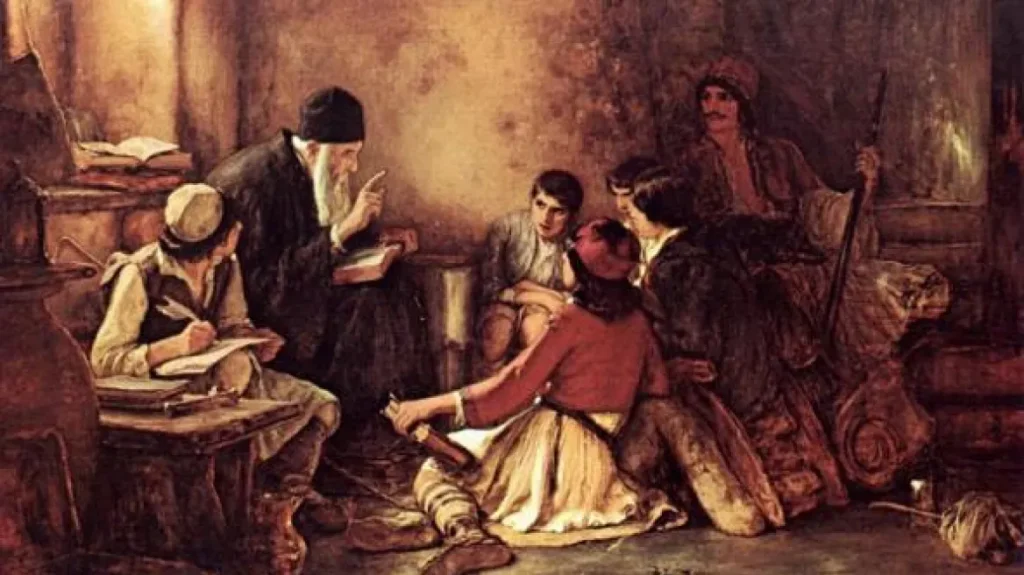
Yet the loss of statehood did not extinguish Greek identity. Through the millet system, Orthodox Christians retained limited autonomy, and the Ecumenical Patriarchate of Constantinople preserved religious continuity, education, and language. Greek communities, classified within the Rum Millet, maintained their Byzantine Roman (Rhomaioi) heritage through parish life, trade networks, and cultural transmission across generations.
Urban centers such as Thessaloniki, Ioannina, Smyrna, and Constantinople flourished as commercial and intellectual hubs. The Phanariots rose to prominence in diplomatic and administrative roles, while Greek merchant networks connected Ottoman territories with Central Europe and Russia. Even under imperial rule, Greek influence remained visible in commerce, education, and governance.
From the eighteenth century onward, the Greek Enlightenment (Diafotismos) strengthened the ideological foundations of national awakening. Thinkers such as Adamantios Korais emphasized education, linguistic reform, and cultural renewal as prerequisites for independence. The idea of liberation gradually shifted from aspiration to coordinated political objective.
Resistance movements in the mountainous regions of the Peloponnese, Roumeli, Epirus, and Macedonia — led by the klephts and armatoloi — expressed growing defiance. The decisive organizational step came with the founding of the Filiki Eteria in 1814 by Nikolaos Skoufas, Emmanuil Xanthos, and Athanasios Tsakalov, transforming scattered hopes into preparation for what would become the Greek War of Independence 1821.
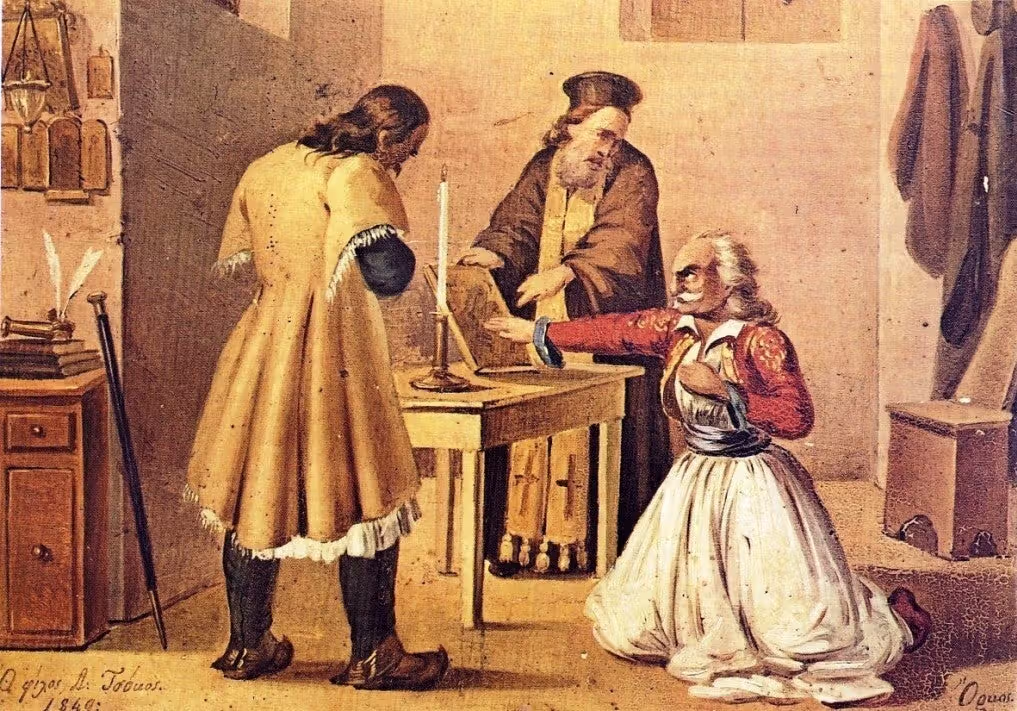
Greek War of Independence of 1821 (1821–1830)
The turning point arrived on 22 February 1821, when Alexandros Ypsilantis crossed the Pruth River and proclaimed the uprising in the Danubian Principalities. This act marked the official outbreak of the Greek War of Independence 1821, a conflict that would permanently reshape southeastern Europe.
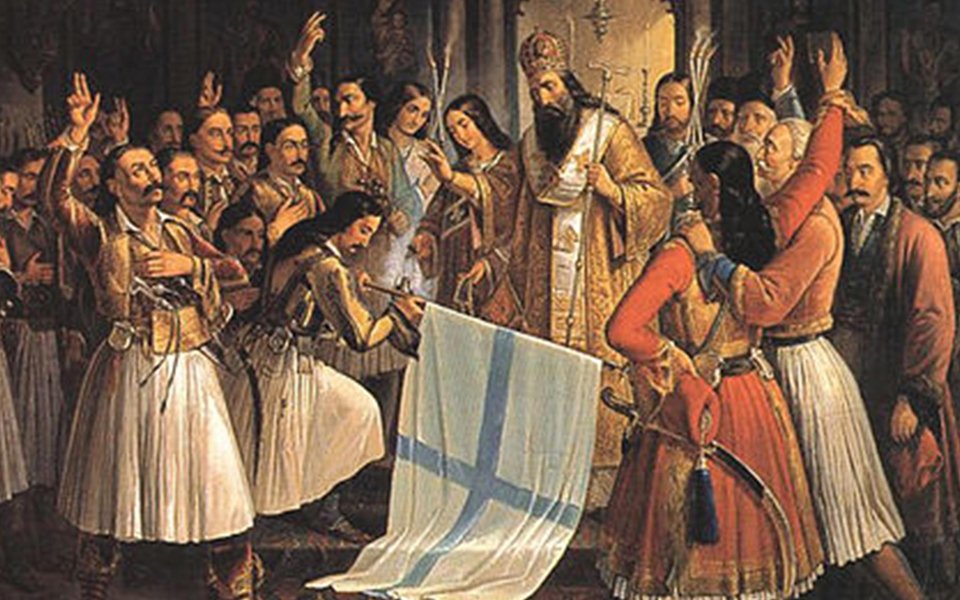
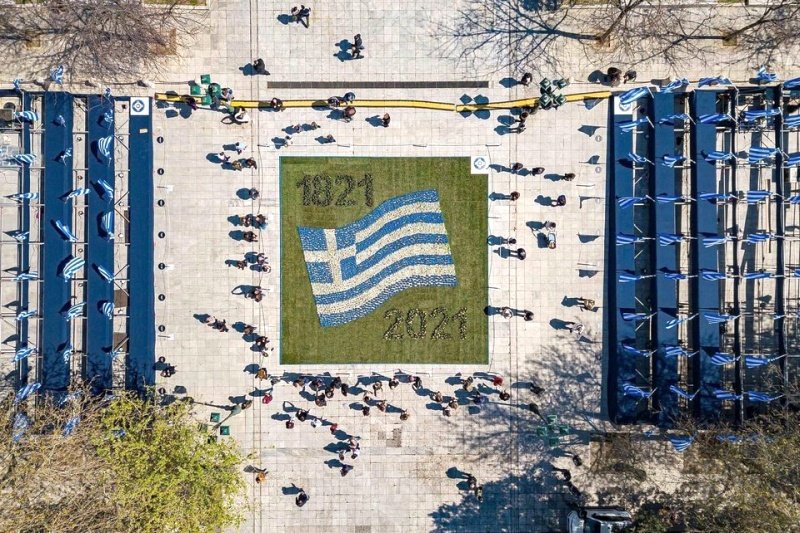
Although Ypsilantis’ campaign in Moldavia was soon defeated by Ottoman forces, the revolutionary movement had already spread south. On 23 March 1821, Kalamata was liberated, signaling that the struggle had moved from preparation to open confrontation. Just two days later, 25 March 1821 — the Feast of the Annunciation in the Orthodox calendar — became the traditional date associated with the nationwide uprising. On that day, revolts were underway across the Peloponnese, in Central Greece north of the Gulf of Corinth, and on several islands. Over time, March 25 was established as Greece’s national day, symbolizing both faith and freedom.
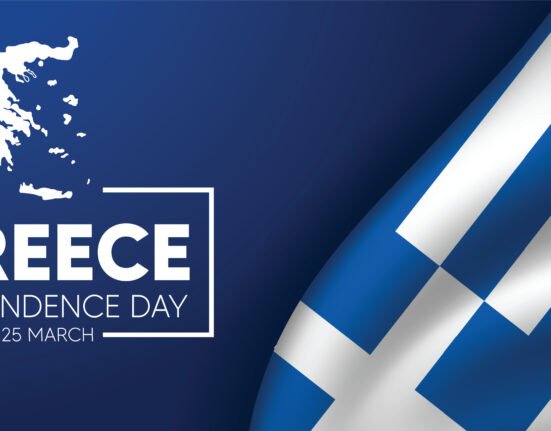
Today, Greek Independence Day on 25 March remains one of Greece’s most important celebrations. Read more in our guide: 25 March Greek Independence Day: A Dual Celebration of Faith and Freedom.
Within a year, the rebels had gained control of most of the Peloponnese, and in January 1822 they formally declared Greek independence. Ottoman attempts to recapture the region between 1822 and 1824 failed to reverse the revolutionary momentum.
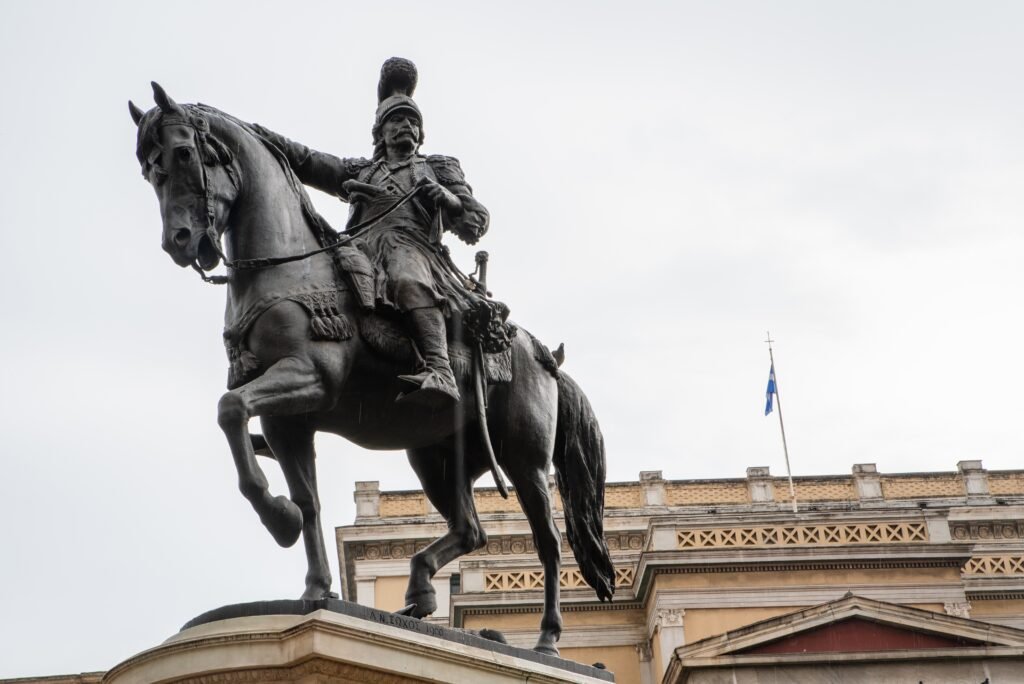
The Revolution revealed defining leaders. In the Peloponnese, Theodoros Kolokotronis (1770-1843) emerged as a strategic architect of victory. In Central Greece, Athanasios Diakos and Georgios Karaiskakis became enduring symbols of resistance. Maritime powers such as Hydra, Spetses, and Psara, under leaders like Andreas Miaoulis and Laskarina Bouboulina, ensured that the Greek War of Independence extended decisively to the sea.
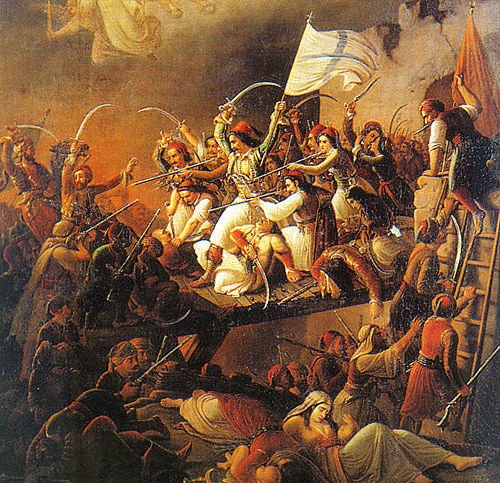
Major victories — including the capture of Tripolitsa (1821) and the Battle of Dervenakia (1822) — strengthened the revolutionary cause. The Siege of Missolonghi (1825–1826) became a symbol of sacrifice that stirred philhellenic support across Europe.
The decisive international intervention came at the Battle of Navarino (1827), when the fleets of Britain, France, and Russia destroyed the Ottoman–Egyptian navy. What began as a regional uprising evolved into a European diplomatic question.
The London Protocol of 1830 formally recognized Greek independence, and the Treaty of Constantinople (1832) defined the borders of the new kingdom. The Greek War of Independence 1821 had achieved its ultimate objective: the re-establishment of a sovereign Greek state after nearly four centuries.
Why the Greek War of Independence 1821 Still Matters: The Greek War of Independence 1821 was not merely a military revolt. It was the culmination of centuries of cultural endurance, intellectual awakening, and communal resilience. The experience of preserving identity without sovereignty shaped modern Greek political thought, education, and national consciousness.
Understanding the Greek War of Independence helps explain why March 25 remains one of the most significant national commemorations, why the year 1821 holds powerful symbolic weight, and why the concept of independence continues to resonate deeply in Greek public life.
The events of 1821 stand as a defining moment in the transition from empire to nation-state — a convergence of memory, faith, diplomacy, and political will that reshaped Greek and European history.
Modern Greece
Modern Greek history is the story of a new state taking shape—building institutions, expanding borders, absorbing major demographic change, and learning how to balance national identity with European integration.
Formation of the Greek State (1830–1897 CE)
The modern Greek state was formally recognized in 1830, following the Greek War of Independence. Yet the country that emerged was geographically limited and institutionally fragile. Its initial territory included primarily the Peloponnese, western and east-central Greece (Sterea Hellas), and island groups such as the Cyclades and parts of the Sporades. Large Greek-speaking populations in Macedonia, Epirus, Thessaly, Crete, and the Ionian Islands remained outside its borders.
Modern Greece therefore began not as a completed national entity, but as a political project still in formation — balancing national aspiration with limited resources and complex regional realities.
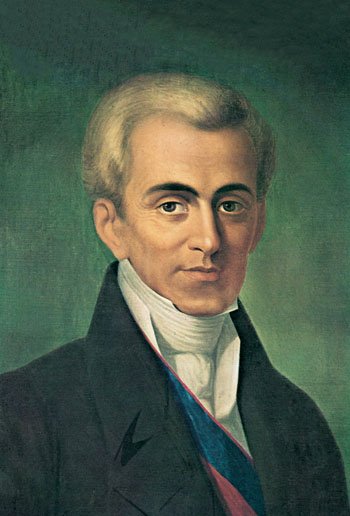
The first capital of the new state was Nafplio, a town closely associated with the revolutionary struggle. There, Ioannis Kapodistrias, the first Governor of Greece and a former diplomat of the Russian Empire, attempted to lay the foundations of centralized administration, public education, agricultural reform, and economic organization. His efforts aimed to impose order after years of warfare and internal conflict. Yet his reforms also exposed deep regional rivalries and entrenched interests. His assassination in 1831 became an early and dramatic sign of the tensions that would accompany the process of state-building.
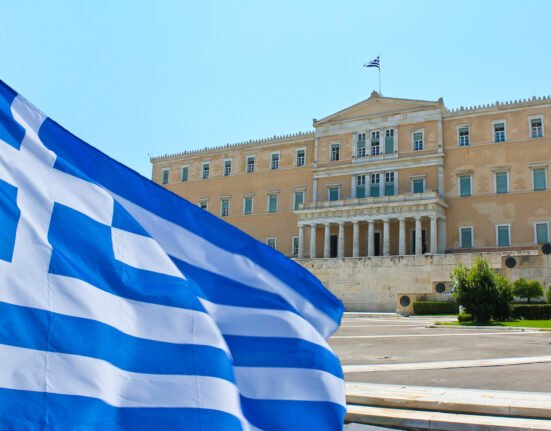
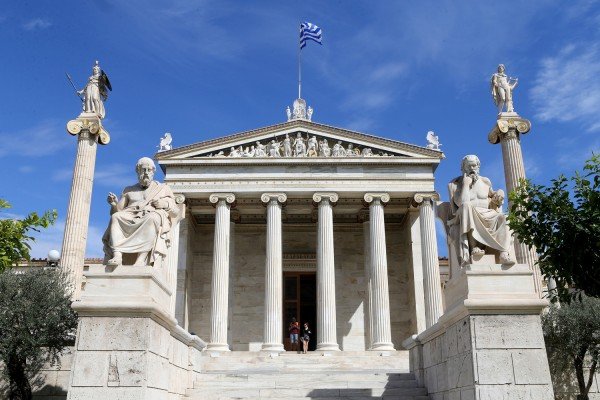
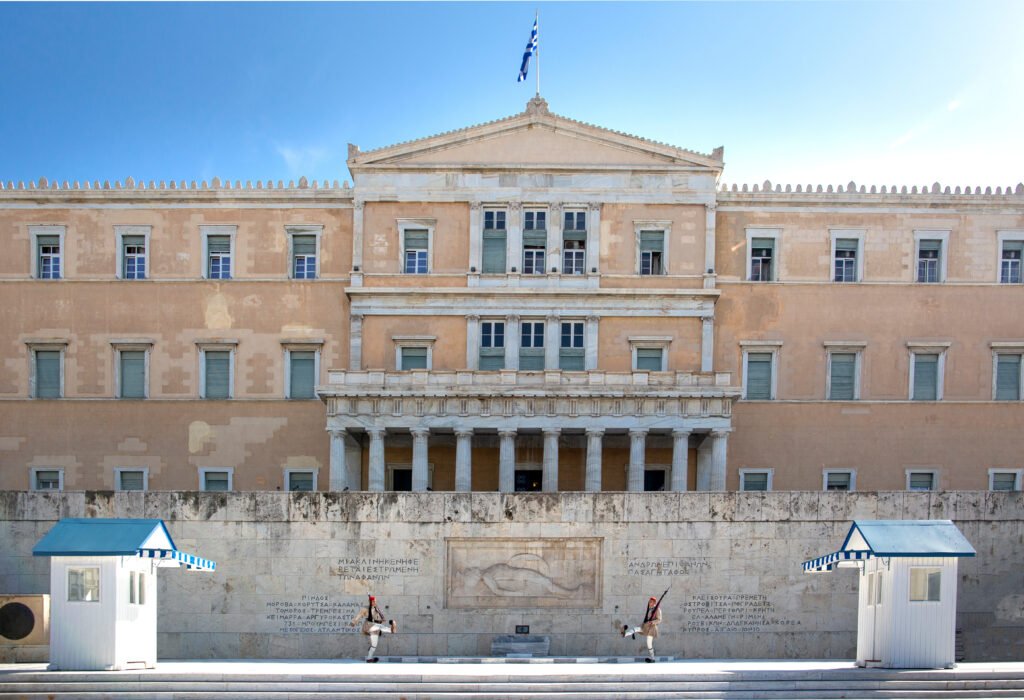
In 1834, the capital was transferred to Athens, a profoundly symbolic decision linking the new kingdom to the prestige of Classical antiquity. At the time, Athens was a modest and partially ruined town. Through ambitious neoclassical planning, public buildings, and archaeological emphasis, it was reshaped into a political and cultural center. This transformation illustrates a defining feature of modern Greek identity: the continuous negotiation between ancient heritage and modern statehood.
The reign of King Otto (1832–1862) introduced Western-style administrative structures, legal codes, and centralized governance. However, foreign influence and limited political participation generated dissatisfaction. In 1843, a popular uprising compelled Otto to grant a constitution, establishing constitutional governance as a core principle of the emerging Greek political system. Political instability and factionalism persisted, but the constitutional framework became a lasting aspiration.
During the second half of the nineteenth century, modernization accelerated. Leaders such as Charilaos Trikoupis promoted infrastructure development, fiscal reform, and integration into European economic networks. Railways expanded, roads were constructed, and the excavation of the Corinth Canal symbolized the ambition to position Greece as a modern European state. Yet rapid development carried financial strain. Mounting public debt culminated in the declaration of state bankruptcy in 1893, exposing the structural limits of the young kingdom’s resources.
At the same time, territorial expansion gradually reshaped the map of modern Greece. The Ionian Islands were united with Greece in 1864, marking the first major enlargement of the state after independence. In 1881, Thessaly (along with part of Epirus) was incorporated. Meanwhile, Crete remained a powerful symbol of unfinished national unity. Repeated uprisings against Ottoman rule kept the “Cretan Question” at the forefront of political debate, preparing the ground for the dramatic territorial transformations of the early twentieth century.
The period concluded with the Greco–Turkish War of 1897, a military defeat that revealed weaknesses in state organization and military preparedness. Yet even in setback, the urgency of reform became clearer. By the end of the century, Greece had established constitutional institutions, expanded educational networks, improved infrastructure, and articulated a coherent national vision.
Why It Matters Today: The formation of the modern Greek state explains many enduring features of contemporary Greece: the strong attachment to constitutional governance, the symbolic importance of Athens as capital, the ongoing dialogue between ancient legacy and modern identity, and the central role of territorial and national questions in political life.
The nineteenth century was not merely a post-independence adjustment period. It was the era in which the institutional, political, and ideological architecture of modern Greece was constructed — laying the foundations for the dramatic transformations of the twentieth century.
Territorial Integration (1897–1922 CE)
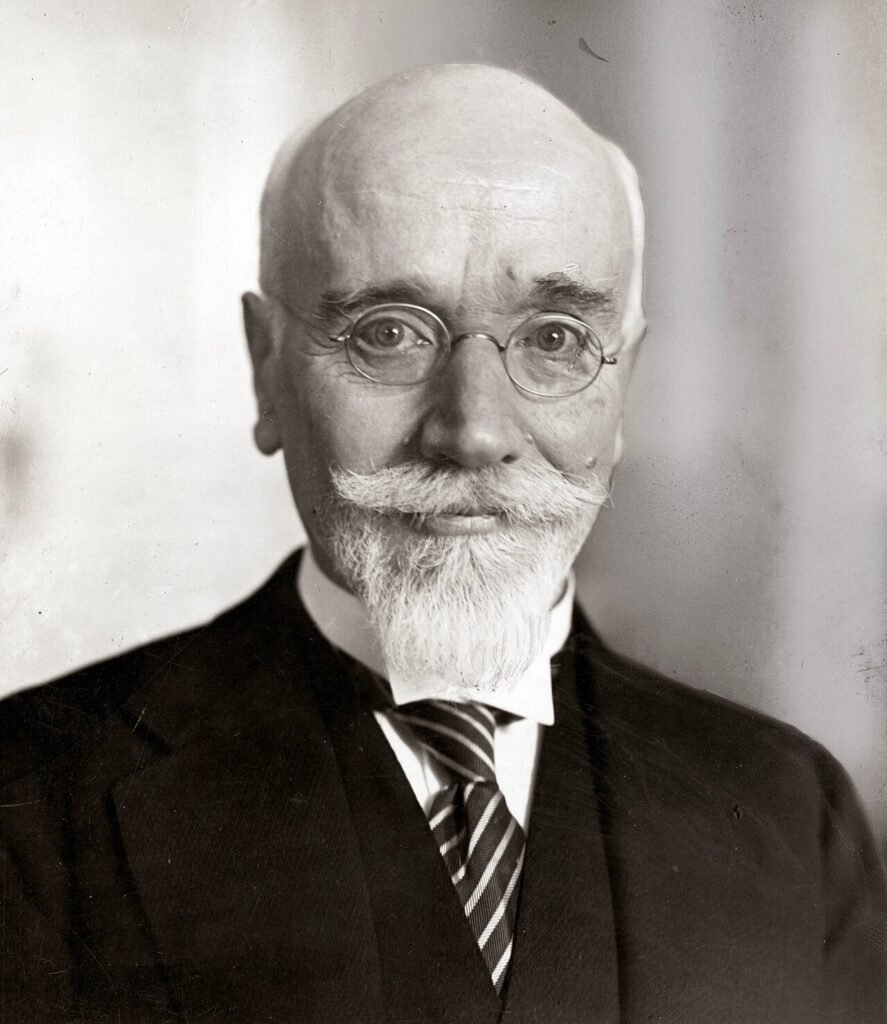
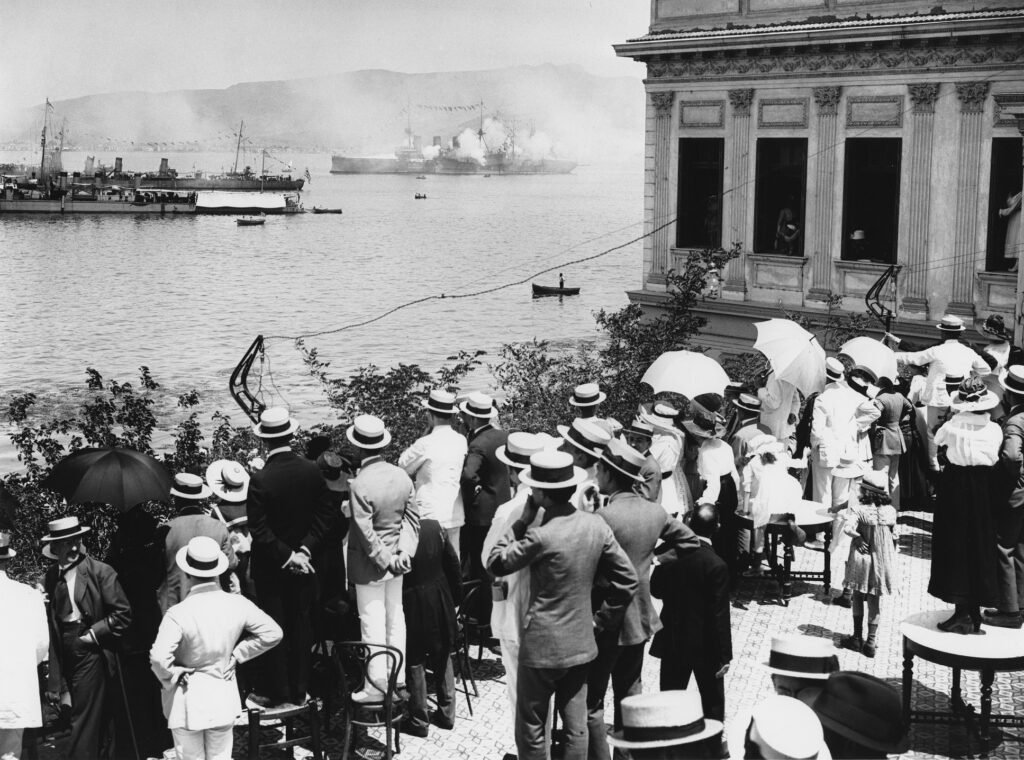
The period between 1897 and 1922 marks one of the most dramatic and transformative phases in modern Greek history. During these years, Greece expanded its borders through war and diplomacy, only to experience a profound national trauma that reshaped society at every level. The defeat in the Greco–Turkish War of 1897 exposed structural weaknesses in the state and military, making reform and reorganization urgent priorities. The rise of Eleftherios Venizelos (1864-1936) introduced a new political style—pragmatic, reform-oriented, and outward-looking—aimed at modernizing institutions and repositioning Greece strategically within regional alliances.
A decisive turning point came with the Balkan Wars (1912–1913), which radically altered the political map of southeastern Europe. Greece incorporated Macedonia, Epirus, Crete, and key Aegean territories, nearly doubling its land area and population. In 1913, the long-aspired union of Crete with Greece became a reality, carrying immense symbolic weight after decades of uprisings and diplomatic struggle. For many Greeks, this moment appeared to fulfill core aspirations of national integration.
Yet territorial expansion intensified internal tensions. During the First World War (1914–1918), the country was divided by the National Schism, a deep political conflict between King Constantine I and Venizelos over Greece’s international alignment. This division fractured political institutions, public life, and even the armed forces, leaving a legacy of polarization that would shape the decades that followed.
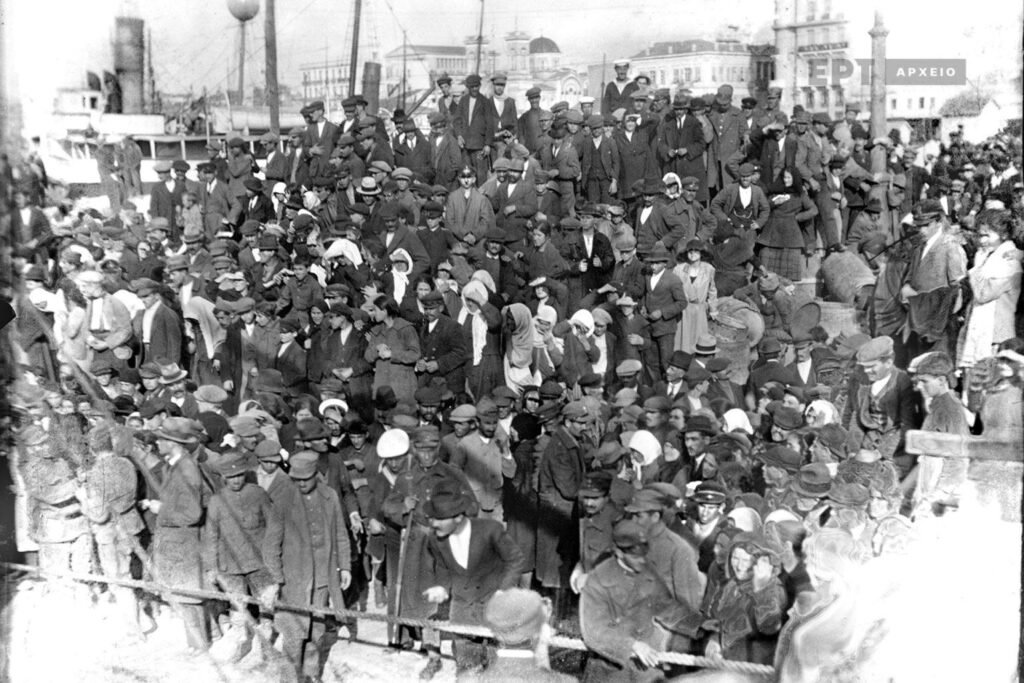
After the war, international agreements seemed to validate Greek ambitions in Asia Minor, where long-established Greek communities had lived for centuries. The Greek landing in Smyrna (Izmir) in 1919, carried out under Allied authorization, was initially perceived as the realization of the “Great Idea” (Megali Idea)—the vision of uniting major Greek populations within one state. However, these ambitions collapsed in 1922 with the military defeat in Asia Minor. The destruction of Smyrna and the ensuing humanitarian catastrophe marked what became known as the Asia Minor Catastrophe.
The aftermath reshaped Greece permanently. The Treaty of Lausanne (1923) formalized a compulsory population exchange between Greece and Turkey, bringing approximately 1.2 million Greek Orthodox refugees from Asia Minor, Pontus, and Eastern Thrace into Greece, while Muslims from Greek territory relocated to Turkey. This demographic transformation altered urban development, economic structures, political alignments, and cultural life. Modern Greece entered its next phase carrying both a new social reality and a profound sense of collective loss.
Why It Matters Today
The years 1897–1922 explain the geographic outline and demographic composition of modern Greece. Many urban neighborhoods, family histories, musical traditions (including rebetiko), and culinary influences trace their roots to the refugee influx of the 1920s. At the same time, the memory of the Asia Minor Catastrophe remains central to national consciousness, shaping discussions of identity, migration, and historical responsibility. This period represents both the culmination of territorial expansion and the decisive moment when Greece turned inward to redefine itself as a consolidated nation-state.

Interwar Period and WWII (1923–1945 CE)
Contemporary Greece (1945–2026 CE)
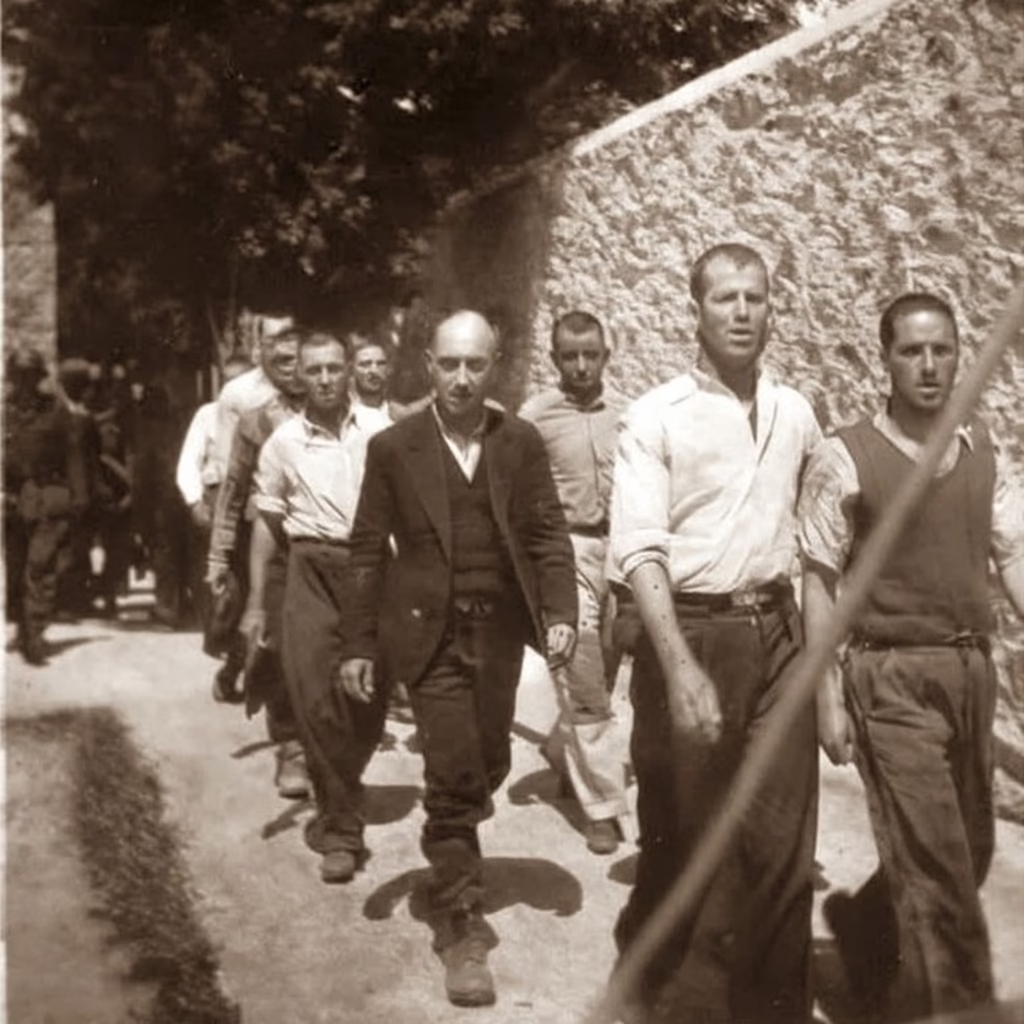
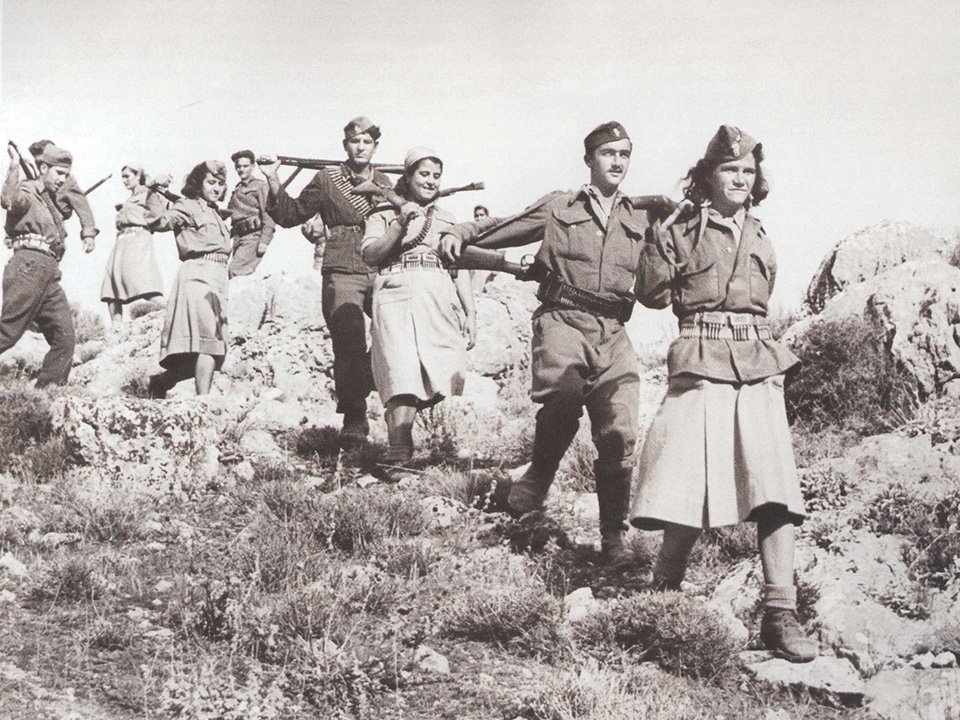
The period after 1945 marks Greece’s transition from devastation and internal conflict to democratic consolidation and European integration. Liberation from German occupation in October 1944 did not bring immediate stability. Tensions quickly escalated between the returning government and the resistance movement that had controlled much of the countryside during the war.
Open confrontation erupted in December 1944, and by 1946 Greece entered a full-scale Greek Civil War (1946–1949). Government forces, supported initially by Britain and later by the United States under the Truman Doctrine (1947), confronted the Communist-led Democratic Army of Greece. The conflict became one of the first battlegrounds of the emerging Cold War.
The Civil War devastated rural regions, displaced hundreds of thousands, and resulted in approximately 100,000 deaths. In 1949, following decisive military offensives by the National Army under General Alexander Papagos, the insurgency collapsed. Although armed conflict ended, ideological divisions and political polarization persisted for decades, shaping party structures and public life.
Amid this fragile post-war environment, Greece completed its territorial consolidation. In 1947, the Dodecanese islands were formally united with Greece under the Paris Peace Settlement, marking the final major territorial incorporation into the modern state.
Reconstruction and Western Alignment (1950s–1960s)
After the Civil War, Greece firmly aligned with the Western bloc and joined NATO in 1952. Political life crystallized into a polarized Right–Centre–Left spectrum shaped by wartime divisions and Cold War realities.
Economically, however, the country entered a prolonged phase of rapid development. Between 1953 and the early 1970s, Greece experienced sustained growth driven by industrial expansion, shipping, tourism, migrant remittances, and foreign investment. Large-scale emigration absorbed surplus labor, particularly toward Western Europe, Australia, and the United States.
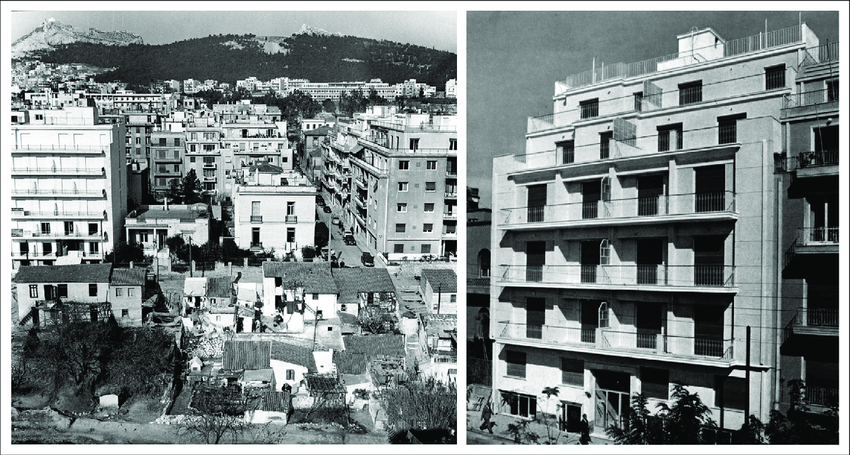
Urban transformation accelerated dramatically. The system of antiparochí (property exchange between landowners and developers) reshaped Athens and other cities, replacing neoclassical buildings with multi-storey apartment blocks and redefining postwar urban life.
In 1961, Greece signed an association agreement with the European Economic Community (EEC) (effective 1962), signaling a long-term European orientation. Yet political instability resurfaced in the mid-1960s amid constitutional tensions and rising social mobilization.
The Military Dictatorship (1967–1974)
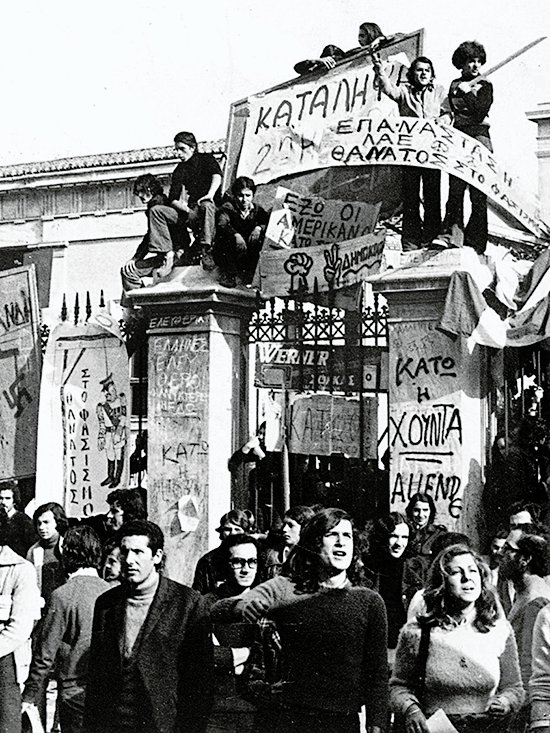
On 21 April 1967, a group of right-wing colonels led by George Papadopoulos seized power in a coup d’état. Parliament was suspended, political parties dissolved, and civil liberties curtailed. Thousands of political opponents were imprisoned or exiled.
The regime maintained control through censorship and repression, but domestic dissatisfaction intensified. A defining moment came with the Athens Polytechnic uprising (November 1973), when students occupied the National Technical University of Athens in protest against authoritarian rule. The violent suppression of the uprising further eroded the regime’s legitimacy. In July 1974, the dictatorship ended, opening the way for the restoration of civilian rule.
Metapolitefsi and Democratic Consolidation
The return of Konstantinos Karamanlis from exile marked the beginning of the Metapolitefsi (1974)—Greece’s transition to stable democratic governance. Political parties were legalized, including the Communist Party, ending decades of exclusion rooted in the Civil War era.
In the referendum of 8 December 1974, Greeks voted decisively to abolish the monarchy, bringing a definitive end to a political question that had shaped Greek public life throughout the 20th century. The Constitution of 1975 established a parliamentary republic with strengthened civil liberties, clearer separation of powers, and institutional safeguards. This democratic settlement proved durable, initiating the longest uninterrupted democratic period in modern Greek history.
European Integration and Political Transformation (1981–2000)
On 28 May 1979, Greece signed the Treaty of Accession to the European Communities, and on 1 January 1981 became a full member.
In October 1981, the centre-left socialist Panhellenic Socialist Movement (PASOK), led by Andreas Papandreou, won a landmark electoral victory. Papandreou expanded the welfare state, strengthened labor protections, promoted social reforms, and reshaped political culture. The 1980s marked a period of broadened political participation and social transformation.
The late 1980s brought political turbulence and coalition experiments. In the 1990s, governments under the centre-right conservative New Democracy led by Constantine Mitsotakis, and later under PASOK Prime Minister Costas Simitis, prioritized fiscal stabilization and European convergence.
In 2002, Greece adopted the euro, symbolizing full participation in European monetary integration.
The Debt Crisis and Political Realignment (2009–2018)
The early 21st century began with optimism, symbolized by the 2004 Olympic Games in Athens. However, structural fiscal weaknesses culminated in the sovereign debt crisis beginning in 2009.
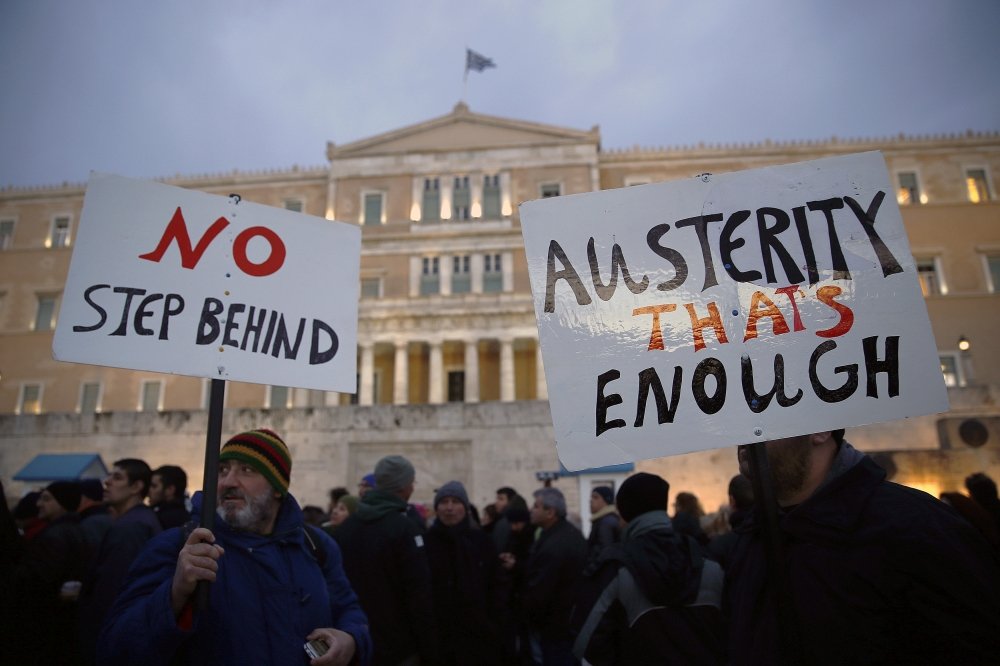
Bailout agreements with the European Union and the International Monetary Fund (2010, 2012, 2015) imposed austerity measures that triggered recession, unemployment, and political restructuring. Between 2012 and 2015, coalition governments led by New Democracy and PASOK managed negotiations with European institutions.
In 2015, the left-wing coalition SYRIZA, led by Alexis Tsipras, rose to power on an anti-austerity platform. Following intense negotiations, the government ultimately accepted a third bailout agreement. The crisis reshaped Greece’s party system, economic governance, and public trust.
Recent Developments (2019–2026)
In 2019, the centre-right conservative New Democracy, led by Kyriakos Mitsotakis, returned to power.
In 2020, Greece elected its first female President, Katerina Sakellaropoulou.
In 2023, New Democracy secured a renewed electoral mandate. In March 2025, Konstantinos Tasoulas was sworn in as President of the Hellenic Republic.
In recent years, Greece has emphasized digital modernization, renewable energy, infrastructure investment, and fiscal stability, while strengthening its position within the European Union and the Eastern Mediterranean. Tourism, shipping, and services remain central pillars of the economy.
Contemporary Greece
Today, Greece stands as a consolidated parliamentary democracy within the European Union. The country balances ancient heritage with modern European life: archaeological sites coexist with urban innovation, Orthodox traditions intersect with secular governance, and Mediterranean rhythms shape daily experience.
Festivals, public debate, cuisine, and civic traditions reflect a layered historical continuum stretching from antiquity to the present—profoundly shaped by the conflicts, transformations, and democratic consolidation of the post-1945 era.
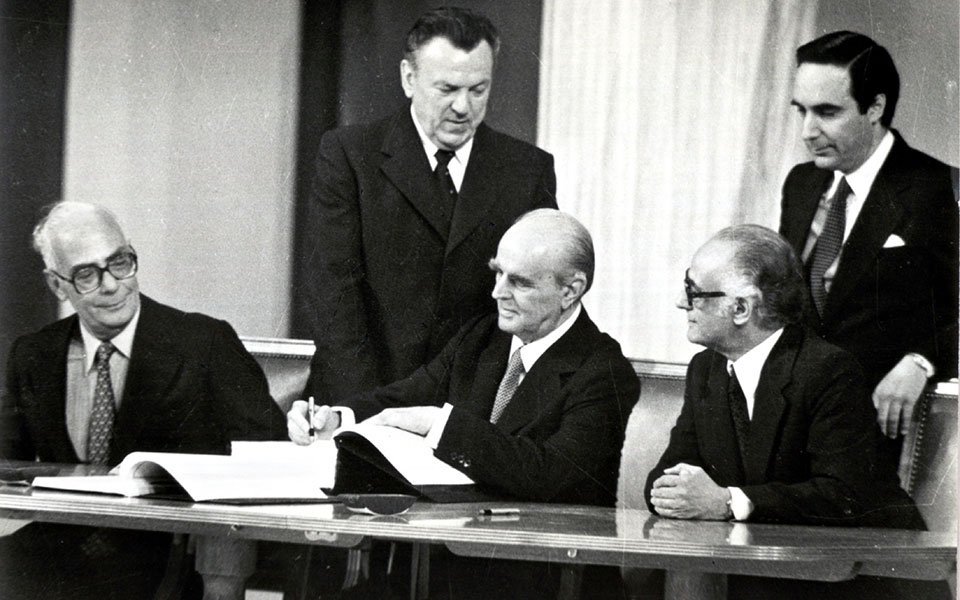
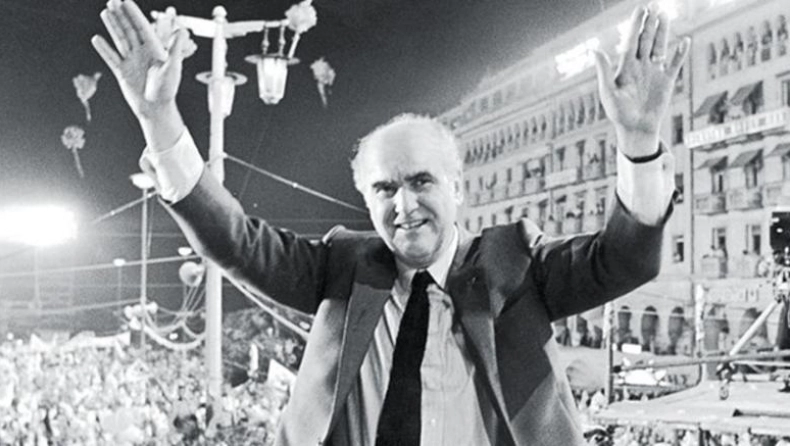
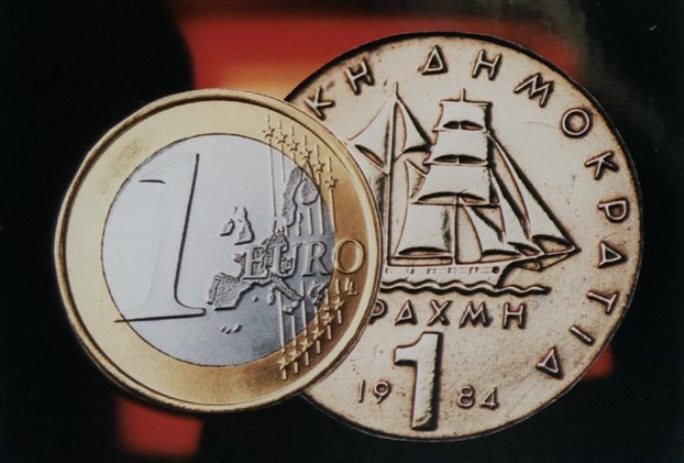
The transition to the euro marked a turning point in Greece’s economic trajectory and its participation in the European monetary framework.
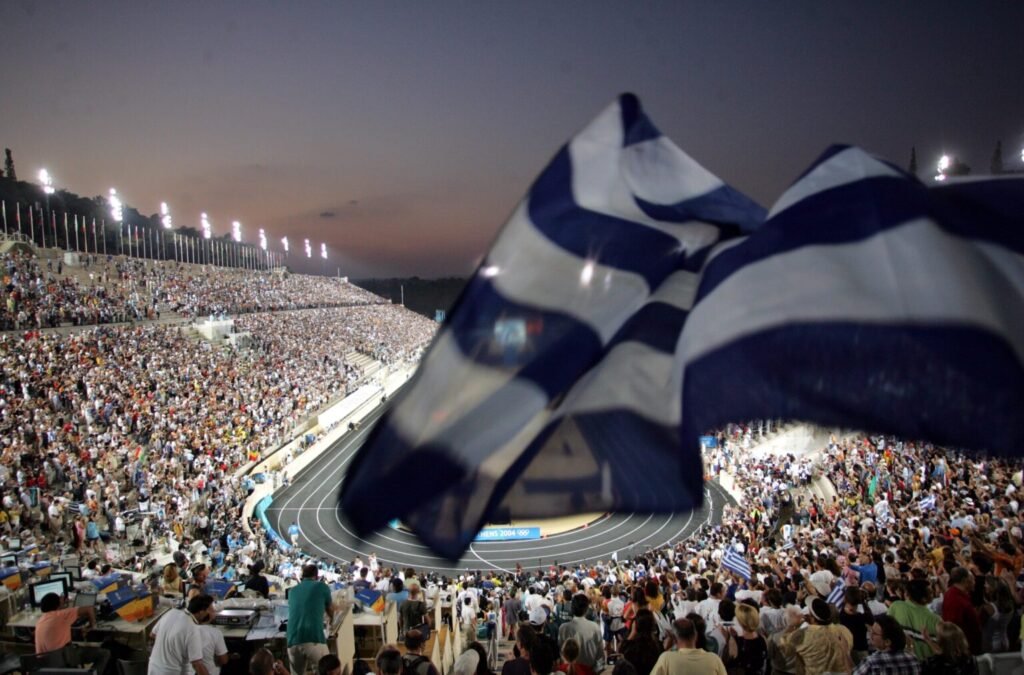
The hosting of the 2004 Olympic Games symbolized a moment of optimism and international visibility for Greece at the beginning of the 21st century.
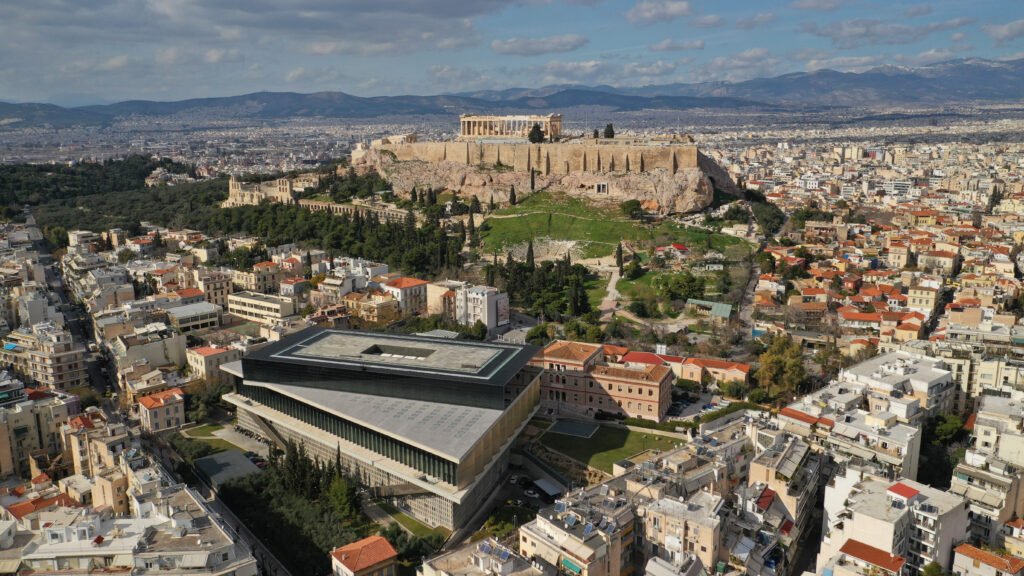
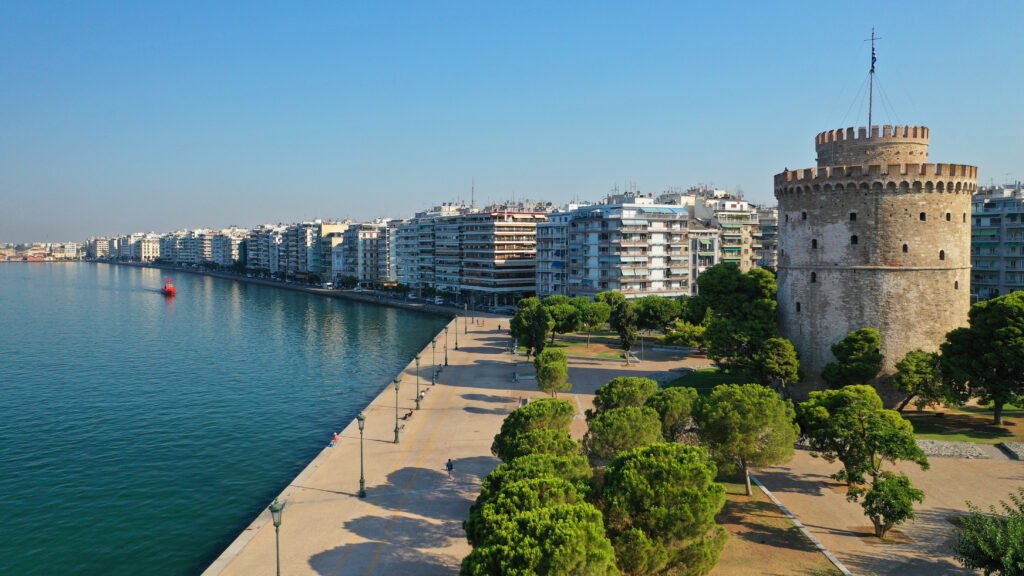
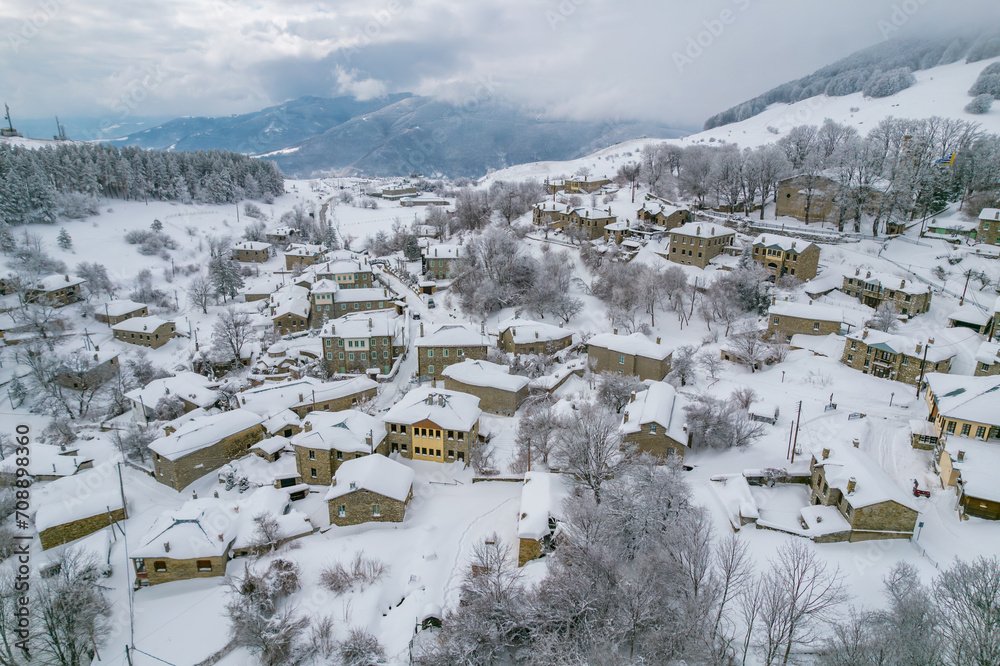
Today, Greece’s layered past remains visible in its vibrant cities, mountain villages, and luminous islands.

Did You Know?
-
The Olympic Games were first recorded in 776 BCE.
Originally part of a sacred religious festival in honor of Zeus at Olympia, they became one of the earliest shared institutions of the Greek world. -
The Greek alphabet was the first European writing system to include vowels.
Adapted in the 8th century BCE, this innovation transformed literature, philosophy, and law — and later influenced the Latin alphabet used across Europe. -
The word “democracy” literally means “rule of the people” (demos + kratos).
It was first practiced in 5th-century BCE Athens, where citizens participated directly in political decision-making. -
Participation in public life was considered a civic duty in Athenian democracy.
Citizens had not only the right but also the obligation to engage in governance. Large juries — sometimes numbering up to 500 citizens — served in courts to reduce bribery and ensure collective judgment. -
The word “idiot” comes from the Greek term idiōtēs.
In ancient Athens, it referred to someone who remained private and did not participate in public affairs — only later did it acquire the meaning of “fool.” -
The Golden Age of Athens (5th century BCE) reshaped Western thought.
During this period, democracy matured, drama flourished, and philosophers such as Socrates laid foundations for ethical inquiry and political theory. -
The Battle of Marathon (490 BCE) marked the first major Greek victory against the Persian Empire.
It became a defining symbol of civic courage and resistance. -
Alexander the Great spread Greek language across three continents.
His conquests created the Hellenistic world, where Koine Greek became the common language of trade and governance. -
During the Byzantine era, Greeks called themselves Rhomaioi (Romans).
The term “Byzantine” was introduced centuries later by Western scholars; the empire itself understood its identity as Roman and Christian. -
Athens has been continuously inhabited for over 3,000 years.
It remains one of Europe’s oldest living cities, where ancient, medieval, and modern layers coexist. -
The drachma endured for more than 2,500 years.
From ancient silver coins to modern banknotes, it remained Greece’s currency until the adoption of the Euro in 2002. -
The Asia Minor Catastrophe (1922) permanently reshaped modern Greece.
The arrival of approximately 1.2 million refugees transformed urban life, political dynamics, and national identity. -
The Dodecanese islands joined Greece only in 1947.
They were the final major territorial incorporation into the modern Greek state. -
Since independence in 1830, Greece has experienced monarchy, republic, dictatorship, and parliamentary democracy.
Modern Greek political identity emerged through repeated institutional transformation.
Key Takeaways
- Greek history unfolds in layers, from prehistoric settlements and Bronze Age civilizations to classical city-states, empire, and the modern nation-state.
- Antiquity shaped Western civilization, introducing democracy, philosophy, theatre, the Olympic Games, and the Greek alphabet.
- Byzantium preserved Greek language and Orthodox Christianity for over a millennium, shaping religious identity and cultural continuity.
- Ottoman rule (1453–1821) did not erase Greek identity — language, faith, and community structures remained strong and influential.
- Modern Greece began in 1830 as a small state and expanded gradually through territorial integration (1864, 1881, 1913, 1947).
- The Asia Minor Catastrophe (1922) transformed Greek society, bringing 1.2 million refugees and reshaping urban life, politics, and culture.
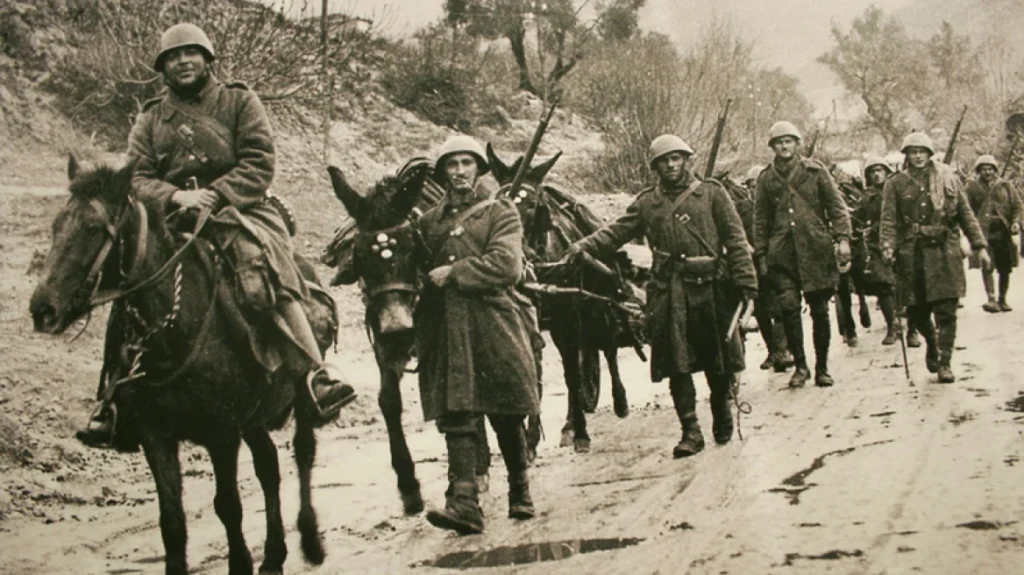
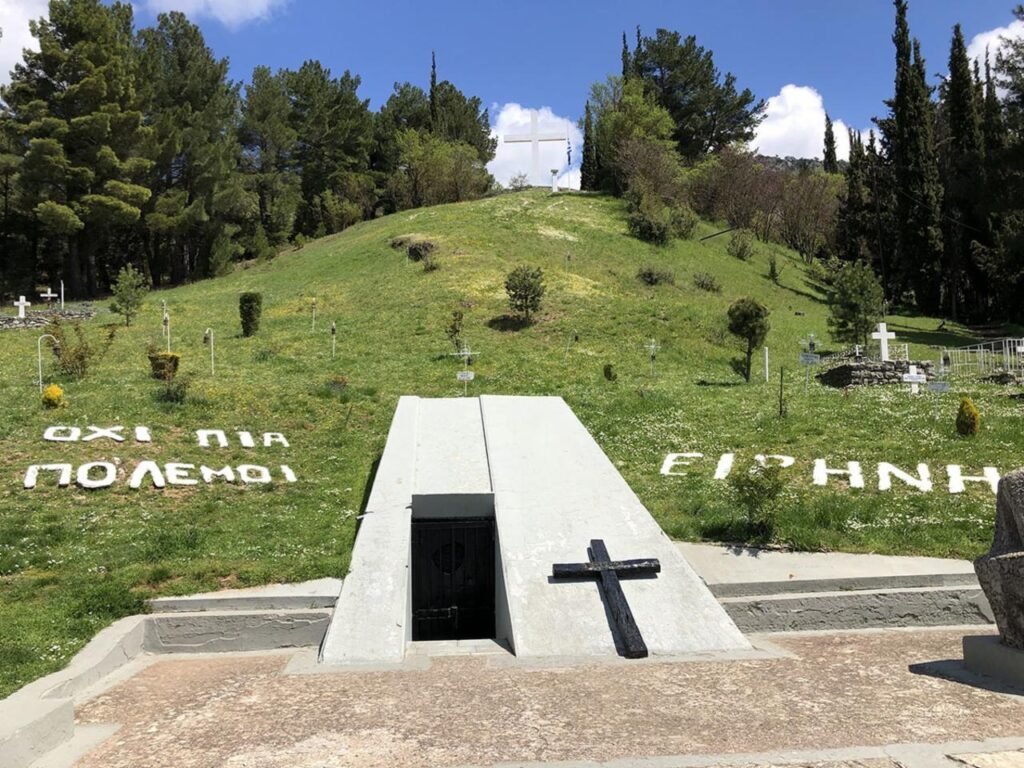
- World War II, occupation atrocities, and the Civil War deeply marked national memory, influencing political discourse for decades.
- The dictatorship (1967–1974) ended in 1974, marking the beginning of the Metapolitefsi and the restoration of stable democratic governance.
- European integration (1981, Euro in 2002) anchored Greece institutionally in Europe, reshaping its economy and political framework.
- Today’s Greece balances ancient heritage with modern European identity, where history remains visible in language, traditions, religion, architecture, and public life.
Sources:
Foundation of the Hellenic World
Museum of Cycladic Art | Byzantine & Christian Museum (Athens)