
If you are an expatriate or foreign resident in Greece, understanding the country’s public holidays is one of the most practical ways to navigate everyday life more smoothly. Public holidays influence school schedules, bank closures, government services, travel patterns, religious life, and local celebrations throughout the country.
The table below shows the complete list of public holidays in Greece from 2026 to 2030.
Public Holidays in Greece (2026–2030)
Click on any holiday name in the first column to jump directly to the explanation below.
Note: Holy Spirit Monday is widely observed in Greece, especially by the public sector, banks, and schools, although some private businesses may remain open.
Public Holidays in Greece at a Glance
Greece has 12 official public holidays, including two national commemorative days and several major religious celebrations linked to the Greek Orthodox calendar. Some holidays take place on fixed dates each year, while others—especially those connected with Easter—change annually.
The two national days are:
- 25 March — Greek Independence Day
- 28 October — Ochi Day
Other major public holidays include Orthodox Easter, Christmas, Epiphany, and the Assumption of the Virgin Mary (15 August).
Because several Greek holidays follow the Orthodox ecclesiastical calendar, their dates change every year. This is particularly true for Clean Monday, Good Friday, Easter Sunday, Easter Monday, and Holy Spirit Monday.
New Year’s Day
New Year’s Day in Greece is associated with family gatherings, festive meals, and the cutting of vasilopita, the traditional cake containing a hidden coin. The person who finds the coin is believed to have good luck during the coming year. For many people, 1 January still belongs to the broader Christmas holiday period, so the atmosphere is both festive and quiet, especially in the morning.
In practical terms, banks, public services, and many businesses are closed. Restaurants and cafés in central areas may operate, but the rhythm of the day is generally slow and family-centered.
Epiphany (Theophany)
Epiphany commemorates the baptism of Jesus and is one of the most visible religious celebrations of early January in Greece. In coastal towns, on islands, and in lakeside communities, priests bless the waters and throw a cross into the sea, river, or lake while swimmers dive in to retrieve it. This ceremony gives the holiday a distinctive public character that many foreigners remember long after seeing it for the first time.
For residents and visitors, Epiphany is one of the easiest holidays on which to observe a living Greek Orthodox tradition in public space. It is especially memorable in seaside locations.
Clean Monday
Clean Monday marks the beginning of Lent in the Greek Orthodox calendar. In Greece, however, it is also one of the best-known long weekends of the year. Families head outdoors for picnics, children and adults fly kites, and fasting foods such as lagana, taramosalata, seafood, olives, and halva dominate the table.
The day feels both spiritual and seasonal. It signals a shift in the religious calendar, but it also expresses something deeply Greek about outdoor life, shared meals, and the arrival of late winter light. Because it falls on a Monday, it often leads to heavy traffic as people leave the cities for short trips.
Greek Independence Day
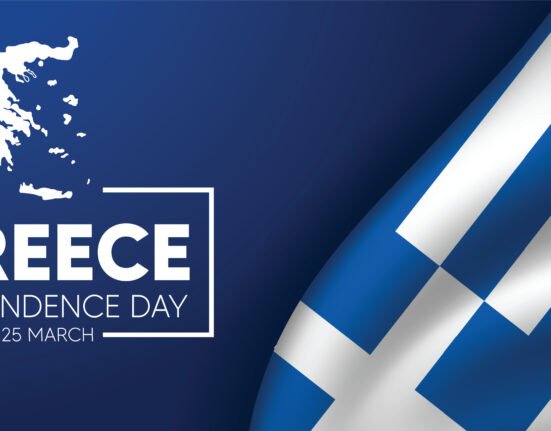
Greek Independence Day, celebrated on 25 March, is one of the two principal national holidays in Greece. It commemorates the outbreak of the Greek War of Independence in 1821 and is marked by military parades, school events, flag displays, and official ceremonies throughout the country.
The date also coincides with the Annunciation of the Virgin Mary, which means it combines national and religious meaning in a way that is very characteristic of Greek public life. In Athens and other cities, roads may close temporarily because of parades and commemorative events.
Good Friday
Good Friday is one of the most solemn days of Holy Week in Greece. Church bells ring in a subdued tone, churches are decorated for mourning, and in the evening the Epitaphios procession passes through neighborhoods and town centers. Even for those who are not religious, the atmosphere is distinctive, quiet, and moving.
For many foreign residents, Good Friday offers one of the clearest examples of how deeply religious tradition continues to shape public life in Greece. Processions are often local, intimate, and strongly tied to community identity.
Orthodox Easter Sunday
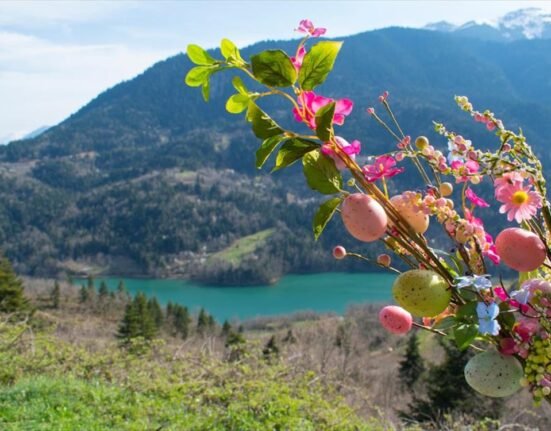
Orthodox Easter is the most important religious celebration in Greece. The emotional high point comes at midnight on Holy Saturday, when the Resurrection service takes place. Candles are lit, bells ring, people exchange the greeting Christos Anesti, and in many places fireworks fill the sky. Easter Sunday itself is centered on family gatherings, roasted lamb, red-dyed eggs, and long festive meals.
For anyone living in Greece, Easter is not simply a religious date. It is one of the key moments of the year when family, faith, tradition, and public celebration all come together.
Easter Monday
Easter Monday extends the Easter holiday period and remains an official day off across Greece. Many people are still with family, away in their villages, or returning to major cities after the Easter weekend. In practical terms, it can be one of the busiest travel days of the holiday period, especially on main roads and ferry routes.
For residents and visitors, it is useful to remember that administrative and business activity remains reduced, while transport demand can remain high.
Labour Day
Labour Day on 1 May combines the international commemoration of workers with a strong association with spring in Greece. Many people spend the day outdoors, and making flower wreaths is one of the most familiar customs connected with the holiday. Depending on the year, it can also create a convenient long weekend for short trips.
Unlike some of the more solemn or ceremonial holidays, Labour Day has a lighter social atmosphere, often linked with excursions, family lunches, and the sense that spring has fully arrived.
Holy Spirit Monday
Holy Spirit Monday is particularly important in practical terms because it affects some sectors more than others. In Greece, it is generally observed by the public sector, banks, schools, and universities, while many private businesses remain open. This means that it is easy for foreigners to overlook, even though it can still affect appointments, paperwork, and administrative planning.
If you need to deal with banking or public services, this is a date worth remembering. It may look like a normal Monday in some parts of daily life, but it does not function like one everywhere.
Assumption of the Virgin Mary
The Assumption of the Virgin Mary, celebrated on 15 August, is one of the most important religious holidays in Greece and is widely known as Dekapentavgoustos. It is often called the “summer Easter” because of its emotional and spiritual importance, but also because it takes place at the height of summer, when many Greeks are already traveling to villages and islands.
The holiday combines pilgrimage, church services, local festivals, family reunions, and summer movement across the country. In practical terms, it is one of the busiest times of year for transport and accommodation.
Ochi Day
Ochi Day, celebrated on 28 October, is one of the two principal national commemorations in Greece. It marks Greece’s refusal to accept the Italian ultimatum in 1940 and the country’s entry into the Second World War. Across Greece, the day is marked by school parades, flags, official ceremonies, and commemorative events.
For foreign residents, Ochi Day is an important reminder that modern history remains very present in Greek public life. It is not just a date in the past; it is part of how national memory continues to be publicly expressed.
Christmas Day
Christmas Day in Greece is celebrated with family meals, church attendance, decorated public squares, and a warm winter atmosphere. Although Easter is generally considered the more emotionally central holiday in the Greek calendar, Christmas remains an important date for family gatherings and seasonal traditions.
In practical terms, banks, public services, and many businesses close, while the broader festive period continues into the following day.
Synaxis of the Mother of God
The day after Christmas, 26 December, is also a public holiday in Greece. It extends the festive period and often keeps the national rhythm slow, especially for administration and formal work. Many people continue spending time with family or remain away from the city if they have traveled for Christmas.
For residents, it is useful to think of 25 and 26 December together as part of one extended Christmas break rather than as completely separate dates.