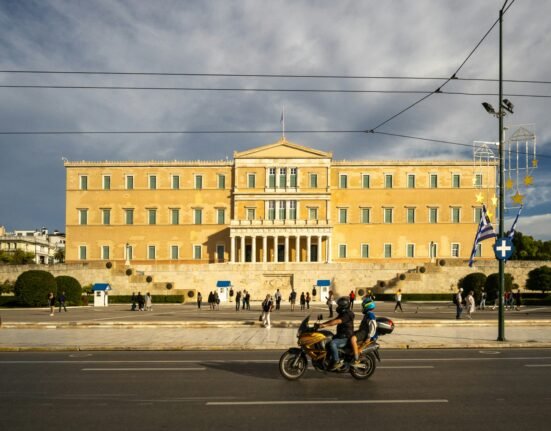


Today, 9 February, marks a moment of global importance with the first official celebration of World Greek Language Day, proclaimed by UNESCO to celebrate the enduring contribution of the Greek language to world civilization.
This is not just another date on the international calendar. It marks the official international celebration of a language long acknowledged as one of the most influential in the world—one that has shaped human thought, science, culture, and communication for thousands of years and continues to do so today. As UNESCO underlines, language does more than convey information; it carries culture, values, identity, and shared ways of thinking.
Greek stands out among the world’s languages not only for its uninterrupted continuity over more than 40 centuries, but also for its highly developed structure in vocabulary, grammar, and syntax. Through its use by unparalleled figures in literature, poetry, theatre, philosophy, politics, and science—such as Homer, Plato, Aristotle, Aeschylus, Thucydides, Hippocrates, Archimedes, and the Fathers of the Church—Greek became the linguistic cradle of fundamental concepts that continue to shape culture, science, and philosophy worldwide.
For people living in Greece, learning Greek, or using it in daily life, this first celebration has special meaning. Greek is not only a national language. It remains a living force with global reach.
A Language Spoken and Written for 40 Centuries
One of the main reasons behind the proclamation lies in Greek’s remarkable continuity.
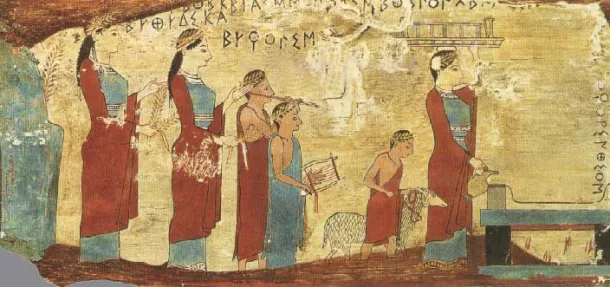
People have spoken Greek for over 40 centuries and written it for at least 28 centuries using the alphabet—or 35 centuries if the earlier Linear B script is taken into account—a continuity unmatched by any other European language. As Nobel Prize–winning poet Giorgos Seferis said during his Nobel Prize Banquet speech in 1963: “Greek language has never ceased to be spoken. It has undergone the changes that all living things experience, but there has never been a gap.”
UNESCO bases this claim on historical and linguistic evidence, not symbolism.
The Greek Alphabet and Its Impact on World Civilization
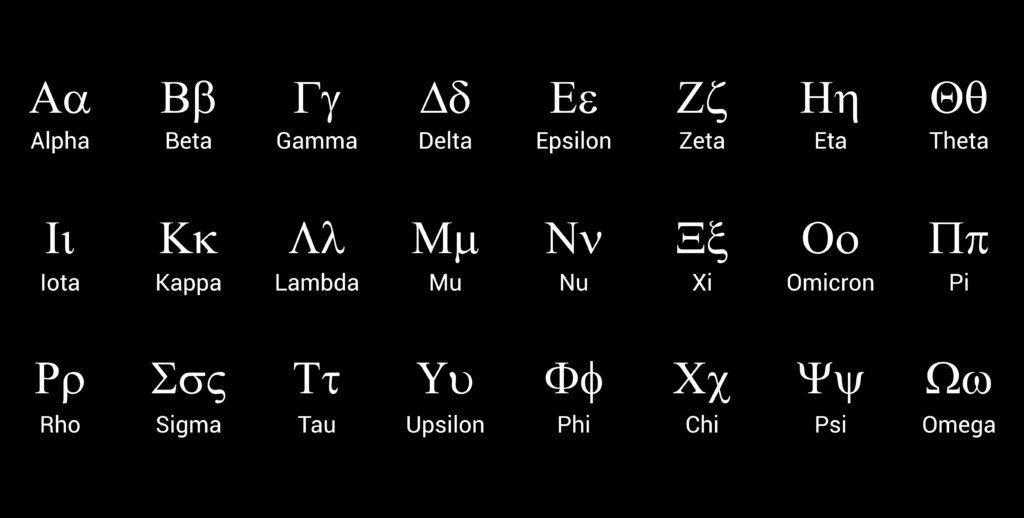
Greek also introduced one of history’s most decisive cultural innovations: the vowel-based alphabet.
In the eighth century BCE, the Greeks adapted the consonant-based Phoenician script by inventing vowels, creating a writing system in which every sound corresponds to a letter. With just 24 letters, an infinite number of words could be recorded in writing.
This invention shaped the course of human history, later influencing the Latin alphabet and most modern European writing systems. Galileo Galilei even described the Greek alphabet as “man’s greatest discovery.”

Greek as the World’s First International Language
During the Hellenistic period, Greek became the world’s first international language, serving for six centuries as a true lingua franca. People used it to govern, trade, teach, and create across vast and diverse regions.
Greek thrived during the era of Alexander the Great and later found strong support in Roman society, which adopted the Greek script in the form of the Latin alphabet. The language spread through the Gospels, re-emerged during the Renaissance, and went on to play a key role in the Enlightenment. Few languages have influenced global thought so deeply and so consistently over time.
This global role did not end in antiquity. Greek continues to be taught internationally today, not only in its ancient form through Classical Studies, but also in its Byzantine and modern forms through dedicated Medieval and Modern Greek language programs worldwide.

A Language Documented Across Millennia
The depth and continuity of Greek are also empirically documented. The electronic Thesaurus Linguae Graecae (TLG) includes more than 12,000 Greek texts by approximately 4,000 authors, spanning from Homer to 15th-century historians and totaling over 105 million recorded words.
Few languages in the world can demonstrate such a vast, uninterrupted textual record.
Greek Words Used in Modern Languages Worldwide
The influence of Greek does not belong only to the past. It is embedded in everyday language around the world.
UNESCO highlights many Greek words that remain in daily use across politics, medicine, science, education, music, and culture—often without speakers realizing their Greek roots. The list below comes directly from the official UNESCO document and shows how deeply Greek continues to shape modern vocabulary.
| Category | Greek Words (as cited by UNESCO) |
|---|---|
| Culture, Society & Thought | Αλφάβητο (alphabet), διάλογος (dialogue), διπλωματία (diplomacy), δημοκρατία (democracy), ιδέα (idea), ιστορία (history), φιλοσοφία (philosophy), θεωρία (theory), πολιτική (politics), κρίση (crisis), θέση (thesis), σύνθεση (synthesis), συμφωνία (symphony / agreement), συνέργεια (synergy), συμβίωση (symbiosis), αρμονία (harmony), ήθος (ethos), πάθος (pathos), ενθουσιασμός (enthusiasm), μυστήριο (mystery), μαγεία (magic) |
| Arts, Music & Theatre | μουσική (music), ποίηση (poetry), ραψωδία (rhapsody), μελωδία (melody), μονόλογος (monologue), δράμα (drama), ρυθμός (rhythm), ορχήστρα (orchestra), θέατρο (theatre), τραγωδία (tragedy) |
| Education & Knowledge | σχολείο (school), μέθοδος (method), λογική (logic), υπόθεση (hypothesis), κριτήρια (criteria), συνώνυμο (synonym), ιεραρχία (hierarchy), κατηγορία (category), ανάλυση (analysis), θέμα (theme) |
| Science, Medicine & Technology | πλανήτης (planet), σφαίρα (sphere), ατμόσφαιρα (atmosphere), κλίμα (climate), σύστημα (system), οικοσύστημα (ecosystem), ωκεανός (ocean), ωκεανογραφία (oceanography), συμπτώματα (symptoms), διάγνωση (diagnosis), πρόβλημα (problem), θεραπεία (therapy), καταστροφή (catastrophe), γεωμετρία (geometry), μαθηματικά (mathematics), αριθμητική (arithmetic), τεχνολογία (technology), μηχανή (machine), ενέργεια (energy) |
| Economy & Organisation | οικονομία (economy), οργάνωση (organisation), τύπος (type), αναλογία (analogy), φάση (phase), πρόγραμμα (programme), συμμετρία (symmetry), περίοδος (period), εποχή (epoch), τόνος (tone) |
| History & Geography | αρχαιολογία (archaeology), αρχαιολόγος (archaeologist), μουσείο (museum), Ατλαντικός (Atlantic), Ευρώπη (Europe) |
These Greek-derived words form the core of modern English and many other languages, helping explain why UNESCO views Greek as a pillar of global linguistic heritage.
Greek Language and UNESCO’s Cultural Heritage
UNESCO has already recognized several elements linked to the Greek language as part of humanity’s shared heritage. These include the lead tablets of the Dodona Oracle and the Derveni Papyrus: The oldest book of Europe, both inscribed in UNESCO’s Memory of the World International Register.

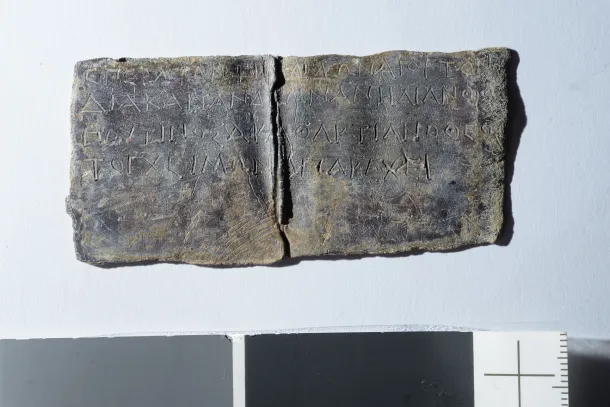

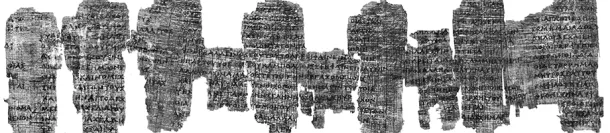
In addition, UNESCO has recognized Byzantine chant, inscribed in 2019 on the Representative List of the Intangible Cultural Heritage of Humanity, as well as the Epirus polyphonic song, selected in 2020 on the Register of Good Safeguarding Practices through the Polyphonic Caravan initiative. Together, these recognitions highlight Greek not only as a written language, but also as a living, performative tradition transmitted through sound, ritual, and collective memory.
Why 9 February Was Chosen for World Greek Language Day
World Greek Language Day is celebrated on 9 February, the date of the death of Dionysios Solomos in 1857. Dionysios Solomos, the Greek national poet and author of the Hymn to Liberty (Ύμνος εις την Ελευθερίαν), embodied the close connection between language, identity, and freedom, making the date both historically and symbolically fitting.
Greek Language, Multilingualism and UNESCO’s Vision
World Greek Language Day aligns closely with UNESCO’s commitment to multilingualism and linguistic diversity, core values of the United Nations. A 2017 UN General Assembly resolution encouraged the recognition of languages beyond the UN’s official ones—Arabic, Chinese, English, French, Russian, and Spanish—in order to promote cultural diversity, dialogue, tolerance, and mutual understanding.
Why World Greek Language Day Matters Today
This first World Greek Language Day is not about nostalgia. It is about awareness.
For the international community—and especially for those who live, work, or raise families in Greece—it is a reminder that learning Greek means engaging with a language that stretches from Ancient Greek to Modern Greek, carrying ideas, science, and culture across millennia.
And today, for the first time, the world officially pauses to acknowledge it.
Source: UNESCO, Executive Board Document 221 EX/39, World Greek Language Day, Paris, March 2025.
A personal story by Maria Daifoti
World Greek Language Day, feels more than just a cultural observance. It’s a moment to reconnect with a language that has carried stories, ideas, and identity across time. The Greek language has a way of feeling both ancient and immediate. It gave life to the epic worlds of The Iliad and The Odyssey, shaped the philosophical foundations laid by Plato and Aristotle, and quietly lives on in modern international vocabulary; often in words people speak every day without realizing their Greek origin.
For me, the day took on a special meaning during my years as an expat. Being far from home made me feel a stronger responsibility to keep my language alive in any way I could. I still vividly remember celebrating our language during the UN DAY, at the International School of Warsaw. We organized an activity for the children called “You speak Greek but you don’t know it.” To make it fun, we created colorful paper boats, each one carrying an English word with Greek origins—words like technology, telephone, music, or planet. The children would pick up a boat, read the word, and then we would reveal its Greek root and meaning.
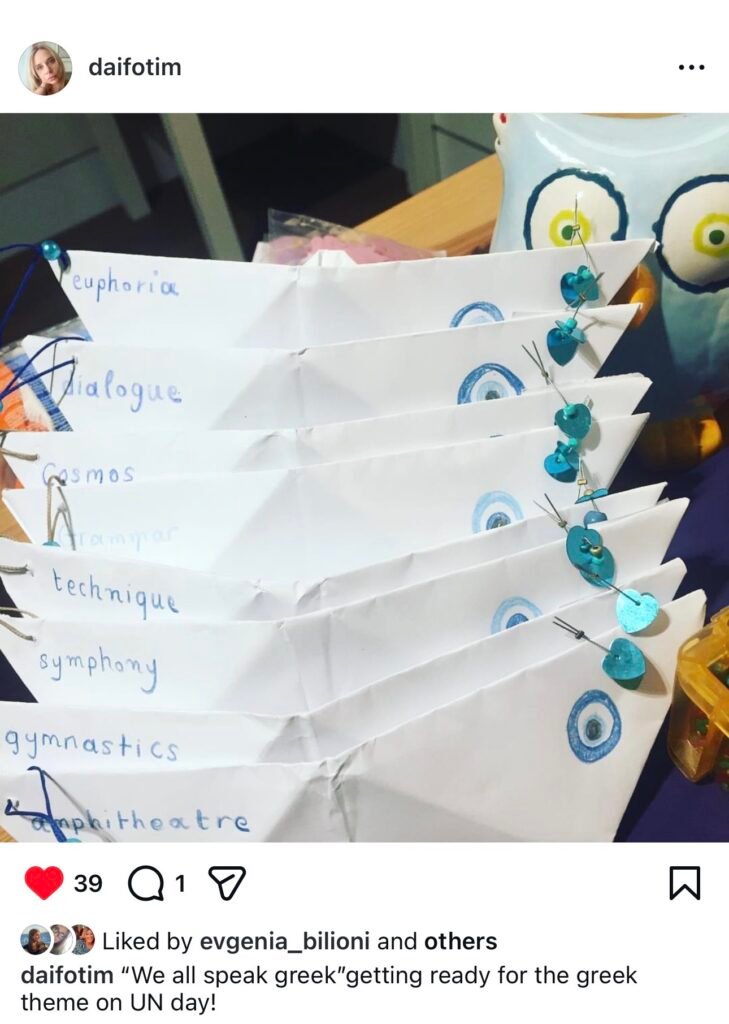

What made the activity unforgettable was their sense of surprise. They suddenly realized that Greek wasn’t distant or unfamiliar, it was woven into the English they used every day. Seeing them discover those connections made the celebration feel personal, joyful, and meaningful. In that moment, sharing my language felt less like informing and more like offering a small gift from home. Events like this, simple, creative, and shared across cultures, capture the heart of what World Greek Language Day represents.
You might also like: