
Table of Contents
Click on any section below to navigate directly to the part that interests you.
- I. How to Choose Fresh Fish at a Greek Fish Tavern
- II. The Fish You Are Most Likely to Taste at a Greek Fish Tavern
-
Top Tier Fish — The Premium Greek Fish Tavern Experience
Whole fish, priced by the kilogram
- Tsipoura (Gilthead Sea Bream — Sparus aurata)
- Lavraki (European Sea Bass — Dicentrarchus labrax)
- Fagri (Red Porgy — Pagrus pagrus)
- Sinagrida (Common Dentex — Dentex dentex)
- Sfirida (White Grouper — Epinephelus aeneus)
-
Medium Tier Fish — Excellent and More Affordable Options
Shared meze, ordered by the portion
- Gavros and Marida
- Sardela (Sardine — Sardina pilchardus)
- Barbouni (Red Mullet — Mullus surmuletus)
-
Top Tier Fish — The Premium Greek Fish Tavern Experience
- III. Classic Seafood at Greek Tavernas
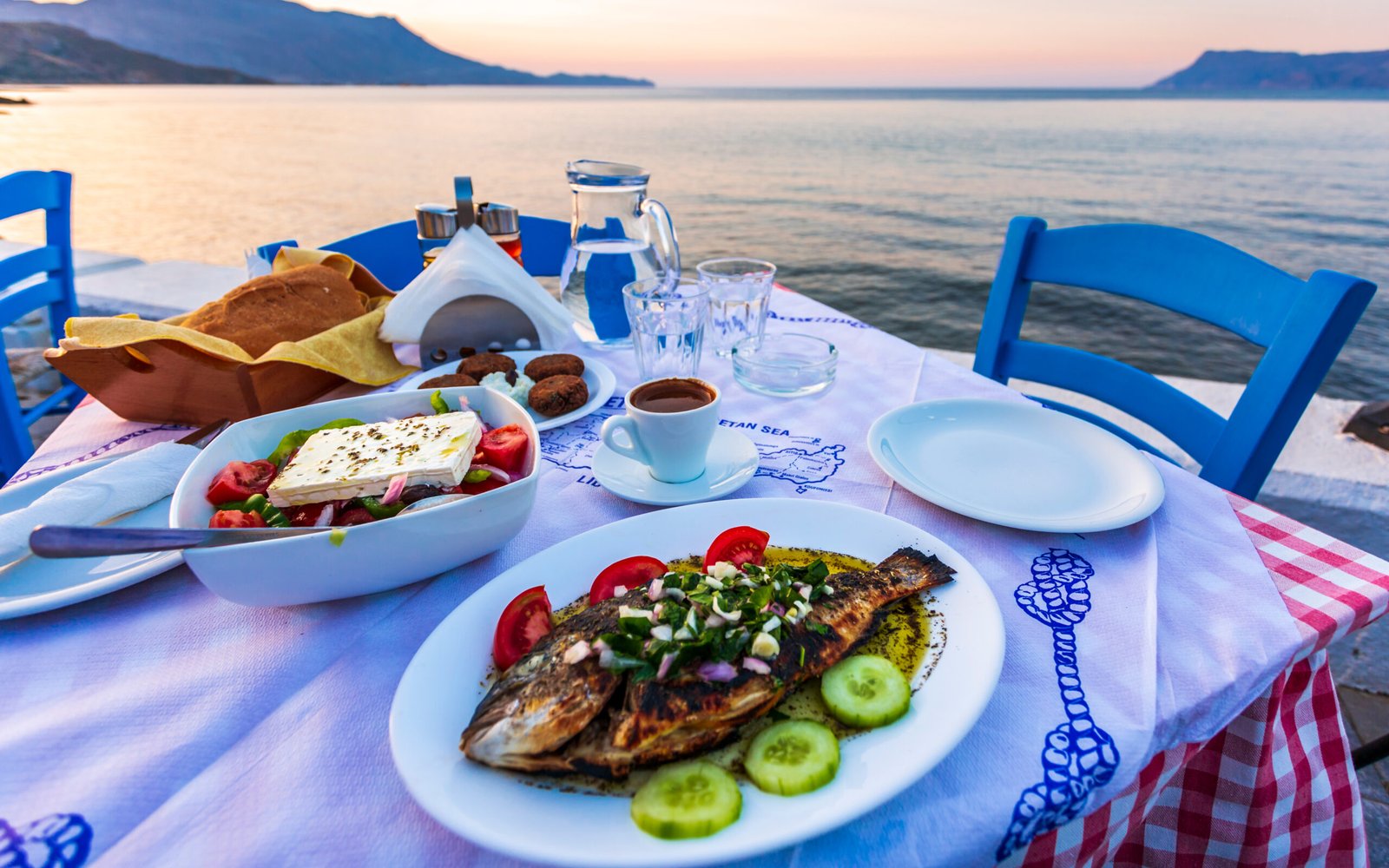
For international residents and visitors in Greece, savoring Greek fish and seafood is an experience that engages all the senses. Picture yourself enjoying the delicacies of the Greek seas at sunset, seated at a traditional fish tavern by the seaside. The gentle rhythm of the waves, the warm sea breeze, and the relaxed murmur of conversation create an atmosphere that is unmistakably Mediterranean.
The Greek fish tavern, the traditional psarotaverna, reflects a way of life shaped by tradition, seasonal rhythms, and local economies. To understand how it works is to connect with the essence of Mediterranean culture.
This guide provides the insight needed to understand what to expect at a Greek fish tavern. Understanding the fish and seafood on offer, as well as the practicalities of ordering, helps you avoid common pitfalls and fully appreciate the freshness of Greece’s exceptional seafood. While there is of course much more variety to explore, the selections included here reflect what you are most likely to come across.
I. How to Choose Fresh Fish at a Greek Fish Tavern
In Greece, transparency is legally required. According to the Hellenic Ministry of Rural Development and Food, every establishment must clearly declare the origin of its catch. This information is reflected in the official menu, which serves as a legally binding source of consumer information. Under Greek regulations, menus must indicate whether seafood is fresh or frozen — often marked as apopsygmeno when defrosted — and specify its origin, distinguishing between local catch, imported products, and whether the fish is wild-caught or farmed (ichthyotrofiou).
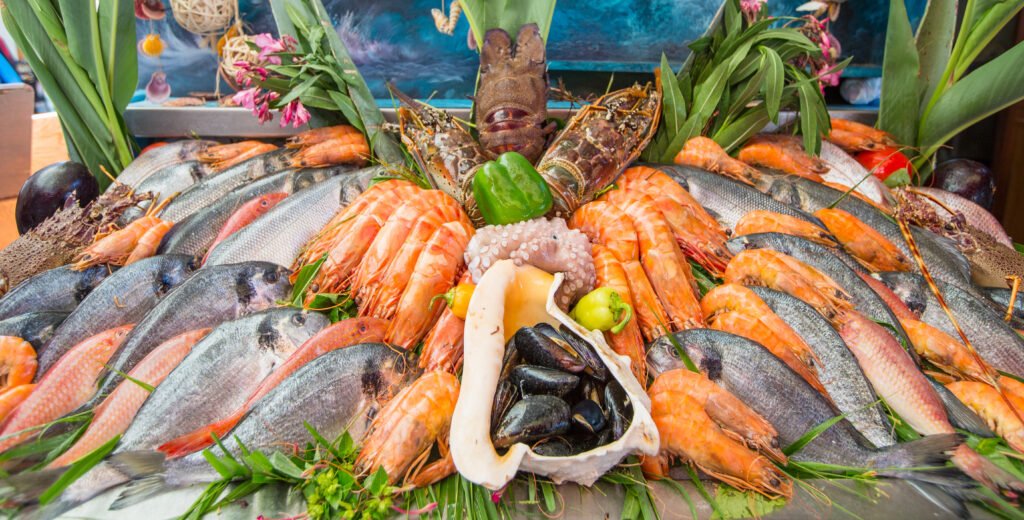
Beyond the menu, many fish taverns, particularly those serving fresh catch, invite guests to view the vitrina, the refrigerated display showcasing the fish of the day. Diners are encouraged to select their preferred fish directly from it. Standing before the vitrina is part of an age-old ritual of quality control. Here is what to look for when making your choice.
👀 Optical Clarity
The eyes of the fish are one of the most reliable indicators of freshness. They should appear clear, bright, and slightly convex. Cloudy or sunken eyes usually suggest the fish is no longer at its best.
🐟 The Gill Check
Lift the operculum (gill cover) and examine the gills. They should be moist and vibrant deep red. Brownish or slimy gills are a clear sign that the fish is not fresh.
🌊 The Aroma
Fresh Mediterranean fish should never smell strongly fishy. It should have a clean, subtle scent reminiscent of the sea or fresh seaweed. A strong or unpleasant smell is a sign to choose another option.
✋ Firmness
If permitted, gently press the flank of the fish. Fresh flesh should feel firm and spring back immediately. If the indentation remains, the fish is likely not freshly caught.
II. The Fish You Are Most Likely to Taste at a Greek Fish Tavern
Once you know how to choose fresh fish, the next step is understanding which species you are most likely to encounter at a Greek fish tavern. Greek menus often feature local names unfamiliar to international visitors, which can make ordering confusing, especially when you are invited to choose directly from the vitrina.
The fish below are grouped into Top Tier and Medium Tier selections, helping you navigate menus with greater confidence and make more informed choices.
Top Tier Fish — The Premium Greek Fish Tavern Experience
These are the most prized fish in Greek waters, typically sold by the kilogram, grilled whole, and served simply with olive oil and lemon to highlight their natural flavour. Their preparation follows a philosophy of simplicity and respect for the ingredient, where freshness is paramount. They are usually served whole, one per person, often accompanied by light sides such as boiled greens or a fresh salad, allowing the fish to remain the centrepiece of the meal.
Tsipoura (Gilthead Sea Bream — Sparus aurata)
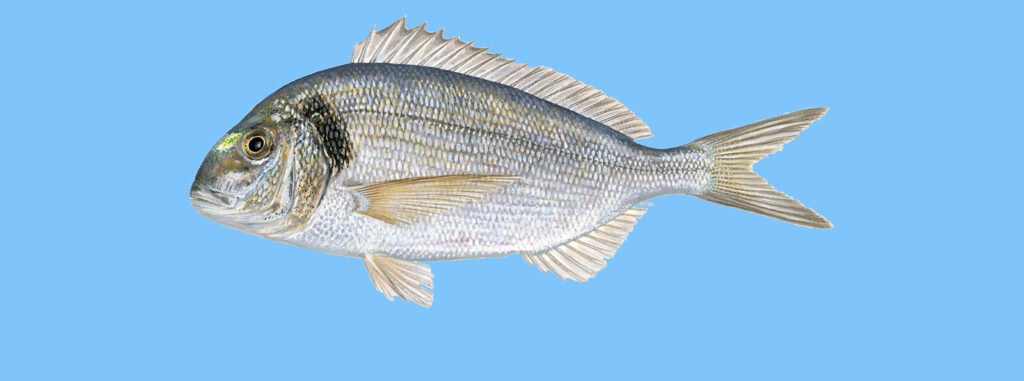
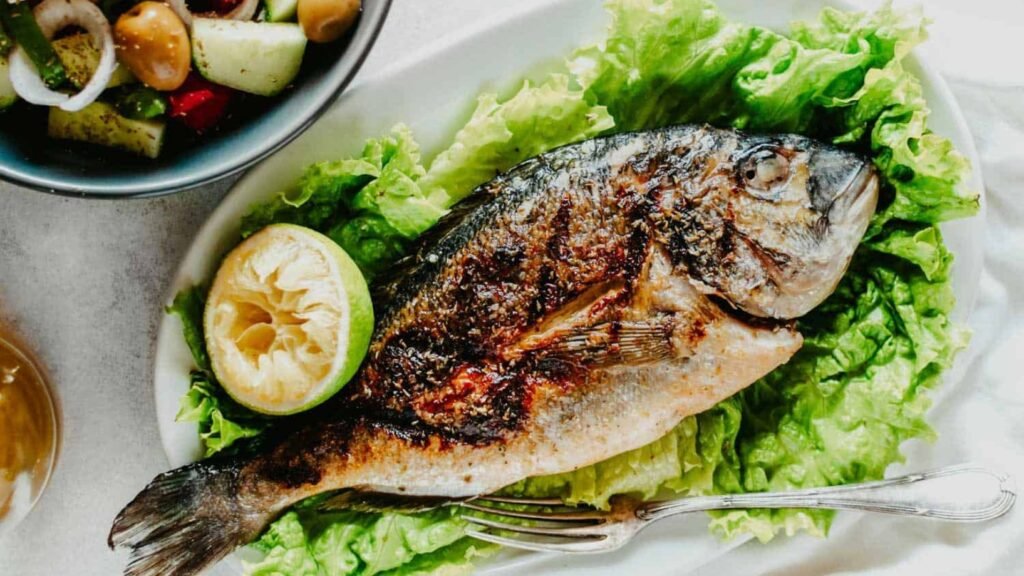
A classic Mediterranean delight, perfectly charred and full of aroma.
📸 Image credit: Real Greek Recipes
Tsipoura is perhaps the most popular fish in Greece and one of the most recognizable species served in Greek fish taverns. Its English name, gilthead sea bream, comes from the distinctive golden stripe between its eyes, making it easy to identify. Thriving in Greek waters, tsipoura is widely available and frequently featured in fish taverns across the country. It feeds primarily on crustaceans and shellfish, which contribute to its delicate flavour and tender, white flesh.
According to sustainability guidelines, the minimum legal catch size is 20 cm, and consumers are encouraged to choose fish above this size. When possible, opt for wild-caught tsipoura between January and September or organically farmed (ichthyotrofiou) options, helping ensure both quality and responsible consumption.
Tip: How to Spot Wild vs Farmed Tsipoura
Wild tsipoura (pelagisia) usually has a leaner, more elongated shape and firmer flesh, while farmed (ichthyotrofiou) fish tend to be rounder with a fuller belly due to higher fat content.
Lavraki (European Sea Bass — Dicentrarchus labrax)
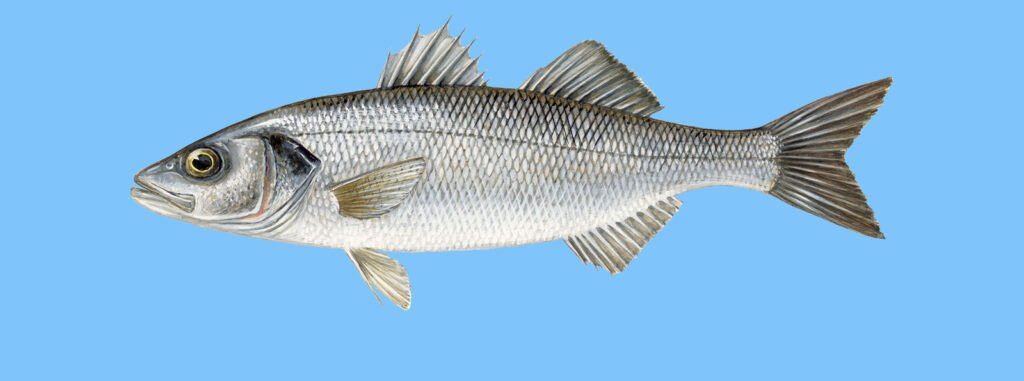
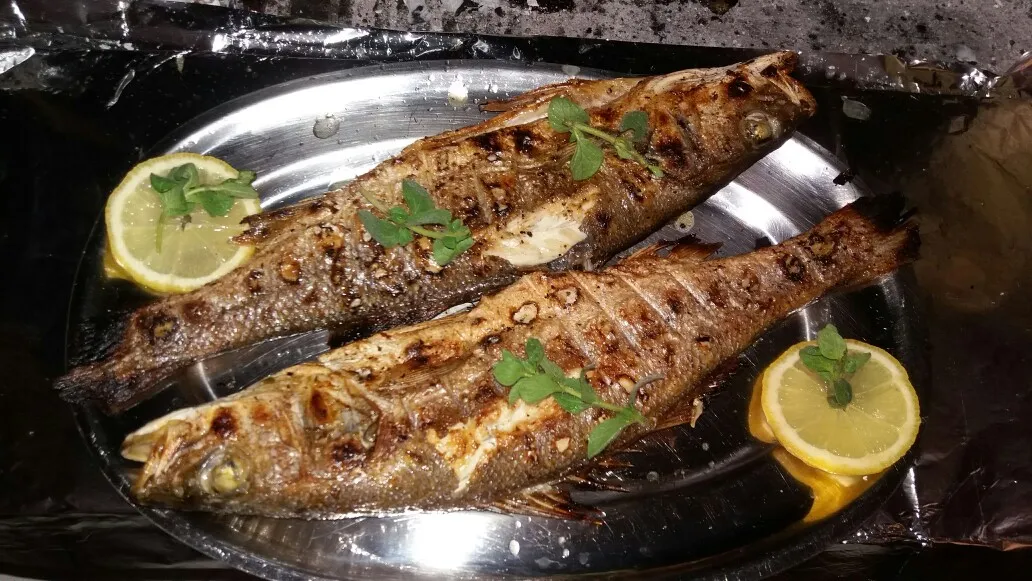
📸 Photo & Recipe by Panagiotis L. via Cookpad Greece
Lavraki is a signature fish of Greek fish taverns and one of the most elegant choices on the menu. Its lean, white flesh and clean, delicate flavour make it particularly appealing, especially for those who prefer lighter seafood. Like tsipoura, lavraki is available both wild and farmed (ichthyotrofiou), with wild fish typically more expensive and seasonal, while farmed lavraki remains widely available across Greece.
Lavraki tends to stay close to shore during summer and move to deeper waters in winter. It feeds on shrimp, molluscs, and smaller fish, which contribute to its refined flavour. Wild lavraki is currently classified as Near Threatened, making responsible consumption increasingly important. The minimum legal catch size is 25 cm, though choosing larger fish allows populations to reproduce before being harvested. It typically spawns between January and March and is one of the two most important species in Mediterranean aquaculture, alongside tsipoura.
Serving Tips
Lavraki is typically served whole and grilled, with the central backbone easy to remove when properly cooked, though some care is needed to navigate the smaller side bones. It pairs beautifully with boiled greens (horta), grilled vegetables, or a fresh seasonal salad, while a light lemon risotto can elevate it into a more refined dish. To complete the experience, a crisp white wine with good acidity, such as Assyrtiko, enhances its clean, delicate flavour and brings balance to the dish.
Fagri (Red Porgy — Pagrus pagrus)
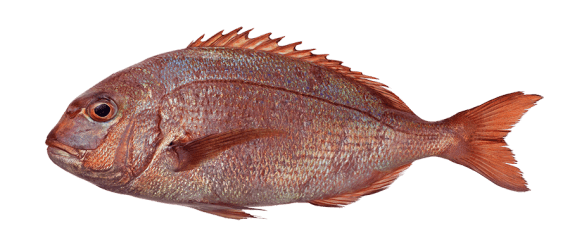
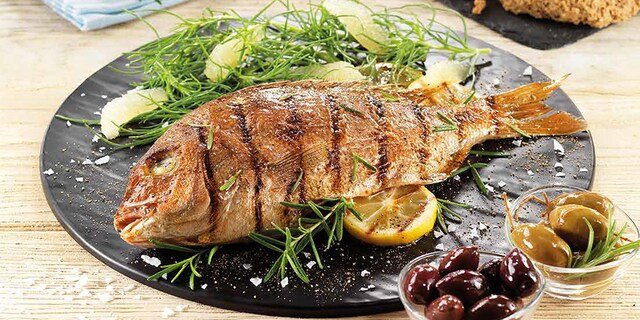
📸 Image credit: AB Vassilopoulos recipe — ab.gr
Fagri is one of the most prized fish in Greece, known for its firm texture and rich, refined flavour. When grilled, it is often described as steak-like, making it a popular choice for those seeking a more substantial seafood experience. It is also visually distinctive, recognized by its pinkish-silver body, reddish back, and subtle blue markings.
Fagri typically inhabits clean coastal waters, favouring seabeds of sand, gravel, or rock, and is often found in small shoals. It feeds on molluscs, crustaceans, and smaller fish, which contribute to its depth of flavour. This species can grow to impressive sizes and has a relatively long lifespan, with a spawning season that runs from February to June, an important consideration for responsible consumption.
The minimum legal catch size is 18 cm, although experts recommend choosing fish above 27 cm, allowing it to reach reproductive maturity before being harvested.
Nutrition Insight
Beyond its refined flavour, fagri stands out for its nutritional value. It provides high-quality protein, is naturally low in fat and cholesterol, and is rich in omega-3 fatty acids, supporting heart and brain health. This balance of flavour and nutrition makes it a particularly appealing choice within the Mediterranean diet.
Sinagrida (Common Dentex — Dentex dentex)
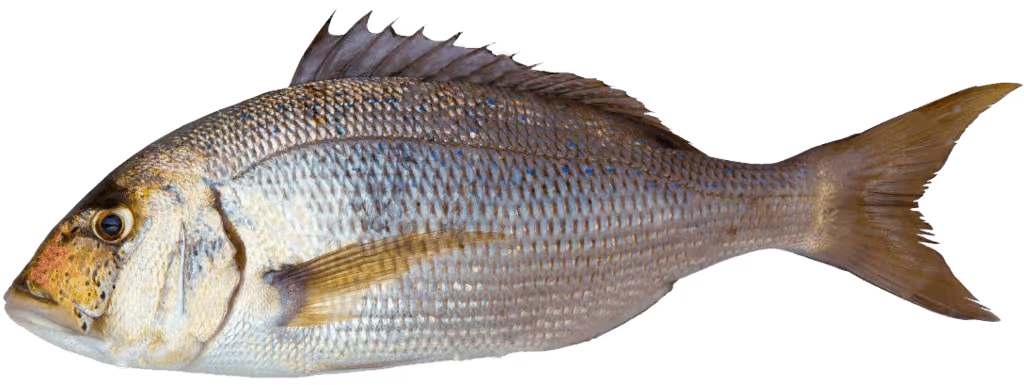
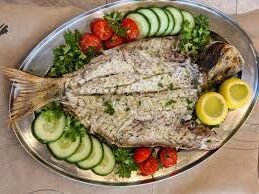
Known for its firm, white flesh and exquisite flavour, it’s best enjoyed with just a drizzle of Greek olive oil and fresh lemon. A true delicacy of the Aegean! 🇬🇷✨
📸 Image credit: @finistrini_tsipouradiko
Often referred to as the “Queen of the Sea”, sinagrida is one of the most prestigious fish you can order in Greece. It is highly valued for its firm texture and deep, refined flavour, and is widely regarded as one of the finest fish in the Mediterranean. It is visually distinctive, recognized by its pinkish body, subtle blue and black markings, and characteristic yellow tones around the head.
Sinagrida inhabits coastal waters, typically at depths between 10 and 50 metres, favouring rocky, sandy, or mixed seabeds, often near seaweed formations. It feeds on fish, molluscs, and cephalopods, contributing to its rich and layered taste. This species can reach impressive sizes and has a long lifespan, with a spawning season from March to May, an important consideration for responsible consumption.
Today, sinagrida is classified as Vulnerable, making sustainable choices essential. While there is no officially defined minimum legal catch size, it reaches reproductive maturity at around 23 cm, and selecting larger specimens helps support the regeneration of its population. Its high commercial value has made it particularly sought after, both historically and in modern Greek cuisine, where it remains a symbol of premium seafood dining.
Dining Insight
Grilling sinagrida requires time and patience. A properly prepared fish typically takes 30 to 45 minutes on charcoal, depending on its size, allowing the flesh to cook evenly and develop its full flavour. If it arrives at the table too quickly, it is worth questioning whether it has been freshly grilled.
For those less comfortable navigating whole fish, sinagrida can be filleted at the table upon request, allowing you to enjoy it with ease. A final detail appreciated by more experienced diners is the cheeks, the small, tender pieces of meat found in the head, widely considered the most delicate and flavourful part of the fish.
Sfirida (White Grouper — Epinephelus aeneus)
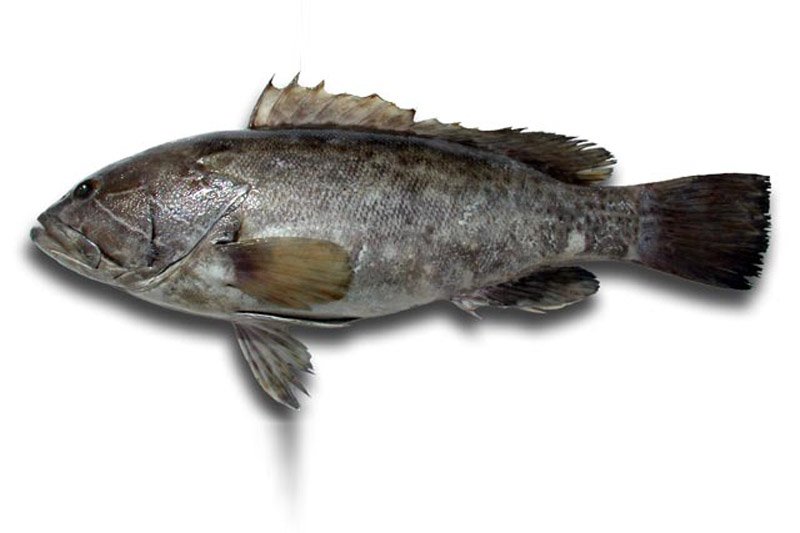
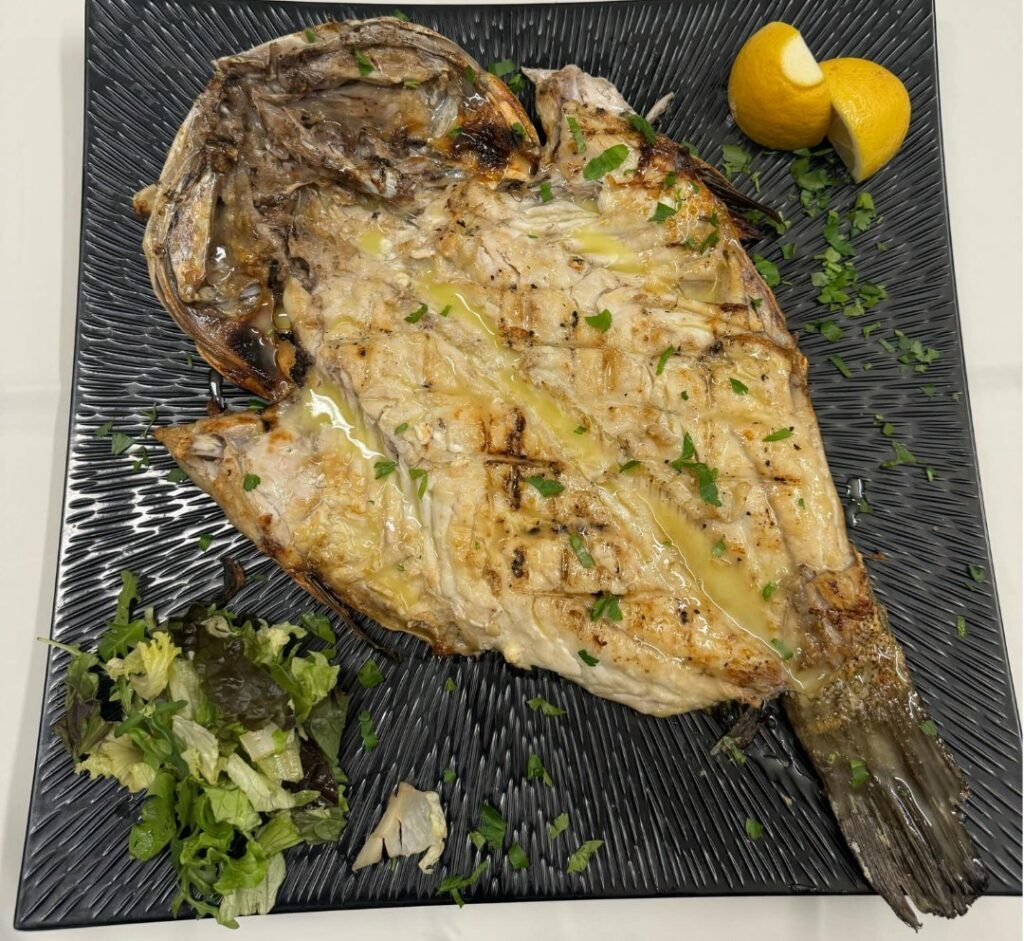
📸 Image Credit: Psarotaverna “To Dixti” via Facebook
Sfirida is prized for its buttery, succulent flesh and rich, full-bodied flavour, making it a premium fish typically found in high-quality fish taverns. It is easily recognized by its brownish-grey body, marked with six to eight vertical bands separated by lighter lines, giving it a distinctive, rugged appearance.
This species inhabits coastal and deeper waters, typically at depths between 25 and 200 metres, favouring rocky, sandy, or muddy seabeds, where it remains close to its shelter while hunting. It feeds on fish, crabs, and cephalopods, contributing to its rich flavour profile. Sfirida can grow to impressive sizes and has a relatively long lifespan, with a spawning season from June to August, and is most commonly found in the southern Aegean and central Ionian seas.
Sfirida is classified as Near Threatened, making responsible consumption important. The minimum legal catch size is 45 cm, while experts recommend choosing fish above 55 cm, allowing it to reach reproductive maturity.
What to Look For When Served
When sfirida is served, the skin should be lightly crisp and charred, showing proper contact with the flame without being burnt. The flesh should remain white, moist, and tender, never dry. Traditionally, sfirida is served whole and often opened in front of you at the table, or presented in large fillets when the fish is particularly big.
Medium Tier Fish — Excellent and More Affordable Options
Unlike top-tier fish, which are typically priced by the kilogram, these are usually ordered by the portion. They are widely available, delicious, and often more affordable, and are commonly served as shared meze, small plates designed for the table to enjoy together, making them a regular choice at the Greek table.
Gavros and Marida
Classic small fried fish, at the heart of Greek meze culture.

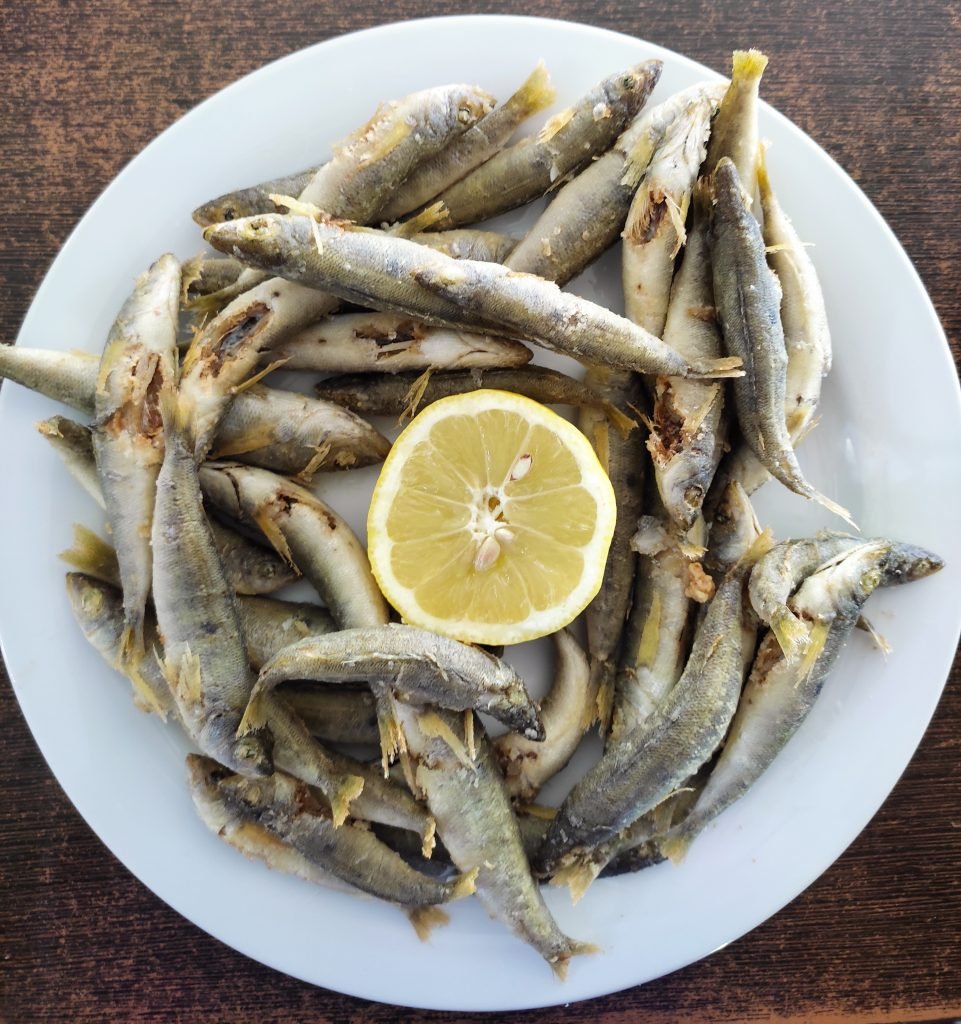
These small, silvery fish are typically lightly floured and fried, creating a crisp texture while preserving their delicate flavour. They are usually served whole and enjoyed as shared meze at the table, forming an essential part of the Greek dining experience.
Gavros (Anchovy — Engraulis encrasicolus) offers a more pronounced, savoury taste and is also commonly prepared marinated, while Marida (Picarel — Spicara smaris) is milder and more delicate, known for its light, crisp bite.
Simple, unpretentious, and deeply rooted in Greek food culture, they are best enjoyed fresh, with a squeeze of lemon and good company.
Sardela (Sardine — Sardina pilchardus)
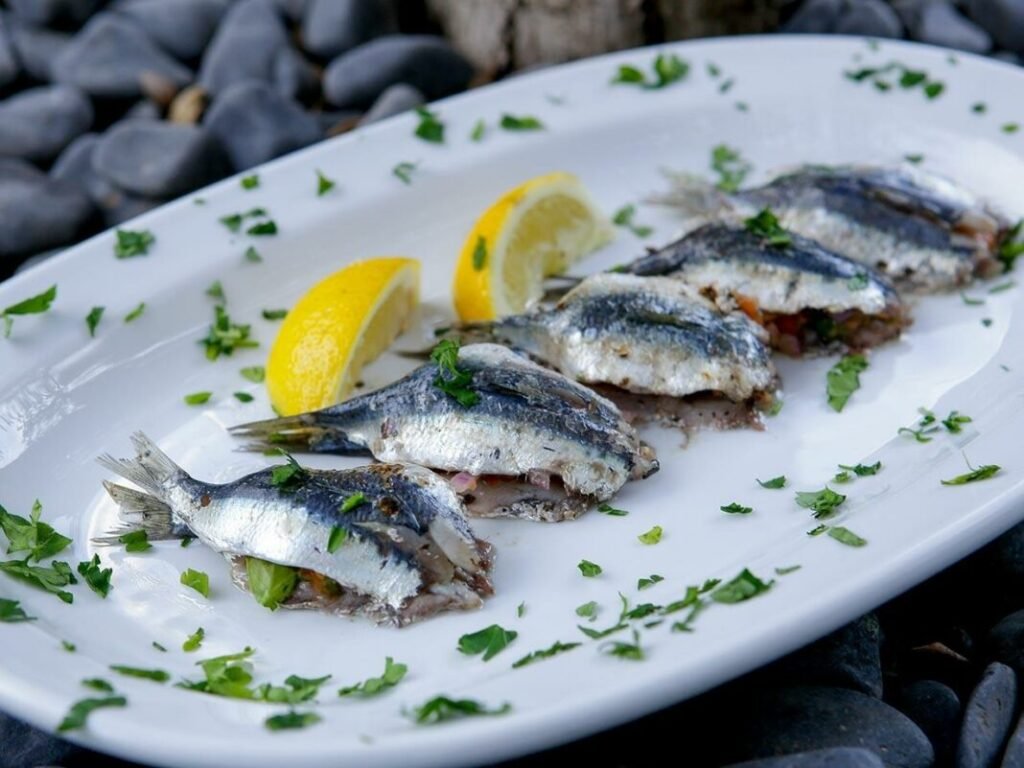
Sardela, a small, silvery fish with a dark blue-green back, is a cornerstone of Greek seaside dining, typically grilled whole and valued for its rich flavour and high omega 3 content, especially popular during the summer months when it is at its best. Living in large shoals close to the coast and feeding mainly on plankton, it plays an important role in the marine ecosystem. In recent years, stocks have declined, so choosing larger, seasonal sardines helps support more responsible consumption while preserving this essential part of Mediterranean food culture.
Barbouni (Red Mullet — Mullus surmuletus)
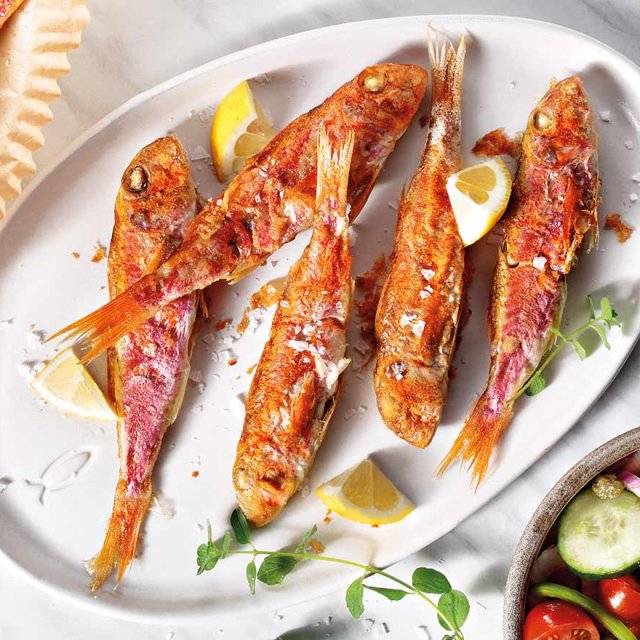
Barbouni, a small, reddish fish with distinctive whiskers, prized since antiquity for its rich, slightly sweet flavour, is most often lightly floured and fried to create a crisp exterior that contrasts with its delicate, tender flesh. It is typically served whole, allowing its natural flavour to stand out, and is considered one of the most refined choices among the smaller fish. Its subtle sweetness and fine texture make it particularly appreciated by those seeking a more nuanced seafood experience.
III. Classic Seafood at Greek Tavernas
Alongside whole fish, no Greek table is truly complete without the essential seafood meze. Here, the experience shifts from the delicate flesh of grilled fish to the more textural, expressive flavours of cephalopods and shellfish, from the smoky char of grilled octopus to the familiar crispness of fried calamari. These are the dishes that define the shared culture of the table, designed to be enjoyed slowly and paired with ouzo, tsipouro, or a glass of chilled white wine.
Calamari (Squid — Loligo vulgaris)
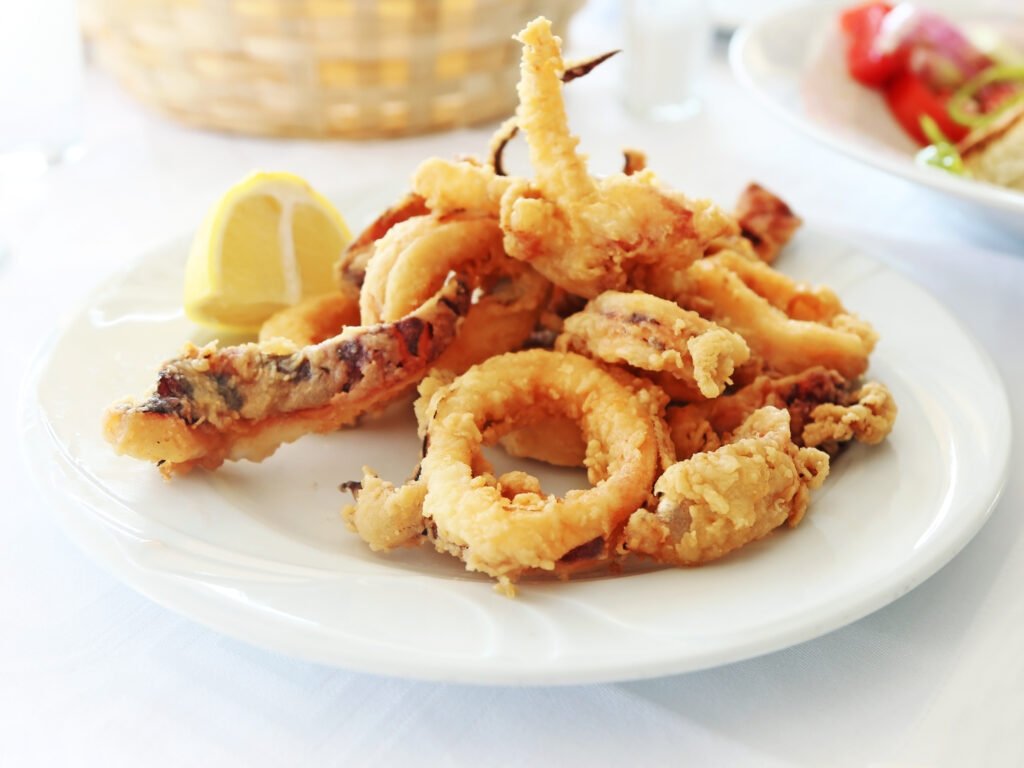
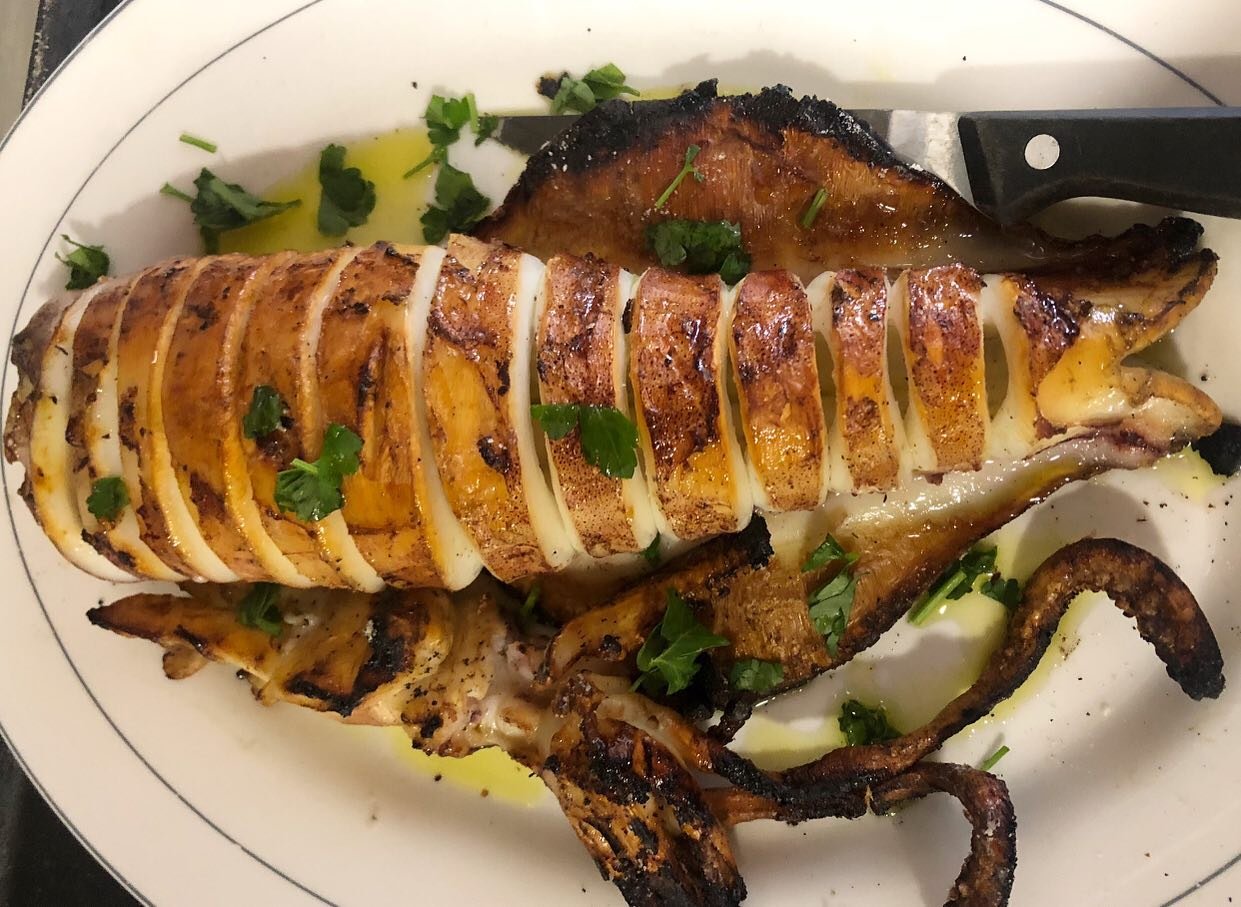
Calamari, one of the most popular seafood dishes in Greek tavernas, is valued for its tender texture and mild, slightly sweet flavour, typically lightly floured and fried or grilled over charcoal and served simply with lemon.
Found throughout the Mediterranean, it is both versatile and widely available, making it a staple choice for both locals and visitors. Beyond its flavour, calamari is also rich in high-quality protein and omega 3 fatty acids, offering a light yet satisfying addition to the table.
The most common way to order it is as “kalamarakia”, referring to squid cut into rings and fried at high temperature, resulting in a crisp exterior and tender interior, although it can also be enjoyed grilled whole or in larger pieces.
Tip: Kalamari vs Thrapsalo
When ordering, it is worth being attentive, as what is listed as calamari may in fact be thrapsalo (flying squid), a larger and more affordable species with firmer, less delicate flesh, better suited to grilling than frying.
Octopus (Chtapodi — Octopus vulgaris)
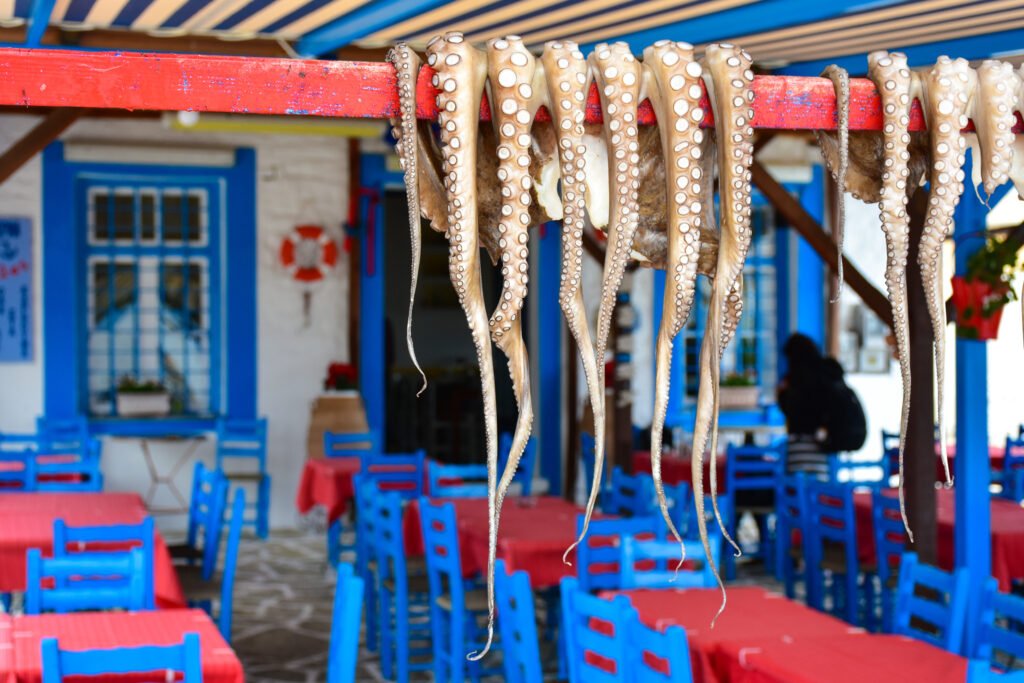
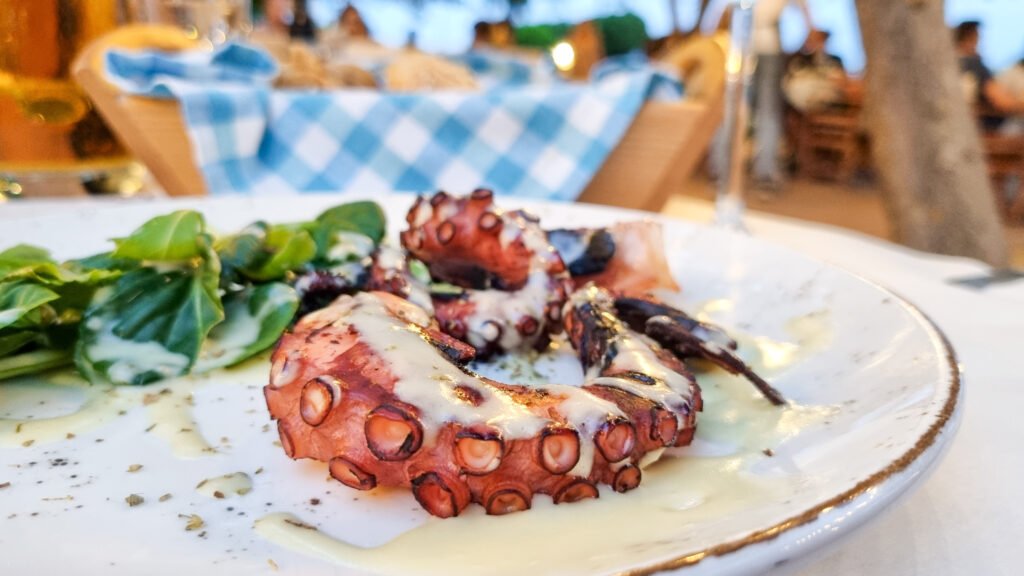
Octopus, often considered the “king” of seafood meze in Greek tavernas, is prized for its rich flavour and tender texture, most commonly grilled over charcoal or served as a vinegar-based cold meze.
The grilled version is the most iconic, typically prepared from sun-dried octopus, which helps tenderise the flesh before cooking. It is usually served as a whole tentacle or sliced into pieces, simply dressed with olive oil, lemon, and oregano, allowing its natural flavour to stand out. The exterior should be lightly crisp, while the inside remains soft and tender.
Another classic preparation is chtapodi xidato, where the octopus is first cooked and then marinated in vinegar and olive oil, often with bay leaves or peppercorns. Served cold, it is a perfect pairing for ouzo or tsipouro, offering a sharper, more refreshing taste.
Tip: Responsible Consumption
For more responsible consumption, it is recommended to choose octopus larger than 12 cm (mantle length), allowing the species to reach maturity before being harvested.
Garides (Shrimp — Penaeus kerathurus)
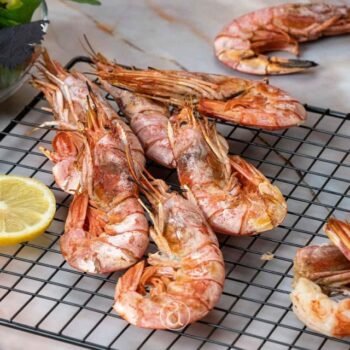
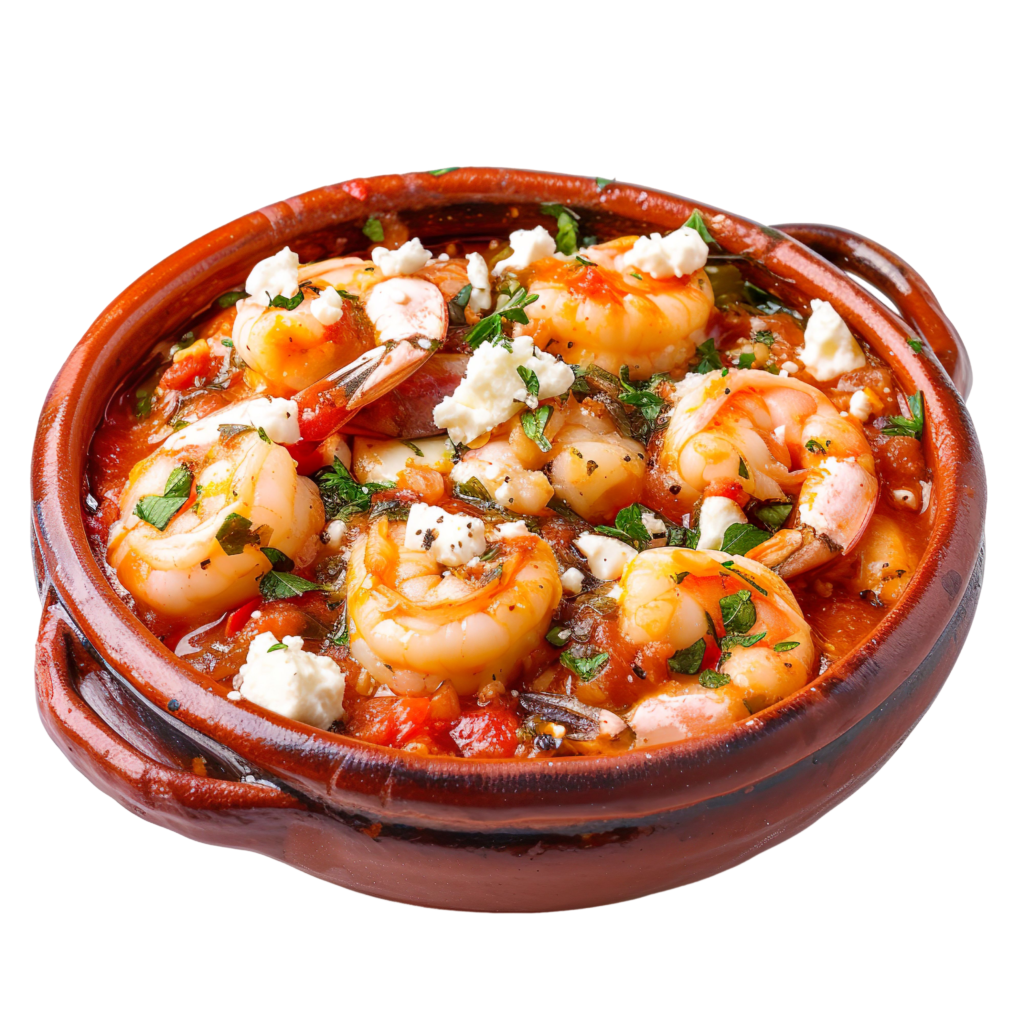
Garides, one of the most popular seafood choices in Greek tavernas, are valued for their sweet, delicate flavour and firm, juicy texture, typically grilled over charcoal or prepared in the classic shrimp saganaki (garides saganaki).
The grilled version is simple and fresh, served whole with olive oil, lemon, and oregano, highlighting the natural flavour of the shrimp. In contrast, garides saganaki is a more indulgent dish, cooked in a rich tomato sauce with feta cheese, creating a balance of sweet, salty, and slightly tangy flavours.
Shrimp are widely available throughout Greece and are often served as a shared dish, making them a staple of the Greek table. Beyond their flavour, they are also rich in protein and low in fat, offering a satisfying yet relatively light option.
Tip: What to Look For
Fresh shrimp should have a firm texture and a clean, slightly briny aroma, never overly soft or with a strong smell. When grilled, the flesh should remain juicy and tender, not dry.
Midia (Mussels — Mytilus galloprovincialis)
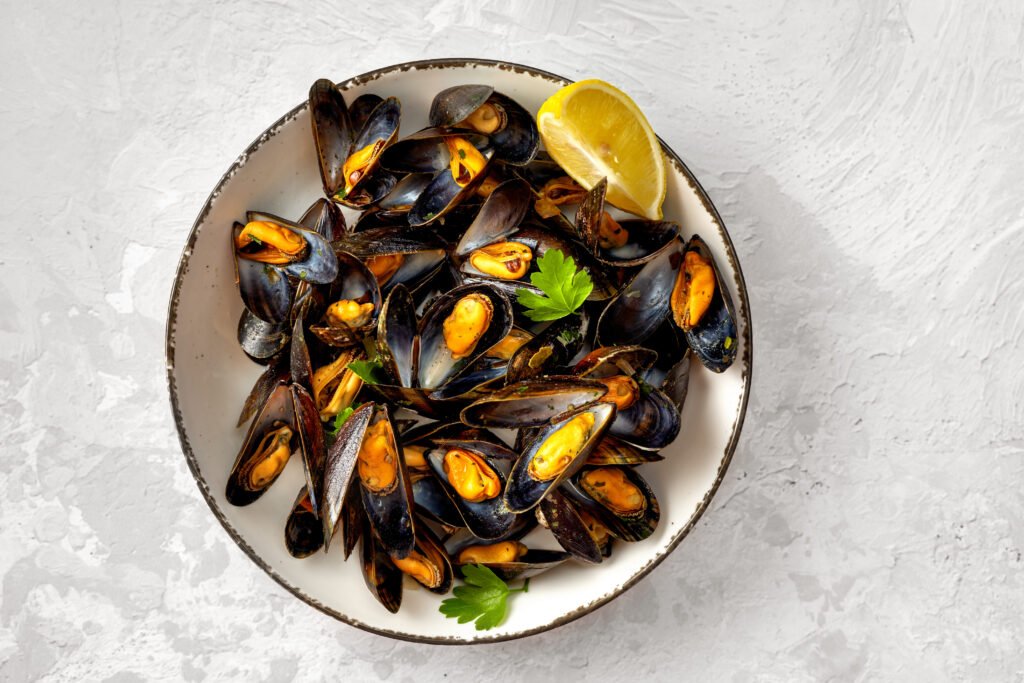
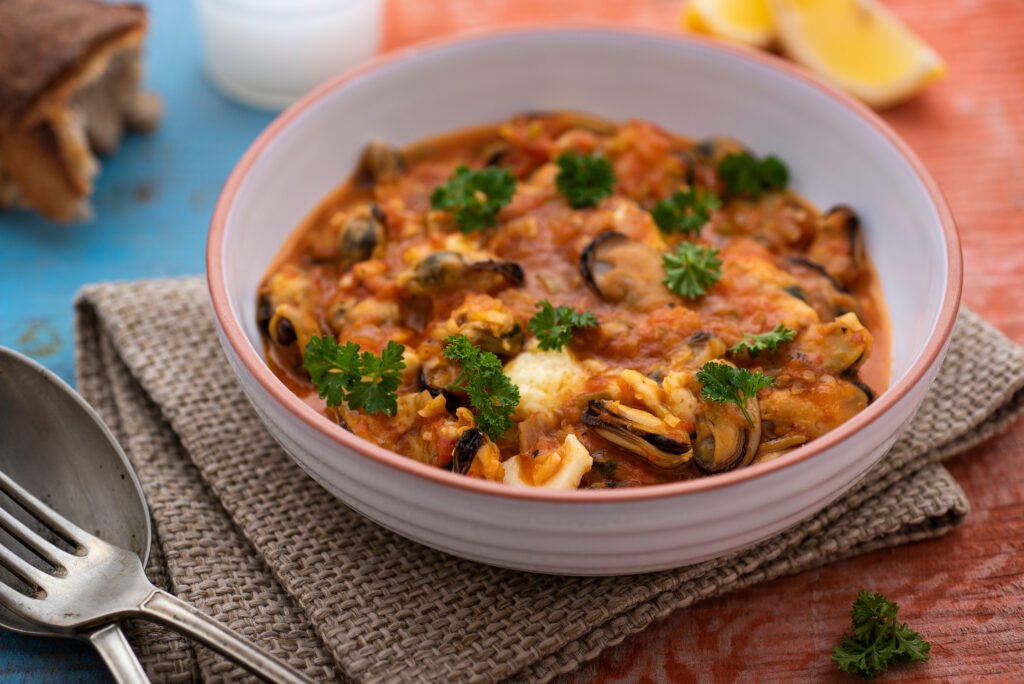
In a Greek taverna, mussels are one of the most iconic seafood meze, bringing the essence of the Aegean to the table. They are typically served in the centre, meant to be shared, and pair perfectly with ouzo, tsipouro, or a chilled glass of white wine, such as Malagousia or Assyrtiko.
Two preparations stand out. Steamed mussels (midia achnista) represent the essence of simplicity, cooked in their own juices with a touch of white wine, garlic, and fresh parsley, with the real pleasure found in dipping bread into the fragrant broth that remains. In contrast, mussels saganaki offer a richer interpretation, combining the mussels with a tomato or mustard-based sauce, peppers, and melted feta, creating a bold balance between the flavours of the sea and the depth of Greek cuisine.
Widely cultivated in Greece, particularly in the Thermaikos Gulf, mussels are an important part of local aquaculture and are available throughout much of the year. Their affordability and ease of sharing make them a popular choice at the Greek table.
Tip: What to Look For
Fresh mussels should be tightly closed before cooking and open during cooking. Any mussels that remain closed after cooking should be discarded. When properly prepared, they should be juicy, tender, and full of flavour.
At a Greek fish taverna, simplicity and freshness guide every choice.
Choose with confidence, take your time, and let the sea define the experience.
Sources: European Maritime and Fisheries Fund and WWF Greece Fish Guide, Τα Ψάρια της Μεσογείου.