
During a historic visit to Washington in April 2026, King Charles III made two jokes about language within the space of a single day.
Addressing a Joint Meeting of the U.S. Congress, the King quoted Oscar Wilde’s famous line: “We have really everything in common with America nowadays except, of course, language.” The audience laughed.
Later that evening, during a state dinner at the White House, he responded to President Donald Trump’s remark that without the United States, Europe would be “speaking German” with a quick historical comeback of his own.
“If it weren’t for us,” the King joked, “you’d be speaking French.”
The room laughed again. But beneath the diplomatic humour lay a deeper historical irony. English, now spoken by more than 1.5 billion people worldwide, no longer belongs to one nation, one class or even one group of speakers.
And perhaps that is worth remembering for the millions of people who use English every day as a second or third language.
For many expats and non-native speakers, English can feel intimidating. There is often a lingering fear of sounding “wrong”, making grammatical mistakes or speaking with an accent that somehow seems less legitimate than others.
Yet the history of the language tells a very different story.
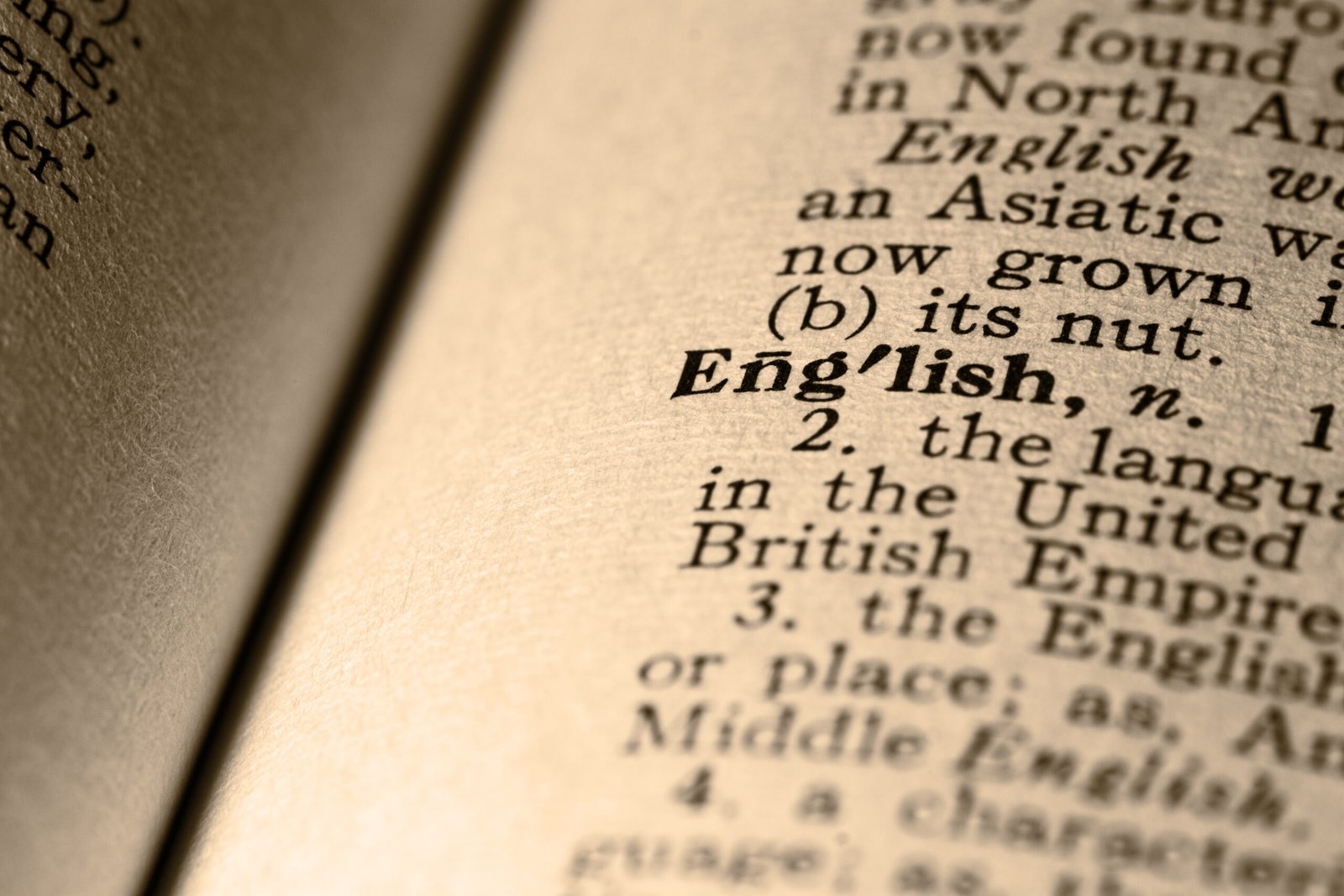
What we now call “Standard English” was never linguistically superior to other forms of speech. It became “standard” largely because it was associated with education, authority and social prestige rather than because it was inherently more correct.

Photo Credit: Steve Cadman / Flickr
As linguist Raymond Hickey explains in Standards of English: Codified Varieties Around the World, standard varieties are shaped less by inherent linguistic quality than by historical power structures and institutional influence. In other words, the English eventually labelled “correct” was largely the version spoken by those who controlled political, economic and cultural life.
And like all living languages, it has continued evolving ever since.
The dialect that won
In the late sixteenth century, the English writer and courtier George Puttenham advised aspiring authors to imitate the speech used “within sixty miles of London”, particularly at the royal court.
Puttenham’s observations appeared in The Arte of English Poesie (1589), a fascinating glimpse into how linguistic prestige was already linked to social hierarchy and court culture in Tudor England.
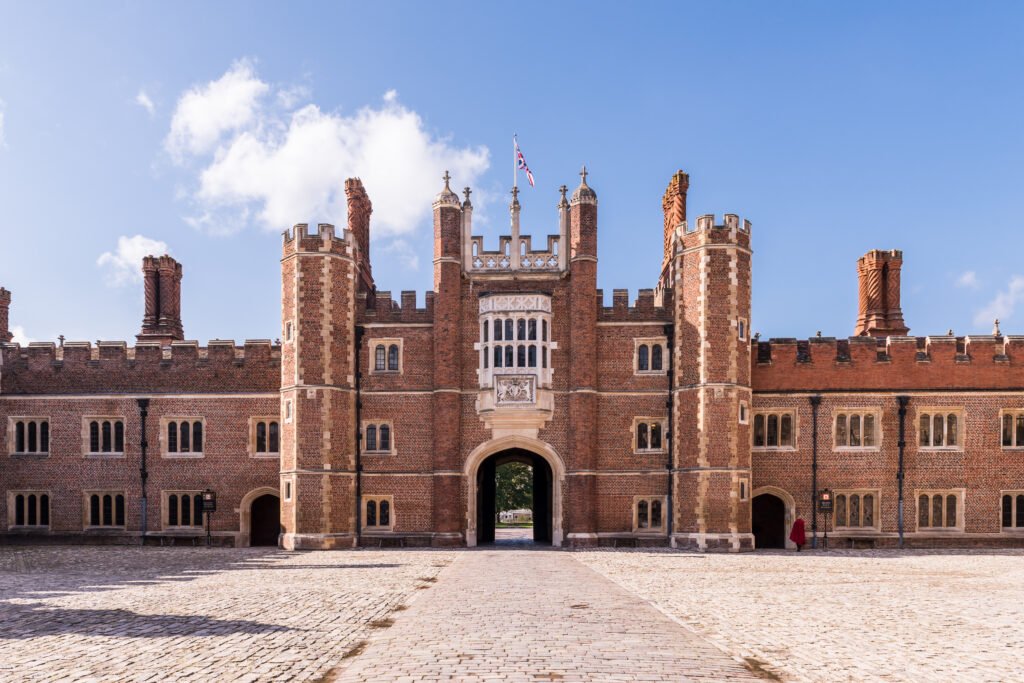
At the time, the Tudor court was not merely the centre of politics. It shaped fashion, etiquette and culture across England.
The dialect spoken around London gradually acquired prestige because the capital itself dominated political and economic life. The royal court, the legal system, expanding trade networks and, later, the printing press all helped spread this variety beyond the regional forms spoken elsewhere in the country.
That process eventually laid the foundations for what became Standard British English.
But this did not happen because London speech was inherently clearer, more logical or more beautiful. Had political power been centred in northern England instead, today’s “correct” English might sound entirely different.
Language history is full of coincidences, power shifts and unexpected twists.
An international language is born
For centuries, English remained relatively regional. That changed dramatically with the expansion of the British Empire from the sixteenth century onwards.
Colonisation carried the language to North America, the Caribbean, Africa, South Asia and Oceania. Along the way, it absorbed local vocabulary, accents and grammatical influences.
The result was not one English, but many Englishes.
After the American Revolutionary War, the newly independent United States began developing its own linguistic identity. American spellings such as “color” and “center” became standardised partly through the work of Noah Webster, whose dictionaries aimed to distinguish American usage from British conventions.
Later, the global rise of the United States through cinema, television, music, technology and business spread American English even further.
Today, millions of people unconsciously switch between British and American vocabulary without even noticing.
You might “take the lift” in one sentence and “watch a movie” in the next.
And nobody is confused.
English no longer belongs to native speakers alone
English has now become the closest thing the modern world has to a global lingua franca — a shared language used between people with different native languages.
As of May 2026, the world’s population has reached roughly 8.3 billion people. According to estimates from Statista and Ethnologue, around 1.53 billion people now speak English either as a native or second language.

That means nearly one in every five people on Earth can communicate in English, a scale few languages in human history have ever achieved..
Yet only around 390 million are native speakers. Roughly 1.1 billion learned it as a second language, meaning non native speakers outnumber native speakers by nearly three to one.
In many ways, English no longer belongs primarily to Britain, the United States or other traditionally English speaking countries. It belongs to the people using it every day across borders, cultures and professions.
The EF English Proficiency Index estimates that roughly 75% of conversations conducted in English worldwide now take place between people for whom it is not their mother tongue.
An engineer from Greece may speak English with a colleague from Germany. A business meeting in Dubai may involve participants from India, Nigeria and Brazil. In science, aviation, diplomacy, tourism and technology, English functions less as a symbol of national identity and more as a practical shared tool.
Many multinational companies, from Samsung to Nestlé, use English internally even when few employees are native speakers.
That reality changes the meaning of “correct English”.
In international settings, successful communication often matters far more than perfect grammar or accent reduction.
The myth of one “proper” English
Linguists often distinguish between two broad approaches to language.
Prescriptivists believe there are strict rules governing “proper” usage and that these rules should be preserved. Descriptivists, meanwhile, study how people actually use language in everyday life. Rather than viewing change as decay, they see it as a natural part of linguistic evolution.
Modern linguistics overwhelmingly leans toward the descriptive approach.
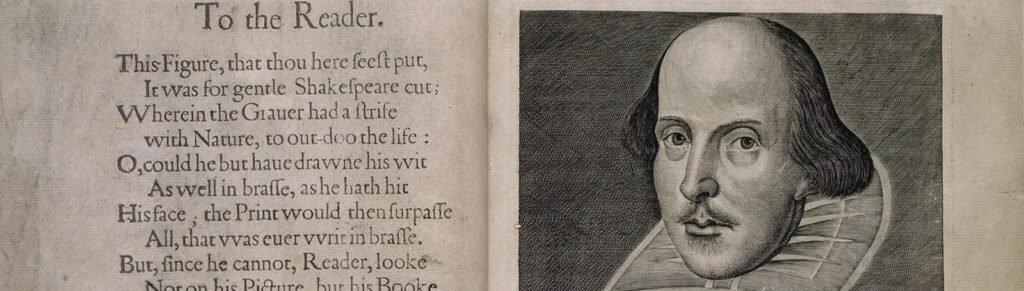
After all, the language has always changed. The English of William Shakespeare already sounds strange to modern ears. The English of Geoffrey Chaucer is even harder to understand. If language had truly remained fixed and “correct”, none of these historical differences would exist.
Ironically, many so called grammar rules were themselves shaped more by social preference than linguistic necessity.
During the eighteenth century, some grammarians attempted to model English after Latin because they considered Latin intellectually superior. That is partly why generations of students were taught never to split infinitives, meaning placing a word between “to” and a verb, as in “to boldly go”, or to end sentences with prepositions, as in everyday phrases such as “Who are you talking to?”, despite the fact that native speakers had always used both forms naturally.
The famous prohibition against ending sentences with prepositions became so rigid that it later inspired one of the most quoted jokes about grammar, often attributed to Winston Churchill:
“This is the sort of nonsense up with which I will not put.”
Even Shakespeare, one of the greatest figures in the language’s history, regularly broke linguistic conventions and invented or popularised hundreds of words and expressions still used today, including “lonely”, “bedroom”, “gossip”, “manager” and “fashionable”.
The internet is changing the language again
Language evolution did not stop with dictionaries or grammar books.
The internet, smartphones and social media now shape English at extraordinary speed. New words appear almost overnight. Terms such as “selfie”, “doomscrolling” and “phubbing”, meaning ignoring someone in favour of your phone, would have sounded absurd only a few decades ago.
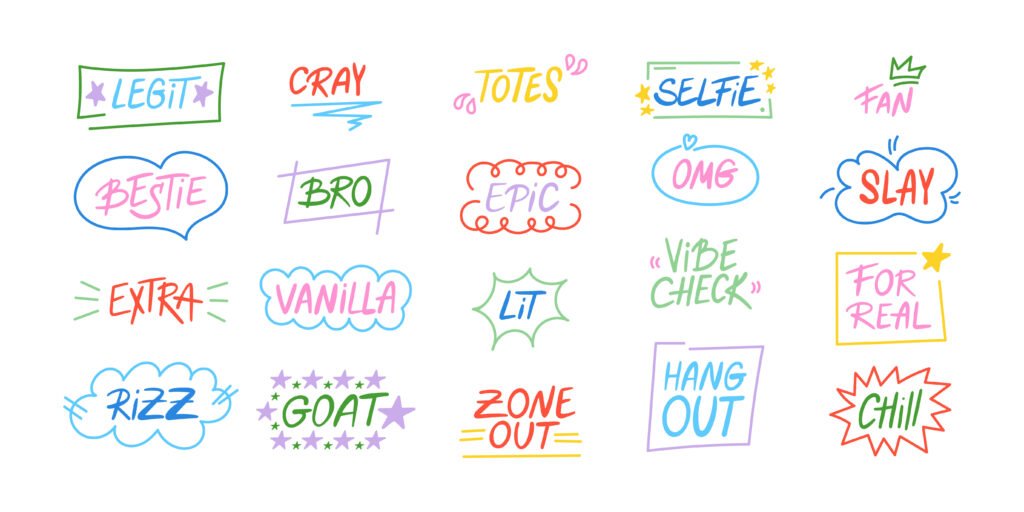
Online communication has also transformed written style itself. Text messages blur the boundaries between speech and writing. Emojis sometimes replace entire sentences. Younger generations move effortlessly between formal and informal registers depending on context.
To some people, these changes signal decline.
Yet similar fears have appeared throughout history whenever language evolved.
For generations, critics complained that slang, foreign influences, informal speech or new forms of communication were “ruining” English. Similar anxieties later surrounded radio, television, text messaging and social media.
Instead, the language simply adapted.
It always does.
So should you worry about speaking “perfect” English?
Probably not.
Clear communication matters. Context matters too. Formal writing still has standards, and professional situations often require careful language.
But the idea that there exists one pure, flawless form of English spoken correctly by a privileged minority is largely a historical illusion.
Your accent tells a story. Your phrasing reflects your experiences, education and cultural background. Whether you speak British English, American English, Indian English, Nigerian English or a blend of several varieties, you are participating in the ongoing evolution of a global language.
English survived not because it stayed pure, but because it never did.
From royal courts and colonial ports to immigrant communities and online slang, the language has always been shaped by outsiders, adaptation and change.
In that sense, speaking “perfect” English may matter far less than participating in the story of a language that was never truly fixed to begin with.
Sources
Babbel Magazine (Dictionary Wars: What Are Prescriptivists and Descriptivists?) • BBC News (Coverage of King Charles III’s Washington Visit) • British Council (The English Effect) • Cambridge University Press (Standards of English: Codified Varieties Around the World) • EF English Proficiency Index • Ethnologue (What Is the Most Spoken Language?) • Merriam-Webster (To Boldly Go: Star Trek and the Split Infinitive)and (Can You End a Sentence With a Preposition?)• Project Gutenberg (The Arte of English Poesie, 1589) • Royal.uk (The King’s Address to the Joint Meeting of Congress in Washington) • Shakespeare Birthplace Trust (Shakespeare’s Words) • Statista (The Most Spoken Languages Worldwide in 2026) • Worldometer (World Population Clock)