
***This article explains both the new EU air passenger rights approved in July 2026 and the existing rights that continue to apply until the updated rules enter into force
Clearer hand-luggage pricing, free family seating, easier compensation claims and stronger rerouting rights are coming under updated EU air passenger rules. However, the changes will not take effect immediately.
Flight cancellations, long delays and unexpected airline charges can turn even a carefully planned journey into a stressful experience. For expats and international residents living in Greece, where air travel is often essential for international journeys, family visits, work and island connections, knowing what an airline must provide can make a significant difference.
On 13 July 2026, the Council of the European Union gave its final approval to an extensive update of EU air passenger rights. The new framework aims to make existing protections clearer, introduce several new rights and make it easier for passengers to claim compensation or assistance when journeys go wrong.
Important: The new rules are not yet in effect. They will enter into force 12 months and 20 days after the regulation is published in the Official Journal of the European Union. Until then, the existing EU air passenger rules continue to apply.
What are the most important changes?
Under the updated framework, passengers will receive clearer information about their rights and the reasons behind a disruption. Airlines will also face more specific obligations regarding assistance, compensation claims and alternative travel arrangements.
Among the main changes are:
- clearer procedures and deadlines for compensation claims;
- stronger rerouting rights following cancellations or denied boarding;
- more clearly defined food, refreshment and accommodation obligations;
- protection of return journeys when the outbound flight was missed;
- better transparency over fares that include a hand-baggage allowance;
- free adjacent seating for families and certain accompanying passengers;
- reinforced protection for passengers with disabilities or reduced mobility.
The reform follows approximately 13 years of negotiations over how to modernise the EU passenger protections originally introduced in 2004.
Does the new law mean free hand luggage?
This is one of the most important parts of the update—and one that has already been misunderstood by many or reported incorrectly.
The new rule does not simply state that every passenger will be entitled to bring a large cabin suitcase free of charge.
Instead, airlines will have to display, by default and before the booking process begins, a fare that includes an allowance for one piece of hand baggage. The aim is to make airline prices easier to compare and reduce situations in which an apparently low fare becomes considerably more expensive once baggage charges are added.
In practical terms, travellers should be able to see the cost of a fare that includes hand luggage before entering the booking process, rather than discovering the true price only after several additional booking steps.
Therefore, headlines claiming that the EU has introduced “free cabin luggage for everyone” do not accurately explain the provision. The change is primarily about price transparency and the fare airlines must display at the beginning of the booking process.
What travellers should remember: A displayed fare including a hand-baggage allowance is not necessarily the same as every type or size of cabin suitcase becoming universally free.
Compensation for delays and cancellations
The updated framework retains compensation at levels broadly similar to those that apply today.
Passengers may be able to claim compensation when:
- a flight arrives more than three hours late; or
- a flight is cancelled fewer than 14 days before departure.
Depending on the circumstances and distance of the flight, compensation may amount to:
€250 for flights of 1,500 kilometres or less
€400 for intra-EU flights and other flights between 1,500 and 3,500 kilometres
€600 for other qualifying flights
Compensation is based mainly on the distance of the journey rather than the original price of the ticket.
An airline may not have to pay financial compensation when a disruption results directly from extraordinary circumstances outside its control. However, the updated framework requires the airline to prove that those circumstances caused the disruption and that it took all reasonable measures to avoid or limit the consequences.
Claims should become easier to submit
Many passengers do not claim compensation because they do not know whether they qualify, where to submit their request or how long an airline has to respond.
Under the updated rules, when a delay may qualify for compensation, the airline will have to contact the passenger electronically within 96 hours after arrival. The message must explain the passenger’s rights and provide clear instructions for submitting a claim.
Once a claim has been submitted, the airline must acknowledge receipt immediately. It must then respond within 30 days by either paying the compensation or clearly explaining why the request has been rejected.
For passengers, this should reduce the uncertainty created by difficult-to-find forms, delayed responses and unexplained refusals.
Food, refreshments and hotel accommodation
The new framework also clarifies what airlines must provide while passengers wait during an eligible disruption.
Passengers will be entitled to:
- refreshments every two hours;
- a meal after three hours;
- a further meal every five hours, up to three meals per day;
- internet access;
- two telephone calls.
When a delay requires an overnight stay, the airline must provide hotel accommodation and free transport between the airport and the accommodation.
If the airline fails to provide the required assistance, passengers may make their own reasonable arrangements and request reimbursement.
Practical advice: Always keep receipts for necessary meals, accommodation and transport. They may be required when requesting reimbursement from the airline.
Stronger rerouting rights
A cancelled flight does not always mean that a passenger must accept a refund and organise an entirely new journey alone.
When passengers choose rerouting following a cancellation or denied boarding, the airline must offer an alternative route at the earliest opportunity. Where appropriate, this may include:
- a flight operated by another airline;
- travel through another airport;
- a different route;
- another form of transport.
The airline must pay for the rerouting and provide it under comparable travel conditions. A passenger who originally booked a direct flight should not, for example, be unnecessarily required to accept a complicated journey involving several connections.
The airline should offer a suitable rerouting option within three hours. If it fails to do so, passengers may organise their own alternative travel and request reimbursement of up to 400% of the original ticket price.
Passengers may also be rerouted in a higher class without paying an additional charge.
Missing the outbound flight will no longer cancel the return
Some airline conditions have allowed carriers to cancel a passenger’s return journey when the passenger did not use the outbound part of the booking. This is commonly known as the “no-show” rule.
Under the new framework, an airline will no longer be able to deny boarding on the return flight solely because the passenger did not take the outbound flight.
This could be particularly important when a traveller reaches their destination by another route following an emergency, a missed connection or a change in plans but still intends to use the return part of the original booking.
Families with children will be able to sit together without an extra fee
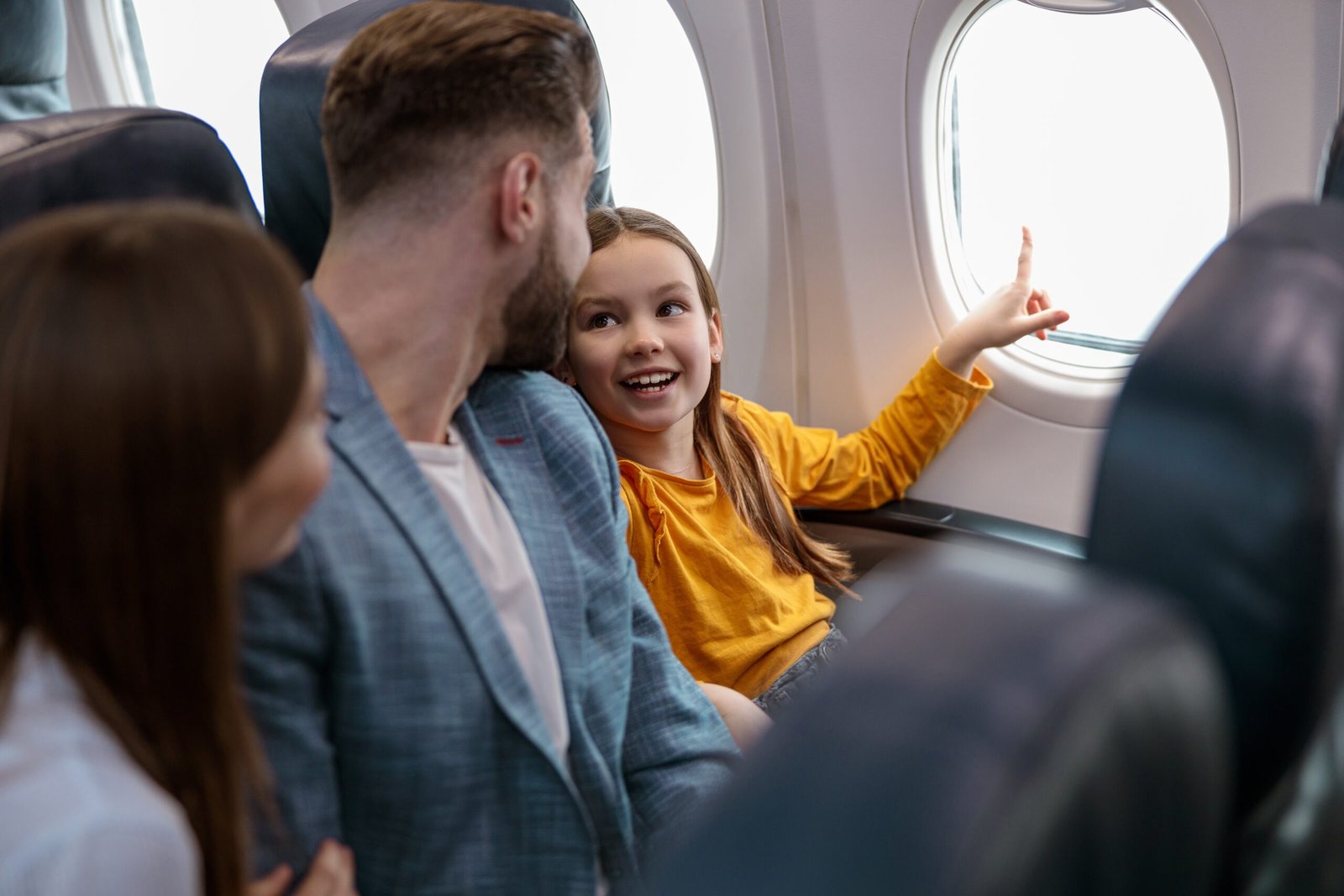
Families travelling with children will have the right to be seated together without paying an additional seat-selection charge.
The protection will also apply to a person accompanying a passenger with specific needs.
This addresses a common concern for parents who may otherwise feel pressured to pay extra simply to ensure that a young child is seated beside an adult responsible for them.
For families: Sitting together will become a passenger right rather than an optional extra that parents may feel obliged to purchase.
Stronger rights for passengers with reduced mobility
The updated framework includes additional protections for passengers with disabilities or reduced mobility, as well as unaccompanied minors and pregnant travellers.
The reinforced protections include:
- priority during assistance and rerouting;
- new compensation rights when an airport fails to provide sufficient assistance;
- the ability to travel with mobility equipment and assistance dogs without paying for additional insurance;
- replacement of mobility equipment at no cost when it is lost or damaged;
- free adjacent seating for an accompanying person.
The rules also strengthen protection against denied boarding for passengers with reduced mobility, pregnant passengers and unaccompanied minors.
Airlines must communicate more clearly
During a disruption, the lack of reliable information can be almost as frustrating as the delay itself.
Under the revised rules, airlines must provide clearer and more comprehensive information about passengers’ rights. They must also explain the cause of the disruption as soon as that information becomes available.
When an airline expects a delay, it must inform passengers as soon as possible and no later than the scheduled departure time shown on the ticket.
Airlines must also offer passengers at least one free and effective way to communicate with them.
What counts as an extraordinary circumstance?
Airlines may avoid paying financial compensation when a delay or cancellation results from an extraordinary circumstance outside their control and unrelated to their normal operations.
The updated framework provides greater clarity on what may qualify as an extraordinary circumstance. It also requires an airline to provide passengers with a clear and understandable explanation when relying on extraordinary circumstances to reject a claim.
Most importantly, the airline must prove that the event directly caused the disruption and that all reasonable measures were taken to prevent or reduce its effects.
Even when financial compensation is not payable because of extraordinary circumstances, other rights—such as assistance, food or accommodation—may still apply.
Which flights are covered?
Passengers do not have to be EU citizens to benefit from EU air passenger protections.
The updated rules apply to passengers:
- travelling on flights within the EU, whether the airline is based inside or outside the EU;
- departing from an EU airport for a non-EU country, whether the airline is based inside or outside the EU;
- arriving in the EU from a non-EU country when the flight is operated by an EU airline.
For someone living in Greece, this means that a flight from Athens to another EU country is covered regardless of the passenger’s nationality. A flight departing from Greece for the United Kingdom, the United States or another non-EU destination is also covered.
A flight arriving in Greece from outside the EU is generally covered when it is operated by an EU airline.
When will the new rules start applying?
The Council gave the legislation its final approval on 13 July 2026, but this does not mean that the new protections became available immediately.
The updated rules will enter into force 12 months and 20 days after the regulation is published in the Official Journal of the European Union.
The precise starting date therefore depends on the date of official publication. Travellers should wait for the confirmed legal application date before assuming that the new provisions apply to a particular journey.
What should passengers do when a flight is disrupted?
Even under stronger legislation, passengers will still need to document what happened.
Keep:
- the booking confirmation and boarding pass;
- emails, text messages and notifications from the airline;
- screenshots of the flight status;
- receipts for reasonable meals, accommodation and transport;
- details of any alternative journey offered;
- copies of compensation or reimbursement claims.
It is also important to ask the airline for the reason behind the cancellation or delay and to request written confirmation whenever possible.
Until the new rules apply: know your existing passenger rights
Although the changes will take time to enter into force, air passengers already have important rights under existing EU law—and many travellers may not be fully aware of them.
Depending on the circumstances, the EU rules currently in force may already give passengers rights to:
- compensation for qualifying cancellations, long delays and denied boarding;
- reimbursement or rerouting when a flight is cancelled;
- meals, refreshments and communication during certain delays;
- hotel accommodation and airport transport when an overnight stay becomes necessary;
- assistance when a flight is overbooked;
- reimbursement when a passenger is downgraded;
- support when baggage is lost, damaged or delayed;
- specific assistance for passengers with disabilities or reduced mobility.
Do you know the passenger rights that already apply?
Until the new rules enter into force, you can read the European Union’s official guide to the existing rights covering delays, cancellations, denied boarding, missed connections and baggage problems.
You may also find interesting