
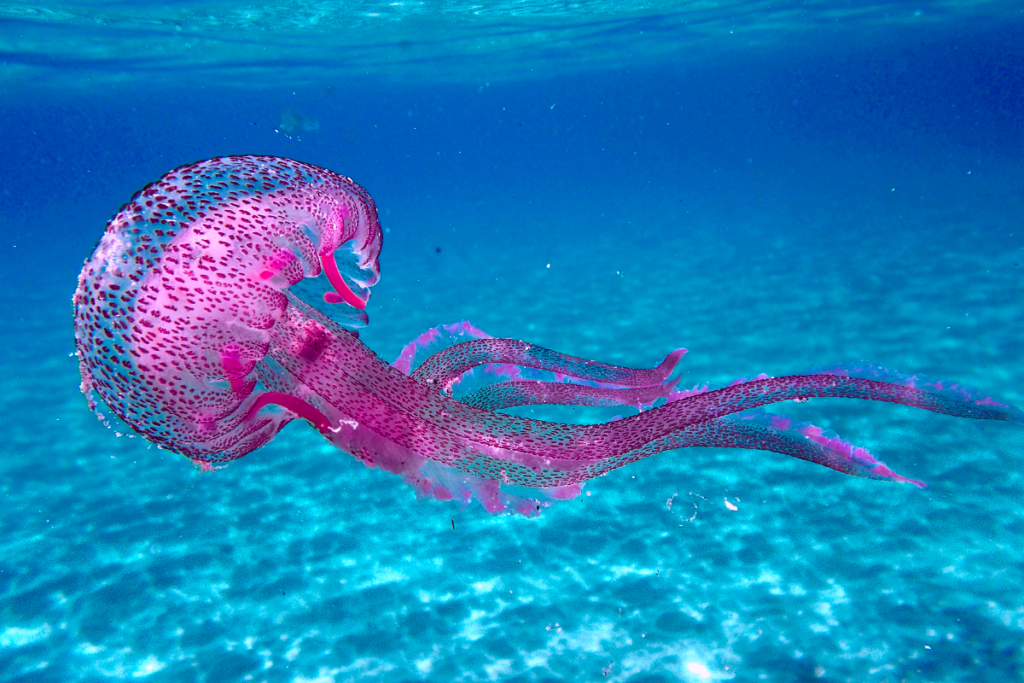
The Hellenic Red Cross (HRC), in response to the increased presence of the purple jellyfish (Pelagia noctiluca) in Greek waters during the summer season, is informing the public about the symptoms its sting may cause and has issued five useful First Aid instructions for immediate and safe treatment.
The purple jellyfish is considered the most venomous jellyfish species in the Mediterranean. Its tentacles and bell are covered with stinging cells, known as nematocysts, which release toxic substances when they come into contact with the skin.
Although its sting can be particularly painful, serious allergic reactions are rare.
What to Do
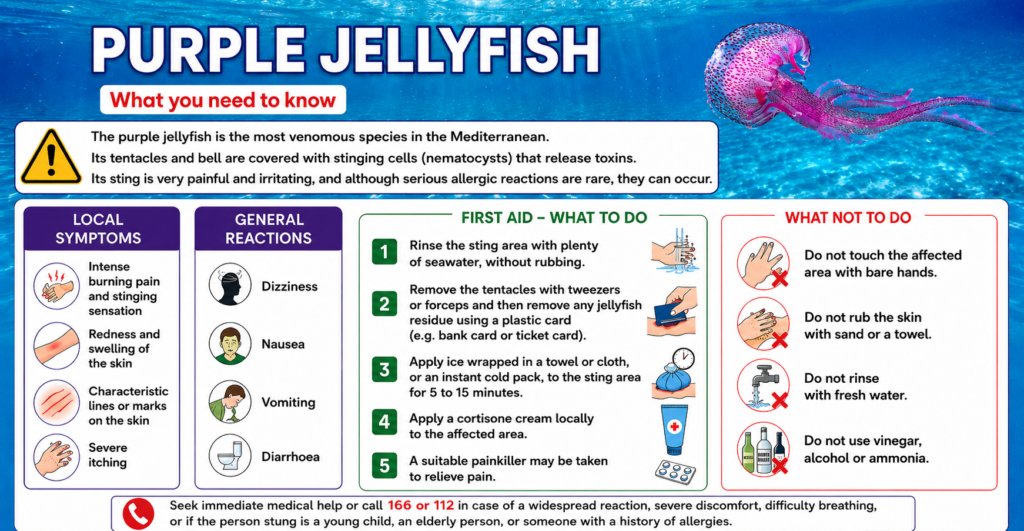
According to the Health Department of the Hellenic Red Cross, these are the recommended steps after a purple jellyfish sting.
1
Rinse the affected area with plenty of seawater, without rubbing it.
2
Remove the tentacles with tweezers or forceps. Then remove any remaining jellyfish residue using a plastic card, such as a bank card or ticket card.
3
Apply ice wrapped in a towel or cloth, or an instant cold pack, to the sting area for 5 to 15 minutes.
4
Apply a cortisone-based cream locally to the affected area.
5
A suitable painkiller may be taken to relieve pain.
What NOT to Do
✕Do not touch the affected area with bare hands.
✕Do not rub the skin with sand or a towel.
✕Do not rinse the area with fresh water.
✕Do not use vinegar, alcohol or ammonia.
When to Seek Medical Help
Seek medical help immediately in case of a widespread reaction, severe discomfort, difficulty breathing, or if the person stung is a young child, an elderly person or someone with a history of allergies.
In Greece, call 166 or 112.
Most Common Local Symptoms
Local symptoms
- Intense burning pain and a stinging sensation
- Redness and swelling of the skin
- Characteristic lines or marks on the skin
- Severe itching
Possible general reactions
- Dizziness
- Nausea
- Vomiting
- Diarrhoea
The Hellenic Red Cross reminds the public that knowing basic First Aid can play an important role in responding effectively to emergencies and protecting people’s health and safety during the summer holidays.
Source: Hellenic Red Cross guidance on purple jellyfish First Aid.