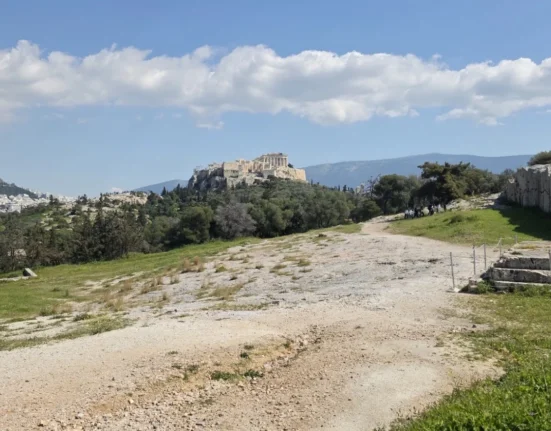


American travel to Greece has increased dramatically over the past decade. Direct flights, strong visitor spending and a growing appetite for richer experiences are reshaping the relationship between the two countries.
On 9 August 2026, The Wall Street Journal published “The Rise of the Unstoppable American Tourist”, reporting that Americans made a record 24 million trips to Europe in 2025 and that US visits to Greece were roughly four times higher than a decade earlier.
Greece holds a different meaning for each traveller. For some it brings ancient history to life. For others it offers an island holiday, a return to family roots or the beginning of a longer relationship with the country.
AT A GLANCE
US travellers to Greece in 2025 Approximately 1.55 million
Spending by US visitors €1,736.7 million
Annual increase in US visitor spending 9.7%
Summer 2026 connections Nine US cities
Weekly US departures from Athens 103
A decade of remarkable growth
According to official data released by the Bank of Greece, spending by visitors from the United States rose by 9.7% in 2025 to reach €1,736.7 million, or approximately €1.74 billion. The Bank records this spending as travel receipts.
Greece welcomed about 1.55 million US travellers during the year, an increase of only 0.2% compared with 2024. Based on the reported totals, spending amounted to approximately €1,120 per US traveller. Overnight stays by US residents fell by 2.5%, showing that American visitors generated considerably more tourism income despite spending fewer nights in the country overall.
Across all international markets, foreign visitors spent €23.63 billion in Greece during 2025. Germany and the United Kingdom generated more revenue, yet America’s rapid rise and strong spending power have given it growing influence.
Direct flights changed the relationship
During summer 2026, Athens offers 103 departures a week to the United States, serving New York JFK, Newark, Chicago, Philadelphia, Atlanta, Boston, Washington Dulles, Charlotte and Dallas Fort Worth. Five airlines operate the routes. Athens International Airport reported a further 10% rise in direct traffic between Athens and the United States during the first four months of 2026.
The Dallas service, launched by American Airlines in May, is especially significant. Dallas Fort Worth is the airline’s largest hub, opening convenient connections across Texas, the southern and western United States and parts of Latin America.
Direct access changes travel behaviour. A journey with fewer connections feels easier to organise, especially for families, older travellers and people carrying luggage for a long stay. It also makes Greece more attractive for a spring or autumn visit, when a complicated itinerary might discourage a shorter trip.
Athens gains from this shift. The capital once served many transatlantic visitors primarily as a gateway to the islands. It now holds its own as a destination. Americans are spending time in its museums and neighbourhoods, eating their way through its growing restaurant scene and using it as a base for trips to Sounion, Delphi, Nafplio and the Saronic Gulf.
The city gives them two versions of Greece within a few days. The Acropolis and Ancient Agora provide the history they crossed the Atlantic to see. Contemporary Athens offers galleries, rooftop bars, markets, coastal walks and the dense, imperfect energy of a modern Mediterranean capital.
Greece already lives in the American imagination
Ancient Greece occupies a permanent place in American education and public life. Democracy, theatre, philosophy and mythology introduce the country long before many people consider travelling abroad. Places such as the Acropolis, Delphi and Olympia arrive with a sense of recognition. Visitors often feel they are encountering the physical setting of stories and ideas they have known for years.
Popular culture has built another Greece around that foundation. Films, television, travel publishing and social media have spread the image of whitewashed villages, churches with blue domes and tables set beside the sea. Santorini and Mykonos carry enormous visual power, even among people who know little about the Cyclades as a whole.
Food provides a warmer and more accessible route into the country. Greek restaurants have been part of American city life for generations, supported by a large and active diaspora. Once visitors arrive, they discover regional dishes and products that rarely appear on restaurant menus abroad.
The pull of family history
For many Greek Americans, the first visit begins with a family story. They arrive looking for a village they have heard about since childhood and leave with a clearer sense of how their family’s past connects with Greece today. The experience can turn a holiday into a homecoming, even when several generations have passed since the family left.
Heritage travel often spreads spending beyond the famous destinations. Family roots can lead visitors to villages in the Peloponnese, Epirus, Macedonia, Crete and smaller islands that sit outside the standard international itinerary. Local tavernas, guesthouses, guides and transport providers all benefit.
The diaspora also strengthens Greece’s visibility throughout the year. Personal recommendations carry unusual authority. A family member or friend who knows the country can influence where someone stays, which island they choose and whether they return.
Travellers want a deeper experience
American demand increasingly favours curated experiences. A week in Greece may include a food walk in Athens, a private visit to an archaeological site, a sailing day, a winery tour or a cooking lesson in a village home. These activities allow travellers to experience a place through the people who know it best.
Greece is particularly well suited to this kind of travel because local knowledge shapes so much of the experience. Small businesses can turn regional traditions, food and landscapes into memorable encounters, while directing more tourism income into local communities.
These possibilities reach far beyond the established destinations. In the Peloponnese, travellers can move between archaeological sites, vineyards, coastlines and mountain villages. Epirus combines hiking with traditional stone settlements and a rich food culture. Northern Greece offers Byzantine history, wetlands and vineyards, with Thessaloniki providing a natural starting point. On less familiar islands, visitors can enjoy the sea and village life at a gentler pace.
American visitors could also help Greece develop a longer tourism season. Spring and autumn are ideal for cultural touring, outdoor activities and city breaks. Athens attracts visitors throughout the year, while many mainland destinations are at their most inviting after the summer heat and crowds have faded.
Success brings pressure
Tourism supports employment, business revenue and investment, but it also places pressure on Greece’s busiest destinations.
During the peak season, popular islands face growing demands on water supplies, waste systems, roads and ports. Cruise ships bring thousands of visitors into small towns within hours, while holiday rentals reduce the housing available to residents and seasonal workers. Visitors can ease some of this pressure by exploring less conventional Greek islands.
Athens faces similar challenges. Tourism has revived buildings and neighbourhoods in the centre, while rising rents have made housing a major factor in the cost of living in Greece. Strong American spending may also encourage more premium accommodation and services, gradually changing the price and character of popular areas.
Spreading tourism across quieter months and overlooked regions would help protect housing, natural resources and local culture. A healthy tourism economy also allows residents to continue living well in the places visitors come to enjoy.
When a holiday becomes a possible future
Some Americans leave Greece planning another summer, while others begin considering a longer stay. Remote work, retirement, family ties and property ownership have widened that interest. Residence routes include the Digital Nomad Visa and the Golden Visa programme. Each has specific eligibility requirements and tax implications that require professional advice.
Living in Greece brings practical considerations that rarely appear during a holiday. Bureaucracy, healthcare, language, employment and year round housing shape daily life. Islands can become very quiet in winter, while Athens offers more services alongside traffic, summer heat and the pressures of a large city. Xpat.gr’s complete guide to moving to Greece explains what prospective residents should consider.
Most Americans will remain visitors. A smaller number are turning their connection with Greece into seasonal living, retirement or permanent relocation.
Related Articles on Xpat.gr
Sources
Bank of Greece
Developments in the Balance of Travel Services 2025, 7 May 2026.
Athens International Airport
First Direct Route from Athens to Dallas Operated by American Airlines, 27 May 2026.
American Airlines
Your European Summer Is Calling, 21 May 2026.
The Wall Street Journal
The Rise of the Unstoppable American Tourist, 10 August 2026.