
Parents whose children attend school in Greece will encounter new rules governing school trips and educational visits during the 2026–27 academic year.
The new framework introduces stronger privacy protections, criminal-record checks for travel-agency personnel and measures intended to make school trips more affordable. It also requires primary-school classes to undertake at least six educational outings during the school year.
The changes were introduced through two ministerial decisions covering educational activities outside primary and secondary schools.
Key Takeaways
- A pupil’s phone can be held if it is used to record another pupil without consent.
- The device is returned to the parent or guardian after the trip.
- Relevant travel-agency personnel must provide criminal-record extracts.
- Primary-school classes must undertake at least six educational outings each year.
- Schools may organise trips together to seek lower prices.
- The participation threshold for special education school activities has been reduced to 50%.
- International-school parents should ask how the rules apply within their school’s particular framework.
Quick Navigation
What Changes When Pupils Use Phones on School Trips?
The new rules establish a specific response when a pupil photographs, films or records another participating pupil without consent.
The device must be switched off and kept by the accompanying teachers. It is then returned to the pupil’s parent or guardian after the trip has ended.
This is not a general ban on pupils taking phones on school trips. The measure concerns the unauthorised recording of other pupils.
The provision gives accompanying teachers a defined procedure to follow. Parents may want to remind children that being outside the school building does not remove the school’s rules on privacy, consent and responsible phone use.
The rule is particularly relevant because a photograph or video can be shared online within seconds. A pupil may regard the recording as harmless, while the child being filmed may not have agreed to appear in it.
Criminal-Record Checks for Travel-Agency Personnel
Travel agencies organising school trips face an additional safeguarding requirement.
The owner of the agency and members of staff who will accompany the pupils must provide an extract from their criminal record.
The measure is intended to strengthen the checks applied to adults who come into direct contact with children during school travel. It applies to the relevant travel-agency personnel in addition to the responsibilities already held by teachers and school administrators.
Parents can ask the school which travel agency has been selected, whether agency personnel will accompany the group and what safeguarding procedures have been followed.
At Least Six Outings for Primary-School Classes
For the first time, the total number of educational outings in primary education cannot be fewer than six per class during each school year.
The outings must be connected to the curriculum and defined learning objectives. They may introduce pupils to:
- culture and history;
- science and technology;
- the natural environment;
- human rights and democratic participation;
- physical and mental health;
- wellbeing and social development.
The teachers’ association at each school may approve additional accompanying teachers when this is considered necessary for the safe transport and supervision of pupils.
What Counts as an Educational Outing?
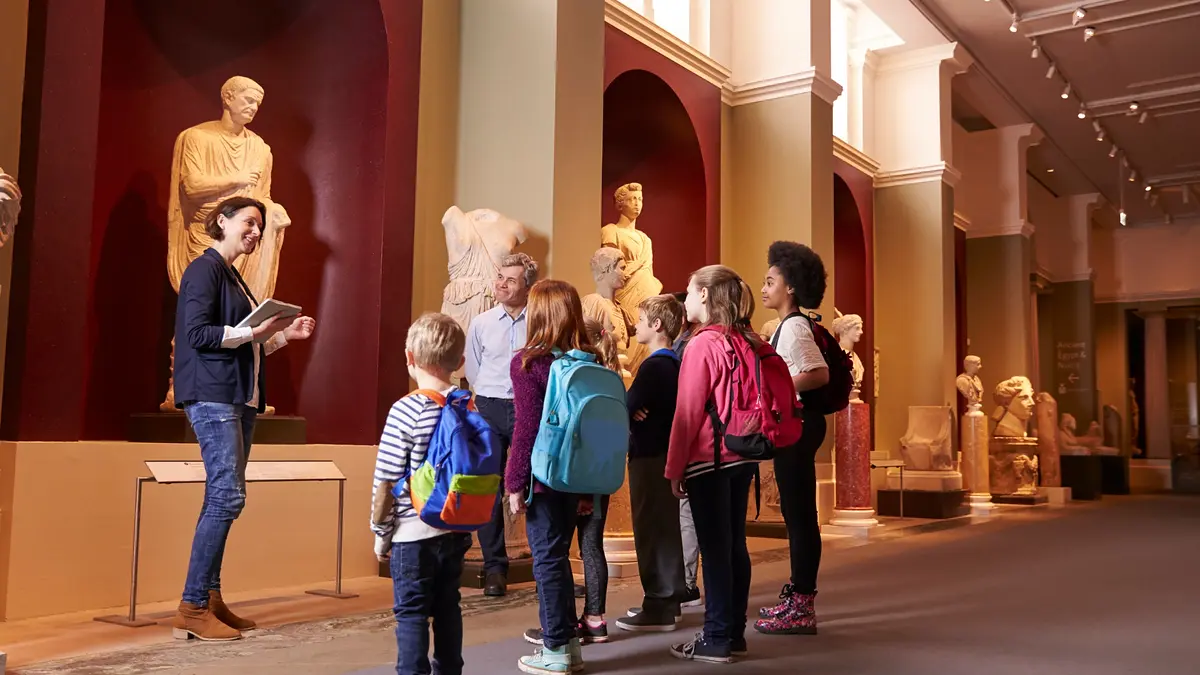
Educational outings include organised visits to museums, archaeological sites, science centres, theatres, environmental projects and other destinations connected to the curriculum.
Primary-school classes must undertake at least six educational outings during each school year. This does not mean six overnight or long-distance trips.
Schools Can Cooperate to Reduce Trip Costs
Two or more schools may now cooperate when arranging trips in Greece or abroad.
By organising a trip together, schools may be able to obtain better offers from travel agencies and use buses, accommodation and other services more efficiently. According to the Education Ministry, the purpose is to reduce the financial burden on participating families.
Before agreeing to the cost, parents should check:
- what the quoted price includes;
- whether meals, tickets and insurance are included;
- when payments are due;
- what happens if the trip is cancelled;
- whether a refund is available if the child cannot participate.
The possibility of schools working together does not guarantee that every jointly organised trip will be cheaper. Parents should still receive clear information about the programme, provider, total price, payment schedule and cancellation conditions.
Easier Participation for Pupils in Special Education
The minimum participation threshold for trips organised by special education schools has been reduced from 70% to 50% of the pupils for whom the activity is arranged.
These schools are known in Greek as Scholikes Monades Eidikis Agogis kai Ekpaidefsis (Σχολικές Μονάδες Ειδικής Αγωγής και Εκπαίδευσης).
The change is intended to prevent educational activities from being cancelled simply because a large proportion of pupils are unable to participate.
Special education schools must have at least one accompanying adult for each class. The school’s teachers’ association may approve additional accompanying staff when this is necessary to give pupils safe and equal access to the activity.
The new threshold should make it easier for special education schools to organise activities for pupils who are able to take part without requiring participation from almost the entire group.
New Activities for Secondary-School Pupils
Secondary-school outings may include what the framework describes as “active citizen” activities.
These can include:
- providing assistance during emergencies;
- charity and solidarity projects;
- environmental clean-ups and restoration projects;
- animal-welfare activities;
- human-rights, health and education campaigns;
- activities highlighting the natural or cultural environment.
The activities must include organised preparation before the visit and an assessment afterwards.
Pupils who do not participate in an educational activity remain at school and follow a specially arranged timetable or take part in other school activities.
Do the Rules Apply to International Schools?
The ministerial decisions regulate educational activities within Greece’s primary and secondary education framework. The secondary-school decision expressly covers public and private schools governed by that framework.
Parents should not assume that every international or foreign-curriculum school will apply every provision in exactly the same way. Some schools operate under different legal, curricular or administrative arrangements.
If your child attends an international school, ask the school whether the new decisions affect its educational visits and how the rules will be incorporated into its existing trip policy.
Parents comparing schools can also consult Xpat.gr’s International Schools in Greece: Top Schools, Tuition Fees & Curricula (2026 Guide).
Questions to Ask an International School
- Do the new ministerial decisions apply to the school’s trips?
- What consent is required for photographs, videos and recordings?
- Who may hold a pupil’s phone and under what circumstances?
- What safeguarding checks apply to external travel providers?
- How many teachers or other adults will accompany the pupils?
- What insurance arrangements cover domestic and overseas trips?
Whatever educational system the school follows, its written trip policy and parental-consent documents should explain the rules applying to pupils.
What Parents Should Check Before a School Trip
- Confirm the destination and educational purpose.
- Check the departure and expected return times.
- Review the transport and accommodation arrangements.
- Ask how many teachers and other adults will accompany the pupils.
- Save the school’s emergency contact information.
- Explain the phone, photography and recording rules to the child.
- Provide the school with relevant medical information.
- Check the insurance arrangements, particularly for trips abroad.
- Ask what happens if the child does not participate.
- Confirm the total cost and what it includes.
- Read the cancellation and refund conditions.
The Final Takeaway
The new framework gives schools clearer procedures and expands opportunities for learning outside the classroom.
For families, the most visible changes will be the stricter response to unauthorised recordings, additional safeguarding checks on travel-agency personnel, at least six primary-school outings and the possibility of schools cooperating to seek lower prices.
Parents should continue to read every consent form carefully and ask the school when a policy, cost or safety arrangement is unclear. Families with children attending international or foreign-curriculum schools should also confirm which parts of the Greek framework apply to their school.
You May Also Like
- International Schools in Greece: Top Schools, Tuition Fees & Curricula (2026 Guide)
- The Scholastic Assessment Test (SAT): A Complete Guide for Students Applying to University
- Universities and Colleges Admissions Service (UCAS) Clearing 2026: The Second Chance Many Students Don’t Know About
- Starting University Abroad: What First-Year Students Wish They Had Known
- Studying Medicine with the International Baccalaureate in Europe: Academic Requirements and Tuition Fees
- Understanding the Law National Aptitude Test (LNAT): An Interview with an Expert
- Scholastic Assessment Test (SAT), Advanced Placement (AP) and International Baccalaureate (IB) in US University Admissions
- Why International Student Numbers Are Falling in the Netherlands
- International Baccalaureate (IB) vs A-Levels: Which Is Better for International Students in Greece?
- Explore More Education Articles on Xpat.gr
Source
- Greek Ministry of Education: New Framework for School Trips, published 17 August 2026
>