
With thousands of years of seafaring history, Greece preserves one of the Mediterranean’s richest collections of underwater cultural remains. Prehistoric settlements, ancient cargo ships, historic harbours, Byzantine vessels and wrecks from the two World Wars lie beneath its seas.
This submerged history received fresh attention on 21 August 2026, when the first International Day for Underwater Cultural Heritage was observed. The day was proclaimed at UNESCO’s 43rd General Conference in November 2025 to raise awareness of cultural heritage found in oceans, seas, rivers and lakes.
The Greek Ministry of Culture has established visitable underwater archaeological sites, with more being prepared across the country. Virtual experiences and the National Museum of Underwater Antiquities being developed in Piraeus are also intended to bring these discoveries within reach of people who do not dive.
For visitors, the practical question is simple: which underwater archaeological sites can people experience now, and which are still being prepared?
Greece’s underwater archaeological sites at a glance
| Site | Access and highlights |
|---|---|
| Peristera, Alonissos | Available through organised dives with certified providers. The late fifth-century BC wreck contains more than 3,500 amphorae. Its designated diving route reaches depths of approximately 22 to 30 metres. |
| Pagasetic Gulf | Three visitable sites at Tilegrafos, Kikynthos and Cape Glaros. Their remains date mainly from the Roman and Byzantine periods. Visits follow protected routes under the supervision of authorised diving professionals. |
| Fournoi Korseon | The Ministry is establishing two visitor areas at Akra Fygou and Vathylakas. Their operating regulations and visitor arrangements are being prepared. The Ministry’s announcement does not state that organised public dives have begun. |
| Piraeus museum | The museum is being developed inside the historic port silo and an adjoining new building. More than 2,500 exhibits are planned for its collections. The Ministry says it is intended to receive visitors in 2026 but does not provide a public opening date. |
Peristera: diving over a cargo from the classical world
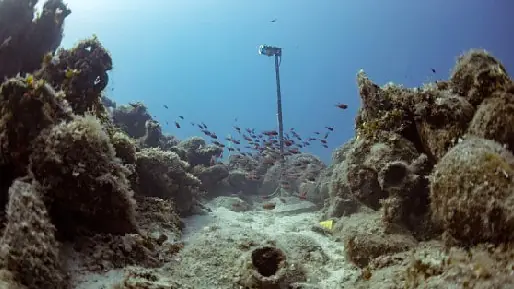
The best-known of Greece’s underwater museums lies beside the uninhabited island of Peristera, east of Alonissos in the Northern Sporades. A fisherman discovered the wreck in 1985 near the island’s western coast. Archaeological evidence dates it to the last quarter of the fifth century BC.
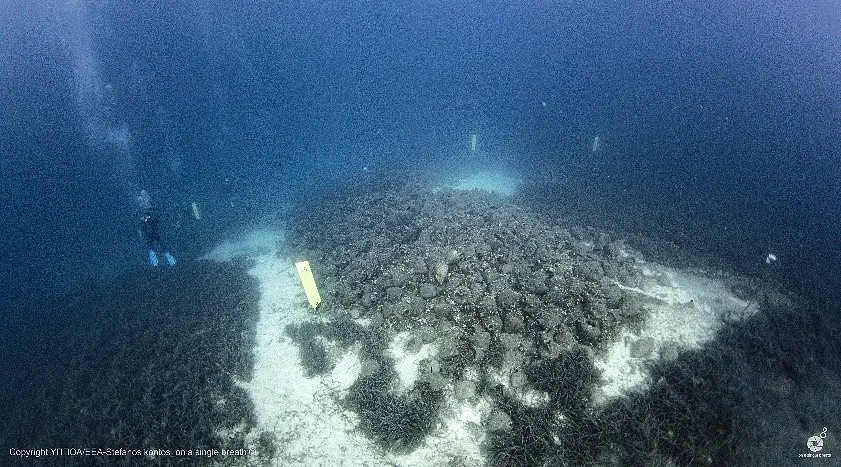
The merchant vessel was carrying more than 3,500 pointed transport amphorae. Archaeologists have identified two principal types, produced in Mende and ancient Peparethos, now Skopelos. Both places were associated with wine production, and the Ministry of Culture considers it likely that the amphorae held wine.
The main cargo was accompanied by black-glazed cups and plates, lamps, a mortar and objects used by the crew. Lead anchor fittings and nails provide further evidence of the equipment carried aboard the vessel.
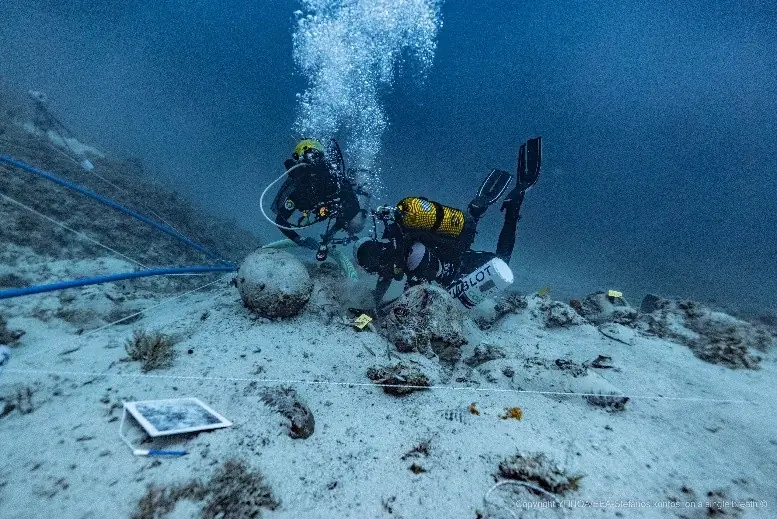
The wooden parts of the ship have largely disappeared, but its amphorae remain gathered in a large concentration on the seabed. Divers can observe the shape and scale of the surviving cargo while following a controlled route around it.
Organised visits reach depths of approximately 22 to 30 metres. Access is arranged through certified diving centres, and visitors enter the site with professional guides trained to accompany divers through protected underwater archaeological areas.
Can non-divers experience Peristera?
People who do not scuba dive can explore a digital recreation of the wreck at the visitor information centre in Patitiri, Alonissos. The virtual presentation introduces the site and the work of the underwater archaeologists who investigated it.
According to Visit Greece, diving visits require a reservation through a certified centre and are generally offered from May to October. The official visitor information specifies an Advanced Open Water Diver qualification.
Availability may depend on weather, sea conditions and the schedules of local diving centres. Visitors should confirm requirements and operating dates before travelling.
Three underwater archaeological sites in the Pagasetic Gulf
The western Pagasetic Gulf contains three visitable underwater archaeological areas at Cape Tilegrafos, Kikynthos and Cape Glaros. Their remains cover different periods and forms of maritime activity, from a late Roman cargo to a Byzantine merchant ship and a hazardous passage marked by wrecks and anchors.
The sites are reached by boats operated by certified diving centres. Underwater, visitors follow predetermined routes designed to provide clear views of the antiquities while protecting the most sensitive parts of each site.
Cape Tilegrafos
The Cape Tilegrafos wreck was identified in 2000 in a bay on the western side of the Pagasetic Gulf. Its remains lie on a rocky seabed with pockets of sand at depths of approximately 17 to 23 metres.
Archaeologists found eight types of commercial amphorae, all dating to the fourth century AD. Twenty vessels came from the Peloponnese, forming the largest known concentration of this particular type found in Greece. Other amphorae originated in the northeastern Aegean, while one was identified as Palestinian.
Pitch found inside many of the vessels indicates that they were used to transport wine. The mixture of amphora types shows that the ship was carrying containers from several production areas.
The amphorae lie in two principal concentrations without the close arrangement seen at Peristera. The Ministry considers this distribution an indication that the vessel overturned and its cargo lost its original formation.
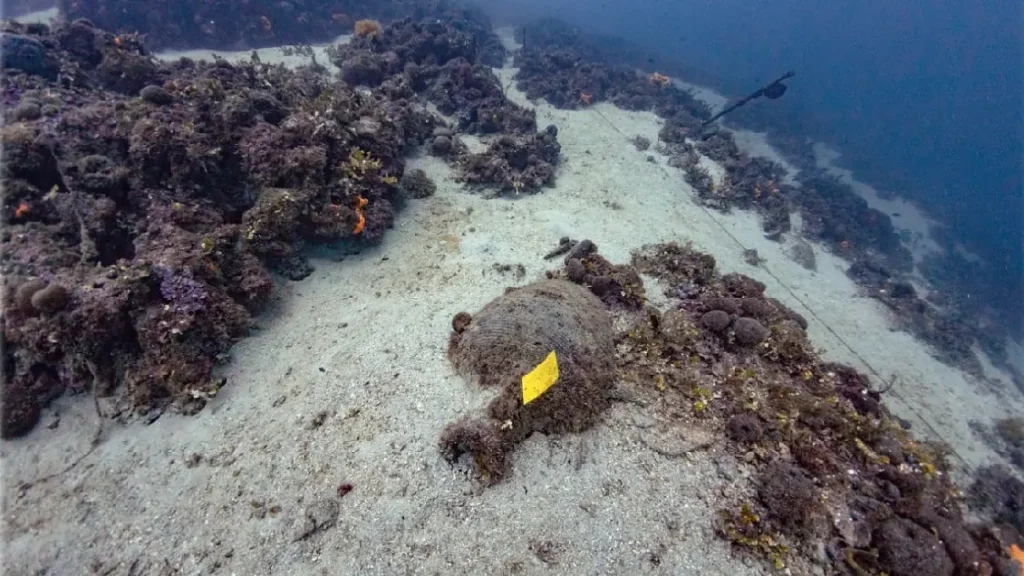
Image credit: Hellenic Ministry of Culture
Kikynthos
The uninhabited islet of Kikynthos forms a natural breakwater at the entrance to the bay of Amaliapolis. Archaeological remains found on and around the islet cover a long period, from early Christian times to the 19th century.
On its northwestern coast, archaeologists discovered a concentration of large broken transport vessels in 2005. The site lies at depths of approximately 3.5 to 12 metres, making it considerably shallower than Peristera and Tilegrafos.
The cargo includes fragments of large pithoi, a type of storage vessel known from the ninth century onwards, and amphorae dating more closely to the 11th and 12th centuries.
Based on the material found so far, archaeologists believe the wreck belonged to a relatively small merchant ship, probably from the 11th century. Its cargo shows how large containers were transported by sea during the middle Byzantine period.
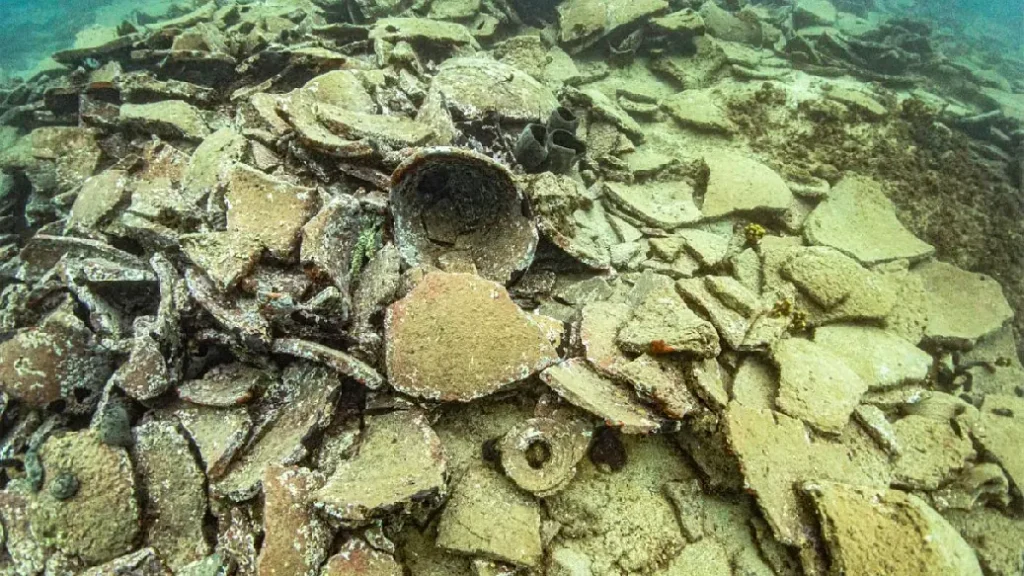
Image credit: Hellenic Ministry of Culture
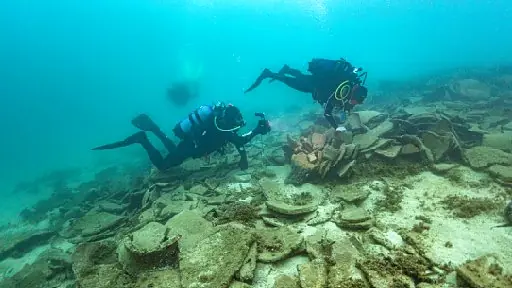
Image credit: Hellenic Ministry of Culture
Cape Glaros
Cape Glaros lies on the southwestern side of the Pagasetic Gulf. In antiquity, ships passed the cape while trying to enter the protected harbour of ancient Nies. The Ministry describes the cape as a dangerous passage, which helps explain the concentration of material found on its seabed.
Archaeologists have identified traces of at least four wrecks: one Hellenistic, one Roman and two Byzantine. Pottery and anchors from other periods may have been lost or discarded by vessels using the area.
Two concentrations contain more than ten Byzantine iron anchors. Nearby amphorae date to the 12th and 13th centuries, indicating that at least some of the anchors may be connected with the wreck of a large Byzantine merchant vessel.
According to the Ministry, this is the largest group of Byzantine anchors found in Greek waters. Glaros therefore presents evidence of repeated maritime traffic and accidents rather than one compact cargo.
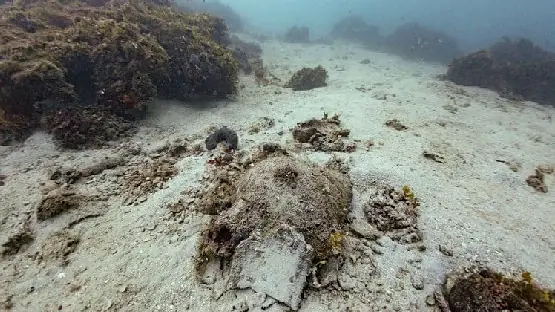
Image credit: Hellenic Ministry of Culture
How visits to the shipwrecks work
These are protected archaeological sites rather than ordinary recreational dive locations. Visitors travel aboard boats operated by certified diving centres, which are responsible for following the regulations governing each site.
At the site, boats use permanent moorings because dropping an anchor could damage the archaeological remains. Divers descend along a fixed line and join the designated underwater route at a set depth.
Underwater information panels identify objects, dates, depths and points of interest. The dive leader is responsible for keeping the group together and ensuring that visitors maintain the required distances.
- Each group may include no more than eight divers.
- Divers must follow the marked route and their professional guide.
- Visitors must remain at least 1.5 metres above the seabed.
- A minimum distance of one metre from visible finds must be maintained.
- Touching archaeological objects, signs, cameras or other installations is prohibited.
- Boats use permanent moorings rather than dropping anchors inside the sites.
Underwater and surface cameras allow the Ephorate of Underwater Antiquities to monitor activity. Peristera’s camera system has operated continuously since its pilot installation in 2020.
Certification and experience requirements depend on the depth and conditions of each route. Visitors should confirm these requirements directly with a certified diving centre before booking.
Fournoi Korseon: two underwater visitor areas under establishment
The Fournoi Korseon archipelago lies in the northern Aegean near Ikaria. Although its islands are small, the surrounding waters were used by ships moving between the Aegean, the coast of Asia Minor and the Black Sea.
Systematic underwater research began in 2014 as a programme of the Ephorate of Underwater Antiquities with support from the RPM Nautical Foundation. From 2015 to 2025, researchers investigated the coastal zones around Fournoi, Thymaina, Agios Minas and the surrounding islets.
By 2025, the project had documented 62 shipwrecks, dating from the sixth century BC to the interwar period. In 2025, the Ministry approved the protection and delimitation of 24 underwater archaeological areas across the archipelago.
The Ministry is now establishing two visitable areas at Akra Fygou, also known as Aspros Kavos, and Vathylakas on Thymaina. Its announcement of 24 March 2026 describes both as under establishment and says their operating regulations are being prepared.
The announcement presents the proposed routes and visitor infrastructure, but does not provide a starting date or booking procedure for organised public dives.
Akra Fygou: seven wrecks on four proposed routes
The Akra Fygou area brings together seven wreck sites dating from the sixth century BC to the tenth century AD. It also contains ancient anchors, scattered pottery and traces of cargo discarded or lost at sea.
Four diving routes are proposed, with maximum depths of 23, 35, 41 and 27 metres. The plan also identifies proposed positions for nine lighted markers and five moorings.
Shipwreck No. 2 dates from the fifth or sixth century AD and lies at depths of eight to 22 metres. It consists of extensive deposits of broken amphorae, but its cargo has been disturbed and survives in poor condition.
Shipwreck No. 3, from the same general period, contains 25 to 30 partly preserved amphorae at depths of 23 to 26 metres. The Ministry identifies it as the only cargo presently known in the Mediterranean with carrot-shaped amphorae from Sinope on the Black Sea.
Shipwreck No. 4 dates from the eighth to tenth centuries and consists of two groups of amphorae at depths of six to 16 metres. Although the site has been looted, more than 150 amphorae remain in partly complete condition.
Shipwreck No. 15 lies at depths of approximately 43 to 49 metres and was selected for excavation. Around 100 amphorae are visible on the surface. Eight types have been identified, many from Crimea, Sinope and Heraclea Pontica on the Black Sea. The ship also carried tableware.
Shipwreck No. 19 lies in the shallower zone at depths of six to ten metres. Its broken early Byzantine cargo includes jugs and amphorae used to transport oil and wine.
Shipwreck No. 55 dates to the second or first century BC. Its Knidian amphorae include stamped examples, while part of the wreck may have been covered by rocks and sand following a landslide.
Shipwreck No. 13, shown below, is the earliest wreck documented at Fournoi. Dating to the first half of the sixth century BC, it contains approximately 40 to 50 visible Samian amphorae on a steep seabed at depths of 34 to 40 metres.
According to the Ministry, no other wreck with a comparable cargo has yet been identified in the Aegean.
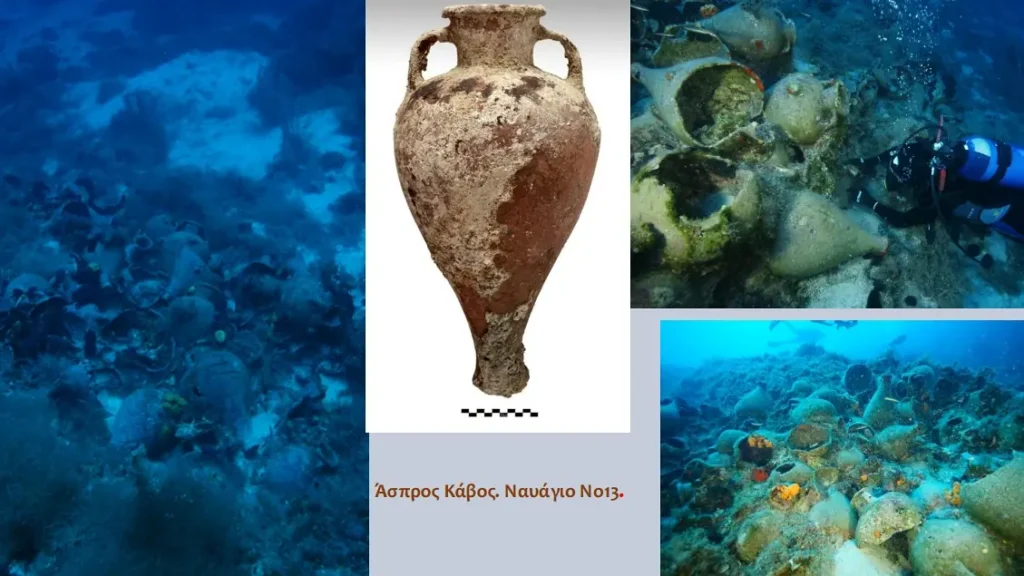
Image credit: Hellenic Ministry of Culture
Vathylakas: three wrecks from ancient trading routes
The second area lies inside Vathylakas Bay on Thymaina. It contains three documented wrecks, along with pottery deposits, ancient and medieval anchors and isolated finds.
Four diving routes are proposed, with maximum depths ranging from 32 to 70 metres. The planned maximum depths indicate that not every route would be appropriate for divers with the same level of training.
Shipwreck No. 28 dates to the second century BC and lies at depths of eight to 30 metres. Its scattered cargo includes amphorae produced in Kos and Ephesus.
Shipwreck No. 45, shown below, dates to the first half of the fourth century AD and lies at depths of 54 to 67 metres. Its cargo includes amphorae from Roman territories in present-day Tunisia and workshops in southern Spain.
Additional amphorae originated in Catalonia and southern Portugal. The range of production areas records trade connections extending from North Africa and the Iberian Peninsula to the northern Aegean.
Shipwreck No. 48 is associated with a broad spread of amphorae, tableware, cooking vessels and lamps at depths of 15 to 30 metres. The Ministry notes that the material may represent one dispersed wreck or several wrecks from a similar period. At least part of the cargo originated in Crete.
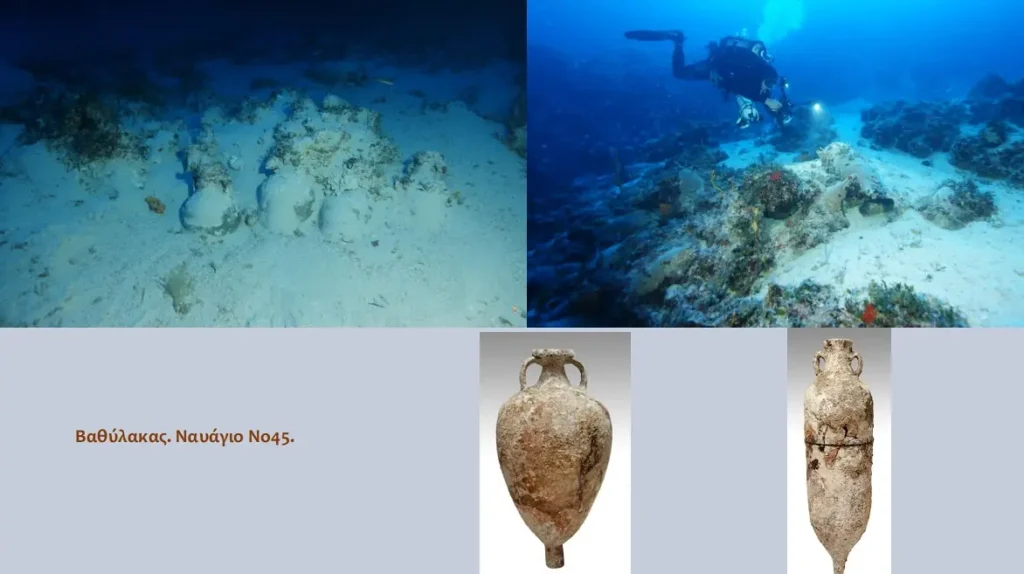
Image credit: Hellenic Ministry of Culture
The National Museum of Underwater Antiquities in Piraeus
People who do not dive are expected to gain wider access to Greece’s underwater archaeology through the National Museum of Underwater Antiquities being developed at Piraeus port.
The museum combines the port’s historic grain silo with an adjoining new building. The silo operated from 1936 until 2010, and elements of its industrial past, including the conveyor once used to load ships, are being incorporated into the visitor route.
Plans provide for more than 2,500 exhibits, together with digital applications, models and reconstructed settings. The presentation will cover submerged settlements, shipwrecks, ships and their cargoes, underwater archaeology and the relationship between people and the sea.
The museum will occupy approximately 26,380 square metres. This includes permanent and temporary exhibition areas, conservation laboratories, educational spaces, a library, multimedia facilities and visitor services.
The Ministry’s project announcement says the museum is intended to receive visitors in 2026. However, the project page does not provide a specific public opening date.
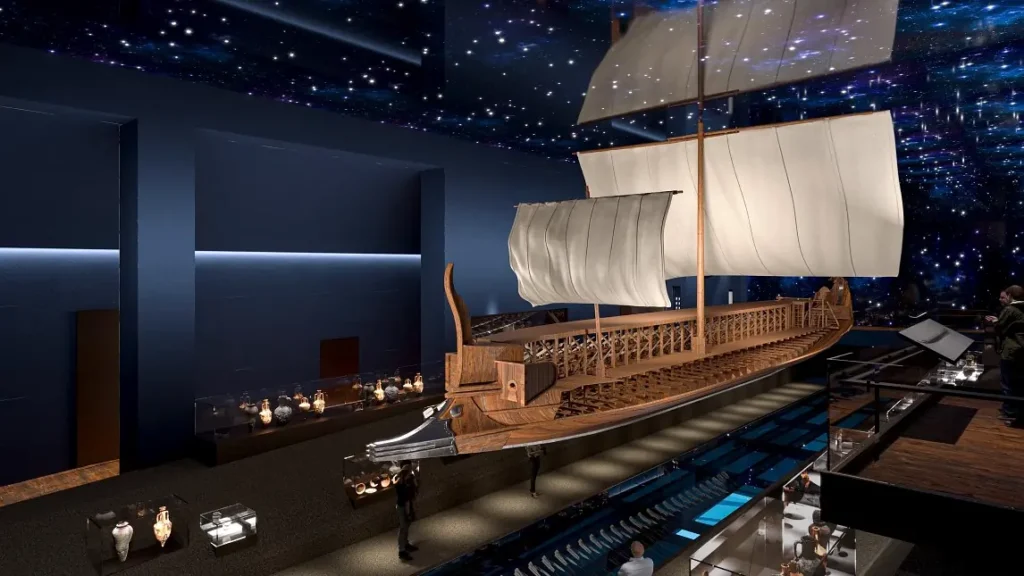
Image credit: Hellenic Ministry of Culture
What visitors can experience now
Peristera, Cape Tilegrafos, Kikynthos and Cape Glaros are the four underwater archaeological sites presented by the Ministry of Culture for organised diving visits.
The two areas at Fournoi Korseon are under establishment. Their operating regulations are being prepared, and the Ministry’s announcement does not state that public dives have begun.
The National Museum of Underwater Antiquities is being developed in Piraeus. The Ministry says it is intended to receive visitors in 2026 but does not provide a specific opening date on its project page.
Anyone planning an archaeological dive should contact a certified centre before travelling. Access depends on qualifications, experience, weather, sea conditions and the operating schedules of local providers.
Sources
- UNESCO: International Day for Underwater Cultural Heritage
- Hellenic Ministry of Culture: International Day for Underwater Cultural Heritage
- Hellenic Ministry of Culture: organised visits to underwater archaeological sites
- Hellenic Ministry of Culture: underwater visitor areas under establishment at Fournoi Korseon
- Visit Greece: Alonissos Underwater Museum
- Alonissos Underwater Museum: official visitor website
- Hellenic Ministry of Culture: National Museum of Underwater Antiquities