
Moving to Greece with a pet begins long before departure. We have been through the process ourselves, and we understand how emotionally demanding it can be. There is paperwork to get right, a journey to organise and the wellbeing of an animal you love to consider at every stage. Knowing what to expect and planning well in advance can make the move easier for both of you.
The correct documents depend on where the animal is travelling from, while the journey itself depends on its species, breed, weight, route and carrier. After arrival, owners must also think about housing, veterinary care and Greece’s rules on registering dogs and cats.
This guide is primarily for people making a permanent or long-term move with their own dog, cat or ferret, the animals covered by the European Union’s harmonised pet-travel system. Birds, rabbits, rodents, reptiles and other animals follow different rules, explained separately below.
The central distinction is not the owner’s nationality. It is the country or territory from which the animal enters the European Union. A British citizen moving from France follows the intra-EU route. An EU citizen bringing a dog directly from the United States follows the non-EU route.
In this guide
- Start with the correct route
- Moving from another EU country
- Moving from a non-EU country
- When a rabies antibody test is required
- Puppies, kittens and special cases
- Birds, rabbits and other pets
- Planning the journey
- What to do after arriving in Greece
- If you rent or live in an apartment building
- Daily life with a pet in Greece
- Health risks and veterinary care
- Relocation timeline and checklist
- Frequently asked questions
Start with the correct route
Before arranging any veterinary appointment, establish which of these routes applies:
- From another EU country: dogs, cats and ferrets normally travel with an EU pet passport, a microchip and a valid rabies vaccination.
- From a listed non-EU country or territory: an EU animal health certificate is normally required, but a rabies antibody titration test is not.
- From a non-listed non-EU country or territory: an EU animal health certificate and a successful rabies antibody titration test are normally required.
- Commercial movement: different procedures apply if the animal is being sold, transferred to a new owner, travelling without the owner under the permitted conditions, or otherwise falls outside the definition of non-commercial movement.
EU pet-travel rules changed in 2026. The European Commission’s current guidance is therefore more reliable than an old checklist or an undated relocation-company page. Check the official requirements again shortly before travel, particularly if the move will take place after 1 October 2026, when new model health certificates begin to apply.
Do not rely on the airline alone. An airline decides whether it will carry the animal. Greek and EU authorities decide whether the animal may enter. You must satisfy both sets of rules.
Moving to Greece from another EU country
For a non-commercial move from another EU member state, the European Commission’s intra-EU pet-travel rules generally require a dog, cat or ferret to have all of the following:
- a microchip that meets the applicable technical requirements
- a valid rabies vaccination recorded after the animal was identified
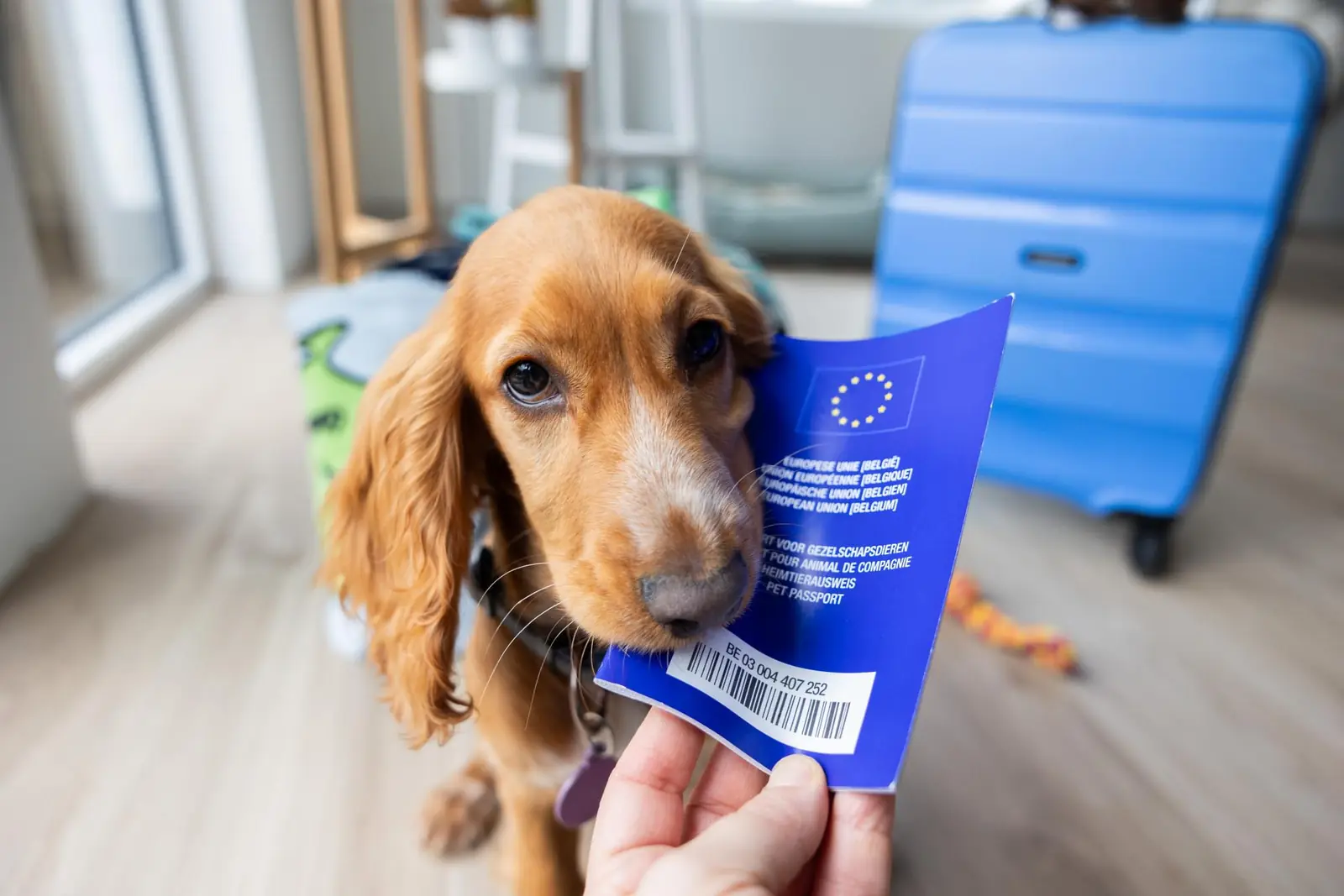
- a valid EU pet passport completed by an authorised veterinarian
- the owner, or an authorised person, travelling under the non-commercial movement rules
The sequence matters. The rabies vaccination date must not be earlier than the date on which the microchip was implanted or read for identification. If the animal is receiving its first valid rabies vaccination, protection does not begin until at least 21 days after completion of the primary vaccination protocol. A booster given while the previous vaccination is still valid does not normally restart that waiting period.
A clearly readable tattoo may still be accepted if it was applied before 3 July 2011. In practice, anyone planning a permanent move should ask a veterinarian to scan the animal’s microchip before booking. Confirm that the number read by the scanner exactly matches the number in the passport and vaccination record.
Greece does not require the special Echinococcus multilocularis tapeworm treatment demanded by certain other European destinations. However, your veterinarian may still recommend parasite protection for health reasons.
Moving to Greece from a non-EU country
Dogs, cats and ferrets arriving from outside the EU usually need:
- an accepted microchip
- a valid rabies vaccination administered after identification
- an EU animal health certificate issued or endorsed by the competent official authority in the departure country
- a written declaration confirming the non-commercial nature of the movement
- a rabies antibody titration test if the departure country or territory is not on the EU exemption list
- entry through an officially designated travellers’ point of entry, where required
The EU animal health certificate must be issued no more than 10 days before the animal enters the EU. After the entry checks, it can generally support onward movement within the EU for a limited period stated in the rules, provided the rabies vaccination remains valid. It is not the same document as an EU pet passport.
Do not assume that a passport-like booklet issued outside the EU replaces the official certificate. EU pet passports are issued by authorised veterinarians in EU countries and certain territories covered by the system. Since Brexit, a pet passport issued in Great Britain is not valid for entry into the EU, although a valid EU pet passport previously issued in an EU country may remain usable if it is kept properly updated by an authorised EU veterinarian.
Listed and non-listed countries
The EU publishes an official list of countries and territories from which pets may enter without a rabies antibody titration test. This includes many common departure points, but the list can be amended. Check your exact departure country on the current European Commission page rather than relying on examples in a blog post.
A pet travelling from a country not on the list must normally complete the blood-test route described below. The relevant country is usually where the animal is coming from, not where the owner holds a passport.
Use an approved point of entry
Pets entering from most non-EU countries must arrive through a designated travellers’ point of entry for documentary and identity checks. This is not the same as saying that every international airport or port can process the arrival.
Check the European Commission’s official travellers’ points of entry page, select Greece and confirm the intended point directly with the competent Greek authority before buying a non-refundable ticket. If the itinerary first enters the EU in another member state, the entry formalities normally take place there rather than at the final Greek destination.
The safest document check
Ask the competent government authority or official veterinarian in the departure country to confirm the correct EU certificate, endorsement procedure, rabies-test status and permitted entry point for the date and route of travel.
When a rabies antibody test is required
For a dog, cat or ferret coming from a non-listed country or territory, allow several months for the rabies antibody titration test. The normal order is:
- Microchip the animal.
- Administer a valid rabies vaccination after identification.
- Wait at least 30 days after vaccination before the blood sample is taken.
- Have the sample tested by an EU-approved laboratory.
- Obtain a result of at least 0.5 IU/ml.
- Wait three months from the date the successful blood sample was taken before entering the EU.
The three-month wait does not apply in the same way when an animal that normally lives in the EU leaves temporarily for a non-listed country, provided the successful test was completed and recorded in its EU pet passport before departure.
A qualifying test does not normally need to be repeated if the rabies vaccination is kept continuously valid with boosters given on time. If the vaccination expires, the administrative chain may be broken and the process may need to begin again.
Puppies, kittens and other special cases
Very young animals
A puppy, kitten or young ferret cannot simply travel because it is small enough for the cabin. A first rabies vaccination is given at no younger than 12 weeks under the standard EU rules, followed by the 21-day waiting period. This makes approximately 15 weeks the usual minimum age for ordinary compliant travel.
The EU does not allow young dogs, cats or ferrets that are not fully protected against rabies to enter from a non-EU country. Limited exceptions may exist for movement between participating EU countries. Check the Commission’s current country table for young animals before relying on one.
More than five pets
Non-commercial movement is normally limited to five dogs, cats or ferrets. The number may exceed five when the animals are more than six months old and are travelling to participate in, or train for, a competition, exhibition or sporting event, supported by written evidence. A household move with six pets does not automatically qualify. It may need to follow the stricter rules for standard or commercial movement.
When somebody else accompanies the pet
An authorised person may accompany the pet with the owner’s written authorisation, but the owner’s own journey must generally take place within five days of the animal’s journey. If the animal travels outside those conditions, different rules may apply. This is particularly important when using a pet-relocation company or cargo service.
Assistance dogs
Assistance dogs still need the relevant health and entry documents. Transport companies have separate accessibility procedures, so contact the operator early and provide any requested training or assistance documentation.
Birds, rabbits, rodents, reptiles and other pets
The EU pet passport system described above is designed for dogs, cats and ferrets. A rabbit does not become eligible for that route because a veterinarian has issued a vaccination booklet. The European Commission advises owners of birds, reptiles, rodents and rabbits to check the destination country’s national rules. These and other animals, including amphibians and ornamental aquatic animals, may be subject to species-specific Greek rules, disease controls, conservation restrictions or documentation under the Convention on International Trade in Endangered Species of Wild Fauna and Flora (CITES).
Before moving one of these animals:
- identify the species by its scientific name
- contact the Greek Ministry of Rural Development and Food or the competent veterinary authority
- check whether import permission, quarantine or a health certificate is required
- check the EU’s CITES and wildlife-trade requirements for protected species
- obtain written acceptance from the airline or ferry operator
Do this before paying for transport. Many airlines that carry dogs and cats do not accept other species, even when entry into Greece would otherwise be lawful.
Planning the journey to Greece
Flying with a pet
Never book the human ticket and assume the pet can be added later. Aircraft have limited capacity for animals, and restrictions vary by operator, aircraft, route, season and breed. Ask for written confirmation that the pet has been added to the booking.
As one current example, AEGEAN’s published rules for travelling with pets permit one dog or cat per passenger in the cabin when the combined weight of the pet and carrier does not exceed 8 kg. Its published maximum carrier dimensions are 55 × 40 × 23 cm on many aircraft, with smaller limits on certain turboprop aircraft. Larger dogs and cats may travel in the hold on eligible aircraft, subject to carrier, breed and connection restrictions. These are airline conditions, not universal Greek rules, and they can change.
- Choose the most direct route available.
- Confirm the aircraft type and pet allowance on every flight segment.
- Check the operating carrier on codeshare flights.
- Use a carrier that meets both the airline’s dimensions and the animal’s welfare needs.
- Acclimatise the animal to the carrier well before departure.
- Ask your veterinarian about food, water, medication and anxiety management. Do not sedate an animal without veterinary advice and airline approval.
- Carry copies of every document and keep the originals accessible.
Some airlines restrict brachycephalic, or flat-faced, dogs and cats because they face greater respiratory risk. Certain large carriers may be too big for the aircraft hold. Hot-weather restrictions can also affect summer travel, so a July or August move may require a different route or date.
Driving to Greece
A road journey can offer more control over stops and temperature, but every border matters. If the route leaves the EU and re-enters it, additional entry rules may be triggered. Check transit-country requirements, motorway rules, pet-friendly accommodation and the location of emergency veterinary clinics along the route.
Secure the animal with an appropriate carrier, barrier or tested restraint. Plan frequent stops, keep water available and never leave an animal in a parked vehicle, even briefly in warm weather.
Arriving or travelling by ferry
Greek ferries generally accept pets, but the accommodation differs considerably by company and vessel. Options may include pet-friendly cabins, onboard kennels, deck areas or a requirement for small pets to remain in carriers. Pet cabins are limited and can sell out long before popular summer sailings.
Blue Star Ferries, for example, advertises pet cabins and dedicated accommodation areas on relevant vessels, while some high-speed services impose tighter restrictions. Seajets requires pets to be registered and accompanied by their current health documentation. Always check the exact ship, not only the company’s general policy.
- Add the animal when booking and provide the requested identification details.
- Reserve a pet cabin early for an overnight crossing.
- Ask whether the animal can stay with you or must use a kennel.
- Carry the pet passport or health booklet.
- Bring a lead, muzzle if required, waste bags, water and cleaning supplies.
What to do after arriving in Greece
Arrange a first appointment with a Greek veterinarian
Once settled, arrange an appointment with a certified local veterinarian. Take the pet’s passport, health certificate, vaccination history, laboratory results, medication list and microchip documents. Ask the vet to scan the chip, review parasite protection and explain which records must be transferred or entered in Greece.
Registering a dog or cat in Greece
Greece’s National Pet Registry is called the Εθνικό Μητρώο Ζώων Συντροφιάς (National Pet Registry), usually abbreviated in Greek as ΕΜΖΣ. Greek law requires dogs and cats kept in Greece to be microchipped and recorded in the registry. A certified veterinarian performs the registration and updates veterinary information.
Foreign owners should not assume that an overseas microchip database automatically connects with the Greek registry. Ask the Greek veterinarian what identification and Greek administrative details are needed in your case. Access to many owner-facing digital services uses Taxisnet credentials, and some procedures require a Greek tax identification number, known as an Αριθμός Φορολογικού Μητρώου (AFM).
If you are establishing residence, obtaining an AFM is likely to be part of your wider relocation process. Our guide to AFM and AMKA in Greece explains the difference between the two numbers.
Sterilisation or a DNA sample
Under Greece’s current companion-animal law, an owner of a dog or cat must arrange sterilisation within the applicable deadline or have a genetic-material sample sent to the designated laboratory. The National Pet Registry’s official guidance on owners’ obligations states that an animal acquired when already over one year old must normally be sterilised within six months. For a younger animal, the deadline normally falls within six months after it reaches one year. A veterinarian may support a different timing because of breed or other specific characteristics.
This rule deserves a direct conversation with a certified Greek veterinarian soon after arrival, particularly if the pet is unsterilised, intended for lawful breeding or has a medical reason that could affect timing. Do not assume that being imported, elderly or registered abroad creates an automatic exemption.
Keep contact details current
Update the telephone number and address linked to the animal. Add an identification tag with a Greek mobile number while the registry details are being arranged. The Greek registry also supports loss and finding declarations for registered animals. Official guidance requires loss to be reported within two working days.
If you rent or live in an apartment building
If you own a detached home, many of the questions in this section will not apply. They matter most when you are renting or will live in a block of flats with shared entrances, lifts and common areas. A listing that accepts a small cat may not accept two large dogs, and a verbal assurance is weaker than a clear term in the lease.
- Tell the agent or landlord the species, number, size and age of the animals.
- Ask for written confirmation that they are accepted.
- Read the lease for pet restrictions and liability clauses.
- Ask about the building’s common areas and lift.
- Check balconies, railings, insect screens and possible escape routes.
- Consider shade, air conditioning and safe walking routes.
- Locate the nearest ordinary and emergency veterinary clinics.
A ground-floor home is not always the best choice for a cat if doors open directly onto a busy street. A large balcony is not automatically safe unless it can be secured. For a dog, visit the area at the times when daily walks will actually happen and check traffic, pavements, shade and access to green space.
If you are still choosing an area, combine the animal’s needs with commute, budget and access to services. Our complete guide to moving to Greece covers housing and the wider relocation process.
Daily life with a pet in Greece
Dogs in public spaces
Dogs may accompany their owners in common public spaces such as streets, squares, pedestrian areas, parks and wooded urban spaces. The owner must keep the dog under control, use a lead during walks, carry the legal documentation and immediately collect waste. Playgrounds are an exception, apart from assistance dogs covered by the law.
Beaches and swimming
On free, non-organised beaches, pets are permitted under their companion’s supervision. Dogs should be controlled on a lead while on the beach. The rules for entering the sea and for organised beaches require more care, particularly when other bathers object or the beach operator has designated arrangements. Check local signs and the National Pet Registry’s current guidance on pets and the sea before visiting.
Cafés, restaurants and shops
Many cafés and restaurants welcome dogs in outdoor seating areas, but this is a business decision rather than a guarantee of access everywhere. Food-hygiene restrictions apply in areas where food is prepared or handled. Ask before sitting down and keep the animal away from walkways. Assistance dogs have separate legal protections.
Public transport and trains
On Athens public transport, OASA permits small pets in a secure closed carrier up to 70 × 40 × 50 cm, accompanied by their owner, who should carry the animal’s health booklet or passport. Boarding can depend on safe conditions and passenger capacity. Assistance dogs follow separate rules.
Hellenic Train publishes detailed conditions by animal size and service. Its general policy requires a microchip, an accompanying owner, a valid health booklet or passport and a carrier, apart from the stated assistance-dog exception. Because available spaces and arrangements vary by train and replacement bus service, check the current route before travel.
A large dog can therefore be difficult to move around Athens without a car or pet-accepting taxi. Factor that into the choice of neighbourhood and veterinarian.
Health risks and veterinary care in Greece
A vaccination record that is sufficient for entry is not a complete health plan for living in Greece. The European Scientific Counsel Companion Animal Parasites advises owners travelling with dogs in Europe to consider local parasite risks, use appropriate protection, check regularly for parasites and carry a tick-removal tool.
Greece is part of the Mediterranean region in which sand flies can transmit Leishmania infantum, the cause of canine leishmaniosis. Ticks, fleas, mosquitoes, intestinal parasites and heartworm risk may also influence the prevention programme recommended for a particular area and animal. Ask a Greek veterinarian for an individual plan rather than extending a northern European schedule unchanged.
Summer heat
Greek summer temperatures can make midday exercise unsafe and can heat pavements quickly. Walk dogs early in the morning and later in the evening, provide constant access to fresh water and shade, and make sure the home has a reliable cool area. Never leave an animal in a parked vehicle. Flat-faced breeds, older animals and those with heart or respiratory conditions may need additional precautions agreed with a veterinarian.
Poisoned bait and unfamiliar hazards
Deliberately poisoned bait, commonly called a φόλα in Greek, is illegal but remains a risk that owners should understand. Keep dogs close enough to prevent scavenging, particularly in unfamiliar rural or semi-rural areas. If poisoning is suspected, contact a veterinarian immediately and report the incident to the police. Do not handle suspicious material with bare hands. Greece’s National Pet Registry publishes an official response guide for animal-poisoning incidents.
Ask the local veterinarian about seasonal hazards in the area, including processionary caterpillars, snakes and endemic parasites. Save the telephone numbers and directions of the nearest daytime clinic and out-of-hours service before an emergency occurs.
Medication and insurance
Bring enough prescribed medication for the transition period, together with a veterinary letter stating the generic drug name, dose and diagnosis. A familiar brand may have a different name or may not be marketed in Greece. Check transport rules for medicines that require refrigeration or contain controlled substances.
Pet insurance exists in Greece, but coverage, age limits, exclusions and reimbursement arrangements vary. Read the policy carefully, especially for pre-existing conditions, diagnostic tests, overseas treatment and third-party liability.
A practical relocation timeline
Four to six months before the move
- Identify the correct EU or non-EU route.
- Check whether a rabies antibody test is required.
- Scan the microchip and compare its number with all records.
- Check the rabies vaccination dates and validity.
- Research airlines, road routes or ferry options.
- Begin carrier training.
- For other species, obtain Greece-specific import instructions.
One to three months before the move
- Reserve the pet’s place and obtain written confirmation.
- Secure housing that accepts the animal in writing.
- Confirm the travellers’ point of entry where relevant.
- Arrange any remaining laboratory work or government endorsement.
- Find a veterinarian near the new home.
- Prepare medication, food-transition supplies and copies of records.
In the final 10 days
- Obtain the EU animal health certificate if travelling from outside the EU.
- Complete the non-commercial declaration.
- Confirm endorsements and entry arrangements.
- Reconfirm the flight, vessel, carrier and temperature conditions.
- Place original documents in an accessible folder.
- Add a temporary tag with working contact details.
During the first weeks in Greece
- Book a Greek veterinary appointment.
- Scan the microchip again.
- Arrange registration in the National Pet Registry.
- Discuss sterilisation or the DNA-sample requirement.
- Set up a Greece-specific parasite-prevention plan.
- Save emergency veterinary contacts.
- Update the animal’s tag and registered contact information.
Final document check
Microchip number, rabies dates, passport or certificate, laboratory result where required, owner’s declaration, authorisation where relevant, booking confirmation and approved entry route should all describe the same animal and journey.
Frequently asked questions
Does Greece quarantine pets?
A compliant dog, cat or ferret completing a normal non-commercial move is not routinely quarantined. If the animal fails the entry checks, authorities may order its return, isolation under official control or another measure permitted by EU law, at the owner’s expense.
Can I use my British pet passport?
A pet passport issued in Great Britain is no longer valid for entry into the EU. For a move from Great Britain, the animal normally needs the current EU animal health certificate. A valid passport previously issued in an EU country is a different case and may remain usable if the required entries remain valid.
Does my pet need a rabies blood test?
Not when moving between EU countries under the standard rules, and not when entering from a non-EU country or territory included on the EU exemption list. It is normally required when arriving from a non-listed country or territory.
Can my pet travel before or after me?
Yes, within the non-commercial system when an authorised person accompanies the pet and the owner’s journey is within the permitted five-day period. Otherwise, the movement may fall under a different regulatory route.
Do I need a Greek pet passport after moving?
An EU animal health certificate used for entry from a non-EU country is not intended to serve indefinitely as the animal’s travel document. Once resident in Greece, ask an authorised Greek veterinarian whether an EU pet passport can be issued and how the animal’s existing records should be transferred.
Must I register my imported dog or cat in Greece?
If the animal will live in Greece, arrange an appointment with a certified veterinarian to record it in the National Pet Registry and update the required details. An overseas database entry is not a substitute for Greek registration.
A final note
Moving to Greece with a pet is manageable when the order is right: identify the legal route, allow enough time for veterinary work, secure the animal’s place on the journey, confirm suitable housing and arrange Greek registration after arrival. The costly problems usually arise when one of those steps is left until the final days.
Rules and carrier policies can change. Before travelling, confirm the requirements with the competent government authority in the departure country, the Greek authorities and every transport operator involved in the route.
You may also like
- Moving to Greece in 2026: The Complete Expat Guide
- Cost of Living in Greece in 2026: Rent, Food, Bills and Real Monthly Budgets
- Greece Visa and Residence Permit Guide for Expats in 2026
- Digital Nomad Visa Greece 2026: The Complete Guide
- Golden Visa Greece 2026: New Data, New Rules and Who Holds It
- Greek Tax Guide for Expats 2026: Income Tax, Benefits & How to File
- Greek Bureaucracy Explained: The Administrative Roadmap for Moving to Greece
- How to Get Your AFM and AMKA in Greece in 2026: The Essential Expat Guide
- Opening a Bank Account in Greece as an Expat: Your 2026 Guide
- Buying Property in Greece in 2026: A Step-by-Step Guide for Foreign Buyers
- Choosing the Right School in Greece: A Practical Guide for International Families
- International Schools in Greece: Top Schools, Tuition Fees & Curricula (2026 Guide)
- Embassies and Consulates in Greece: Complete Diplomatic Missions Directory
- Moving Your Whole Home to or from Greece? What to Ask Before Choosing an International Moving Company
Official sources
- European Commission: Travelling with a pet within the EU
- European Commission: Bringing a pet into the EU from a non-EU country
- European Commission: Dogs, cats and ferrets
- European Commission: Young animals
- European Commission: Rabies antibody testing laboratories
- National Pet Registry: Owners’ obligations in Greece
- National Pet Registry: Access to public spaces
- National Pet Registry: Pets and the sea
- OASA: Travelling with animals
- Hellenic Train: Accompanied animals
- European Scientific Counsel Companion Animal Parasites: Travelling pets
This guide provides general information and does not replace instructions issued for an individual animal and journey by the competent authorities, an authorised veterinarian or the transport operator.