
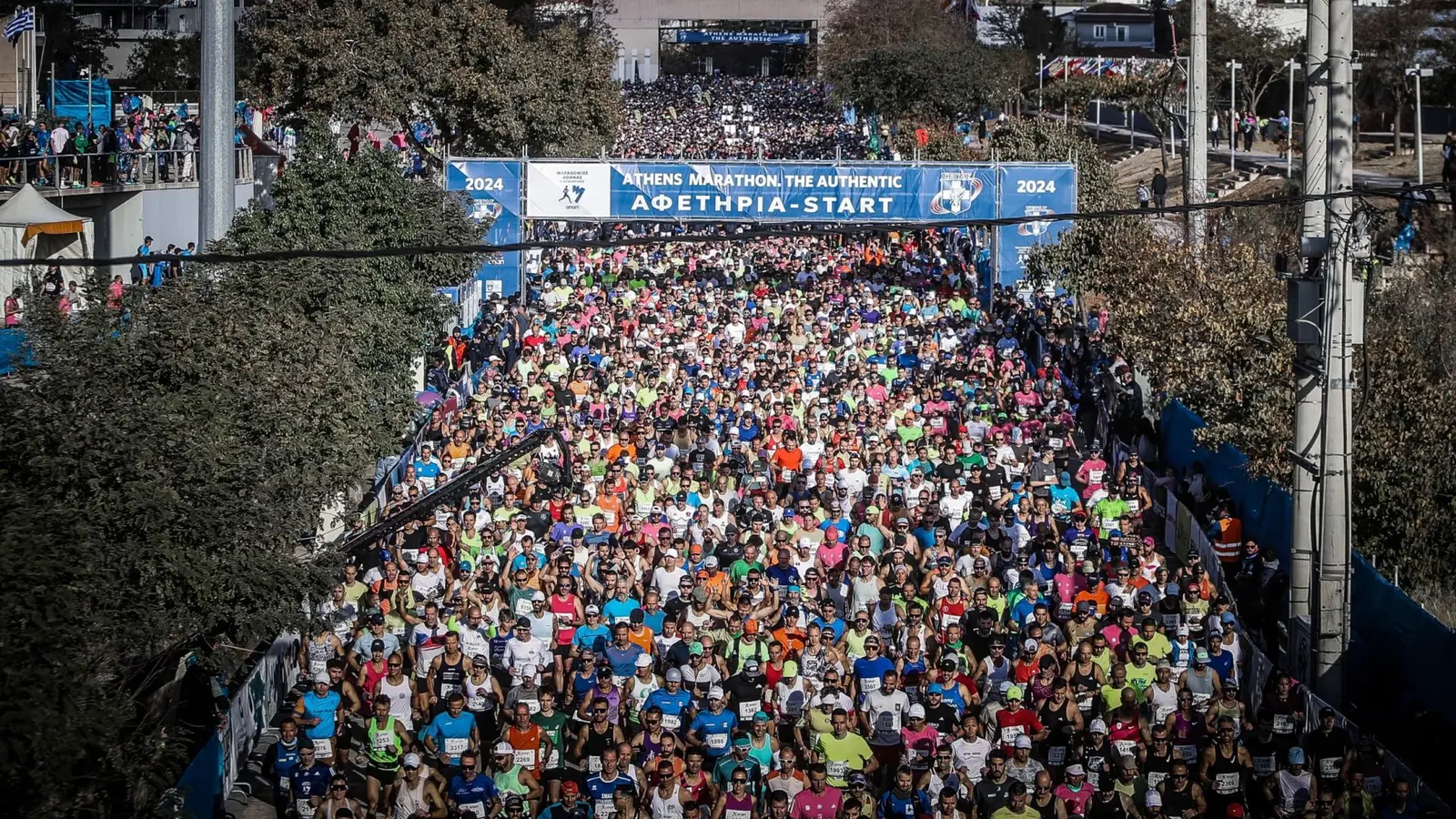
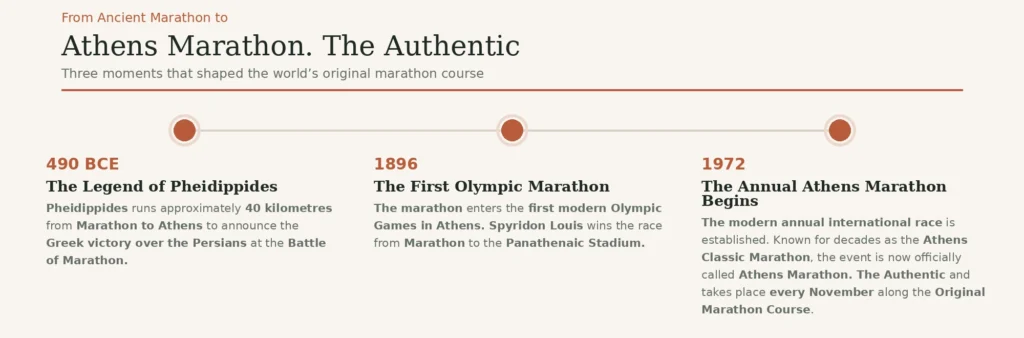
“Athens Marathon. The Authentic”, taking place this year on 7 and 8 November 2026, is a 42.195-kilometre test of endurance, discipline and will that follows the historic Marathon-to-Athens corridor used for the first Olympic marathon. The marathon as we know it today was conceived for the first modern Olympic Games in Athens in 1896. It was inspired by the legendary run attributed to Pheidippides, who is said to have carried news of the Greek victory over the Persians from the Battle of Marathon in 490 BCE to Athens. From that first Olympic race, the marathon grew into one of the world’s most celebrated sporting events.
Among the marathons now held around the world, Athens Marathon. The Authentic, first staged as an annual race in 1972, offers something other marathon courses cannot reproduce. It retraces the story behind the event, begins in the town of Marathon, which gave the race its name, and ends at the Panathenaic Stadium, where the first Olympic marathon reached its conclusion.
This year, the “Athens Marathon. The Authentic” takes place on 7 and 8 November 2026, with the main marathon beginning in Marathon on Sunday 8 November. Registrations for the Marathon, 10 km and general 5 km races have closed after selling out. This guide remains useful for registered runners, their families and anyone planning to watch the event.
From the Battle of Marathon to the First Olympic Race
The marathon’s story begins with the Battle of Marathon in 490 BCE, a decisive Greek victory against the Persian Empire and an enduring symbol of civic courage and resistance. In the tradition that inspired the modern race, after the Athenians and their Plataean allies defeated the invading Persian army, Pheidippides ran approximately 40 kilometres from Marathon to Athens to deliver the news. He announced the victory before collapsing and dying from exhaustion, an announcement traditionally rendered as “Nenikēkamen” (Νενικήκαμεν), meaning “We have won.” This story gave the modern race its name and original direction.
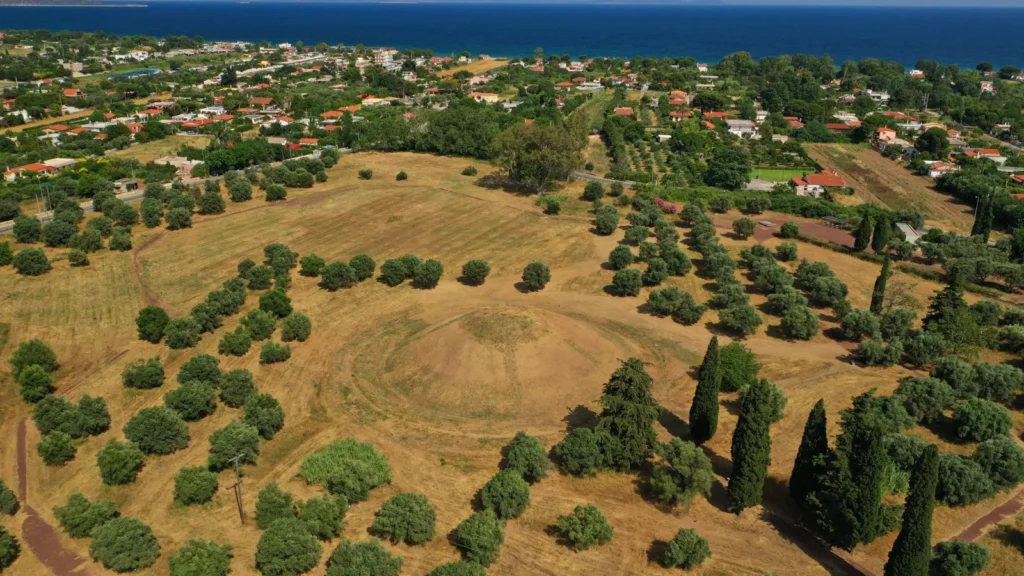
Early in today’s race, runners pass the Marathon Tomb, the burial mound of the Athenian soldiers who fell in the battle. The monument creates a direct connection between the modern course and the historic event that inspired it.
More than two millennia later, French classical scholar Michel Bréal proposed transforming the messenger’s journey into a competitive race for the first modern Olympic Games. In a letter to Pierre de Coubertin, the driving force behind the revival of the Olympics, Bréal suggested a long-distance race from Marathon to Athens and offered to provide a silver cup for its winner.
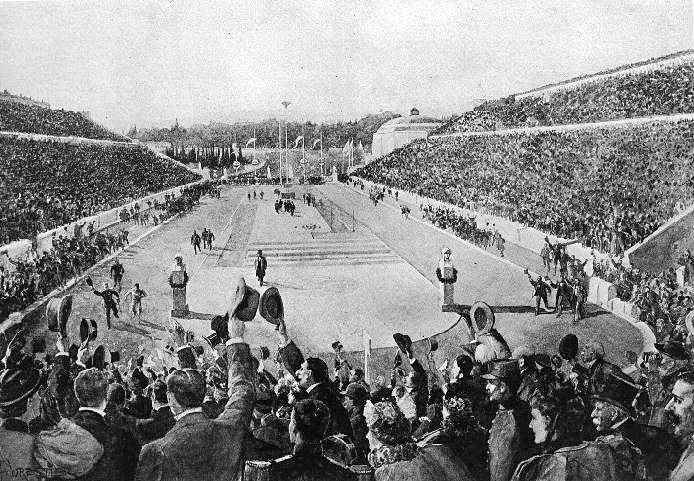
The proposal was accepted, and on 10 April 1896, seventeen men representing five countries set out from Marathon on an approximately 40-kilometre course. Only nine reached the restored Panathenaic Stadium. The first to enter its packed marble stands was a previously unknown Greek runner from Marousi named Spyridon Louis.
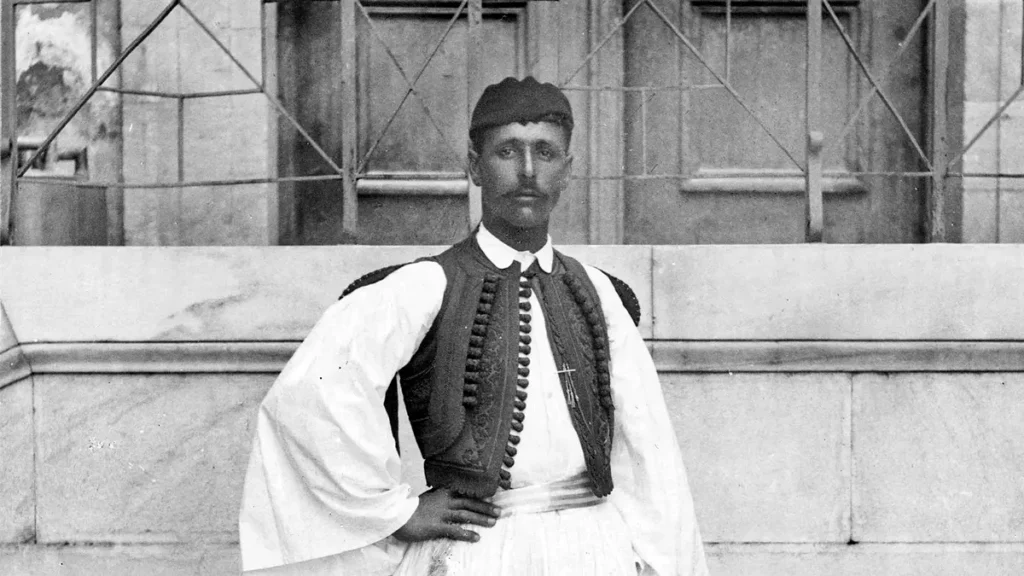
Spyridon (Spiros) Louis and the Race That Defined the Games
Spyridon (Spiros) Louis, a 23-year-old water carrier from Marousi, entered the Panathenaic Stadium first in 2:58:50. Greece had yet to win an athletics event at its own Games, and his arrival before the packed marble stands became one of the defining scenes of the Olympic revival.
Louis represented far more than a finishing time. An unknown Greek runner had won an event created from one of the country’s foundational stories. He became a national hero, yet never competed again. His name survives in the Olympic Athletic Center of Athens “Spiros Louis” (OAKA).
But one runner remained outside both the stadium and the official history of those Games. Her name was Stamata Revithi.
Stamata Revithi and the Race She Was Denied
Stamata Revithi, a poor 30-year-old woman from Syros who was living in Piraeus, also travelled to Marathon hoping to compete. The organisers refused her entry, officially because the deadline had passed, in an Olympic programme that excluded women.
Revithi ran the course herself on 11 April 1896, the day after the men’s race. Witnesses signed a statement recording her departure. About five and a half hours later she reached the Athens area, where she was stopped near the military barracks at Parapigmata, close to Evangelismos, and denied entry to the Panathenaic Stadium. Her run earned no Olympic result, but it endures as an early challenge to women’s exclusion from distance running.
From Athens to Boston and Back Again
The new race quickly crossed the Atlantic. After witnessing the Athens Games, John Graham helped bring the idea to Boston. The first Boston Marathon was held on 19 April 1897, with 15 starters and John J. McDermott as its winner. It remains the world’s oldest annual marathon.
Early marathon courses varied in length. The present 42.195-kilometre standard developed from the route used at the 1908 London Olympics and was formally adopted in 1921.
The modern international race from Marathon to Athens began on 8 April 1972, when Greece’s Yiannis Virvilis won in 2:26:26. Known for decades as the Athens Classic Marathon, the event is now officially called Athens Marathon. The Authentic and is normally held every November. The annual race’s winners, finishing times and course records are traced from 1972.
Since 1982, the event has been dedicated to Grigoris Lambrakis, the athlete, doctor and Member of Parliament who became a symbol of peace and human rights. During the prohibited 1963 Marathon Peace March, Lambrakis carried the peace symbol alone for part of the road from the Marathon Tomb towards Athens.
The Route Returns to the Olympic Programme
When the Olympic Games returned to Athens in 2004, both marathon races began in Marathon and finished inside the Panathenaic Stadium. This time the athletes covered the official 42.195-kilometre distance. Japan’s Mizuki Noguchi won the women’s race in 2:26:20, and Italy’s Stefano Baldini won the men’s race in 2:10:55.
The races returned the historic corridor to a worldwide audience and revealed its defining physical challenge, a long middle climb followed by a sustained descent into central Athens.
How the Olympic and Annual Races Differ
The two events share a historical connection while serving different purposes.
| Olympic marathon | Athens Marathon. The Authentic | |
|---|---|---|
| What it is | A medal event within the Olympic Games | An annual mass-participation road race in Greece |
| Where it is held | In or near each Olympic host city. The route changes. | From Marathon to the Panathenaic Stadium in Athens |
| Athens connection | The Marathon-to-Athens route was used in 1896 and 2004 | The historic corridor is used every year |
| Distance | 42.195 km today. The 1896 race was about 40 km. | 42.195 km |
| Who takes part | Selected national-team athletes who qualify for the Games | Elite and recreational runners registered for the annual event |
In short, the Olympic marathon moves with each host city. SEGAS stages the public Athens race on the Marathon-to-Athens course every year.
Athens Marathon Records: The Historic Course and the Annual Race
The Marathon-to-Athens course has also hosted the 1896 and 2004 Olympic marathons and the 1997 World Championships marathon. This creates two distinct records: the fastest performances in any official competition on the historic course and the records belonging specifically to the annual Athens Marathon. The Authentic, established in 1972.
| Category | Fastest on the historic course | Annual Athens Marathon record |
|---|---|---|
| Men | Edwin Kiprop Kiptoo Kenya · 2:10:34 2023 Athens Marathon |
Edwin Kiprop Kiptoo Kenya · 2:10:34 2023 |
| Women | Mizuki Noguchi Japan · 2:26:20 2004 Olympic Games |
Rasa Drazdauskaitė Lithuania · 2:31:06 2010 |
Edwin Kiprop Kiptoo’s 2023 performance is both the annual race record and the fastest men’s time achieved on the historic course. The women’s records differ because Mizuki Noguchi’s faster time was recorded during the Athens 2004 Olympic Games, while Rasa Drazdauskaitė holds the record for the annual event.
Athens Marathon. The Authentic: A Demanding Course
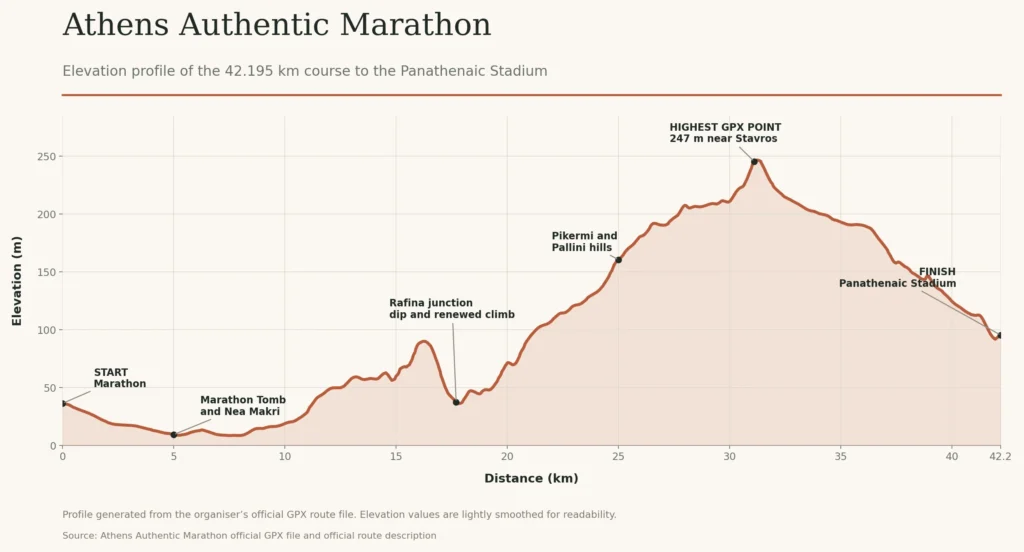
The Athens Marathon is a demanding road-marathon course, principally because of the prolonged climbing between the first third of the course and the approach to Stavros at approximately kilometre 31.
The opening kilometres can create a misleading sense of ease. The first four kilometres are slightly downhill, followed by a relatively flat section through Nea Makri.
Intermittent climbing begins after approximately kilometre 11. The gradient then becomes more persistent through Pikermi, Pallini and Gerakas.
The final and most difficult uphill section approaches the Stavros junction around kilometres 30 and 31. The course then descends through Agia Paraskevi, Cholargos and towards central Athens.
That descent may appear welcome on a course profile, but it arrives after more than 30 kilometres of running. Tired quadriceps must absorb the repeated impact, and runners who attacked the early kilometres or climbs too aggressively may struggle to take advantage of the downhill terrain.
Athens offers a demanding setting for a personal best. Its history, difficulty and stadium finish give the race its distinctive value.
The Route, Section by Section
Start to Kilometre 10: Marathon and Nea Makri
The first 200 metres are downhill. The course continues on a slight descent for approximately four kilometres before turning towards the Marathon Tomb, the burial mound associated with the Athenians who died in the Battle of Marathon.
After circling this historical area, runners return to the main route. The section between approximately kilometres 6 and 10 through Nea Makri is comparatively flat.
This is where the first major pacing mistake can occur. The terrain and early-race energy may encourage runners to move faster than planned. Time gained here can be lost several times over during the later climbs.
Kilometres 10 to 17: The Terrain Begins to Change
After Nea Makri, the route begins a series of intermittent climbs, followed by a pronounced downhill section before the Rafina junction.
Runners should resist interpreting each descent as the end of the difficult terrain. The principal climbing has yet to come.
Kilometres 18 to 25: Pikermi and the Sustained Effort
The course climbs towards and through Pikermi, alternating between gentler and more noticeable uphill sections.
By kilometre 25, the accumulated elevation and distance begin to combine. Runners who have trained only on flat roads may find that their expected marathon pace now requires substantially more effort.
This section rewards controlled effort and flexible kilometre times.
Kilometres 25 to 31: Pallini, Gerakas and Stavros
The uphill terrain continues through Pallini, particularly around kilometres 27 and 28.
From Gerakas, runners approach the final major climb towards the Stavros junction, around kilometres 30 and 31. The official route description identifies this as the last and most difficult uphill section.
This is likely to be the decisive part of the race. Runners are already approaching the point at which marathon fatigue typically becomes most severe, while also facing the course’s hardest sustained work.
Kilometres 31 to 37.5: Agia Paraskevi, Cholargos and Katechaki
After Stavros, the route descends steeply towards Agia Paraskevi. It then follows Mesogeion Avenue through Cholargos, with flat and downhill sections leading towards central Athens.
The most characteristic descent extends from the Ministry of National Defence towards the Katechaki junction, at approximately kilometre 37.5.
Runners who have practised controlled downhill running may benefit here. Those whose quadriceps are already severely fatigued may find the descent unexpectedly difficult.
Kilometres 37.5 to 40: Entering Central Athens
After passing Henry Dunant Hospital, the route turns towards Michalakopoulou Avenue, Feidippidou Street, Alexandras Avenue and then Vasilissis Sofias Avenue.
Runners pass the American Embassy, the Athens Concert Hall and Eleftherias Park, reaching the final official supply station at approximately kilometre 40.
The surroundings become increasingly recognisable and spectator support generally becomes more concentrated.
The Final 2.2 Kilometres: The Panathenaic Stadium
The course continues past Evangelismos Hospital and the War Museum, before turning into Irodou Attikou Street.
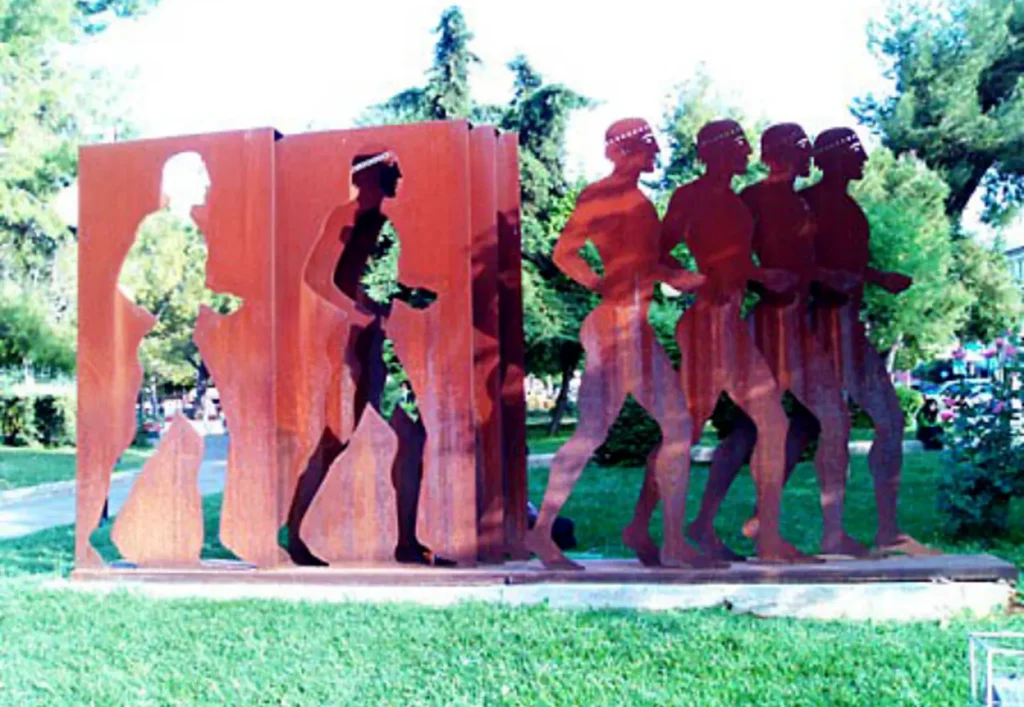
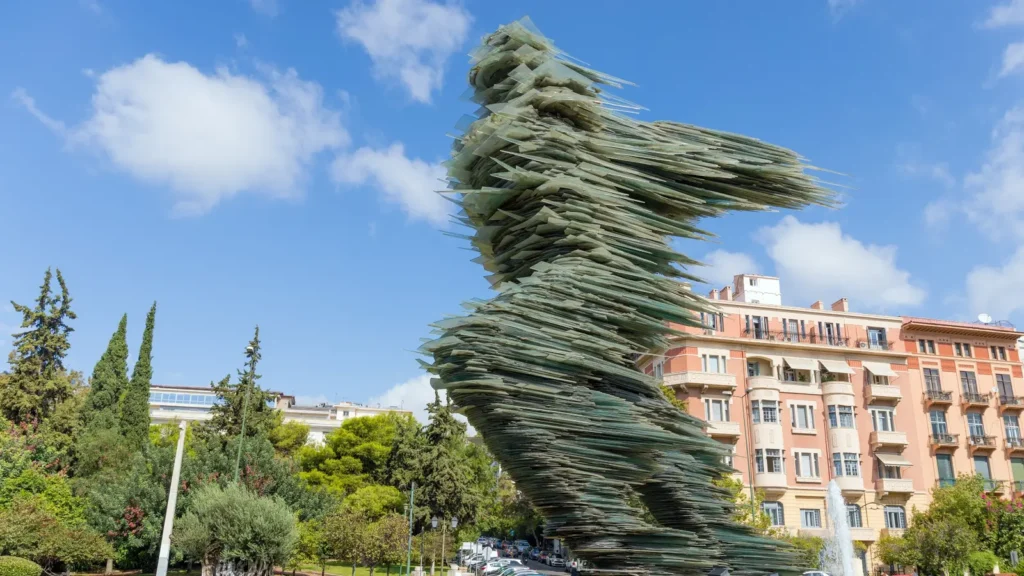
Runners pass the Maximos Mansion, the Presidential Palace and the National Garden. From the statue of the Discobolus, they head towards the Panathenaic Stadium.
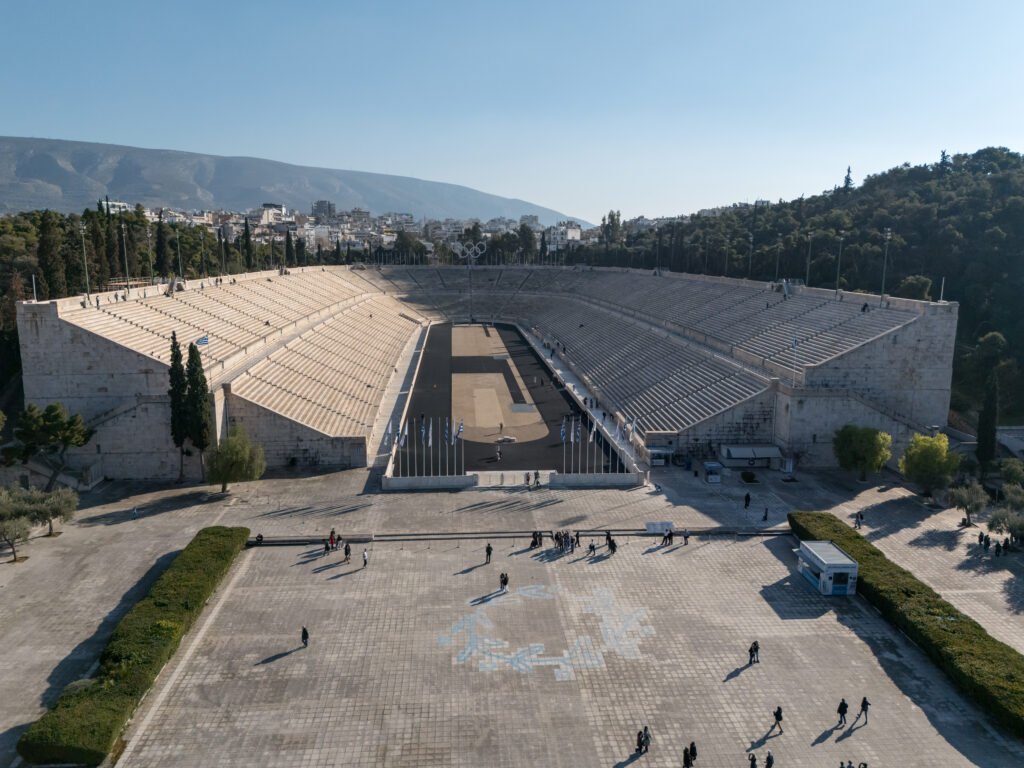
The final 170 metres are completed inside the stadium. After hours on open roads and urban avenues, runners cross the finish line in the marble venue associated with the birth of the modern Olympic marathon.
What Previous Runners Report
Few runners know this course better than Stefano Baldini, who won the Athens 2004 Olympic marathon on it and returned 15 years later to complete the annual race in 2:57:07. Speaking before his return, the Olympic champion acknowledged that age had changed his body but said the emotion of running in Athens remained the same. European Athletics
Greek-American ultramarathoner and bestselling author Dean Karnazes is more direct:
“No marathon is as humbling as the Athens Marathon. The Authentic.”
Karnazes describes a race steeped in history and filled with hills, a combination that demands considerably more than an ordinary city marathon. Dean Karnazes
The detailed accounts of experienced amateur runners explain how that difficulty unfolds. Gareth Richards, a long-distance runner who completed Athens in 3:08:31 and achieved a Boston Marathon qualifying time, divides the course into three stages: “the First Half, the Hill and the End Bit.” His race guide explains why an even or negative split is difficult to apply when the terrain changes so substantially.
The runner behind Tom Runs Trails finished 16th overall in 2:34. He describes the climbs as long rather than uniformly steep. The individual hills remained manageable, but their cumulative duration demanded concentration and controlled effort. His report also warns that the sudden downhill section after kilometre 31 places a different strain on already tired legs.
For Sandy MacDonald of Portobello Running Club, the value of Athens lies beyond the stopwatch:
“Don’t do it for the PB, but do it for the experience.”
PB means personal best.
Athens Marathon veteran James Phillipson reaches a similar conclusion in the Official Athens Guide. He calls the entrance into the Panathenaic Stadium the race’s “crowning glory” and argues that running the original marathon course should be every long-distance runner’s ambition.
Together, these accounts present a consistent picture. The opening kilometres reward restraint, the prolonged climb demands disciplined pacing, and the descent must be approached with tired legs in mind. Support can be sparse along some stretches of eastern Attica, but it grows as the route approaches central Athens. Whatever time appears on the clock, the final entrance into the Panathenaic Stadium gives the race its defining moment.
Race Strategy
Protect Your Energy in the Opening Kilometres
The opening descent and flatter kilometres can make an ambitious pace feel comfortable. Accelerating here may leave too little energy for the sustained climbing later.
A conservative start allows the runner to reach Pikermi, Pallini and Gerakas with greater control.
Run the Hills by Effort
Trying to preserve a flat-course pace on every climb can raise the effort to an unsustainable level. Allowing the pace to slow while keeping the effort controlled is likely to be more effective.
Expect Changing Kilometre Splits
Intelligent pacing on this course follows the terrain. Runners should judge progress against effort and elevation as well as the clock.
Prepare for the Descent
Downhill running places a different load on the legs. The descent into Athens can be advantageous, but only if the runner’s quadriceps can tolerate it after the prolonged climbing.
Keep Something for the Final Kilometres
The major hills may be over after kilometre 31, but more than 11 kilometres remain. The downhill section, urban turns and final approach still require concentration.
Training for the Hills and Descent
Runners preparing for Athens should include both climbing and controlled descending in their training, provided this is appropriate for their health, experience and individual programme.
Useful preparation may include:
- long runs on rolling terrain
- sustained moderate climbs alongside shorter hill efforts
- controlled downhill running
- practising race effort on varied terrain
- testing nutrition and hydration during long runs
- using intended race shoes before race day
- strengthening the muscles needed to manage descents
- avoiding an abrupt increase in training load
Runners should follow a programme appropriate to their experience and consult a qualified professional where necessary.
Anyone experiencing chest pain, unusual breathlessness, dizziness, fainting or other concerning symptoms should stop exercising and seek medical advice. The organiser recommends a recent medical examination and draws particular attention to cardiovascular health.
Athens Marathon 2026: Essential Information
| Main race | Athens Marathon. The Authentic |
| Date | Sunday 8 November 2026 |
| First starting block | 08:30 |
| Start | Marathon |
| Finish | Panathenaic Stadium, Athens |
| Distance | 42.195 kilometres |
| Marathon capacity | 25,000 runners |
| Completion limit | Eight hours |
| Last runners expected across the start | Approximately 10:15 |
| End of race time limit | 18:15 |
| Registration | Marathon, 10 km and general 5 km sold out |
| Race weekend | 7–8 November 2026 |
The programme begins on Saturday 7 November with the Kids Race at 16:00, the general 5 km race at 17:00 and the Universities Night Run at 20:00.
On Sunday 8 November, the 10 km race starts in central Athens at 08:00, followed by the first starting block of the Authentic Marathon from Marathon at 08:30.
Starting times and block arrangements remain subject to the organiser’s final instructions.
An International Field
The Authentic Marathon has become increasingly international.
In 2025, the Marathon start list contained 24,000 runners from 126 countries. Of these, 10,574 came from outside Greece, setting a record for international participation. A further 13,081 registered runners were from Greece.
The largest international groups in the Marathon came from:
- Italy: 1,320 runners
- France: 1,139 runners
- Cyprus: 959 runners
- United States: 864 runners
- United Kingdom: 790 runners
- Poland: 754 runners
- Germany: 719 runners
Across the Marathon, 10 km, 5 km, Universities Night Run and children’s races, approximately 72,800 people registered for the 2025 weekend.
For 2026, the organiser advertises 75,000 runners across the Marathon, 10 km, general 5 km and Universities Night Run. The published limits reach 78,000 when the separate 3,000-place Kids Race is included.
2026 Participation Limits
The official participation limits for the 2026 race weekend are:
| Race | Participation limit |
|---|---|
| Authentic Marathon | 25,000 |
| 10 km Road Race | 17,000 |
| General 5 km Road Race | 30,000 |
| 5 km Universities Night Run | 3,000 |
| Kids Race | 3,000 |
| Total including Kids Race | 78,000 |
The organiser also lists a Special Olympics Hellas 1.2 km race; its principal table leaves the participation limit unspecified.
The Marathon, 10 km and general 5 km races are sold out. The Universities Night Run is restricted to eligible students and academic staff.
The participation limits represent available entries. The eventual number of people who start and finish may be lower because some registered runners will withdraw or fail to attend.
Weather and Race-Day Conditions
November in Attica can produce very different running conditions. A cool morning is possible, but so are sunshine, warmth, rain, humidity and wind.
The start in Marathon may feel cooler than central Athens, particularly while runners wait before their block departs. Temperatures can then rise during the morning, especially for participants in later starting waves.
A useful race-day forecast will become available several days before the event. The final check should cover:
- expected temperature at the start
- temperature during the later hours
- probability of rain
- wind speed and direction
- humidity
- appropriate official safety guidance
Runners should avoid making last-minute changes to clothing, shoes, nutrition or hydration based solely on a long-range forecast.
How Runners Reach the Start in Marathon
The organiser provides buses from Athens to the starting area in Marathon and recommends them as the standard race-day transport.
According to the currently published 2026 instructions, transportation is divided between two groups.
First Wave: Blocks 1–10
Buses are scheduled to depart between 05:00 and 06:45 from central locations including:
- Syngrou-Fix
- Syntagma
- Panepistimio
- Evangelismos
- Katechaki
- Omonia
The last bus from Syngrou-Fix is scheduled to depart at 06:15.
Second Wave: Blocks 11–15
Later buses are scheduled between 06:30 and 07:45 from:
- Ethniki Amyna
- Cholargos
- Katechaki
- Nomismatokopio
Runners must use the instructions corresponding to their assigned block and check the final organiser announcement before travelling.
Private transport requires careful allowance for road closures, distant drop-off points and an early arrival. The organiser directs runners towards the official buses as the normal means of reaching Marathon.
Clothing Bags and the Marathon Expo
For 2026, runners must leave their official clothing bag at the Expo before race day.
The organiser currently states that runners must deliver their official clothing bag in advance at the allwyn Marathon Expo, held at the Faliro Indoor Hall and Exhibition Centre, formerly the Tae Kwon Do venue.
The published schedule is:
| Date | Hours |
|---|---|
| Wednesday 4 November | 12:00–22:00 |
| Thursday 5 November | 10:00–22:00 |
| Friday 6 November | 10:00–22:00 |
| Saturday 7 November | 10:00–21:00 |
Clothing-bag drop-off takes place in advance at the Expo. There will be no clothing-bag collection service at the Marathon start on Sunday morning.
After finishing, runners collect their bags from the designated area in the Zappeion gardens by showing their bib number.
The official bag is intended for clothing and must not contain passports, money, valuables or medication. Runners should arrange secure storage for these items in accordance with the organiser’s instructions.
Water, Nutrition and Medical Support
The organiser lists 15 supply stations along the marathon course.
Water is scheduled at regular intervals, with isotonic drinks available at selected stations. The current table also lists:
- energy gels at kilometres 10 and 20
- bananas from kilometre 20
- Coca-Cola and savoury snacks at kilometre 30
- sponges at intermediate points
- physiotherapy support at kilometres 25 and 30
Medical assistance, toilets and timing points are distributed along the course.
Runners should study the final supply-station table and use products already tested in training. Nutrition and hydration requirements vary substantially; excessive fluid intake also carries risks.
Medical coverage is provided by the organiser, the National Emergency Aid Centre (EKAB) and supporting rescue and first-aid teams. Ambulances and medical personnel are positioned along the route.
The Eight-Hour Time Limit
The Marathon has an official completion limit of eight hours.
Because runners start in successive waves, the organiser currently expects the last participants to cross the start at approximately 10:15. All finishes must be completed by 18:15.
Participants falling behind the official timetable may be required to leave the protected race route as roads reopen. Anyone targeting the later part of the time limit should study the organiser’s intermediate cut-off requirements when the final instructions are confirmed.
Where to Watch the Athens Marathon
Spectators can watch from numerous points between Marathon and the Panathenaic Stadium, but they should consider road closures and the limited ability to move between locations once the race has begun.
Potential viewing areas include:
- Marathon, for the start
- Nea Makri, during the earlier section
- Pikermi and Pallini, where encouragement can be particularly valuable on the climbs
- Agia Paraskevi and Cholargos, after the most difficult uphill section
- Mesogeion Avenue
- Vasilissis Sofias Avenue
- the approach through Irodou Attikou Street
- the area surrounding the Panathenaic Stadium
Spectators hoping to see a particular runner should use the official tracking service and agree on a meeting place in advance.
Mobile signals may become congested around the finish, and access immediately beside the stadium can be controlled.
The most convenient viewing locations often lie near Metro stations on Mesogeion Avenue or Vasilissis Sofias Avenue, where spectators can reach the route easily and support runners during the difficult final kilometres.
Exact spectator access around the Panathenaic Stadium should be confirmed from the final 2026 guide.
Road Closures and Public Transport
The Marathon requires extensive traffic restrictions from Marathon through northeastern Athens and into the city centre.
The affected route includes sections of:
- Marathonos Avenue
- Mesogeion Avenue
- Michalakopoulou Avenue
- Feidippidou Street
- Vasilissis Sofias Avenue
- Irodou Attikou Street
- roads surrounding the Panathenaic Stadium
Restrictions will also affect the Saturday races in central Athens.
The final police traffic order and public-transport plan remain pending. The definitive arrangements will come from the Hellenic Police, OASA, STASY and the race organiser.
Residents and visitors should expect diversions, bus and trolleybus changes, parking restrictions and delays across a large part of Athens.
Metro travel will usually be the most practical option for reaching the centre, subject to the final operating arrangements.
Information Pending for Race Weekend
The organiser has published the main framework for race weekend. Several operational details will be finalised closer to 8 November:
- final starting times for each block
- final runner transportation arrangements
- race-pack collection requirements
- any changes to the Expo programme
- final water and supply-station services
- spectator access to the Panathenaic Stadium
- the official police road-closure order
- bus, trolleybus, Metro and tram changes
- race-day weather
- any safety or security restrictions
Registered runners should always follow the final instructions sent directly by the organiser, even if they differ from earlier published information.
Notable Greek Marathon Runners
From the Olympic victory of Spyridon Louis to contemporary champions, Greek runners have shaped the history of the marathon both at home and abroad.
| Runner | Why They Matter |
|---|---|
| Stelios Kyriakides | Won the 1946 Boston Marathon in 2:29:27 and used the attention generated by his victory to appeal for humanitarian assistance for post-war Greece. He later played an important role in organising the earlier Athens International Marathon. |
| Spyros Andriopoulos | Set the Greek men’s national record of 2:12:04 at the 1988 Berlin Marathon, where he finished second. He returned to Berlin and placed third in 1989. |
| Maria Polyzou | Holds the Greek women’s national record of 2:33:40, set at the 1998 European Championships in Budapest, and was the first Greek woman to compete in an Olympic marathon, at Atlanta 1996. Her 2:39:10 at the 1997 World Championships in Athens is the fastest time by a Greek woman on the historic course. |
| Michalis Koussis | Represented Greece at three Olympic Games and finished fourth at the 1980 Boston Marathon. His official marathon best was 2:14:36, recorded in Amsterdam in 1982. |
| Nikos Polias | Won the annual Athens Marathon in 1993, 1995, 1998 and 2000. At the Athens 2004 Olympic Games, he finished 24th in 2:17:56, then the fastest performance by a Greek man on the historic course. |
| Kostas Gelaouzos | Won the 2021 Athens Marathon in 2:16:49, the fastest performance by a Greek man in the annual race and on the historic Marathon-to-Athens course. |
| Charalampos Pitsolis | Won the Athens Marathon in 2022 in 2:23:44 and claimed a second victory in 2024 in 2:18:56. |
| Stamatia Noula | Won the women’s race in 2024 in 2:40:19 and retained her title in 2025 in 2:39:28. Her 2025 performance is the fastest by a Greek woman in the annual Athens Marathon. The Authentic. |
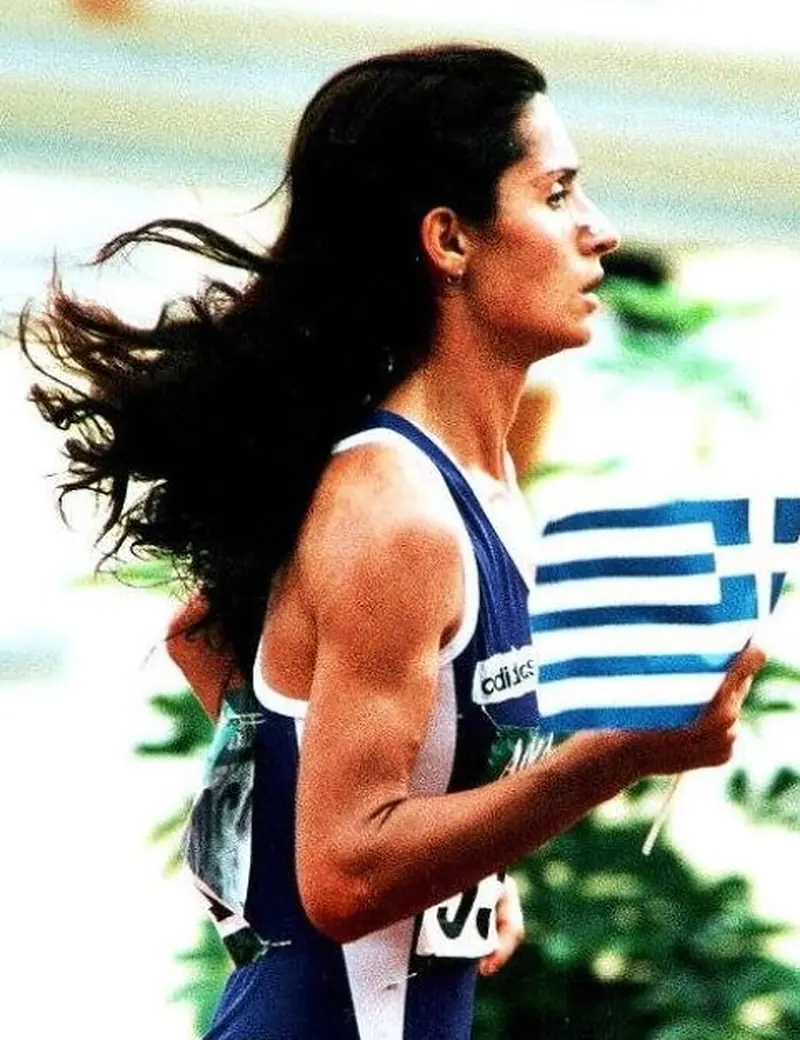
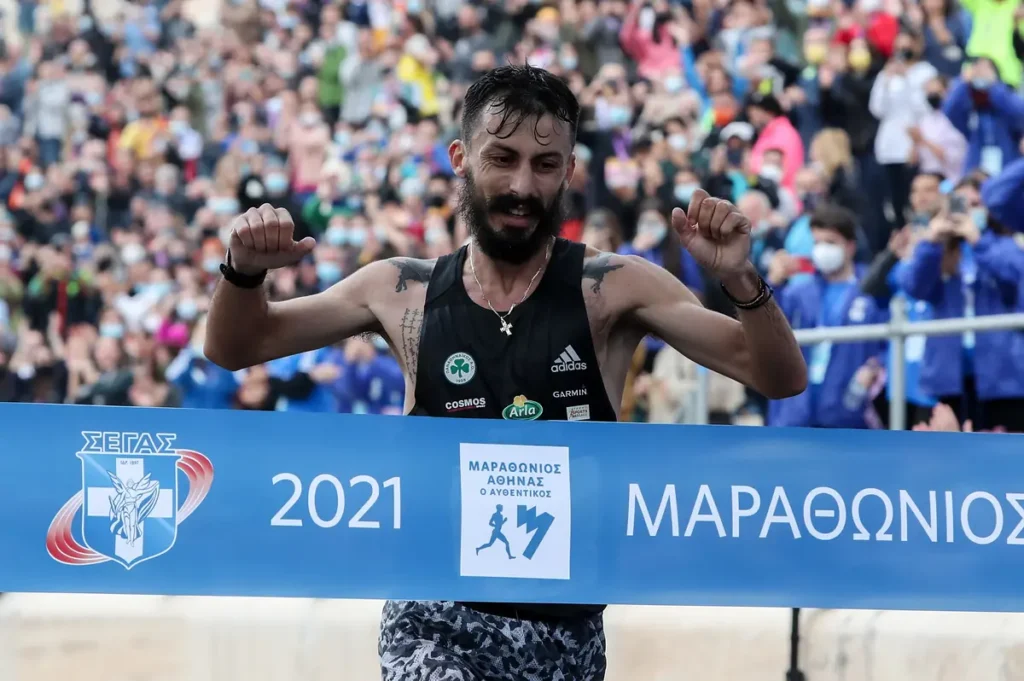
Times and results in this section were checked against World Athletics, the official Athens Marathon results archive, the Boston Athletic Association, Olympedia and the Stelios Kyriakides archive.
Other Famous Marathons Around the World
The Abbott World Marathon Majors comprise seven celebrated races: Tokyo, Boston, London, Sydney, Berlin, Chicago and New York. Other prominent international marathons include Valencia and Cape Town, which is seeking membership of the series.
Many of the sport’s fastest performances have been recorded in Berlin, Chicago and London. Kenya’s Sabastian Sawe set the men’s world record of 1:59:30 at the 2026 London Marathon, becoming the first man to break two hours in an official marathon race. Kenya’s Ruth Chepngetich holds the women’s mixed-race record of 2:09:56, set in Chicago in 2024. Ethiopia’s Tigst Assefa holds the separate women-only record of 2:15:41, set in London in 2026.
Athens occupies a different place in international running. Its distinction comes from the history behind the race, the difficulty of its course and the finish inside the Panathenaic Stadium.
You May Also Like
Missed Paris? C’est Pas Grave! Discover Greece’s Epic Olympic Secrets
Greek History Explained: A Clear Timeline for Expats & Foreign Residents
Athens Explained: The Extraordinary Story of Europe’s Oldest Capital
Sources and Further Information
- 43rd Athens Marathon. The Authentic: official 2026 event information, races, dates and organiser updates
- The Sport Journal: Michel Bréal and the idea of the marathon
- Kathimerini: the establishment of the annual Athens Marathon in 1972 and its inaugural winner
- Olympic World Library: Athanasios Tarasouleas, Stamata Revithi, Alias Melpomeni
- World Athletics: marathon history and standardisation of the distance
- Boston Athletic Association: history of the Boston Marathon
- Abbott World Marathon Majors: current member races
Race arrangements may change. Registered participants should consult the official 2026 instructions before travelling to the start or making race-day plans.