
Why Is the Sea So Blue in Greece? Science, Art and the Power of Greek Blue
Greek Blue: Where Sea, Art and Life Meet
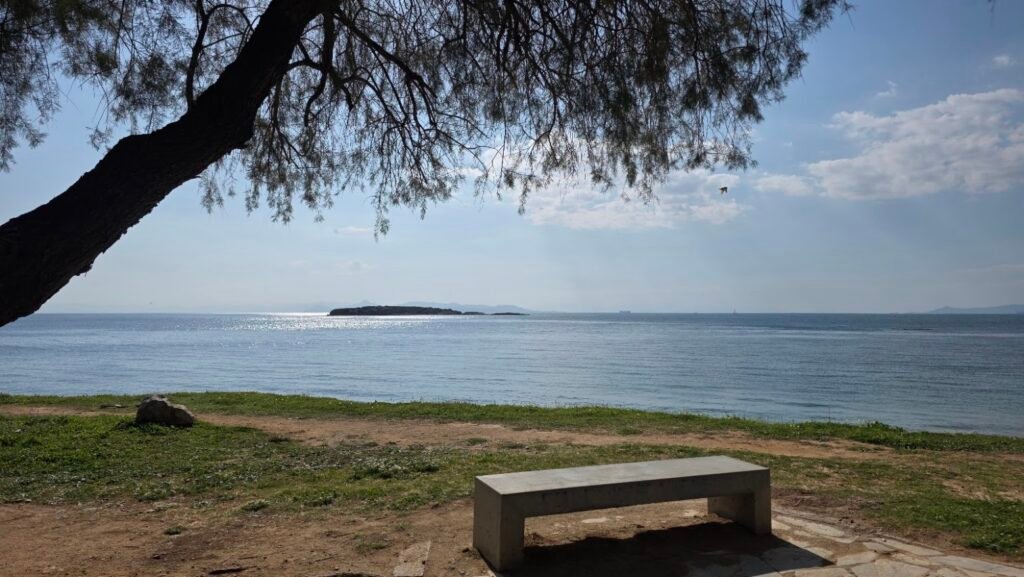
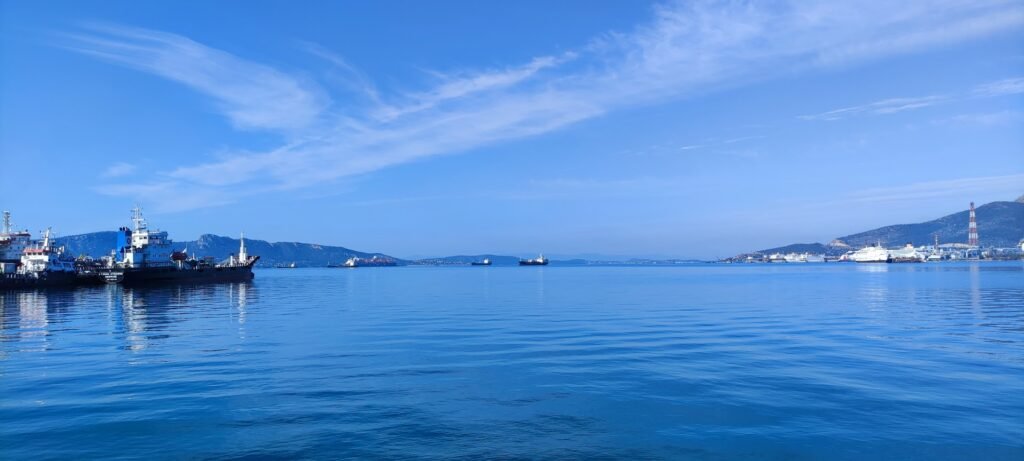
The sea has always been inseparable from Greece. With one of the longest coastlines in the world, stretching for roughly 16,000 kilometres, and more than 6,000 islands and islets scattered across the Aegean and Ionian seas, Greece is a country where the sea is never far away. It shapes journeys, ports, fishing villages, ferry routes, summer rituals and everyday imagination. Land and water often feel as if they are speaking to each other. Yet the Greek sea has another quality that no visitor can easily escape. It draws the eye, changes the mood and raises a question almost immediately: why is the sea so blue in Greece?
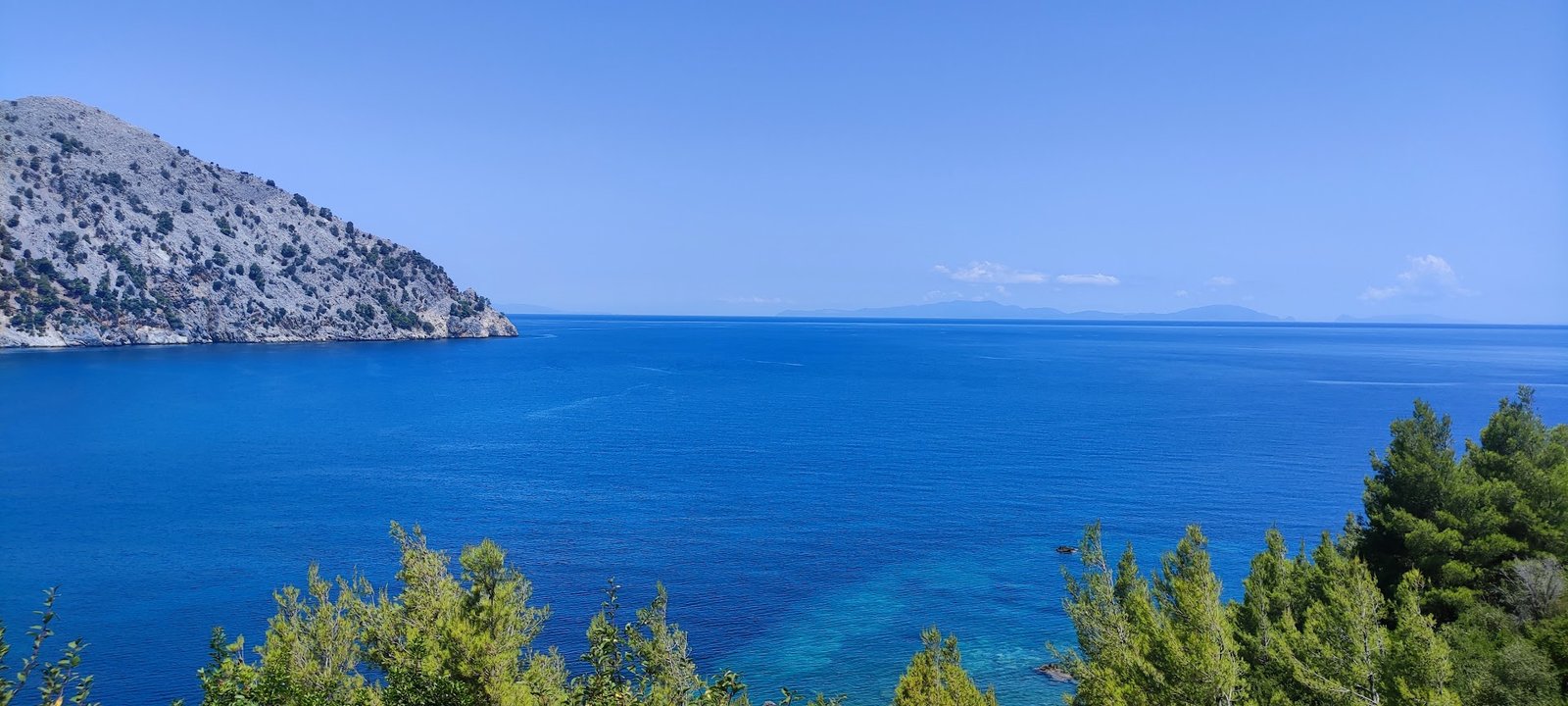
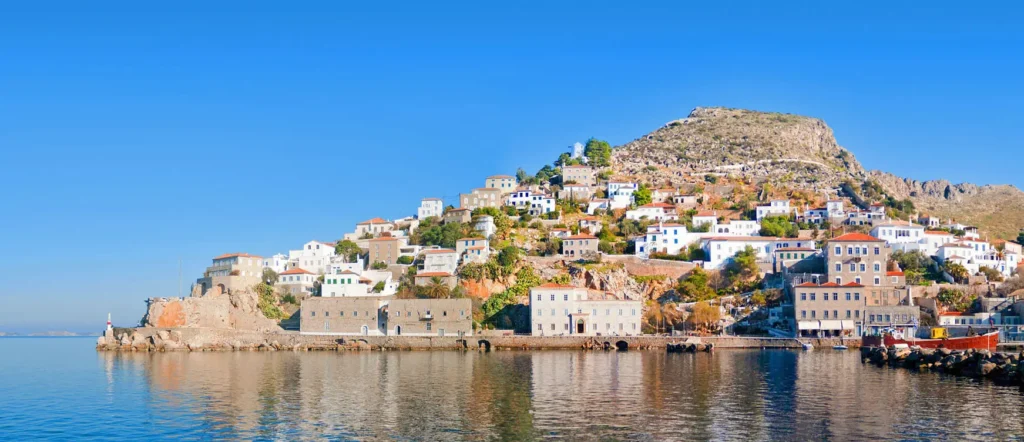
The colour can feel almost unreal. The Aegean shifts from deep navy to silver-blue, while the Ionian often glows in shades of turquoise and pale aquamarine. In some places, the water is so clear that boats seem to float above the seabed, and swimmers can see rocks, sand and fish several metres below the surface. But before we look at the scientific reasons behind this extraordinary blue, it is worth seeing how deeply the colour has entered Greek art, literature and identity.
Blue in Greek Art and Imagination
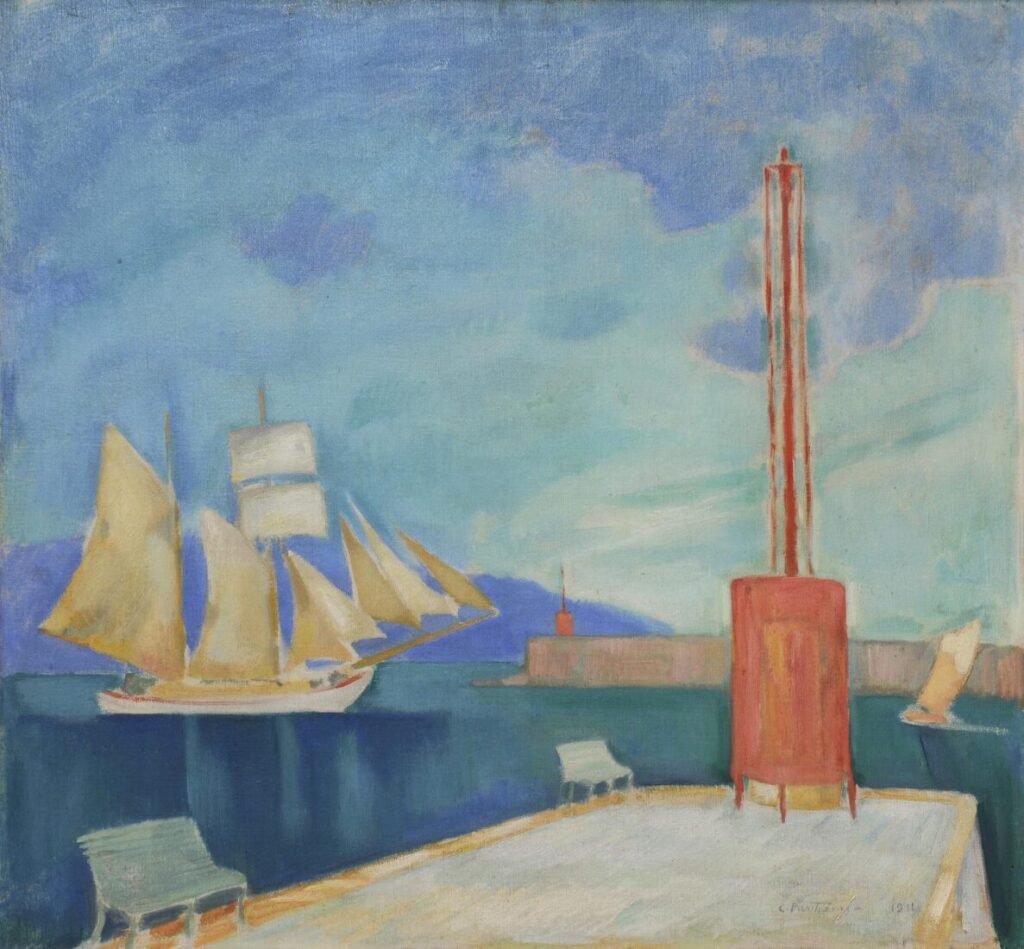
The blue of Greece’s sea and sky has become part of how the country is imagined, remembered and represented. From Homer’s Odyssey to Alexandros Papadiamantis, Nikos Kavvadias, George Seferis, and Odysseas Elytis, the sea runs through Greek literature as a place of journey, memory, longing and identity. Greek painters also returned again and again to the sea, from Konstantinos Volanakis and Ioannis Altamouras, who helped shape Greek maritime painting, to modern artists such as Konstantinos Parthenis, Konstantinos Maleas, Nikos Hadjikyriakos-Ghikas, Yiannis Moralis, Panayiotis Tetsis and Alekos Fassianos, who transformed the sea into light, colour, geometry and memory. In Greek culture, blue is rarely just a colour. It is landscape, atmosphere, emotion and identity.
No poet expresses this more intensely than Odysseas Elytis, the quintessential poet of the Aegean and of light. In Maria Nefeli, he gives Greek blue one of its most unforgettable lines:
“My God, how much blue you spend so that we cannot see you!”
«Θεέ μου, τι μπλε ξοδεύεις για να μη σε βλέπουμε!»
Odysseas Elytis, Maria Nefeli
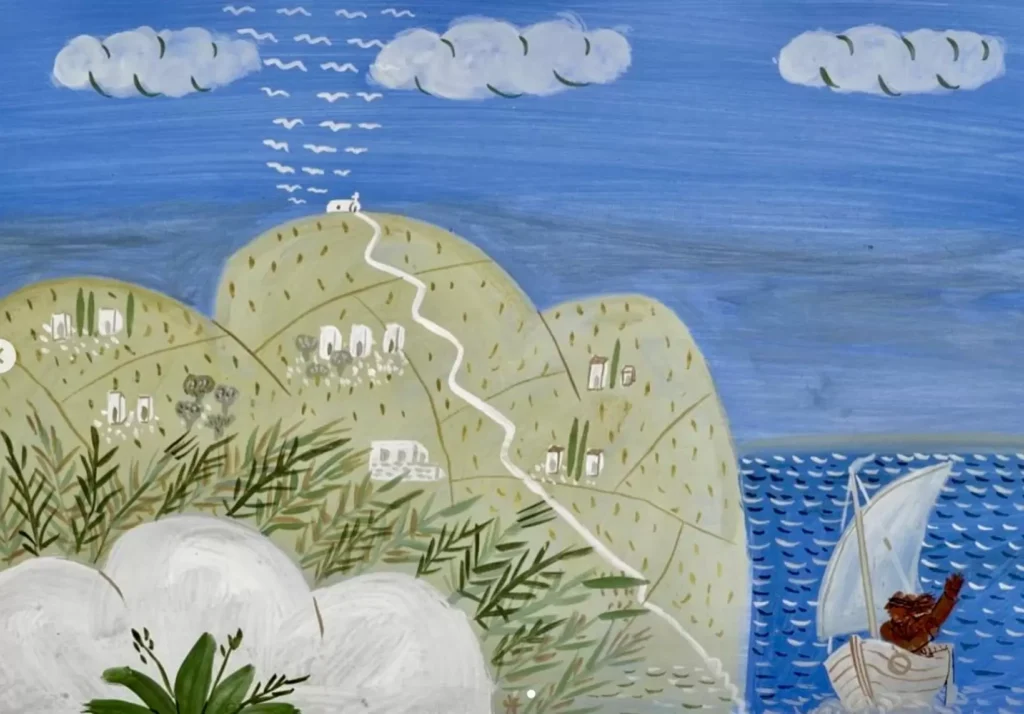
The hues of Greek blue also fill Greek painting, where the sea and sky become more than scenery. They become a way of seeing Greece itself.
So, Why Is the Sea So Blue in Greece? Science Has the Answer
The unearthly blue of Greece’s sea, which has inspired generations of poets and painters, is the result of very real natural conditions. Its intensity comes from the way sunlight, water clarity, low nutrient levels, depth, pale seabeds and the brightness of a clear Greek sky work together.
The Physics of Light
The first reason is the way water itself interacts with sunlight. It is often said that the sea is blue because it reflects the sky, and this is partly true at the surface. But reflection is not the whole story. If you go below the surface, the blue remains. That means the colour is also being created by the water itself.
Sunlight contains the full range of visible colours, from red and orange to green, blue and violet. As light travels through seawater, these colours are not absorbed equally. The longer wavelengths, especially red and orange, are absorbed first and disappear after only a few metres. Yellow and green fade next. Blue wavelengths travel deeper through the water and are scattered back toward our eyes, which is why deep, clear water often appears blue.
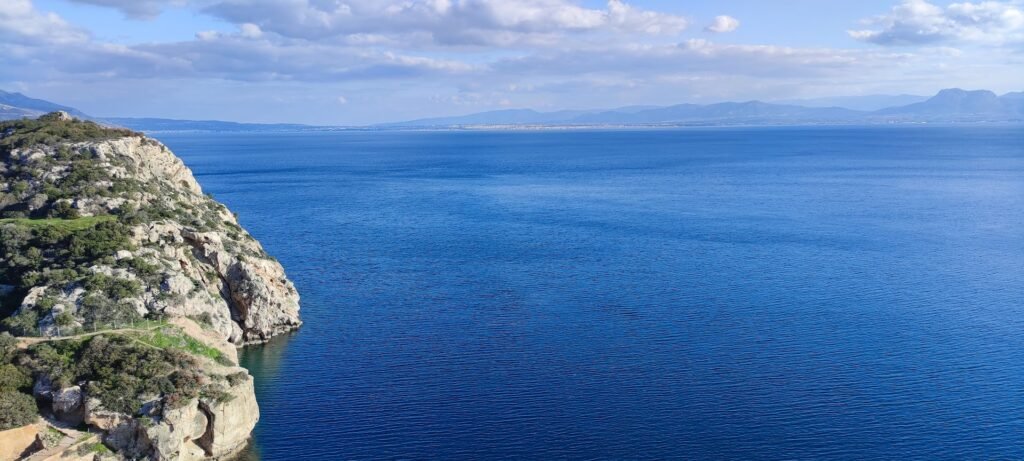
This is also why the colour changes with depth. In shallow clear water, sunlight can reach the seabed and bounce back, creating turquoise or green-blue tones. In deeper water, where the warmer colours have been absorbed and the seabed is no longer visible, the blue becomes darker and more intense. As the Woods Hole Oceanographic Institution explains, the sea can reflect the sky at the surface, but the blue colour also remains below the surface because of how water absorbs and scatters light.

Clear Water and Low Nutrients
The second reason is the clarity of the water. Much of the eastern Mediterranean is oligotrophic, meaning it is relatively low in nutrients such as nitrates and phosphates. This may sound technical, but the result is easy to see: with fewer nutrients, there is often less phytoplankton, the microscopic plant life that can make seawater look greener, murkier or cloudier.
This is one reason Greek waters often appear so transparent. When there are fewer suspended particles, sediments or microorganisms in the water, sunlight can travel deeper and return with a cleaner blue tone. In other words, the colour of the sea depends not only on light itself, but also on what is present in the water. Waters with fewer particles and less organic matter usually appear bluer, while more productive or sediment-rich waters may look greener or browner.
In simple terms, the Greek sea often looks blue because there is less in the water to interrupt the light. The clearer the water, the more intensely the blue can appear.
Depth, Sand and Rock
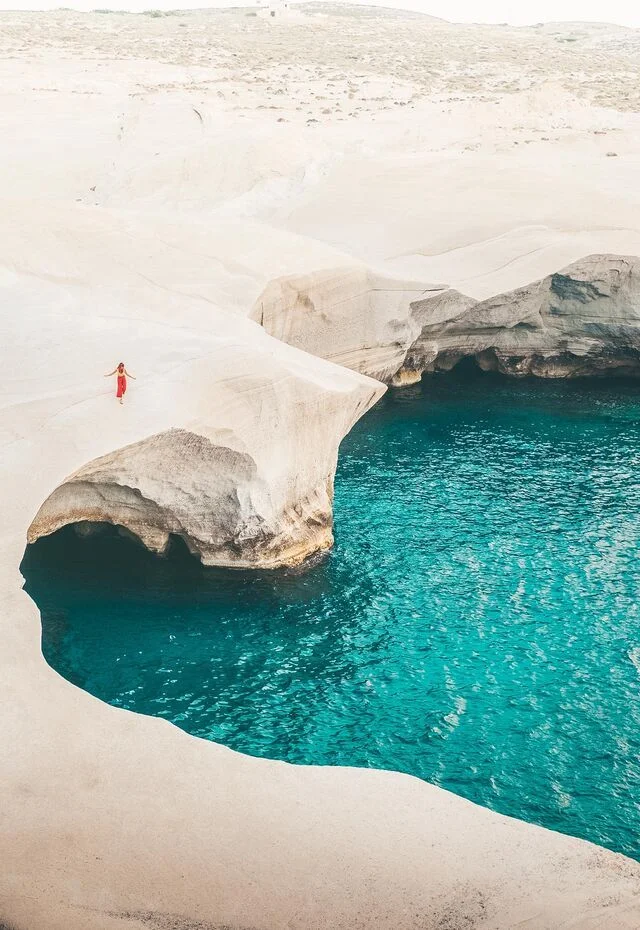
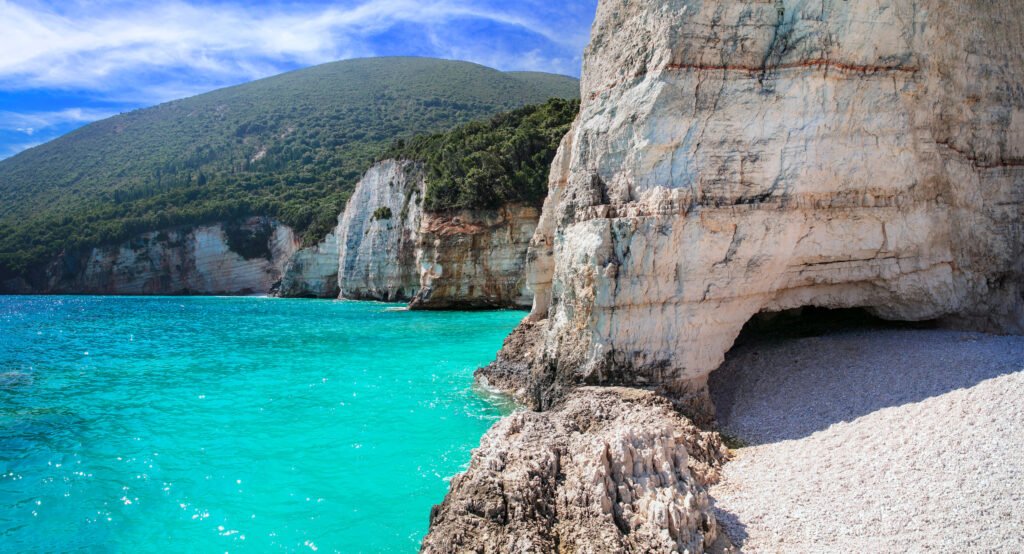
The third reason is depth and seabed colour. In deeper water, the blue becomes darker and more intense, which is why the open waters of the Aegean and Ionian seas can look sapphire, navy or cobalt. In shallow coves, pale sand, limestone and light-coloured rock reflect sunlight upward, creating the turquoise and aquamarine tones that make many Greek beaches look almost tropical.
As a result, one beach can seem to contain several seas at once. Near the shore, where the water is shallow and the seabed is bright, the colour may appear pale green-blue or turquoise. A few metres farther out, where the seabed drops and the water deepens, the colour can suddenly become a stronger, deeper blue. The Greek coastline, with its cliffs, coves, white rock, pebble beaches and sandy bays, makes these changes especially visible.
The Greek Sky and the Changing Surface
The sky does not fully explain why the sea is blue, but it does change how that blue appears. At the surface, water can reflect the colour and brightness above it. On a clear day, the sea may look lighter, sharper or more luminous; on a cloudy day, the same water may turn grey, silver or dark blue.
This is why the Greek sea never feels like one fixed colour. It changes with the hour, the wind, the clouds and the angle of the sun: turquoise at noon, silver-blue in the breeze, deep cobalt in open water and violet at dusk. The blue comes mainly from the way light behaves in clear water, but the sky gives it mood. And when you consider that Greece is one of Europe’s sunniest countries, with many regions enjoying more than 300 days of sunshine a year, it becomes easier to understand why this brightness makes the sea appear sharper, lighter and more luminous.
Greece and the Blue Mind Effect
There is another way to understand the pull of the Greek sea. Marine biologist Dr Wallace J. Nichols popularised the idea of Blue Mind, a term used to describe the calm, mildly meditative state people often experience when they are near, in, on or under water. The idea is not simply that water is beautiful, but that it changes the way we feel: it softens attention, slows the mind and creates a sense of openness.
Researchers often use the term blue space for visible outdoor water environments such as seas, lakes, rivers and coastlines. A systematic review published in Health Promotion International found that blue-space interventions may support mental health and psychosocial wellbeing, although the evidence is still developing and should not be treated as a medical cure.
In Greece, the idea feels especially natural. The sea is rarely distant. It appears at the end of streets, below village balconies, beyond ferry railings, beside archaeological sites, outside tavernas and along morning walks. The blue is not something you visit once and leave behind. In Greece, it keeps returning.
This may be why the Greek sea stays so strongly in memory. It is not only colour, but rhythm: the sound of waves against rocks, the slow approach to an island by boat, the flash of light on the water at noon, the quietness of a harbour after sunset. Even before we understand the science, most of us recognise the feeling.