

Athens is facing another period of extreme heat, with temperatures in Attica expected to reach around 39°C and parts of Greece exceeding 40°C. Stronger northerly winds in the Aegean are also increasing the risk of wildfires and disruption to ferry services.
For people living in Athens, the difficulty is not limited to the temperature shown in the afternoon forecast. Roads, pavements and buildings absorb heat throughout the day and release it slowly after sunset. Homes can remain hot through the night, giving the body little time to recover before temperatures rise again.
Residents and visitors should reduce unnecessary movement during the hottest hours, check on people who may need help and know where to find an air-conditioned public space. Archaeological sites may also change their opening hours at short notice.
Conditions can change during the day. Check official forecasts, municipal announcements, archaeological-site opening hours and ferry information before travelling.
Athens Classifies Heatwaves by Health Risk
The temperature alone does not reveal how dangerous a heatwave may be. Humidity, overnight temperatures, the length of the hot period and local conditions all affect the risk to health.
The Municipality of Athens, working with the National Observatory of Athens and its METEO scientific team, uses a local forecasting system to assess the health risk from extreme heat. The model was developed using approximately 20 years of weather and mortality data for Athens.
The system has five levels, from Category 0 to Category 4. Category 0 means that there is no significant thermal burden, while Category 4 indicates extreme temperatures presenting major health risks. Higher categories require greater precautions and wider protection for vulnerable people.
The classification may change as new forecasts become available, so we are not stating a fixed category in this article. View the latest official assessment on the METEO heatwave map. Information about measures introduced by the Municipality of Athens is published on the Cool Athens portal.
How to Stay Safe in Extreme Heat
The most effective protection is to reduce the amount of heat your body must manage. Reschedule errands and outdoor work where possible, particularly between 11:00 and 18:00.
- Drink water regularly, even if you do not yet feel thirsty.
- Carry water whenever you leave home.
- Avoid excessive alcohol and limit drinks containing large amounts of caffeine or sugar.
- Wear loose, lightweight and light-coloured clothing.
- Use a hat, sunglasses and high-protection sunscreen.
- Eat smaller, lighter meals, including fruit and vegetables.
- Avoid running, strenuous exercise and heavy physical work in direct sun.
- Rest in shaded or air-conditioned places whenever possible.
- Take cool or lukewarm showers, or place a cool wet cloth on your head and neck.
If you have to cross the city, travel during the cooler hours and allow more time. Carry more water than you expect to need, particularly when accompanying children, older people or animals.
Why Athens Stays Hot After Sunset
Athens experiences an urban heat island effect. Roads, pavements and densely built neighbourhoods absorb heat during the day and release it slowly at night. Limited vegetation and poor air movement in some areas can make the difference between central Athens and less densely built surroundings particularly noticeable.
Warm nights give the body and the home less opportunity to cool down. The effects can build over several consecutive days, even when the maximum daytime temperature remains broadly unchanged.
How to Keep Your Home Cooler
The measures taken early in the morning can determine how hot a home becomes later in the day. Once the temperature outside is higher than the temperature inside, leaving windows open may allow more heat into the building.
- Close windows, shutters, blinds and curtains before the sun reaches the building.
- Lower external awnings on sun-facing balconies where appropriate.
- Open windows late at night or early in the morning, when the air outside is cooler.
- Create a cross-breeze by opening windows on opposite sides of the home when conditions allow.
- Switch off unused lights, computers and electrical appliances that generate heat.
- Use ovens, washing machines and dishwashers during the cooler evening hours.
- Prepare meals that require little or no cooking.
- Keep doors and windows closed while air conditioning is operating.
- Spend more time in the coolest room, even if it is not the room you normally use.
A fan can help air circulate, but it does not lower the temperature of a very hot room. If you cannot cool your home adequately, go to an air-conditioned public place. The Municipality of Athens recommends spending at least two hours in a cooler space to help reduce body temperature.
Air-Conditioned Cooling Spaces in Athens
From Sunday 23 August and for as long as necessary, the Municipality of Athens is operating seven Friendship Clubs as air-conditioned spaces for residents. The spaces are open from 09:00 to 21:00.
- Agios Pavlos Friendship Club: 22 Mamouri Street and Dymis Street. Telephone: 210 822 3946.
- “The Ascension of the Lord” Neos Kosmos Friendship Club: 15 Heldreich Street. Telephone: 210 924 0403.
- Votanikos Friendship Club: 4 Kozanis Street. Telephone: 210 342 3716.
- Kolokynthou Friendship Club: 9 Aimonos Street and Astrous Street. Telephone: 210 514 0877.
- Agios Eleftherios Friendship Club: 372 Acharnon Avenue. Telephone: 210 201 2334.
- Kypseli Friendship Club: Skyrou Street and Kafkasou Street. Telephone: 210 881 5877.
- Ambelokipi Friendship Club: Panormou Avenue and Vatheos Street. Telephone: 210 645 9890.
The spaces are available to citizens who need protection from the heat. As the arrangements will remain in force only for as long as necessary, check the municipality’s latest official announcement before travelling.
Municipality of Athens 24-hour service line: 1595 or 210 528 7800
Municipal Heatwave Medical Line: 210 363 8049, operating daily from 08:30 to 19:30 for medical advice and guidance on heat-related health problems.
Take water, any medication you require and your mobility aids when travelling to a cooling space. If an older or vulnerable person cannot reach one safely, contact the municipality or ask a relative, neighbour or carer to help.
Recognising Heat Exhaustion
Heat exhaustion is a warning that the body is struggling to control its temperature. Symptoms can include:
- Heavy sweating.
- Dizziness or faintness.
- Headache.
- Nausea or loss of appetite.
- Intense thirst.
- Muscle cramps.
- Weakness or unusual tiredness.
- Rapid breathing or heartbeat.
- Cool, pale or clammy skin.
Move the person to a shaded or air-conditioned place. Remove unnecessary clothing and give them cool water to drink. Cool their skin with water, wet cloths, a fan or cold packs wrapped in fabric and placed around the neck or under the arms.
Stay with them and monitor their condition. They should begin to feel better within approximately 30 minutes. Seek medical assistance if they do not improve, if the symptoms become more serious or if you are uncertain about their condition.
Heatstroke Is a Medical Emergency
Call 112 or the ambulance service on 166 if the person remains unwell after approximately 30 minutes of cooling or shows signs of heatstroke.
Warning signs include:
- Confusion, agitation or unusual behaviour.
- Poor coordination.
- Very high body temperature.
- Hot skin, which may be dry or still sweating.
- Rapid breathing or shortness of breath.
- A seizure.
- Loss of consciousness.
Do not wait for the person to stop sweating. Someone with heatstroke may still have moist or sweaty skin.
Continue cooling the person while waiting for medical help. If they are unconscious but breathing, place them in the recovery position. Do not give food, water or medication to anyone who is unconscious or confused.
Who Needs Extra Care?
Extreme heat can affect anyone, but some people are less able to regulate their body temperature or may find it difficult to reach a cooler place.
Those at greater risk include:
- Babies and young children.
- People aged 65 and over.
- Pregnant women and nursing mothers.
- People with heart, lung, kidney or neurological conditions.
- People with diabetes or other chronic illnesses.
- People with dementia or severe mental health conditions.
- People who live alone or have limited mobility.
- People experiencing homelessness.
- Outdoor workers and people doing physically demanding jobs.
- People taking medication that may affect hydration, sweating or temperature regulation.
Check on relatives, friends and neighbours who may be at risk. Ask whether their home is cool enough, whether they have water and whether they can safely reach an air-conditioned space. A telephone call may not reveal how hot the home has become, particularly after several days of extreme temperatures.
Medication During Extreme Heat
Some medicines can affect hydration, sweating or the body’s ability to control temperature. High temperatures may also affect how medication should be stored.
Ask a doctor or pharmacist for individual advice if you have concerns. Do not stop taking prescribed medication or change the dose without medical advice. Keep medicines away from direct sunlight and never leave them in a parked car.
Children and Parked Cars
The inside of a parked vehicle can become dangerously hot within minutes. Leaving a window partly open does not keep the vehicle safe.
Never leave a baby or child alone in a parked car, even for a short time. Check the back seat every time you leave the vehicle and keep car keys where children cannot reach them.
On longer journeys, carry enough water, take regular breaks and make sure the vehicle is properly ventilated. If a child becomes unusually sleepy, irritable, dizzy or unwell, stop somewhere safe, begin cooling them and seek medical advice.
Protecting Animals During a Heatwave
Dogs, cats and other animals can also suffer heat exhaustion and heatstroke. Make sure they always have fresh water, shade and a cool, ventilated place.
Never leave an animal in a parked car, even for a few minutes and even when the windows are open. The temperature can rise rapidly enough to cause organ damage or death.
- Walk dogs early in the morning or later in the evening.
- Avoid running and strenuous play during the hottest hours.
- Carry water and offer it regularly on longer journeys.
- Use proper ventilation in the car and take frequent breaks.
- Do not leave animals on balconies or in yards without reliable shade.
- Never leave an animal tied outside a shop in direct sunlight.
- Help keep public water bowls clean and filled with fresh water.
Hot pavements can burn an animal’s paws. Place the back of your hand on the surface for several seconds. If it is too hot for you to keep your hand there comfortably, choose a shaded route or wait until the ground has cooled.
The Municipal Veterinary Hospital
The Municipal Veterinary Hospital is at the junction of 94 Mesogeion Avenue and Trikala Street, opposite Alsos Chorofylakis in Ambelokipi.
The latest municipal announcement lists opening hours of 09:00 to 15:00 and the telephone number 210 748 3967. Check the current announcement before travelling because arrangements may change.
Visiting the Acropolis and Other Archaeological Sites
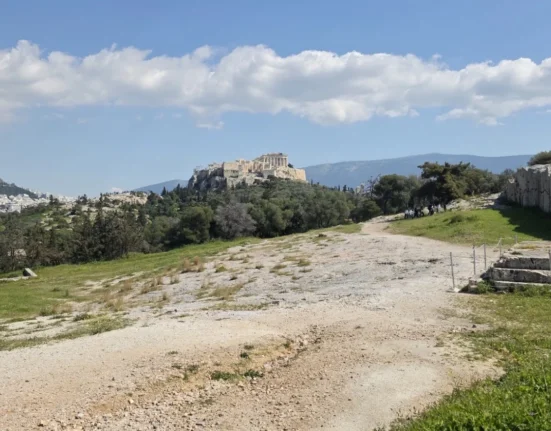
Outdoor archaeological sites may change or suspend their opening hours when extreme heat creates a health risk for visitors and staff. This can include the Acropolis of Athens.
Check the official Acropolis visitor-information page on the morning of your visit. Do not rely entirely on a ticket confirmation, travel guide or opening time published before the heatwave. If possible, choose the earliest available entry, carry water and allow time for breaks in the shade.
Official Acropolis information: View current opening hours and visitor details on the Hellenic Heritage website.
Heat, Strong Winds and Wildfire Risk
Extreme temperatures in Greece may coincide with strong northerly winds. This combination can cause fires to spread rapidly and can also lead to ferry delays or cancellations.
Check the official daily fire-risk map before entering forested or rural areas. Avoid any activity that could produce a flame, spark or hot ash. If you see smoke or fire, call 199 or 112 immediately and give the clearest possible location.
Passengers travelling by sea should confirm their departure with the ferry company or port authority before setting out. A valid ticket does not guarantee that a sailing will operate if weather conditions become unsafe.
Rubbish Collection During Extreme Heat
While the current measures remain in force, the Municipality of Athens is asking residents and businesses not to put rubbish in street bins between 11:00 and 17:00. This helps protect sanitation workers and reduces the time waste remains in very high temperatures.
The measure may not apply every day. Check the latest municipal announcement rather than following instructions issued during an earlier heatwave.
Emergency Numbers in Greece
112: European emergency number
166: Emergency ambulance service
199: Fire Service
1595 or 210 528 7800: Municipality of Athens service lines
210 363 8049: Municipal Heatwave Medical Line, daily from 08:30 to 19:30
When calling, explain what has happened and give the exact location. If you do not know the street address, provide a nearby landmark, junction or location pin and follow the operator’s instructions.
Extreme heat is easier to manage when preparations begin before anyone feels unwell. Check the forecast, keep your home cool from early in the day, plan journeys around the hottest hours and pay attention to people and animals who may need help.
You May Also Like
Sources
- Municipality of Athens: Cooling Spaces and Current Heatwave Measures
- Municipality of Athens: Cool Athens
- National Observatory of Athens: Heatwave Classification Map
- Hellenic Heritage: Acropolis of Athens Visitor Information
- National Public Health Organisation: Heatwave Guidance
- Ministry for Climate Crisis and Civil Protection: Heatwave Guidance
- NHS: Heat Exhaustion and Heatstroke
- NHS Specialist Pharmacy Service: Heatwaves and Medicines