

Once upon a time, in a land of sunny skies, dramatic philosophers, and endless olive groves, there was a city in search of a name. Yes, the city we now know as Athens was nameless, and its founders—clearly having more sense than modern parents who name their children after fruits or car brands—decided to leave the decision to the gods.
It all began when two of the mightiest Olympians, Poseidon, the hunky god of the sea, and Athena, the brainy goddess of wisdom, decided they both wanted to be the patron deity of this up-and-coming metropolis. Naturally, they couldn’t just talk it out like sensible immortals. Instead, they engaged in a divine duel of gifts to win over the city’s mortals. Think The Voice, but with fewer chair spins and more eternal consequences.
Round 1: Poseidon’s Pitch
Poseidon made his move first. With his trident raised high, he struck the ground (probably with dramatic flair) and created… a saltwater spring.
Now, let’s pause for a second. Poseidon was the god of the sea. What did he think people wanted inland? A taste of seawater? Perhaps he misunderstood the assignment, or maybe he was just having an off day.
The mortals were polite about it. “Oh, uh, thanks Poseidon,” they probably muttered while side-eyeing the salty puddle. “Very… creative.” They may have even applauded out of sheer awkwardness.
Round 2: Athena’s A-Game
Athena, not one to be outdone, stepped up next. With a flourish, she planted an olive tree in the rocky soil. Not just any olive tree—this one symbolized peace, prosperity, and the possibility of excellent salads.
The mortals loved it. They could press olives for oil, eat them as snacks, and make fancy wreaths to wear on Instagram-worthy toga parties. The tree screamed “practicality and Pinterest potential,” which was way more useful than Poseidon’s saline splash zone.
The Winner: Wisdom Over Waves
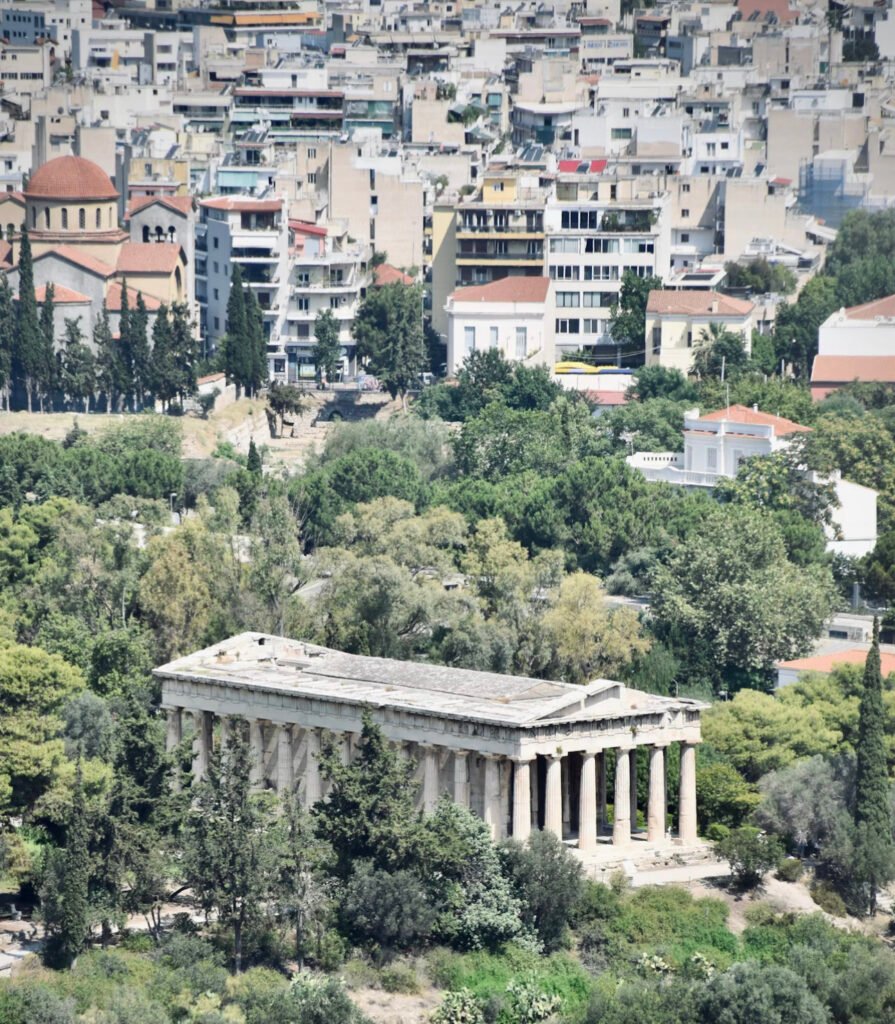
A council of gods and mortals declared Athena the winner, officially making her the city’s patron deity. As a reward, the city was named Athens in her honor. Poseidon, meanwhile, sulked off back to the sea, where at least his gifts were more appreciated.
The Legacy of the Olive Tree
To this day, Athena’s olive tree remains a symbol of the city. In fact, there’s a legend that the original tree still stands on the Acropolis, though modern botanists would probably like a word about its age. Regardless, the olive tree’s legacy lives on in every Greek salad and bottle of extra virgin olive oil you’ve ever overpaid for at a farmer’s market.
The Moral of the Myth
The story of Athens’ naming is a reminder that brains often win over brawn, especially if your competition thinks saltwater is a gift. So next time you’re stuck in a brainstorming session or an actual storm, channel your inner Athena: plant something useful, and you just might win the day.
Want More Greek Myths?
If you’d like to dive deeper into the mythological drama that makes modern soap operas look tame, check out these resources:
- Theoi Project – A treasure trove of Greek mythology.
- Encyclopedia Britannica on Athena – Who doesn’t trust Britannica?
- Greek Myths Explained – For your mythological fix.
So next time you’re in Athens, give a nod to Athena, snack on an olive, and remember: the gods were just as dramatic as the rest of us.