
A new exhibition at the Basil & Elise Goulandris Foundation brings together posters by Toulouse-Lautrec, Mucha, Steinlen and other artists whose work transformed the appearance of Paris at the end of the nineteenth century.
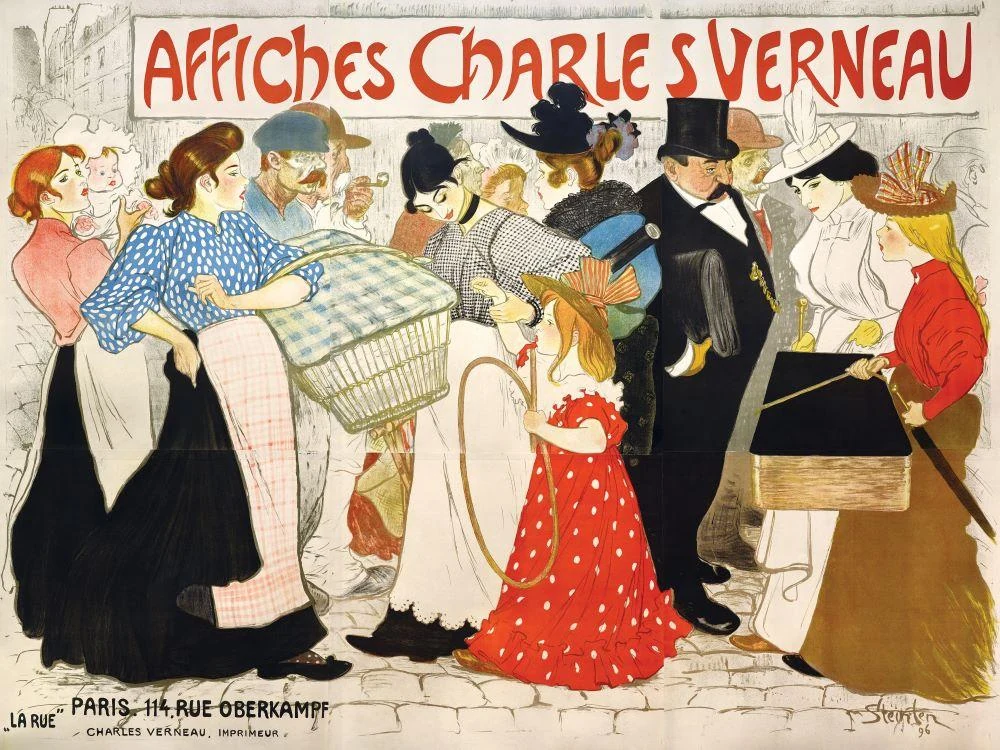
In 1896, the Parisian printer Charles Verneau commissioned Théophile-Alexandre Steinlen to advertise his business. The result was The Street, a lithograph almost three metres wide depicting a crowd of Parisians, including a laundress carrying her basket, fashionable women and a wealthy businessman.
Printed across six sheets, the poster demonstrated what Verneau’s presses could achieve. Its scale and precise colour registration advertised the printer’s craftsmanship.
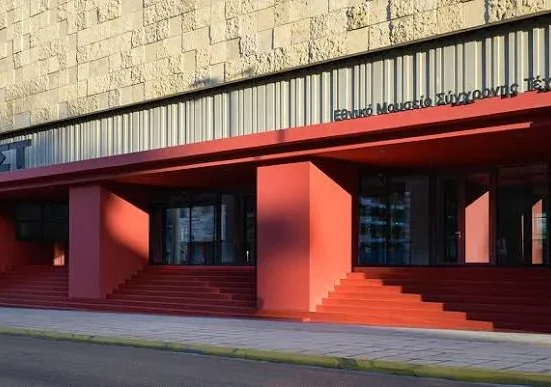
Steinlen’s work is among approximately 90 works by 15 artists featured in Belle Époque, the major temporary exhibition that opened at the Basil & Elise Goulandris Foundation in Athens on 31 October 2026 and runs until 15 February 2027.
The exhibition concentrates on the years 1880–1900, when illustrated posters became a prominent feature of Parisian life and artists began experimenting with the commercial possibilities of colour printing.
Paris at the end of the nineteenth century
Paris had been extensively rebuilt under Baron Haussmann during the reign of Napoleon III (1852–1870). Its broad boulevards changed how people moved through the city, while expanding department stores and entertainment venues encouraged new patterns of shopping and leisure.
Electric lighting altered the experience of Paris after dark. Montmartre’s cabarets and café-concerts attracted audiences eager to see the performers whose names were becoming familiar through advertising. The Moulin Rouge, the Folies-Bergère and the city’s theatres were important centres of this entertainment culture.
Transport was also changing. The first line of the Paris Métro opened in 1900, at the end of the two decades covered by the exhibition.
The expansion of commerce created a growing demand for advertising. Manufacturers promoted bicycles and consumer goods, while entertainment venues competed for audiences. Advances in colour lithography made it possible to reproduce artists’ drawings at considerable size, using successive applications of ink to produce the finished images.
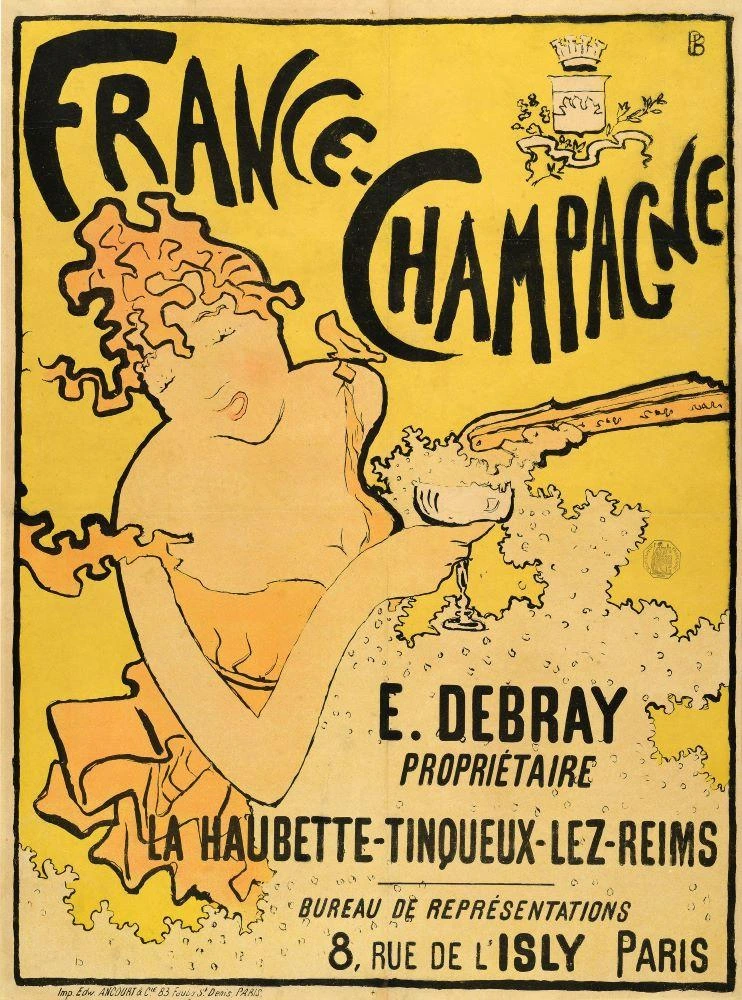
An advertisement displayed on a busy boulevard had to attract attention quickly. Large figures and bold lettering helped pedestrians recognise a product or performer without stopping to read lengthy announcements.
Jules Chéret was among the artists who developed this approach. His posters frequently featured energetic female figures in flowing dresses, nicknamed Chérettes, who became familiar presences in Parisian advertising.
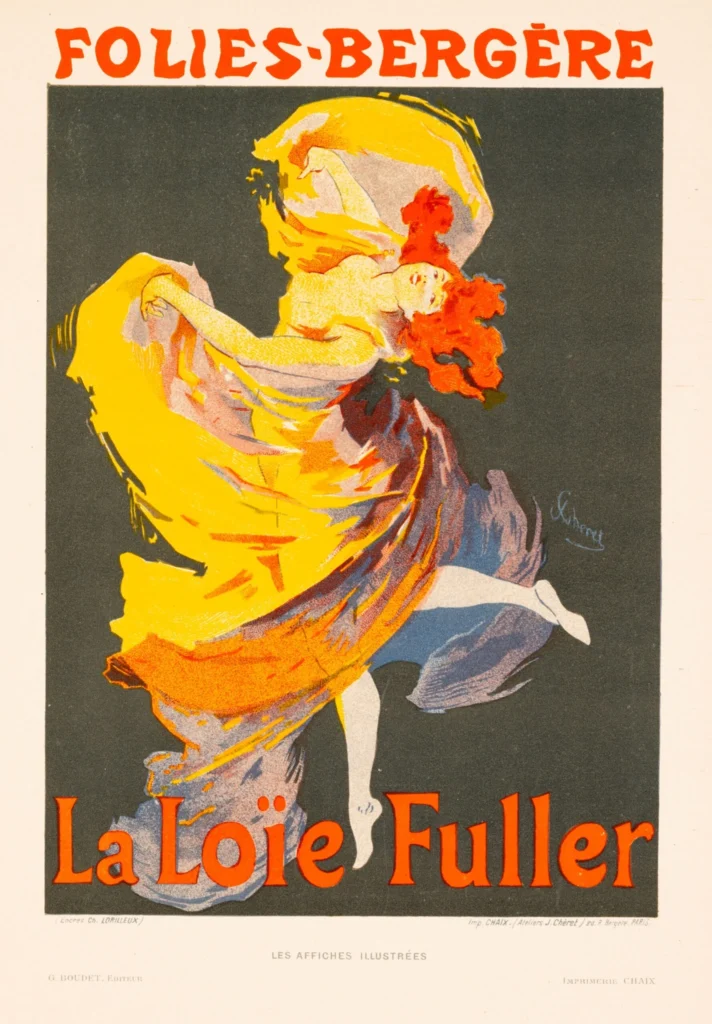
The illustrated poster also brought artists’ work onto the streets, where pedestrians encountered it without entering a gallery.
When Paris caught poster mania
During the 1890s, illustrated posters attracted an unexpected following. Collectors began acquiring copies from printers and dealers, while some sought examples directly from the walls.
The enthusiasm became known as affichomanie. Exhibitions devoted to posters were already taking place by 1889, including a retrospective of Jules Chéret. Specialist publications and art criticism followed, alongside a growing trade in prints originally produced for commercial purposes.
In 1895, Chéret launched Les Maîtres de l’Affiche, a subscription series reproducing celebrated poster designs in smaller formats.
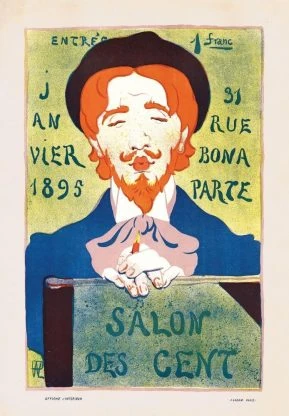
Collectors were preserving advertisements that had been intended for temporary display, sometimes while the performances and products they promoted were still familiar to the public.
Toulouse-Lautrec and the stars of Montmartre
Henri de Toulouse-Lautrec knew the cabarets and café-concerts of Montmartre well. His first poster, created for the Moulin Rouge in 1891, depicted Louise Weber, better known as La Goulue, performing the cancan.
Her partner, Valentin le Désossé, occupies the foreground, while the spectators form a row of dark silhouettes. La Goulue dominates the composition, her dancing pose immediately recognisable.
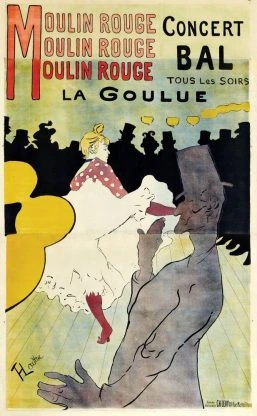
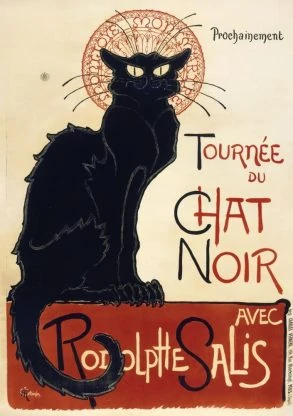
The poster promoted the Moulin Rouge through the image of one of its star performers. Toulouse-Lautrec subsequently designed advertisements for Jane Avril and Aristide Bruant, whose public identities became closely associated with his work.
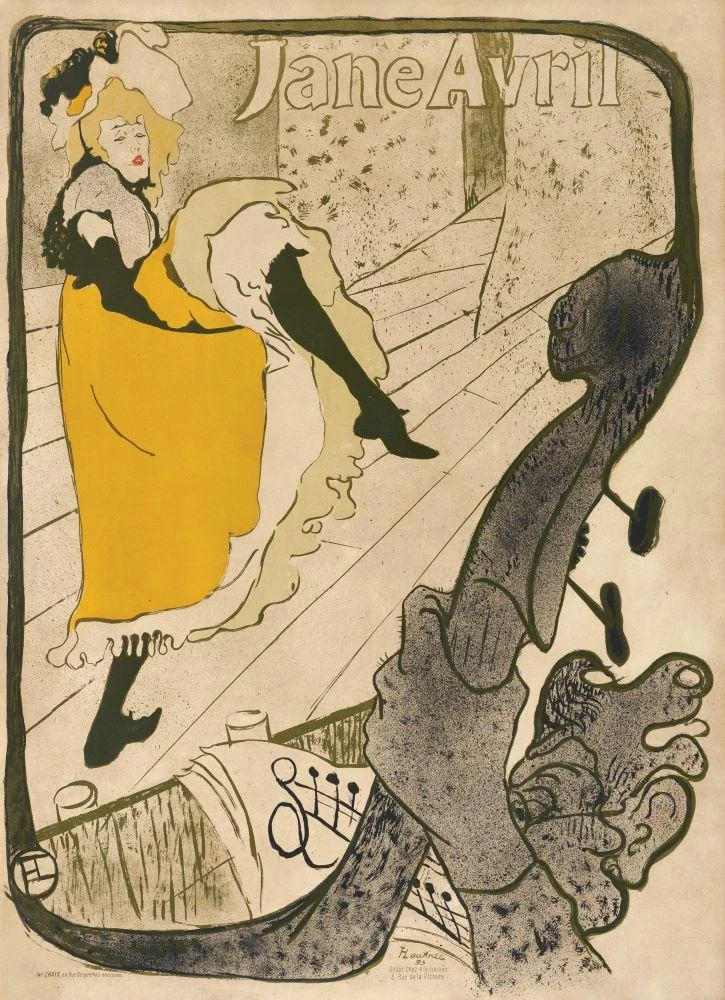
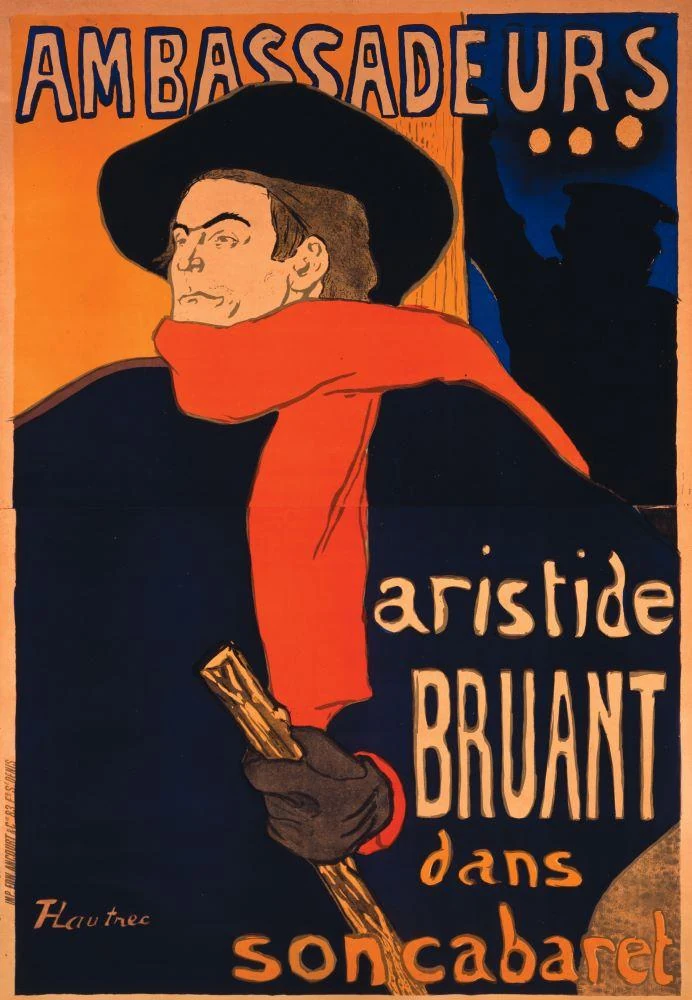
The Athens exhibition includes Moulin Rouge: La Goulue (1891), Divan japonais (1892–1893), Ambassadeurs: Aristide Bruant (1892) and several posters featuring Jane Avril.
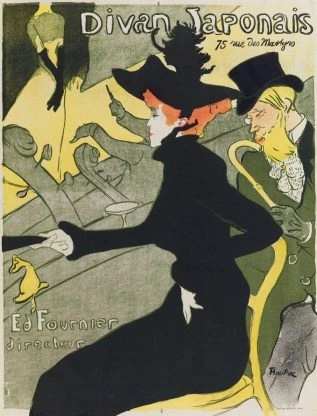
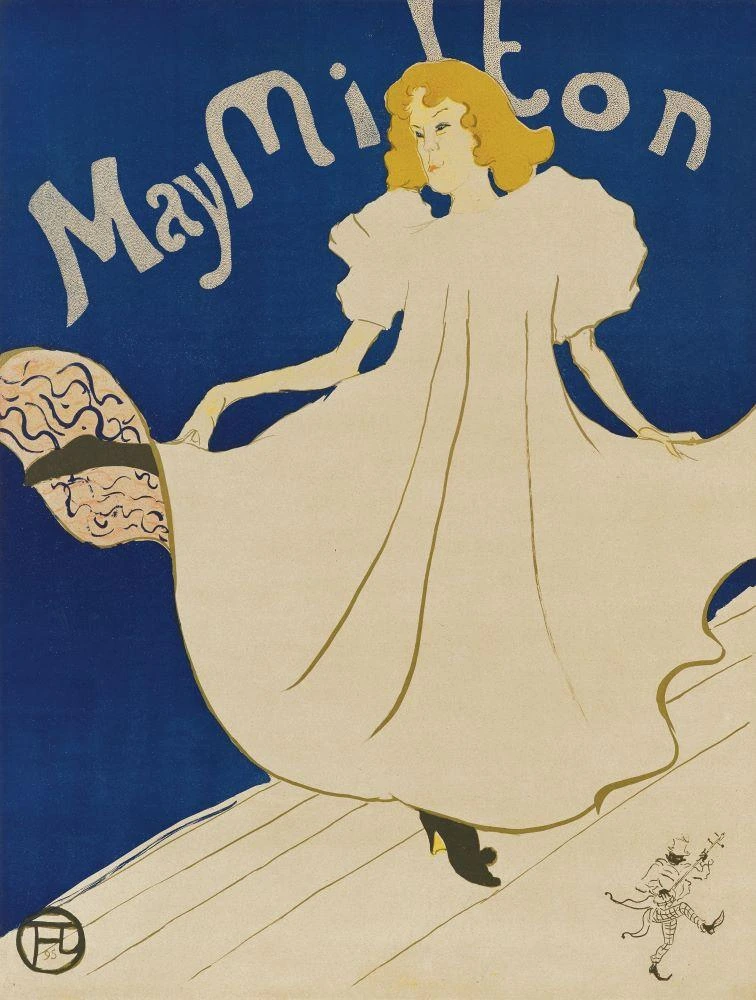
These posters carried performers’ likenesses beyond the cabarets, introducing them to Parisians who had never seen them on stage.
Women in the new consumer city
Women occupied a prominent place in Belle Époque advertising. As department stores expanded and more women entered paid employment, posters increasingly depicted them shopping, travelling and moving independently through the city.
These images reflected the emergence of the modern woman in European urban life, whose growing presence in public spaces challenged established social conventions. Advertisers recognised women as an important consumer market, although idealised female beauty remained a familiar way of promoting luxury products.
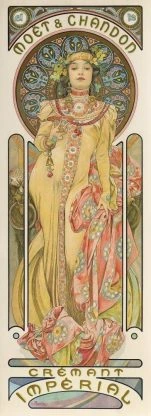
Alfons Mucha’s Moët & Chandon, Crémant Impérial (1899) belongs to this commercial tradition. An elegant female figure, surrounded by decorative Art Nouveau patterns, dominates the advertisement. His The Seasons, Spring (1896) is also included in Athens.
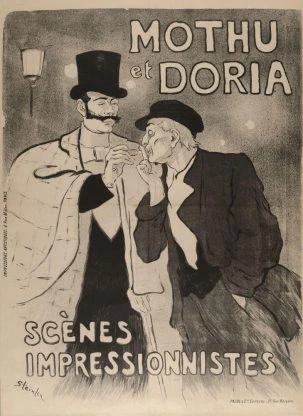
Steinlen’s work frequently portrayed working-class Paris. In The Street, a laundress carrying her basket shares the pavement with wealthier inhabitants, their different circumstances apparent in their clothing and occupations.
The contradictions of the Belle Époque
The Belle Époque is associated with fashionable entertainment and the prosperity of Paris, yet the period was also marked by harsh working conditions and pronounced social inequalities.
The Dreyfus Affair, which divided France over the wrongful conviction of a Jewish army officer, exposed antisemitism and political tensions during these years. Those divisions rarely appear in the glamorous advertisements for cabarets and consumer goods.
The Goulandris exhibition places the artistic poster within this wider history through historical photographs, most drawn from the Bibliothèque nationale de France and the Musée Carnavalet.
Excerpts from early films by the Lumière brothers and Georges Méliès include Les colleurs d’affiches (The Poster-Pasters) and Défense d’afficher (Post No Bills), concerned with the practice of displaying advertisements in public spaces.
The exhibition’s scenography, designed by Paraskevi Gerolymatou and Andreas Georgiadis, recreates elements of Belle Époque Paris. Its arrangement draws on the boulevards and public spaces where the posters competed for the attention of passers-by.
The exhibition in Athens
Other artists represented in the exhibition include Pierre Bonnard, Félix Vallotton, Maurice Denis, Henri-Gabriel Ibels, René Hermann-Paul, Émile Bernard, Claude-Émile Schuffenecker, George Bottini, Théo van Rysselberghe, Louis Anquetin and Wassily Kandinsky.
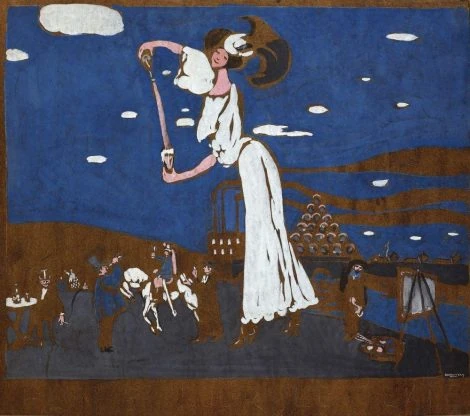
Alongside the posters are drawings, oil paintings and pastels. The exhibition is curated by Marie Koutsomallis-Moreau, Head of Collection at the Foundation, and Marina Ferretti Bocquillon, Scientific Director Emerita of the Musée des impressionnismes Giverny.
Visitors can explore several works through The Secrets of the Belle Époque, an augmented-reality game available in Greek, English and French. Guided by a young girl named Colette, players solve nine riddles involving works by artists including Bonnard, Mucha, Steinlen and Toulouse-Lautrec. Pointing a phone camera at the correct poster activates its digital features.
The game can also be played at home using the exhibition catalogue.
The Foundation has produced a three-part podcast series addressing French society, the development of artistic advertising and Athens during the same period.
For English-speaking visitors: the exhibition catalogue and augmented-reality game are available in English. Guided tours and most accompanying workshops are conducted in Greek.
Visiting Belle Époque at the Goulandris Foundation
Basil & Elise Goulandris Foundation
13 Eratosthenous Street, Pangrati, Athens 116 35
| Information | Details |
|---|---|
| Exhibition dates | 31 October 2026 – 15 February 2027 |
| General admission | €16 |
| Concession ticket | €13 |
| Permanent collection | Included with exhibition admission at no additional cost |
| Free admission | B&E Members, children up to 12 and other eligible categories |
| Opening hours | Wednesday–Thursday and Saturday–Monday, 10:00–18:00; Friday, 10:00–20:00 |
| Closed | Tuesday |
| Telephone | +30 210 72 52 895 |
| visit@goulandris.gr |
You can purchase exhibition tickets online or at the museum, subject to availability. Allow approximately 60–90 minutes to explore the temporary exhibition at your own pace. Your ticket also includes access to the permanent collection at no additional cost.
The Foundation is also hosting Belle Époque on the Big Screen, a series of film screenings beginning with Jean Renoir’s French Cancan on 6 November and Max Ophüls’s Lola Montès on 27 November 2026. Both screenings begin at 20:00, with Greek subtitles. Further screenings and activities are listed in the programme.
You may also like
Rachel Feinstein’s Fates in Athens – another art exhibition in the city.