
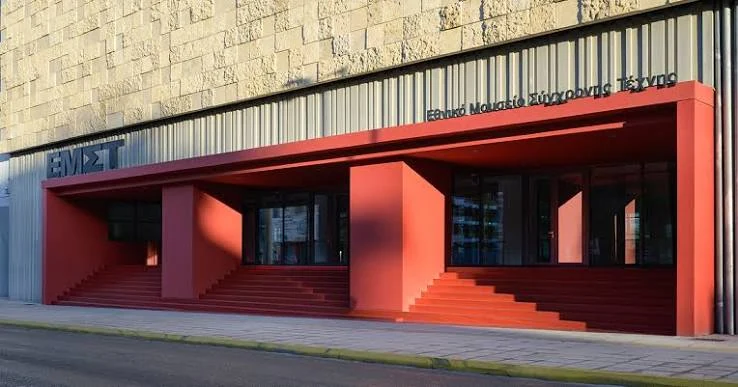
EMST won the European Museum Academy Art Museum Award 2026 on Saturday, 26 September, in Alicante, Spain. The distinction recognises museums that place art in innovative contexts and use it to engage with contemporary social issues.
The National Museum of Contemporary Art Athens (EMST, Εθνικό Μουσείο Σύγχρονης Τέχνης) was selected from six finalists, alongside the Rijksmuseum and FENIX Museum of Migration in the Netherlands, Hastings Contemporary in the UK, Museum Gugging in Austria and the National Gallery of Slovenia.
Until now, Greece’s strongest international museum profile had been closely associated with its archaeological collections. EMST’s award gives contemporary art a much more prominent place in that picture and recognises the transformation of the museum over recent years.
Why EMST received the award
The European Art Museum Award places the social role of art museums at its centre. Its criteria include social justice, participation, inclusion, equality, community building, sustainability and resilience, with particular attention to new ways museums can respond to the society around them.
The jury singled out the ambition and consistency of EMST’s programme under artistic director Katerina Gregos and its ability to combine a strong commitment to Greek contemporary art with an outward-looking perspective towards the Eastern Mediterranean and the wider world.
Since 2022, the museum has developed a series of major thematic programmes around contemporary political, social and cultural questions. Statecraft examined nation-building, power and governance, while Modern Love (or Love in the Age of Cold Intimacies) looked at intimacy and human relationships in the digital age. What if Women Ruled the World? placed work by women artists throughout the museum for more than a year, opening up questions around gender, representation and power.
These were followed by Why Look at Animals? A Case for the Rights of Non-Human Lives, exploring humanity’s relationship with other species, and the current programme, The Cosmopolitans, which considers belonging, cultural exchange and cosmopolitanism at a time of growing nationalism and polarisation.
The award reflects EMST’s development into a public institution where contemporary art is closely connected to wider questions about society, culture and the world beyond the museum. The jury also highlighted its role as a cultural bridge between Greece, the Eastern Mediterranean and the wider international art world.
What to see at EMST now
EMST’s current programme extends across the museum, with exhibitions, collection displays, installations, screenings and public events. Among the exhibitions currently on view are:
South by Southeast: Re-Orienting the Collection — opened 11 June 2026
Curated by Katerina Gregos, the exhibition marks a major shift in EMST’s collection policy, placing Greece within a wider cultural geography extending through the Balkans, Turkey, the Middle East and North Africa. It brings together 50 artists from more than 20 countries through recent acquisitions, donations, existing works from the collection and selected loans, reconsidering Greece through its historical and contemporary connections with Southeastern Europe and the Eastern Mediterranean.

SPOTLIGHT. George Lappas. Art always begins with the word “supposing” — 11 June–8 November 2026
George Lappas (1950–2016) was one of the most influential figures in contemporary Greek sculpture, and the exhibition marks ten years since his death while focusing on a key period in his practice from 1996 to 2004. Curated by Daphne Vitali, it brings together works from the EMST Collection and selected loans, tracing his experiments with sculpture, photography, movement, light and architectural space and his role in expanding Greek sculpture towards a more conceptual and environmental approach.

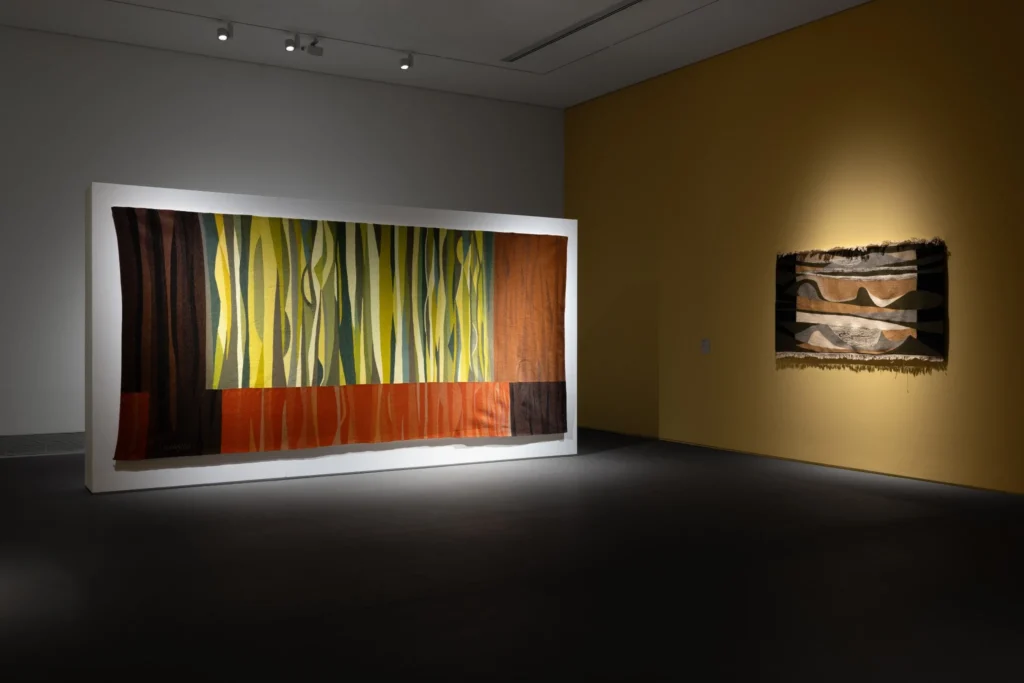
An Ode to Things. Niki Kanagini. Retrospective — 2 April–8 November 2026
Niki Kanagini (1933–2008) was one of the most significant Greek women artists of the post-war era, and the retrospective revisits four decades of her work, from large-scale tapestries to participatory installations. Curated by Tina Pandi, it explores Kanagini’s engagement with modernism, writing as a visual medium, gender identity and the relationship between applied and fine arts, and includes important works from a promised gift by the artist’s family to EMST.
Margarita Athanasiou: VOICES, 2025 — 11 June–22 November 2026
The video essay explores channelling and its unexpected links with communication technologies, women’s history and emancipation. Moving from nineteenth-century spiritualism to the digital age, Athanasiou combines archival references, personal material and digital collage through a feminist lens. The work is shown in EMST’s Screening Theatre on Level -1.

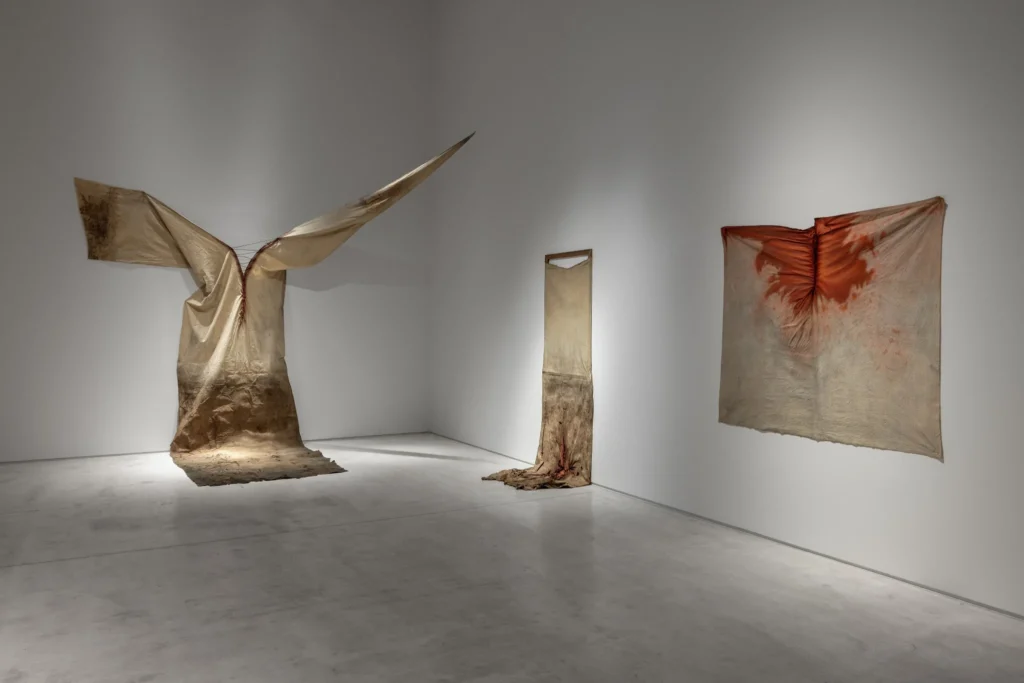
Stathis Logothetis: Earth to Earth — 2 April–8 November 2026
Stathis Logothetis (1925–1997) occupies a distinctive place in post-war Greek art, and this is the first major retrospective of his work since 1994, bringing together around 70 works from across his career. Curated by Stamatis Schizakis, the exhibition traces his experiments with canvas, pigment, the body, natural materials and decay, placing his practice within the European avant-garde of his time, and includes previously unpublished material from the artist’s archive.
These exhibitions form part of a wider autumn programme that also includes collection displays, screenings, guided tours and public events across the museum.
Visiting EMST
Address: Kallirrois Avenue & Amvr. Frantzi Street, Athens
Metro: Syngrou Fix, Line 2, around 280 metres from the museum. The FIX tram stop is around 300 metres away.
Opening hours: Tuesday, Wednesday and Friday to Sunday, 11:00–19:00. Thursday, 11:00–22:00. Closed Monday.
Tickets: €10 general admission and €5 reduced admission. Entry is free on the first Thursday of each month from 18:00 to 22:00, except in July and August. Each ticket also allows a second visit within 30 days.
Accessibility: All exhibition areas are wheelchair accessible, and the museum provides additional accessibility resources for visitors with different needs.
Source
EMST: EMST wins European Museum Academy Art Museum Award 2026
You may also like
Rachel Feinstein: Fates at Gagosian Athens
Brushstrokes of Modern Greece: An Expat’s Guide to Contemporary Greek Painters