
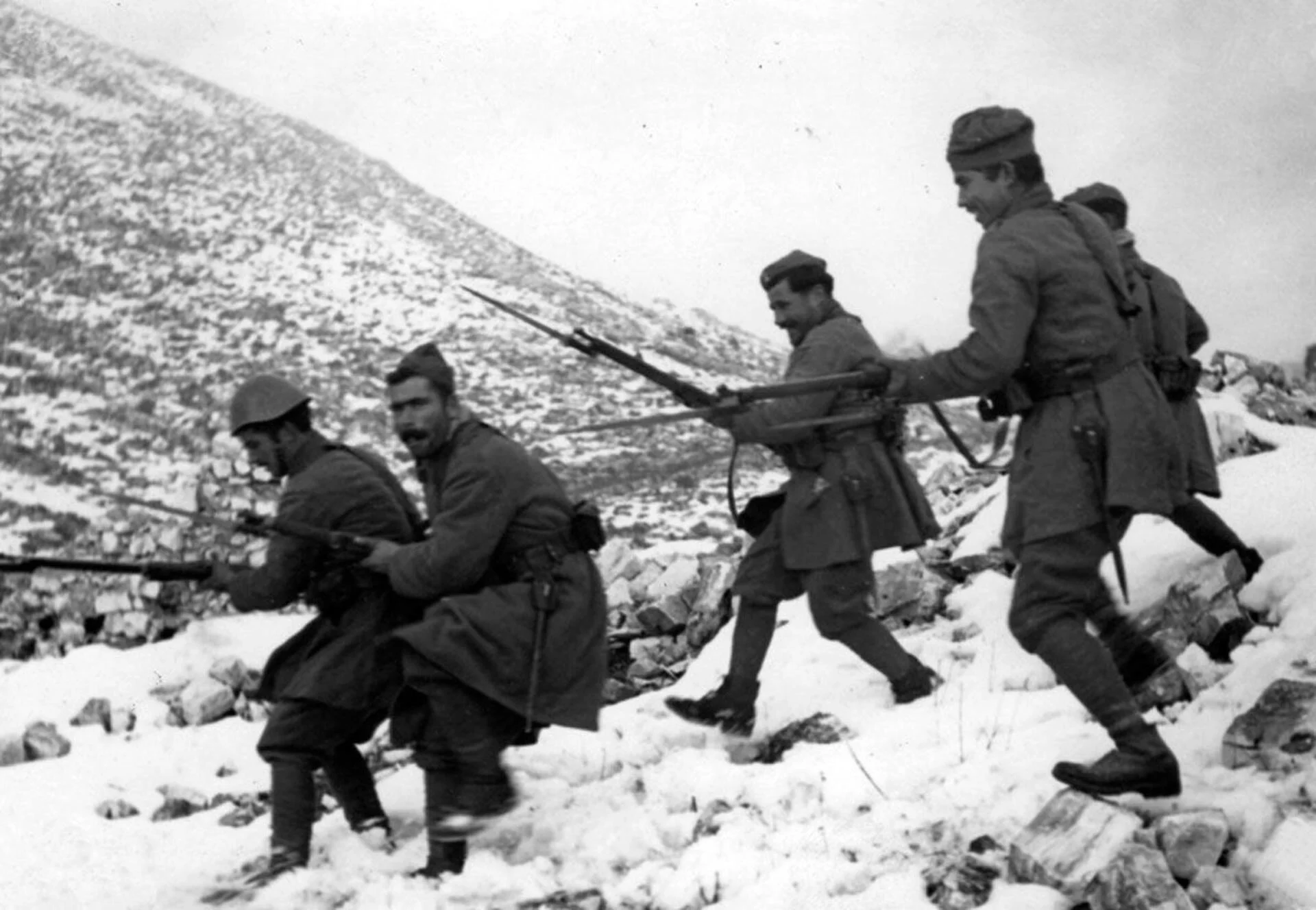
Greece’s principal Second World War holiday is Ohi Day (Όχι, meaning ‘No’), celebrated on 28 October. It marks the country’s refusal of Mussolini’s ultimatum in 1940, which was followed by the Italian invasion. While many European countries commemorate the end of the war in Europe in May 1945, Greece celebrates the beginning of its involvement in the conflict.
The army’s victories over Italy gave Greece a memory shared across political divisions. Citizens began observing the date under occupation, and the state later recognised an anniversary the public had made its own. The conflicts that followed liberation helped keep the campaign of 1940–41 at the centre of national commemoration.
The Greco-Italian War
In the early hours of 28 October 1940, Italian ambassador Emanuele Grazzi presented Prime Minister Ioannis Metaxas, who ruled Greece as a dictator, with an ultimatum from Benito Mussolini demanding access to strategic positions in the country.
Metaxas reportedly replied in French, «Alors, c’est la guerre» (‘Then it is war’). His refusal became known as Ohi (Όχι), the Greek word for ‘No’. Italian forces invaded hours later, beginning the Greco-Italian War (1940–41) and bringing Greece into the Second World War.
The Greek army repelled the Italian offensive and counterattacked into Albania, then under Italian occupation. Fighting continued through a bitter winter, and in March 1941 Greek troops defeated a renewed Italian offensive.
These victories, remembered as the Epic of ’40, were among the first significant setbacks Axis forces suffered in Europe.
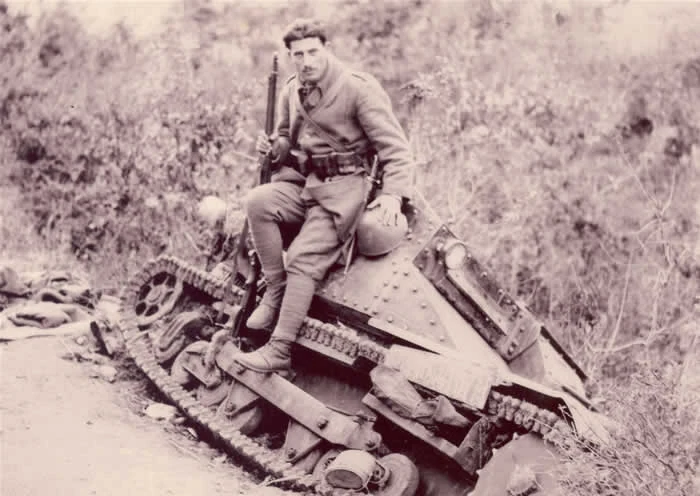
From the Greco-Italian War to Axis occupation
On 6 April 1941, Nazi Germany invaded Greece. German troops entered Athens on 27 April, and the conquest of Crete completed the main phase of the Axis invasion.
Greece was divided into occupation zones controlled by Nazi Germany, Fascist Italy and Bulgaria. The occupation brought widespread famine, mass executions, brutal reprisals against civilians and the destruction of entire villages.
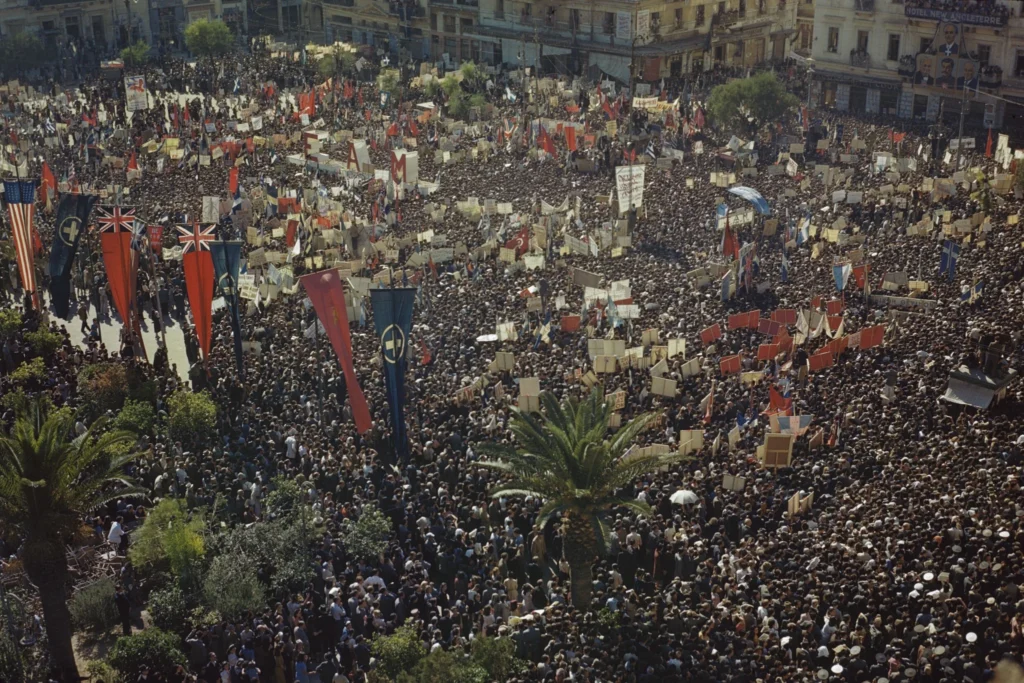
Resistance movements developed across the country and fought the occupying forces. Athens was liberated on 12 October 1944, although German garrisons remained on some Greek islands until May 1945.
An anniversary established during occupation
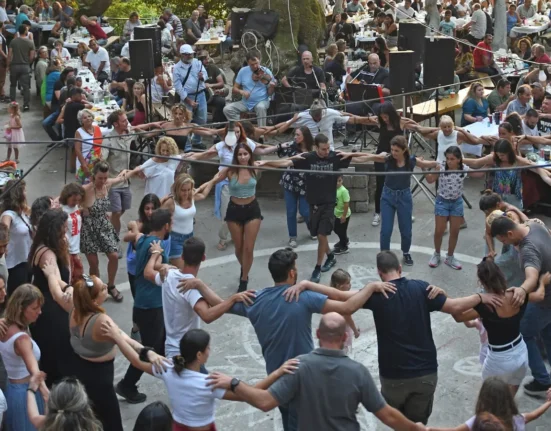
Greeks began commemorating 28 October while the country was still occupied. The first anniversary was observed at the University of Athens in 1941, and further gatherings and demonstrations followed in 1942 and 1943. The commemorations became acts of public opposition to the occupying forces, giving the date a meaning beyond the military campaign.
Twelve days after Athens was liberated, a royal decree dated 24 October 1944 made 28 October a national celebration. The date already had popular support, and the decree gave an existing observance official status. The first official commemoration took place four days later, with a parade attended by Prime Minister Georgios Papandreou.
Why liberation never became the main national holiday
The Greek victories over Italy in 1940–41 offered a source of national pride shared by people with very different political loyalties. Support for the defence of Greece extended across divisions that would later become central to the country’s post-war history.
Liberation in October 1944 brought those divisions to the surface. Disputes over the role of resistance organisations, collaboration with the occupying forces and the country’s political future intensified. In December, fighting erupted in Athens between communist-led ELAS forces and government troops supported by Britain. Known as the Dekemvriana (December Events), the clashes deepened the country’s political divisions and preceded the Greek Civil War of 1946–49.
The first official commemoration of 28 October in 1944 included members of the wartime resistance. By 1945, resistance organisations had been excluded, and the ceremonies concentrated on the Greek army’s victories against Italy.
The anniversary retained its prominence because the campaign of 1940–41 offered a history that Greeks across political divisions could celebrate.
Why Greece celebrates the beginning of a struggle
Greek national commemorations place particular weight on the decision to resist. The country’s two principal national holidays both mark the start of a struggle.
28 October marks the refusal of the Italian ultimatum and the beginning of the Greco-Italian War in 1940. 25 March marks the traditional beginning of the Greek War of Independence in 1821, nine years before the London Protocol of 3 February 1830 formally recognised Greece as an independent state.
The same emphasis appears elsewhere in modern Greek history. 17 November commemorates the Athens Polytechnic uprising of 1973 against the military dictatorship, eight months before democracy returned in July 1974.
These anniversaries honour the decision to resist at a moment when the outcome was still uncertain.
Does Greece commemorate the end of World War II?
8 May 1945, known as Victory in Europe Day, marks Nazi Germany’s surrender and the end of the Second World War in Europe. Some countries commemorate the anniversary on 9 May.
Greece marks the war’s end as well. Law 2703/1999 established 9 May as a nationwide day honouring the struggle against Nazism and Fascism and the National Resistance. Athens also commemorates its liberation on 12 October.
28 October remains Greece’s principal Second World War anniversary and one of its national public holidays, with school and military parades across the country. It honours the soldiers and civilians who resisted the Italian invasion in 1940. The victories of 1940–41 provided a shared national memory that helped the anniversary retain its prominence through the divisions of the post-war years.
Sources
- Ta Nea (2011) – We Like to Celebrate Uprisings, Not Their End. Report on the Onassis Stegi discussion with historians Christina Koulouri, Antonis Liakos and Hagen Fleischer.
- Christina Koulouri (2024) – Forgetting the Occupation and the Resistance. To Vima.
- Antonis Liakos (2003) – Partisans and Bandits in Academic Lecture Halls. In Greece 1936–49: From Dictatorship to Civil War, edited by Hagen Fleischer, pp. 25–36.
- National Historical Museum – The Second World War and the Greco-Italian War.
- Memories of the Occupation in Greece – Historical Timeline.
- Royal Decree of 24 October 1944, Government Gazette A΄ 4/24.10.1944.
- Law 2703/1999, Article 4 – National Resistance commemoration.