

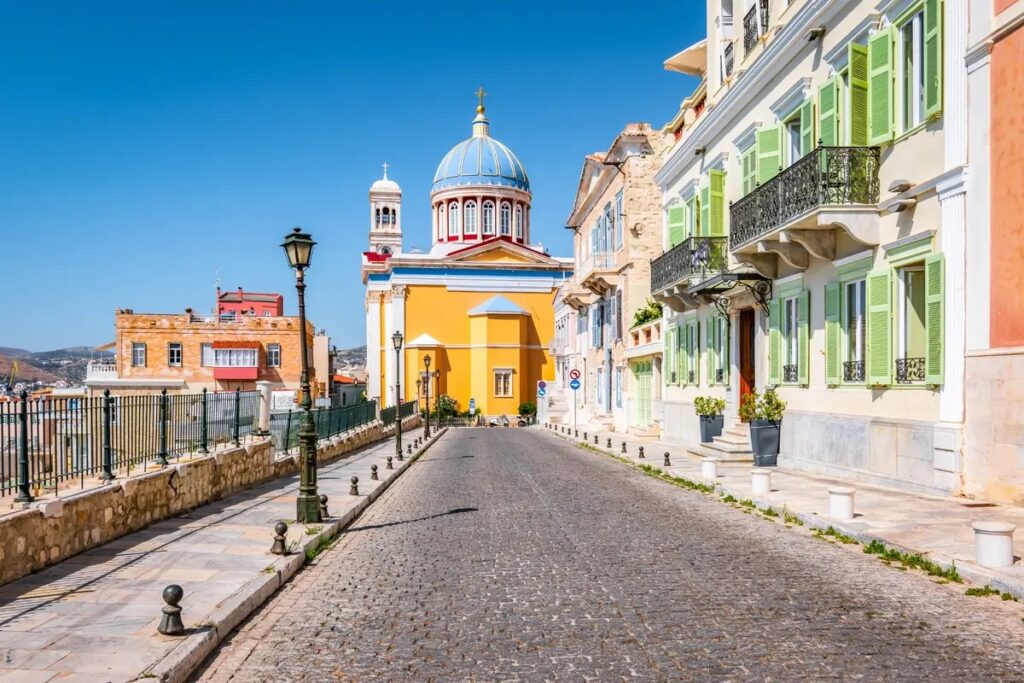
On summer afternoons, Greek neighbourhoods begin to draw inwards and the Greek siesta takes on an almost ceremonial quality. Shutters close against the sun, balconies empty and the sounds of daily life soften. Even Athens, a city that rarely becomes silent, seems to lower its voice.
For a newcomer, the change of pace can feel inconvenient. There are still errands to run, places to visit and several hours of daylight ahead. Yet continuing at the same speed often means crossing the city in punishing heat and reaching the evening already exhausted.
The afternoon pause offers another way to experience the day. It leaves room for lunch, sleep, reading, quiet work or simply retreating to a cooler room before Greece begins again outside.
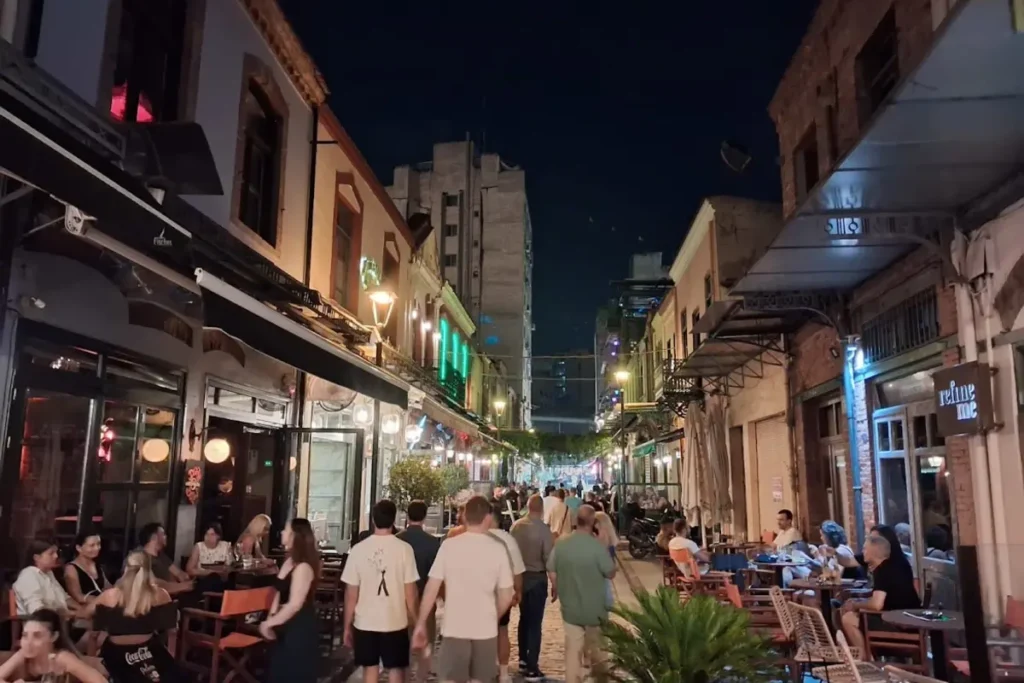
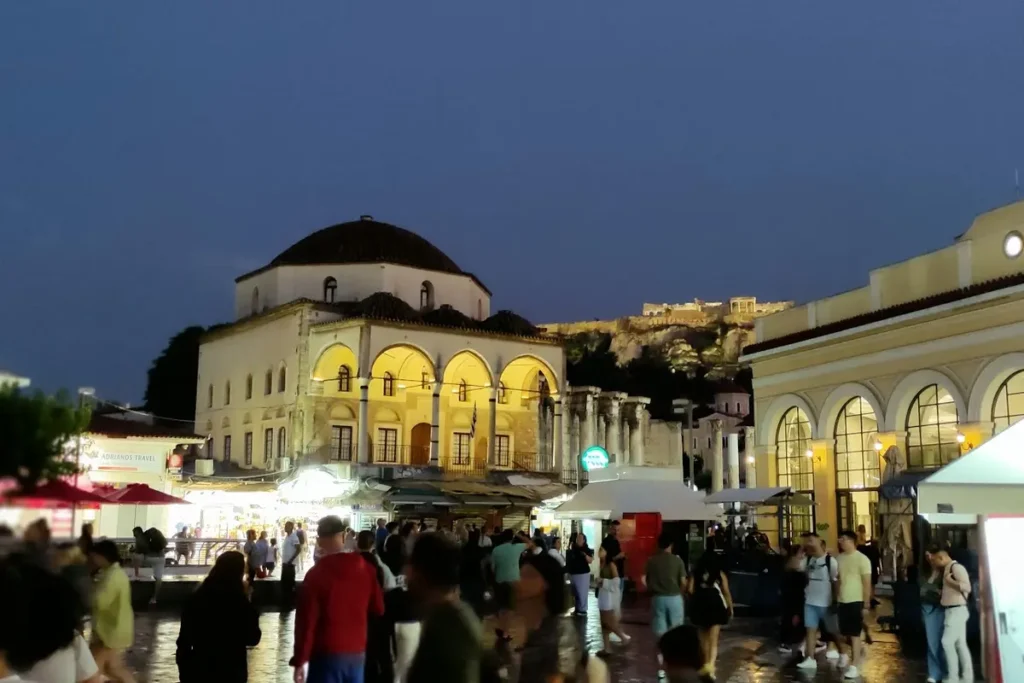
By ten or eleven at night, the country has settled into the rhythm locals know best, with full terraces, children playing in neighbourhood squares and conversations unfolding over dinners that began long after sunset.
In This Article
Follow the rhythm of a Greek summer day and discover why the afternoon pause still matters.
Where the word siesta comes from
Greek words for afternoon rest
Where the Word Siesta Comes From
The word siesta entered English from Spanish, although its roots reach back to the Latin expression sexta hora, meaning the sixth hour. The Romans counted the hours of daylight from sunrise, which placed the sixth hour around midday, when the sun was high and the heat was strongest.
Over time, the Spanish word came to describe the period of rest taken during this part of the day. French uses the related word sieste, which developed from the same Spanish and Latin roots. The word gradually travelled beyond the countries where the practice was most familiar and became an international term for a midday rest or nap. Read the word history.
The history of the word reflects the practical origins of the custom. The hours around midday were a natural point at which to pause, eat and avoid unnecessary exertion before returning to work later in the day.
The Greek Language of Afternoon Rest
Greek has no single everyday word that corresponds exactly to the Spanish siesta. Instead, several expressions describe the time of day, the act of sleeping and the quieter rhythm of the afternoon.
Μεσημέρι — mesiméri — Midday or the broader early afternoon period
Μεσημεριανός ύπνος — mesimerianós ýpnos — Midday sleep or an afternoon nap
Μεσημεριανή ανάπαυση — mesimerianí anápafsi — Afternoon rest, whether or not sleep is involved
Ώρες κοινής ησυχίας — óres kinís isychías — Common quiet hours when unnecessary noise must be avoided
The expression mesimerianós ýpnos, meaning midday sleep, refers specifically to taking a nap. Mesimerianí anápafsi, meaning afternoon rest, is broader and may include lunch, reading, quiet work or simple relaxation. Greece’s legally recognised quiet hours require residents to avoid unnecessary noise during specific periods of the afternoon and night.
These distinctions help explain why the Greek siesta is better understood as a change of rhythm than as a compulsory nap. Sleep may be part of the pause, although the wider idea is that the day slows and becomes quieter during its hottest and most demanding hours.
A Summer Rhythm Worth Following
The Greek word mesimeri may be translated as midday, although in everyday life it extends well into the afternoon. Lunch can begin at two or three, especially at weekends, while evening plans may be arranged for an hour when people elsewhere are preparing to end their day.
During the afternoon pause, some people sleep and many do not. Families eat together, remote workers move into the coolest room, older residents rest and people working in hospitality or retail prepare for the evening ahead. The afternoon becomes less a fixed activity than a change of atmosphere.
In villages and on smaller islands, this rhythm may still influence the opening hours of local businesses. Central Athens and Thessaloniki usually maintain a continuous commercial schedule, although residential streets often become noticeably calmer as the heat builds.
Foreign residents and visitors often enjoy Greece more once they stop treating every hour as equally suitable for every activity. Morning works well for sightseeing, shopping, appointments and anything physically demanding. The afternoon offers shade, lunch and rest, while the evening brings walks, swimming, open air cinemas and tables outside that finally catch a breeze.
A traveller who fills every hour from morning until early evening may experience Greece at its hottest and most tiring. Someone who accepts the pause discovers the country as it returns outdoors.
When Extreme Heat Changes Daily Life
The heat of summer 2026 has made the value of the Mediterranean afternoon pause feel especially current. The Copernicus Climate Change Service reported that western Europe experienced its warmest June on record, with an average temperature of 20.74°C. This was 3.06°C above the average recorded from 1991 to 2020.
During periods of extreme heat, Greece may introduce temporary measures to protect workers and the public. Outdoor work can be restricted during the most dangerous hours, while archaeological sites may reduce their opening hours or close for part of the afternoon to protect employees and visitors.
These arrangements depend on the conditions of each heatwave and should not be treated as a permanent summer timetable. The Ministry of Culture advises visitors to check for possible changes before planning a visit to an archaeological site during periods of high temperatures.
In this context, the siesta reflects more than tradition. It is a practical response to a climate in which slowing down at the right time can make daily life safer and more manageable.

Quiet Hours Are Part of Life in Greece
The afternoon pause also has a legal expression through Greece’s common quiet hours. These are officially known as ώρες κοινής ησυχίας, pronounced óres kinís isychías. According to the Hellenic Police, the protected periods change with the season.
Ώρες κοινής ησυχίας — óres kinís isychías — Common quiet hours
Summer Quiet Hours
3 pm to 5.30 pm
11 pm to 7 am
From 1 April until 30 September
Winter Quiet Hours
3.30 pm to 5.30 pm
10 pm to 7.30 am
From 1 October until 31 March
These hours protect residents from avoidable disturbance such as loud music, drilling, shouting and moving furniture. Businesses may remain open and residents may continue working, studying or going about their day. The shared expectation is simply that neighbourhood life becomes quieter.
Respecting this rhythm is one of the small cultural adjustments that makes settling in Greece easier. A quiet household appliance is unlikely to cause concern, although drilling into a concrete wall in the middle of the afternoon may introduce you to the neighbours sooner than expected.
Greece Combines the Siesta With Long Working Days
The Mediterranean pause still attracts an outdated association with laziness, although Greece records some of Europe’s longest working hours. According to the latest Eurostat figures, people in Greece worked an average of 39.6 hours per week in their main job in 2025. This was the highest national average in the European Union, where the overall average was 35.9 hours.
The afternoon rest belongs within a culture of long days, late shifts and seasonal work. A shopkeeper may open in the morning, close for several hours and return for the evening. A restaurant employee may begin the busiest part of the day when office workers elsewhere are finishing theirs.
Many of the people supporting Greece’s summer economy continue working well beyond midnight. Hospitality workers, cleaners, drivers, construction workers and delivery staff may experience the hottest part of the day as work rather than rest.
For those able to take it, the siesta serves a practical purpose. It conserves energy between different parts of the working day and offers relief when heat and fatigue meet.
The Best Time and Length for a Siesta
Modern wellness culture often describes a brief and planned period of daytime sleep as a power nap. The term may sound contemporary, although the basic idea is familiar. A short rest can help restore alertness without taking over the afternoon or interfering with nighttime sleep.
For an adult following a typical daytime schedule, the most practical siesta falls in the early afternoon. The American Heart Association recommends taking a short nap before three in the afternoon, while the Mayo Clinic advises keeping it to approximately 20 to 30 minutes.
A quiet and dark room makes it easier to settle, while resting early enough helps protect nighttime sleep. The aim is to wake refreshed rather than to enter a long period of deeper sleep.
Your Greek Siesta and Power Nap Guide
Recommended Time
1 pm to 3 pm
This early afternoon window allows time to rest without moving too close to nighttime sleep.
Actual Sleep
10 to 20 Minutes
A brief period of sleep may improve alertness and mood without drawing you deeply into the sleep cycle.
Total Break
20 to 30 Minutes
The total break allows a few minutes to settle before sleep begins and a few minutes to wake comfortably.
Set the alarm when you lie down. A 25 minute break may provide 10 or 15 minutes of actual sleep, which is often enough for a gentle reset. Allow yourself a few minutes to wake fully before driving or returning to a demanding task.
Napping after three in the afternoon can make nighttime sleep more difficult, while longer naps increase the chance of waking groggy. People who already struggle with insomnia may find that daytime sleep makes the problem worse.
A sudden need for frequent or unusually long naps can also reflect poor nighttime sleep, medication effects or an underlying sleep condition. A healthcare professional can help when the change is persistent or unexplained.
Why Shorter Usually Works Better
Research increasingly distinguishes between a brief power nap and regular, prolonged daytime sleeping. A systematic review and analysis published in 2024 combined 44 studies involving 1,864,274 adults.
Naps shorter than 30 minutes showed no significant increase in the health risks examined. Naps lasting 30 minutes or longer were associated with higher rates of several cardiovascular and metabolic conditions, along with higher mortality.
These were observational studies, so they cannot prove that longer naps caused poor health. People may sleep for extended periods during the day because they already have an illness, a sleep disorder or persistent nighttime sleep deprivation.
The findings nevertheless support a sensible approach in which the siesta restores the day without attempting to replace proper nighttime sleep.
A short power nap may brighten the afternoon, although it cannot continually repair nights that are too short or badly disrupted.
How to Embrace the Greek Afternoon
Living according to the Greek summer rhythm requires very little ceremony. Begin earlier when possible, keep outdoor plans for the morning and avoid crossing the city at the hour when the heat reaches its full intensity.
Eat lunch without rushing, close the shutters and allow the household to become quiet. A short sleep may follow naturally, although reading, listening to music or simply leaving the phone in another room can provide enough distance from the morning.
The purpose is to emerge rested rather than to achieve a perfect nap. As the sunlight softens, beaches grow more comfortable, neighbourhood squares begin to fill and tables spread across pavements that felt uninhabitable only a few hours earlier.
Dinner can begin late, children remain outside and conversations continue because the cooler hours have finally given social life room to unfold. The evening becomes the natural continuation of a day that paused rather than ended.
Foreign residents often begin by treating these habits as charming peculiarities. With time, many discover that the Greek timetable carries its own intelligence. It respects the climate, accommodates long working days and preserves the hours in which people can gather comfortably.
You May Also Like
Continue exploring the customs and practical knowledge that can make everyday life in Greece easier, safer and more enjoyable.
Navigating Greek Etiquette
Understand Greek greetings, communication styles, hospitality, dining customs and the everyday social expectations that help newcomers feel more at ease.
Exploring the Outdoors Safely Under the Greek Sun
Plan outdoor activities around the heat, stay hydrated, choose suitable clothing and use practical safety tools when hiking, cycling or spending time at the beach.
Sources
• Merriam Webster on the history and meaning of siesta
• Copernicus Climate Change Service on European temperatures in June 2026
• Greek Ministry of Culture on archaeological site opening hours during high temperatures
• Hellenic Police on official quiet hours in Greece
• Eurostat on average weekly working hours in 2025
• Sleep Medicine Reviews analysis of daytime naps and health outcomes
This article provides general cultural, lifestyle and health information. It is not a substitute for individual medical advice.