
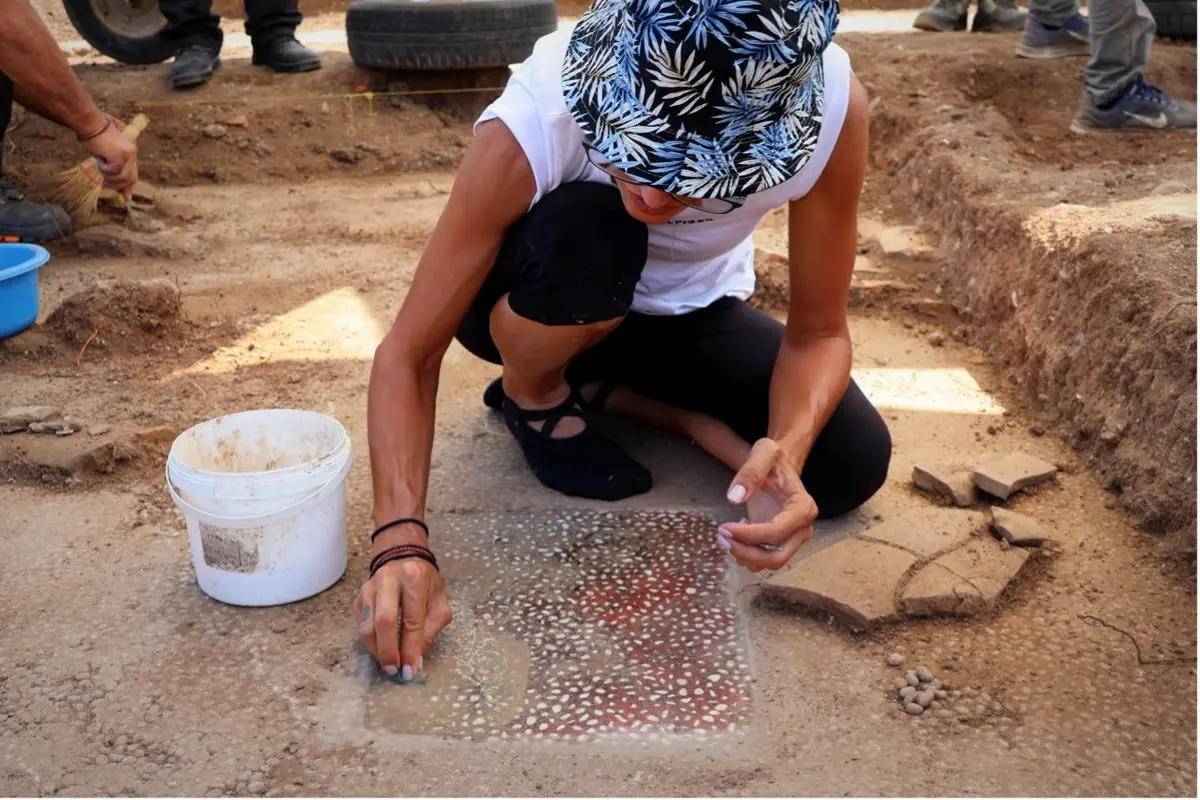
Archaeologists excavating the Royal Gymnasium of ancient Mieza in northern Greece have uncovered mosaic floors in two banqueting rooms, adding to the evidence about the institution where young Macedonians were educated during the reign of Philip II, king of Macedonia and father of Alexander the Great. The floors were uncovered during the 2026 excavation season, and the discovery was announced by Greece’s Ministry of Culture on 3 September.
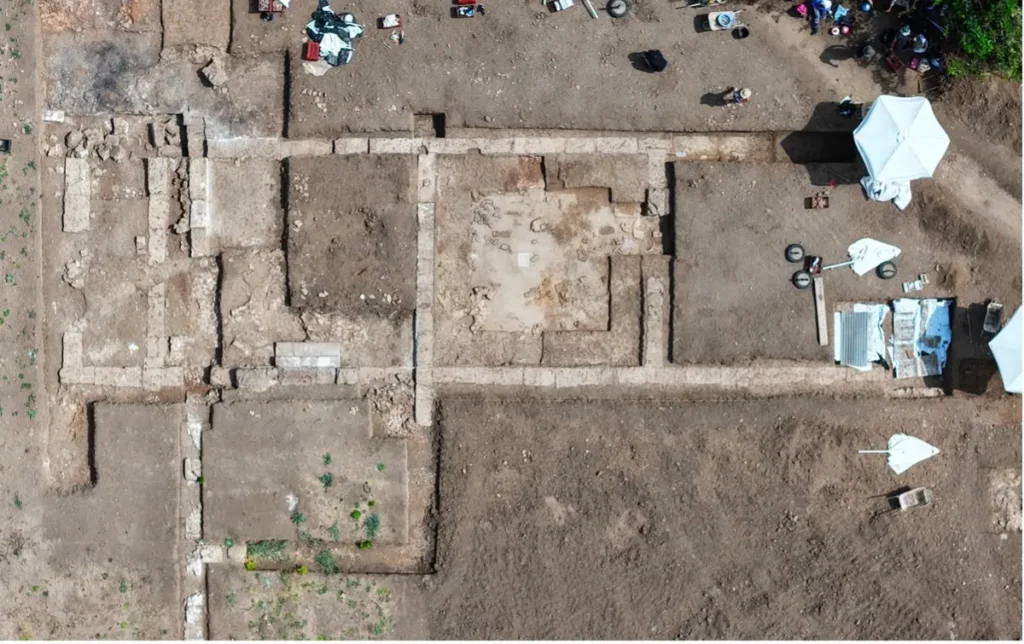
The rooms form part of a newly revealed three-part complex within the area identified as the teaching building. The gymnasium, near the modern city of Naousa in the northern Greek regional unit of Imathia, dates from the middle of the fourth century BC and has striking architectural similarities to the palace at ancient Aigai, the royal centre of Macedonia. According to the archaeological interpretation presented by the Ministry, the latest discoveries strengthen the identification of the site as the Royal Gymnasium where Aristotle taught the young Alexander, later known as Alexander the Great, and other sons of the Macedonian elite.
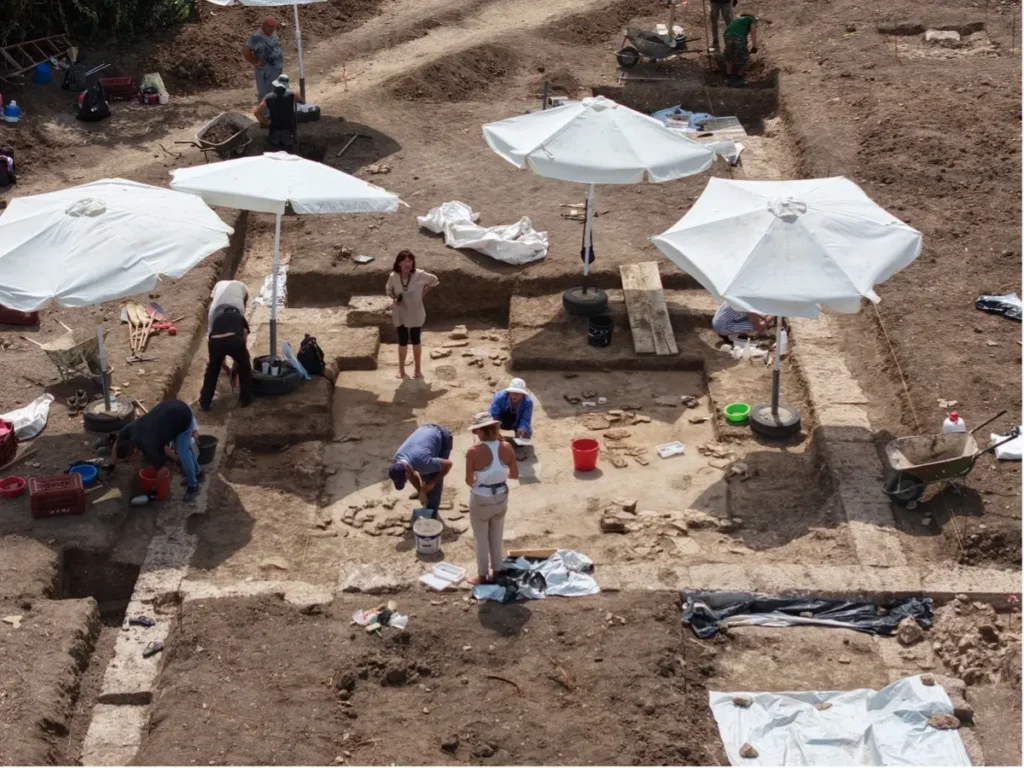
Two banqueting rooms with mosaic floors
The newly uncovered complex covers more than 160 square metres and consists of a central antechamber flanked by two andrones, formal dining rooms used for symposia, or shared meals and drinking gatherings. Mosaic floors survive in both rooms, while raised platforms around their edges mark the positions of the dining couches.
Each room had ten couches and could accommodate at least 20 diners. The Ministry of Culture said the quality and construction technique of the mosaic floors bear striking similarities to those found at the palace of Aigai.
A monumental centre of education
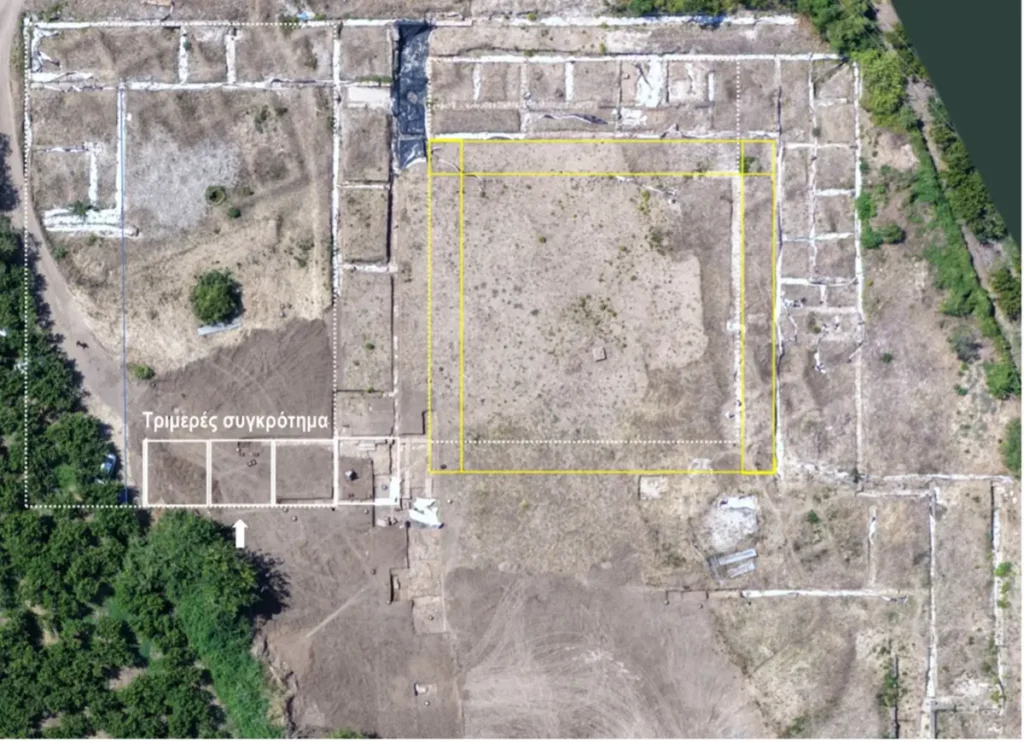
The Royal Gymnasium formed part of an extensive complex covering approximately three hectares, an area equivalent to about four football pitches. Excavations have revealed sections of the palaestra, a courtyard complex used for physical training, along with the stadium, covered walkways, teaching rooms and water-supply infrastructure. One of the largest features is the xystos, a covered colonnade approximately 200 metres long that was used for exercise.
The 2026 excavation is focused on the eastern side of the site, where the palaestra meets the area archaeologists call the “Teaching Building”. Lecture rooms with stone benches have been identified there, helping researchers understand how physical training, teaching and formal dining were brought together within the same institution.
Architecture linked to the Macedonian court
Further finds from the palaestra include fragments of an Ionic frieze and capital, as well as an architectural support combining a square pier with column-like elements. Archaeologists also uncovered a rare fragment of a Doric corner architrave from the palaestra’s peristyle, the colonnade surrounding its courtyard. The fragment is expected to help researchers reconstruct the architecture of the palaestra more accurately. Together with the wider excavation evidence, these discoveries strengthen the identification of the complex as the Royal Gymnasium of ancient Mieza.
What was ancient Mieza?
Ancient Mieza stood on the green foothills of Mount Vermio, between the Macedonian royal cities of Aigai and Pella and close to Beroea, today’s Veria. Ancient geographers, including Strabo, Ptolemy and Pliny the Elder, placed it among Macedonia’s important cities, while archaeological evidence traces settlement in the wider area from the Late Bronze Age through the Iron Age and later periods of ancient Greek history.
The city included a walled centre, surrounding farmland, sanctuaries, cemeteries and monumental public buildings. Its best-known remains include the ancient theatre and several elaborate Macedonian tombs, monumental chamber tombs built for members of the elite, including the Tomb of Judgement and the Tomb of the Palmettes. The gymnasium and theatre stood outside the city walls, south of the main settlement, and both were established during the reign of Philip II, who ruled Macedonia from 359 to 336 BC.
Aristotle, Alexander and Mieza
Mieza became famous through the account of the ancient Greek biographer Plutarch, who wrote that Aristotle taught Alexander and other Macedonian royal youths there. Alexander was still a teenager, and the other pupils were young members of Macedonia’s royal and aristocratic circle.
The nearby Nymphaeum at Isvoria has long been associated with Aristotle’s school. A nymphaeum was a sanctuary connected with water and dedicated to the Nymphs, nature deities in ancient Greek religion. Set among springs, caves and dense vegetation, the site was reshaped during the second half of the fourth century BC.
The size and organisation of the gymnasium, including its teaching rooms, exercise areas and dining halls, strengthen its identification as the institution where the royal youths were educated. The official Aigai archaeological site also points to its close relationship with the neighbouring theatre, while the Ministry of Culture describes Mieza as a place where Alexander and his companions were prepared for leadership.
What else has been discovered?
Smaller finds from the excavation include four styli, pointed implements used for writing on wax tablets, as well as pottery, coins and architectural fragments. Although the Romans systematically dismantled the buildings after the battle at Pydna in 148 BC, substantial remains have survived, including walls with exceptionally fine plasterwork and ancient floors preserved beneath destruction layers and traces of an extensive fire.
The excavation began in 2024 under the direction of archaeologist Dr Angeliki Kottaridi, who holds the honorary title of ephor of antiquities, a senior position in Greece’s archaeological service. The work is being conducted through an agreement between the Ministry of Culture and the Municipality of Naousa.
Research will continue as archaeologists investigate the architecture and changing functions of the site. The Ministry says the identification and presentation of the Royal Gymnasium carry significance beyond Imathia and Greece because of Mieza’s association with Aristotle, Alexander and the education of Macedonia’s future leaders.
Sources
Greece’s Ministry of Culture
Archaeology in the Heart of Macedonia: Archaeological Site of Mieza
You may also like
Vergina Royal Tombs & New Aigai Museum: A Full Journey Through Ancient Aigai
A 4th-Century Odyssey Fragment Reveals How Homer Was Read
The Odyssey Keeps Returning: Odysseus, Ithaca and the Story That Never Ends
Greek History Explained: A Clear Timeline for Expats & Foreign Residents
Thessaloniki Explained: The History of Northern Greece’s Great Metropolis