
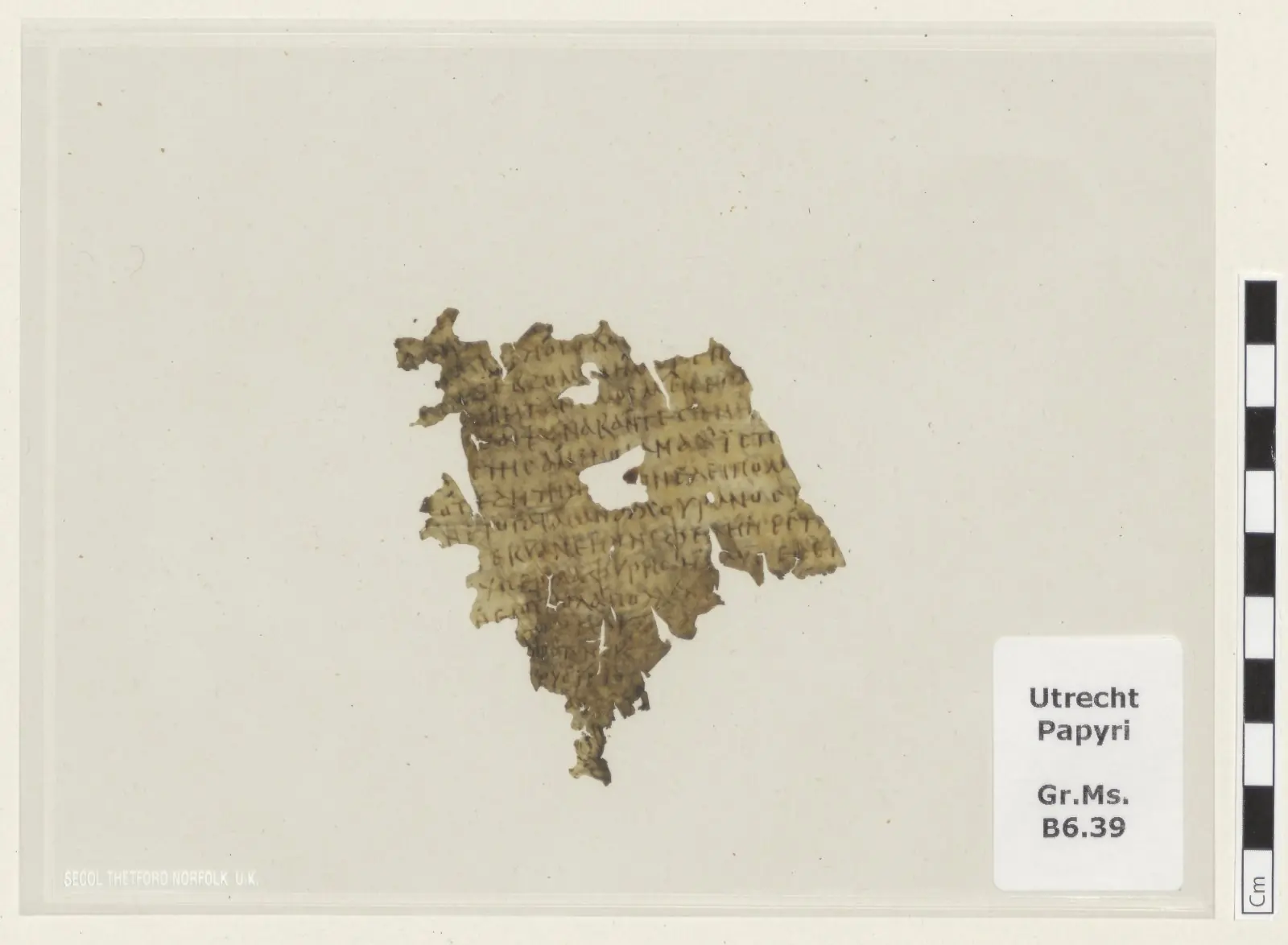
A fragment of Homer’s Odyssey, dating from the third or fourth century CE, has been identified in Utrecht University Library. The small piece of parchment preserves verses from Book 12 and once belonged to a compact copy of the complete epic, probably read in Egypt around 300 CE.
Utrecht University announced the identification on 14 September 2026. Dr Mark de Kreij of Radboud University recognised the text during a project to study and publish the ancient manuscripts held in the university’s Special Collections.
The discovery offers physical evidence of Homer’s continued popularity in Late Antiquity. Many centuries after The Odyssey took shape in the ancient Greek world, readers were still copying and reading the poem across the eastern Mediterranean.
At a glance
What: A parchment fragment from Homer’s Odyssey
Date: Third or fourth century CE
Text: Verses from Book 12 concerning Helios and his sacred cattle
Probable origin: The Fayum oasis in Egypt
Original format: A compact parchment edition of the complete Odyssey
Catalogue reference: Utrecht Gr. Ms. B6.39a
Identified by: Dr Mark de Kreij of Radboud University
Recognising Homer in a damaged manuscript
Utrecht University acquired the fragment during the middle of the 20th century as part of a collection purchased from the heirs of the German scholar Carl Schmidt. The collection mainly contained early Christian manuscripts written on parchment in Coptic, together with Egyptian and Greek papyri.
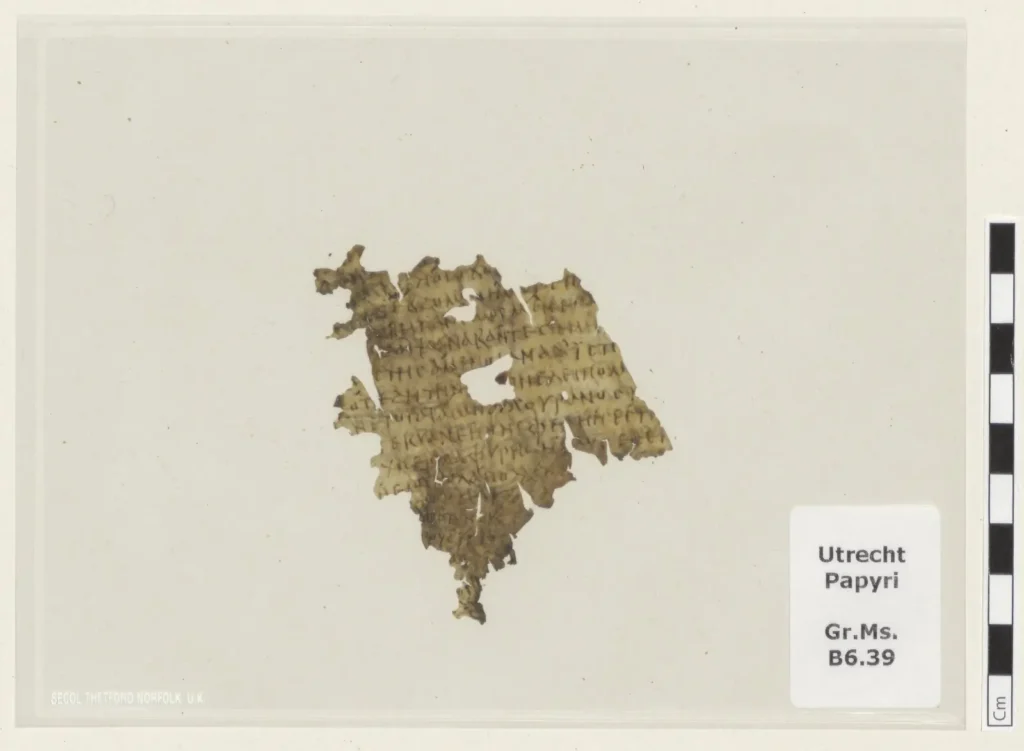
Among them was a damaged and discoloured piece of parchment covered with very small, neat Greek letters. It had initially been regarded as an unremarkable fragment from the seventh century.
While examining the material, De Kreij recognised several words characteristic of Homeric poetry. Further research showed that the text preserved verses from Book 12 of The Odyssey. The manuscript was then redated to the third or fourth century CE.
Utrecht University says that only around thirty comparable fragments are known worldwide. The manuscript is now catalogued as Utrecht Gr. Ms. B6.39a.
The lowest point in Odysseus’ journey
The surviving verses describe the moment when the Sun god Helios discovers that Odysseus’ companions have killed and eaten his sacred cattle.
Odysseus had ordered his men to leave the animals untouched. However, after becoming trapped on the island by unfavourable conditions, the crew ignored his warning. Their actions brought divine punishment and led to the destruction of their ship. Every remaining companion was lost, leaving Odysseus to continue alone.
The passage belongs to the closing part of the story Odysseus tells at the court of the Phaeacians. In Books 9 to 12, he recounts the dangers that carried him from Troy to Scheria, including the Lotus-Eaters, Polyphemus the Cyclops, Circe and the disasters at sea.
Book 12 ends this long account of his wanderings. The loss of his ship and companions marks the lowest point of his ten-year journey and prepares the way for the return to Ithaca and the confrontation awaiting him there.
The passage also falls around the midpoint of the poem’s 24 books. Utrecht University describes it as a turning point between the wanderings at sea and the movement towards Odysseus’ return and recovery of his household.
To follow the complete journey and the structure of Homer’s poem, read The Odyssey Keeps Returning: Odysseus, Ithaca and the Story That Never Ends.
A pocket-sized copy of the complete Odyssey
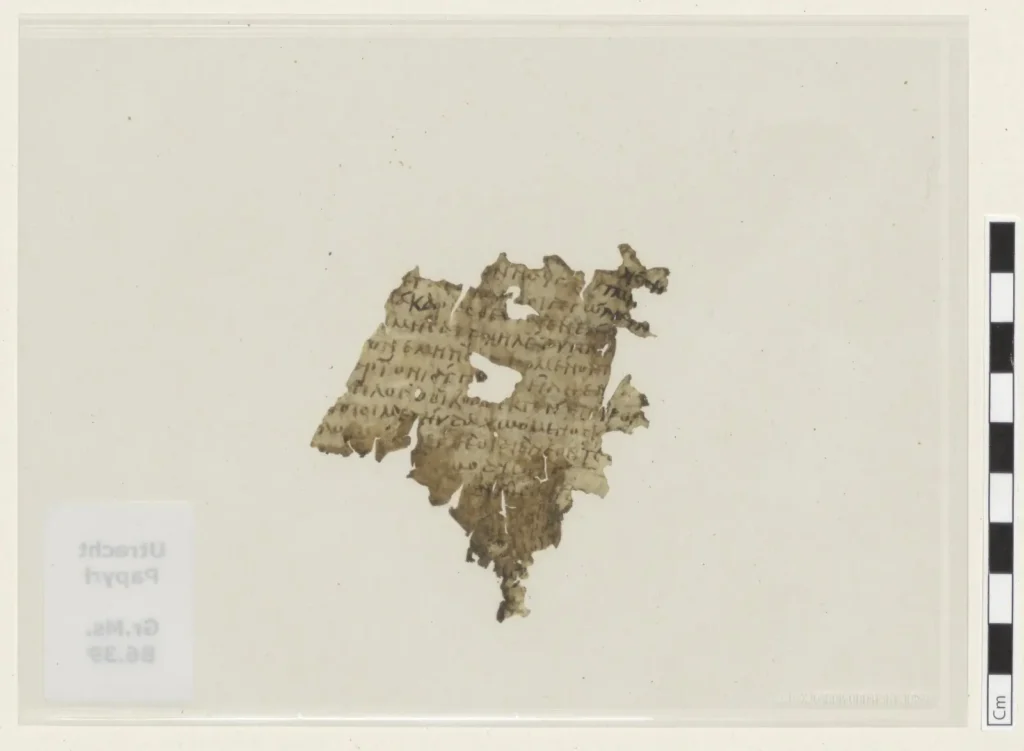
The parchment is written on both sides and once formed a page in a codex, an early type of bound book. Researchers believe the codex contained the complete Odyssey in a format comparable in size to a modern Kindle.
This compact format offers a different picture of ancient reading. Homer’s epic was not preserved only in large or ceremonial manuscripts. It also circulated in portable editions that an individual reader could own and handle.
Utrecht University connects the manuscript with the Fayum oasis in Egypt and dates the original book to around 300 CE. Its owner appears to have been a reader with a strong interest in Homer, living far from the Greek islands described in the poem but still connected to the wider Greek literary world.
The fragment therefore tells us more than which verses survived. Its material, compact format and probable place of origin reveal how Greek literature continued to travel and find readers during the Roman period.
Homer in Late Antiquity
The Odyssey began within an oral tradition in which epic poetry was performed, heard and remembered. Over time, the poem also circulated in written copies, first on rolls and later in bound books.
By the third or fourth century CE, Homer’s epic had already been read for many centuries. Yet the Utrecht fragment shows that it remained part of literary life in Late Antiquity. A reader in Roman Egypt could still encounter Odysseus, Helios and the doomed crew through a personal copy of the poem.
The fragment will be published with other ancient documents from Utrecht University’s collections in the forthcoming volume Hieratic, Demotic, Greek, and Coptic Texts in the Utrecht University Collection (P.Utr.).
Source
Utrecht University: 4th-century fragment of The Odyssey discovered in Utrecht University Library
You may also like
The Odyssey Keeps Returning: Odysseus, Ithaca and the Story That Never Ends
Greek Mythology in Hamnet: Why the Story of Orpheus Still Moves Us
Modern Greek Literature in English: Essential Writers and 20 Books to Start With
Greek History Explained: A Clear Timeline for Expats & Foreign Residents
Athens Explained: The Extraordinary Story of Europe’s Oldest Capital
Thessaloniki Explained: The History of Northern Greece’s Great Metropolis
World Greek Language Day: Why This First Celebration Matters