
On 7 October 1571, one of the largest naval battles of the early modern Mediterranean was fought off western Greece. Four hundred and fifty-five years on, Nafpaktos is commemorating the Battle of Lepanto with a re-enactment at its Venetian harbour on Saturday, 10 October at 21:00.
The city’s connection with the battle runs through its old Western name, Lepanto. The fighting took place some distance from the small harbour seen today, but Nafpaktos was an important Ottoman naval base and its name became permanently attached to the confrontation. In Greece, the battle is also known as the Battle of Nafpaktos.
Battle of Lepanto re-enactment in Nafpaktos: quick facts
- Event: Battle of Lepanto re-enactment
- Date and time: Saturday, 10 October 2026, 21:00
- Place: Venetian harbour, Nafpaktos
- Anniversary: 455 years since the Battle of Lepanto
What happened at the Battle of Lepanto?
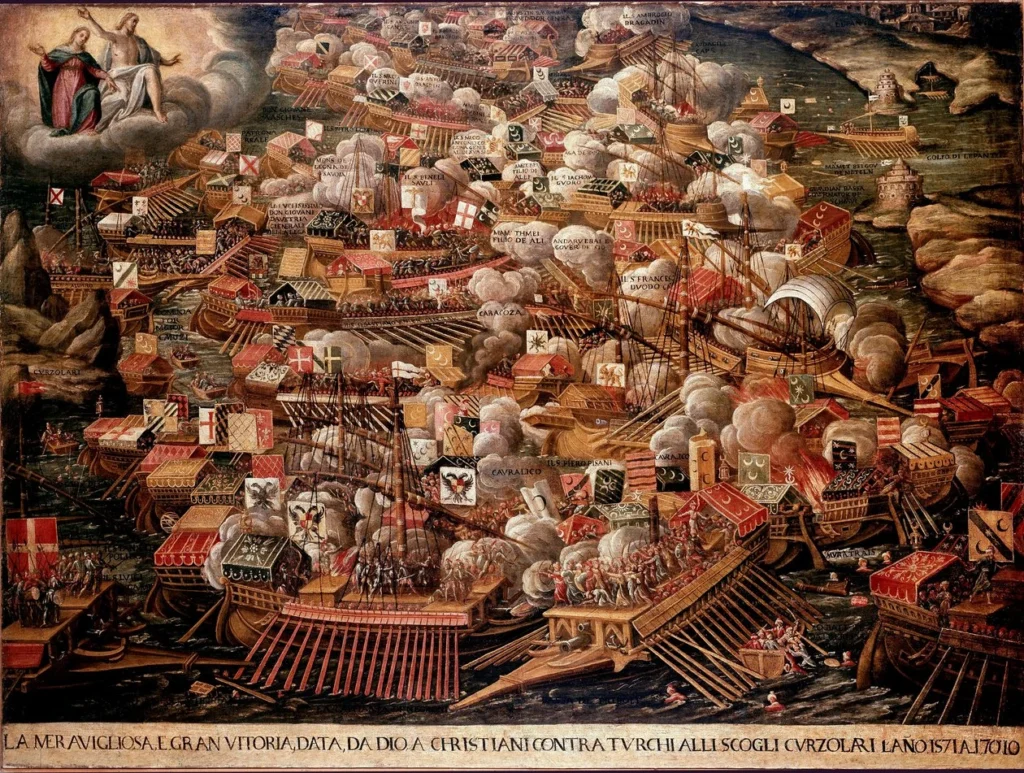
On 7 October 1571, the combined fleet of the Holy League met the Ottoman fleet in one of the largest naval confrontations of its age. The alliance had been formed under Pope Pius V and brought together forces from Spain, Venice, the Papal States, Genoa, Savoy, Malta and other Italian states. Its fleet was commanded by Don John of Austria.
The decisive fighting took place near the Echinades islands, close to the mouth of the Acheloos river. Hundreds of vessels were drawn into the battle. Galleys grappled at close range, soldiers fought across decks and Venetian galleasses brought heavy artillery into the engagement.
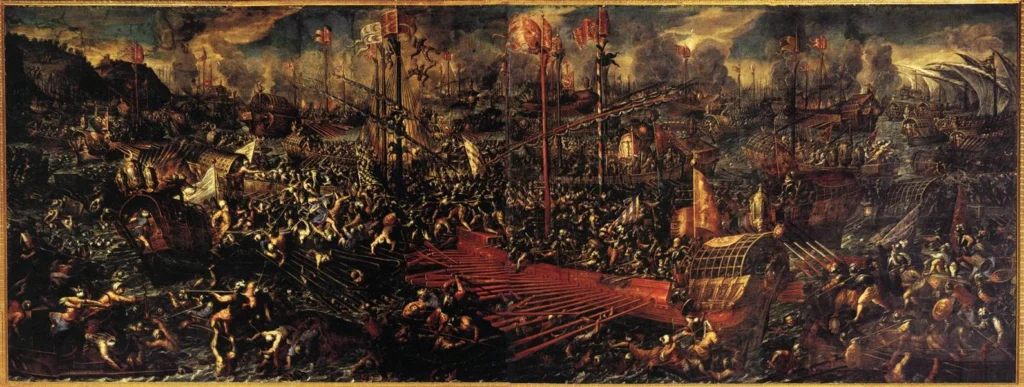
By the end of the day, the Holy League had won a major naval victory. The Ottoman fleet suffered heavy losses in ships and men, while thousands of Christian galley slaves were freed. The victory damaged the aura of Ottoman naval invincibility in Western Europe, although the empire rebuilt much of its fleet quickly and remained a major Mediterranean force.
For the wider historical setting, see our guide to Greek history, including the Ottoman era.
The Greek role in the battle
Greeks were present in significant numbers on both sides. Many came from the Ionian Islands and Crete, while others served in the Ottoman fleet, including men recruited under compulsion. Greek maritime communities also contributed ships, crews and commanders to the Holy League effort.
The victory carried particular significance for Greek communities living under Ottoman rule. Uprisings followed in Mani, Patras, Aigio, Galaxidi, Parga, Igoumenitsa, Vonitsa, Andros, Paros and Naxos, although Ottoman rule continued in each of these areas.
From naval battle to European cultural memory
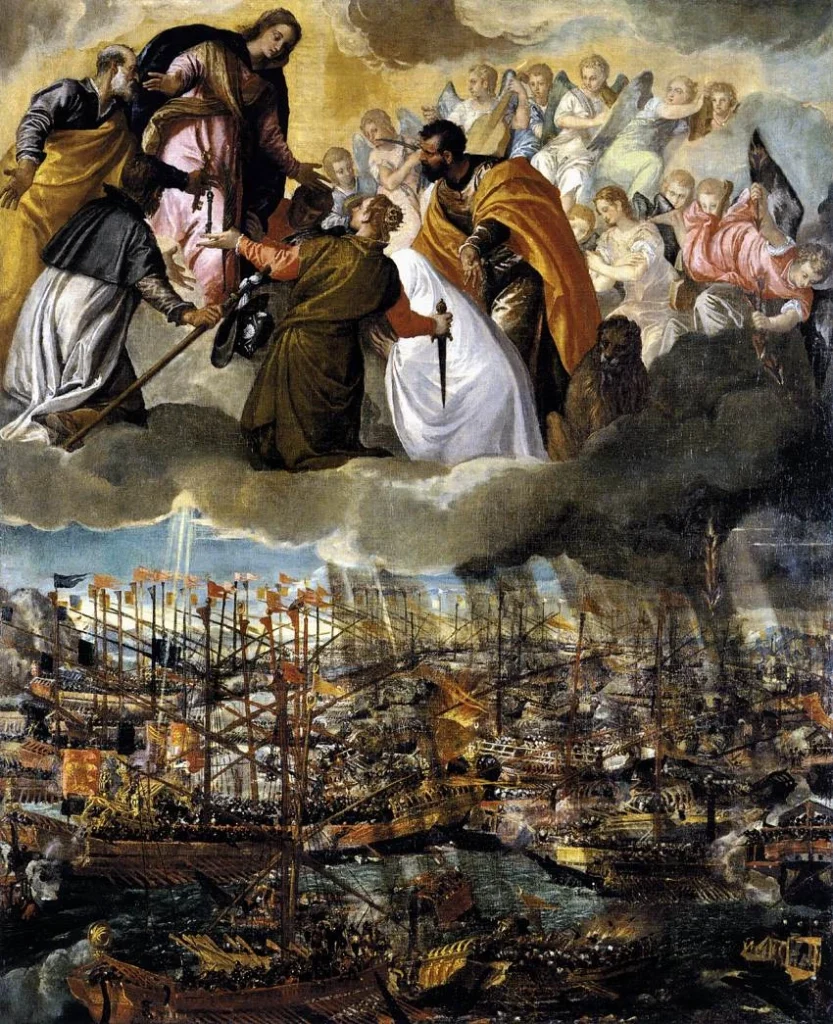
The battle reached well beyond the military encounter, influencing the course of Europe and inspiring major figures in literature and the arts. Miguel de Cervantes, the future author of Don Quixote, took part in the fighting aboard the galley Marquesa. He was wounded during the battle, suffering injuries that left his left hand severely impaired, and Lepanto remained an important part of his own account of his life.
Painters including Tintoretto, Veronese and Titian also connected their work with the battle and its artistic legacy, helping to turn Lepanto into a subject of European cultural memory as well as military history.
This year’s programme includes a Spanish culture evening, a blitz chess tournament and a new historical exhibition.
The Battle of Lepanto re-enactment in Nafpaktos
The centrepiece of the anniversary takes place on Saturday, 10 October at 21:00, when Nafpaktos’s Venetian harbour becomes an open-air stage for the annual re-enactment.
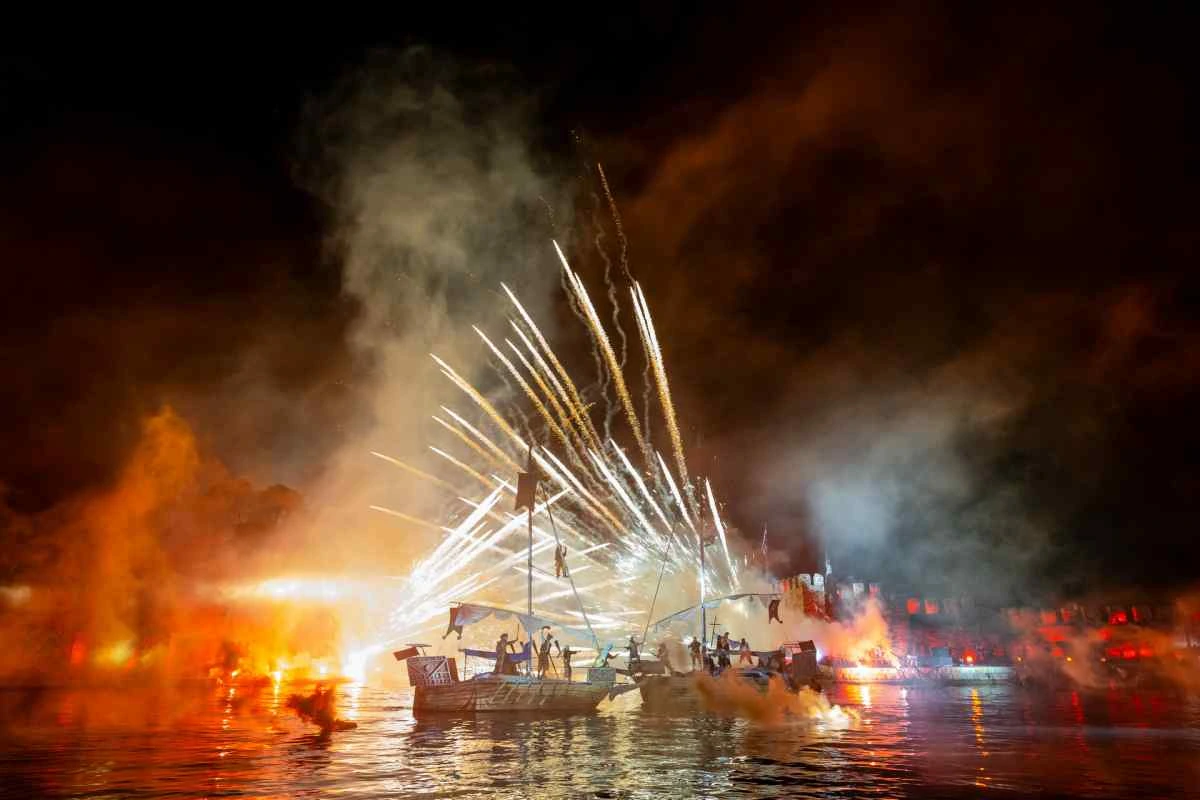
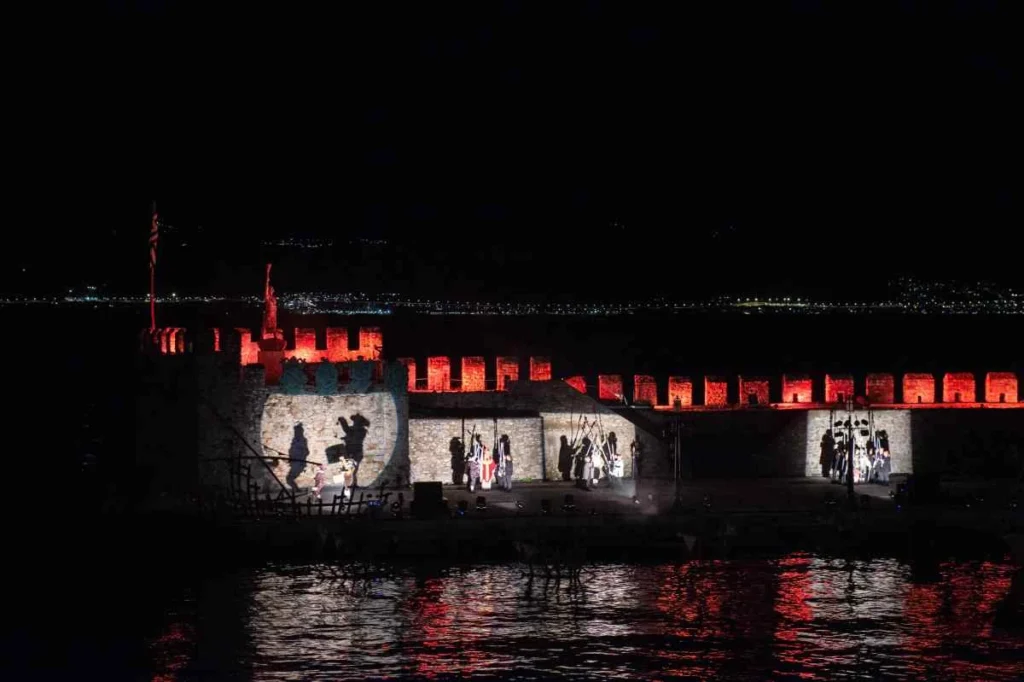
Beneath the Venetian walls, with the illuminated castle rising above the town, the naval confrontation is recreated through boats, performers, sound, lighting and pyrotechnics. A parade by the Nafpaktos Cultural Routes association forms part of Saturday’s central event and leads into the re-enactment at the harbour.
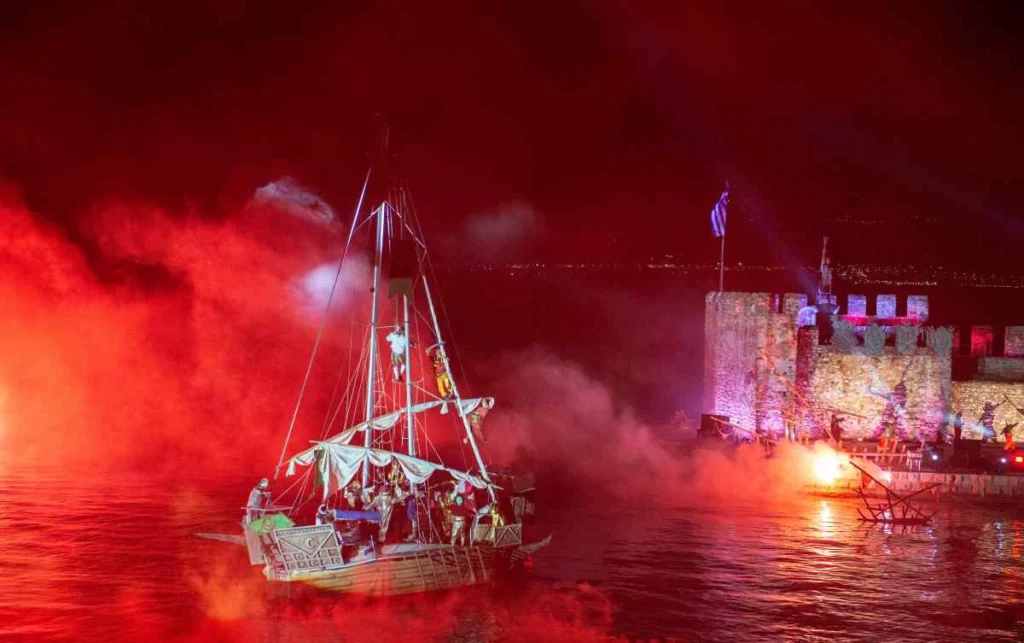
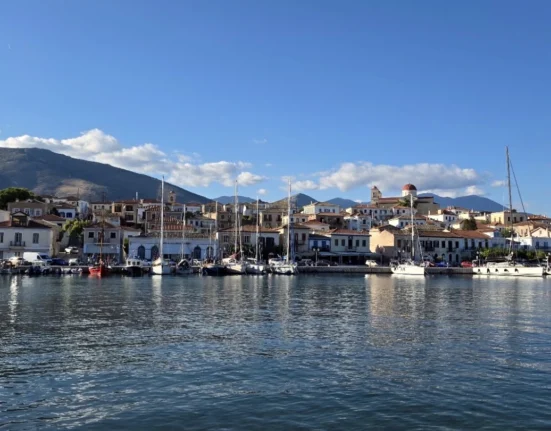
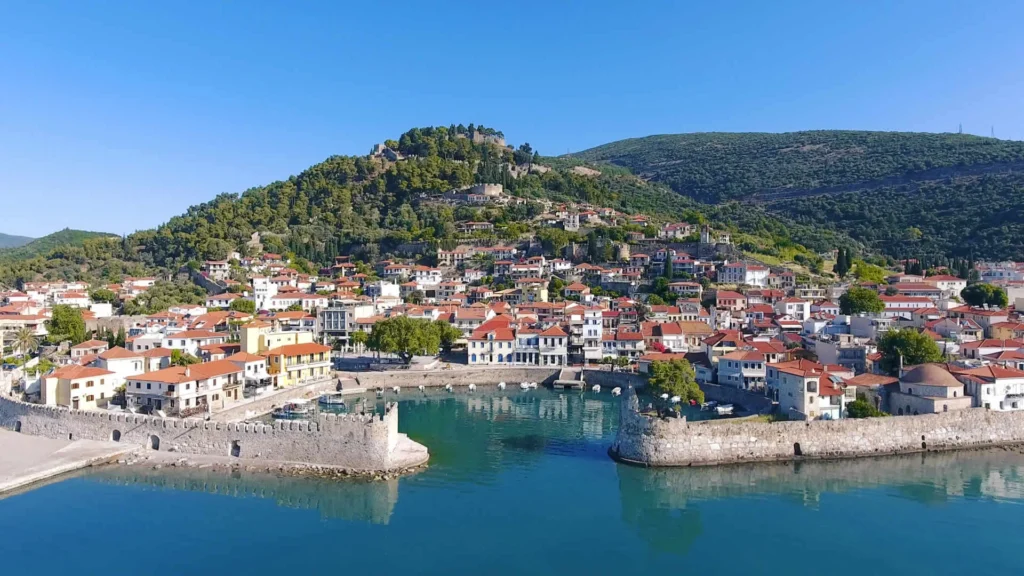
The setting gives the event much of its impact. The harbour is enclosed by stone walls, while successive lines of fortification climb the hillside towards the castle. As darkness falls, the architecture becomes part of the performance.
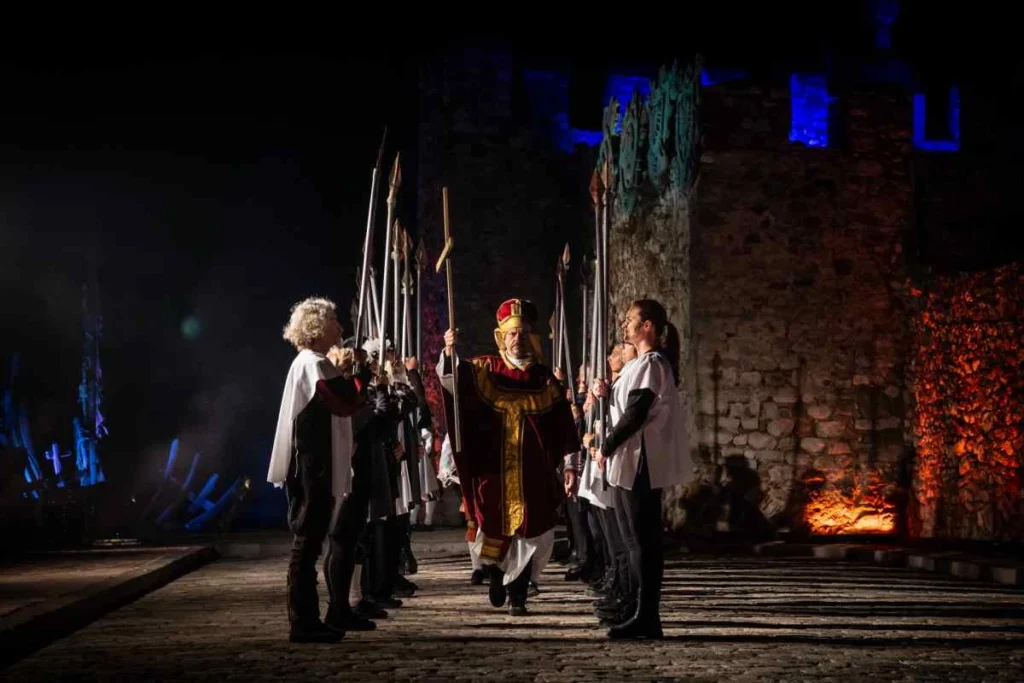
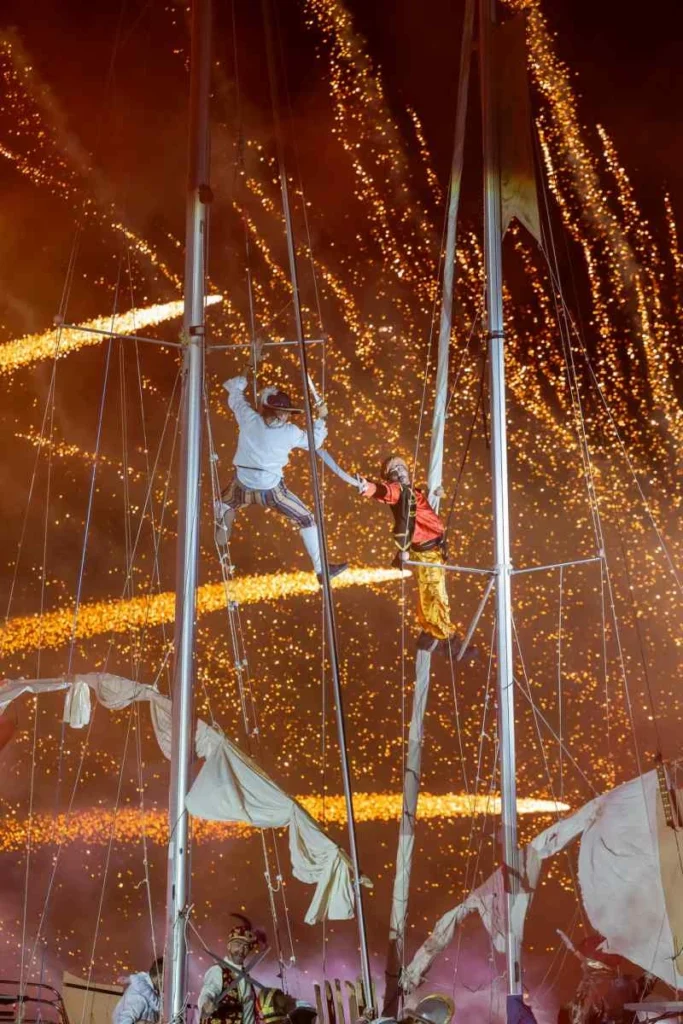
Previous re-enactments have filled the harbour with smoke, light and movement as performers climb the rigging and boats pass between the illuminated fortifications. The compact scale of the harbour keeps the spectacle close to the audience.
If you are going to the re-enactment
The event to plan around is the Battle of Lepanto re-enactment on Saturday, 10 October at 21:00 at the Venetian harbour.
From Athens: Nafpaktos lies about 200 km west of the capital. The drive follows the route past Corinth and across the Rio-Antirrio bridge and takes around two and a half hours. From Patras: Nafpaktos is around 30 minutes away by car across the bridge.
The harbour is compact, so the main viewing areas are likely to fill early. Arriving in the afternoon gives enough time to walk around the harbour, explore the old town and see the fortifications in daylight before the evening spectacle begins.
Battle of Lepanto Re-enactment
Saturday, 10 October 2026, 21:00
Venetian Harbour, Nafpaktos
The wider 455th-anniversary programme
The anniversary programme runs from 3 to 11 October. Several events around the Saturday-night re-enactment fit a weekend in Nafpaktos.
- Friday, 9 October, 19:30: parade and symbolic announcement of the battle through the city, ending at the Venetian harbour.
- Friday, 9 October, 20:30: A Journey through Spanish Culture: Music, Dance, Poetry at the Immersive Reality Centre for the Battle of Nafpaktos.
- Saturday, 10 October, 16:00: 16th Lepanto Blitz Chess Tournament at Psani Beach.
- Saturday, 10 October, 21:00: Battle of Lepanto re-enactment at the Venetian harbour, with a parade by Nafpaktos Cultural Routes forming part of the central event.
- Sunday, 11 October, 11:30: opening of the historical exhibition Nafpaktos: Siege and Liberation at the Dimitrios and Aigli Botsaris Foundation.
For the complete schedule, including educational and commemorative events, see the Municipality of Nafpaktia’s 455 Years Since the Battle of Nafpaktos programme.
Battle of Lepanto: quick answers
When is the Battle of Lepanto re-enactment in Nafpaktos?
The 2026 re-enactment takes place on Saturday, 10 October at 21:00 at the Venetian harbour.
Who won the Battle of Lepanto?
The Holy League, an alliance led by Spain, Venice and the Papal States under Don John of Austria, defeated the Ottoman fleet on 7 October 1571.
Why is Nafpaktos called Lepanto?
Lepanto is the Venetian and Italian name of Nafpaktos. The battle took its name from the city because Nafpaktos was an important Ottoman naval base in the area.
Where was the Battle of Lepanto fought?
The fighting took place near the Echinades islands and the mouth of the Acheloos river, at the entrance to the Gulf of Patras in western Greece.
Sources
Municipality of Nafpaktia: 455 Years Since the Battle of Nafpaktos (in Greek)
SanSimera: The Battle of Nafpaktos (in Greek)
Centro Virtual Cervantes: Cervantes and the Battle of Lepanto (in Spanish)