
Autumn is one of the best times to see the Edessa waterfalls. We came in late October, with the leaves just beginning to turn, and the first thing that stayed with us was the sound, well before the sight of the falls. Water is everywhere here, running beside the paths, slipping under small bridges and rushing through channels beneath trees that were already dropping their leaves.
Long before Karanos comes into view, Edessa sounds like a city built around water.
The streams and small cascades of Edessa Waterfall Park make a fine walk on their own, but then stone steps lead down beside the cliff, the noise builds and the route takes you closer to Karanos before passing behind the falling water and into the cave beneath it.
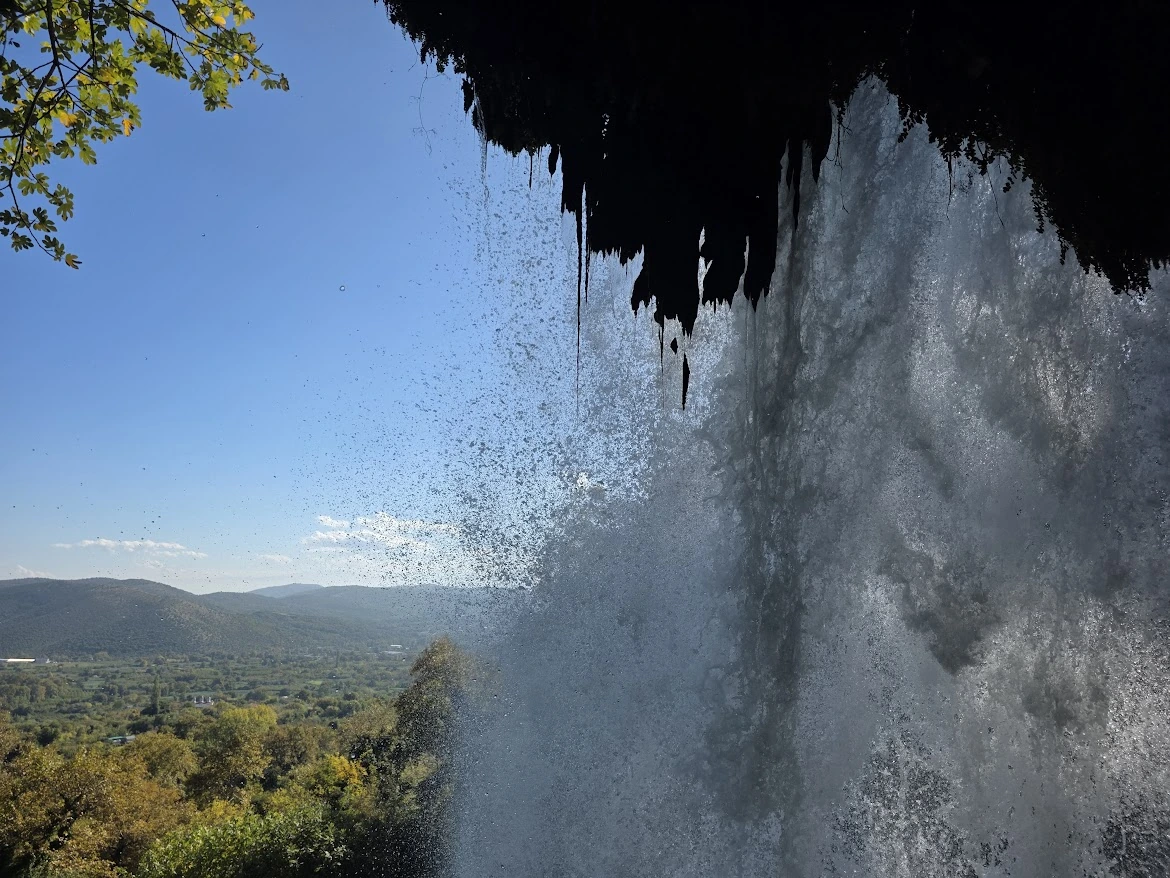
The most powerful part of the walk comes farther down, where you reach a lower viewing level beneath Karanos and the cascade runs at full force almost directly behind you. Spray drifts across the path and, when you turn around, the scene changes completely as Longos and the Macedonian plain spread out below.
The route continues farther into the lower gorge to the Double Waterfall, or Lambda, before eventually climbing back towards Edessa’s former mill district, now the Open-Air Water Museum, and continuing across the plateau to Varosi. Water links every part of the walk, from geology and industry to old streets and wide views across the plain.
Our suggested Edessa waterfall walk
Start in Waterfall Park and go down beside the Chapel of the Ascension towards Karanos. Follow the lower path behind the falling water and to the cave, continue to the lower viewing level beneath Karanos, then carry on down the stone-paved path to the Double Waterfall, or Lambda. From there, climb back up towards the Open-Air Water Museum and cross the old mill district to Varosi.
Allow 3–4 hours to walk the whole route, longer if you linger for photographs or visit the museum spaces.
In this guide
| Edessa Waterfall Park | Karanos Waterfall |
| Behind Karanos & the cave | Lower viewing level |
| Double Waterfall / Lambda | Open-Air Water Museum |
| Varosi | Where we stopped |
| Best time to visit | Plan your visit |
| What else to see |
Edessa Waterfall Park: water before the waterfall
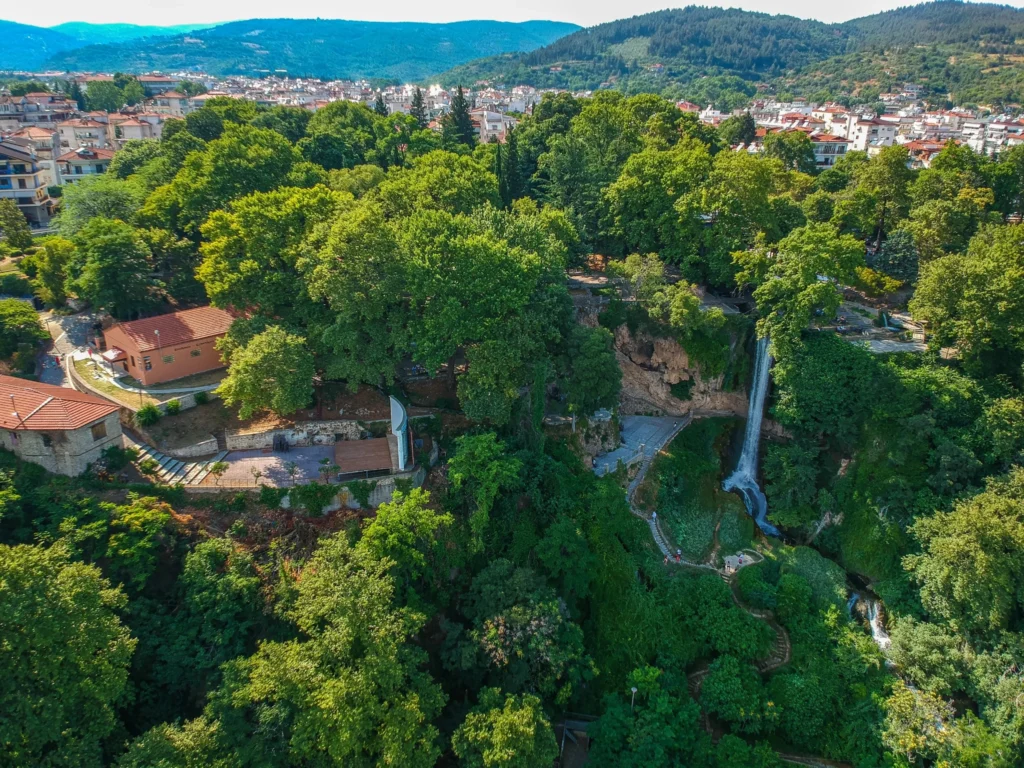
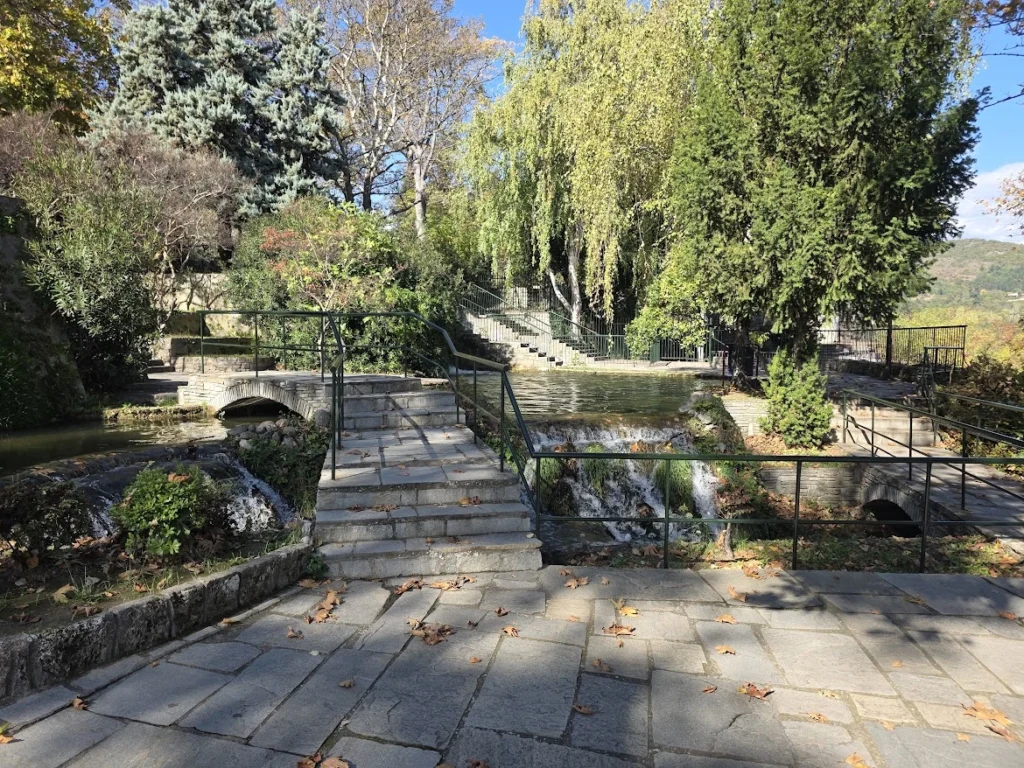
Edessa Waterfall Park is a broad green area of streams, channels, footbridges, terraces and small cascades. The Edessaios River (Εδεσσαίος, Edessaíos) crosses it on its way towards the edge of the plateau.
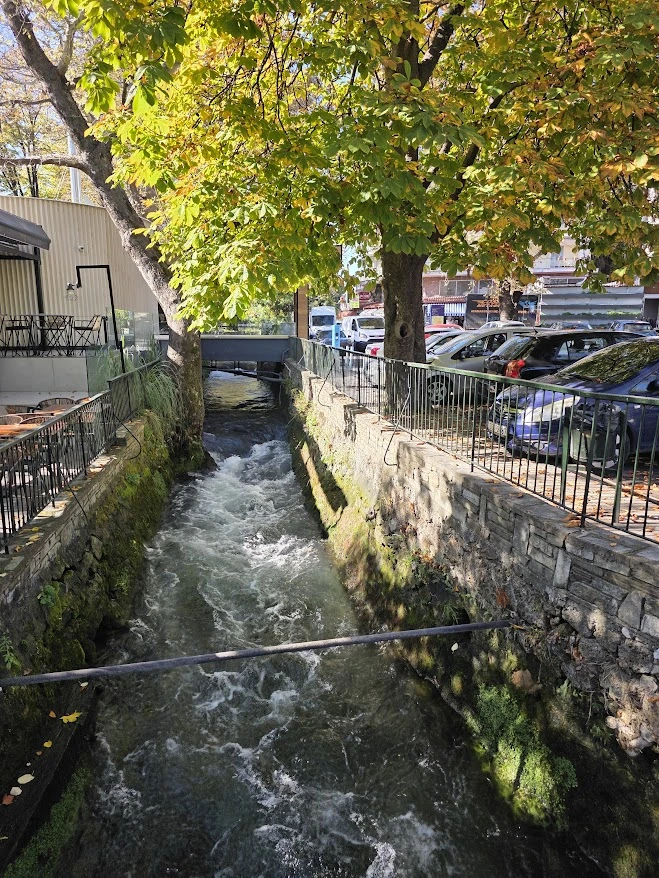
The park covers around 100,000 square metres, and the water stays with you throughout the walk as it passes beside paths, beneath bridges and through channels before gathering speed on its way towards the cliff.
Paths in the upper park thread between mature trees, planted terraces and waterways, with buildings appearing between the greenery. During our late-October visit, yellow and brown leaves were beginning to collect along the channels while much of the canopy was still green.
Karanos Waterfall: the descent begins
Karanos (Κάρανος, Káranos) dominates the waterfall district, dropping around 70 metres from the edge of the city. Rather than revealing itself all at once, it appears gradually as the path descends through the trees.
The way down starts beside the Chapel of the Ascension, where stone steps drop through the trees and the sound of the waterfall grows stronger with every turn. At first you catch only fragments of rock and water through the branches, but the view opens more fully as you descend.
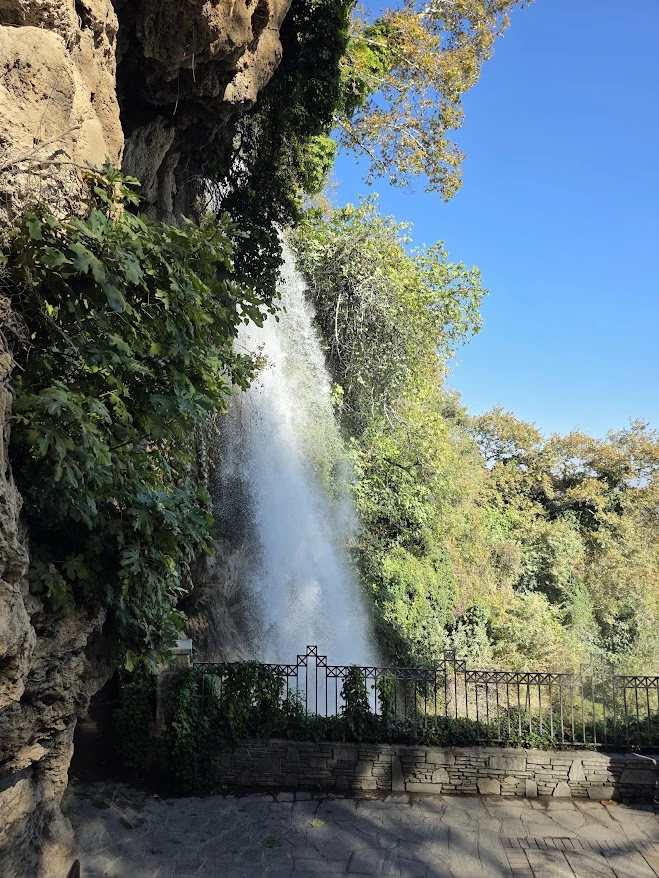
Lower down, the cliff begins to dominate the route as the air becomes cooler and the sound of the water deepens. By this point you are moving from simply viewing the waterfall towards walking into its immediate surroundings.
Behind Karanos and inside the waterfall cave
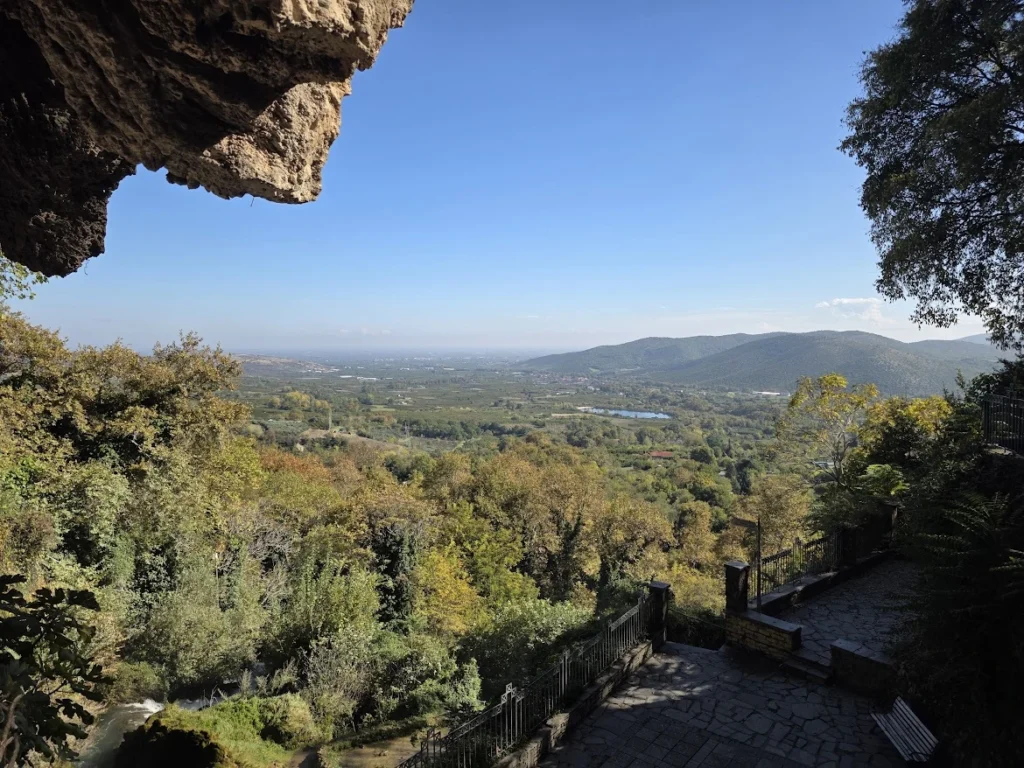
The path continues beneath the rock towards one of the most memorable sections of the walk, with the cliff closing in above while the Macedonian plain appears through openings on the exposed side.
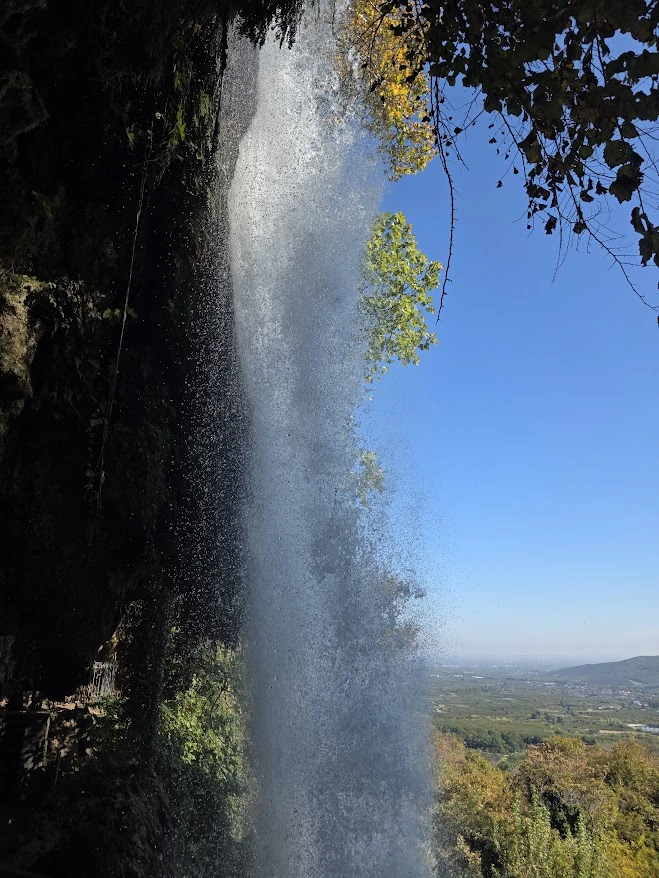
A walkway passes behind the falling water, turning Karanos into a moving curtain between you and the landscape beyond. Looking through the spray towards the plain is one of the most unusual views anywhere on the route.
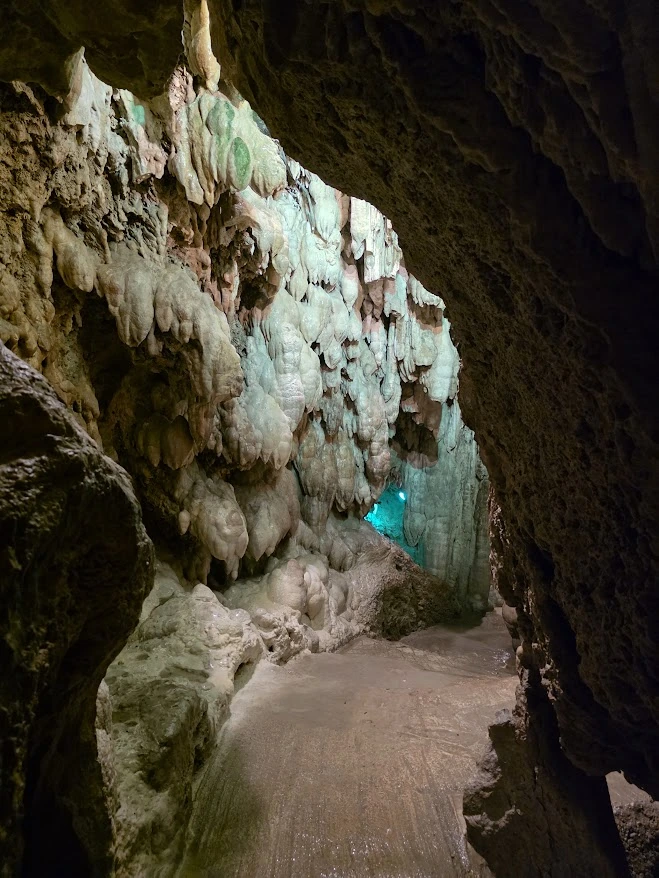
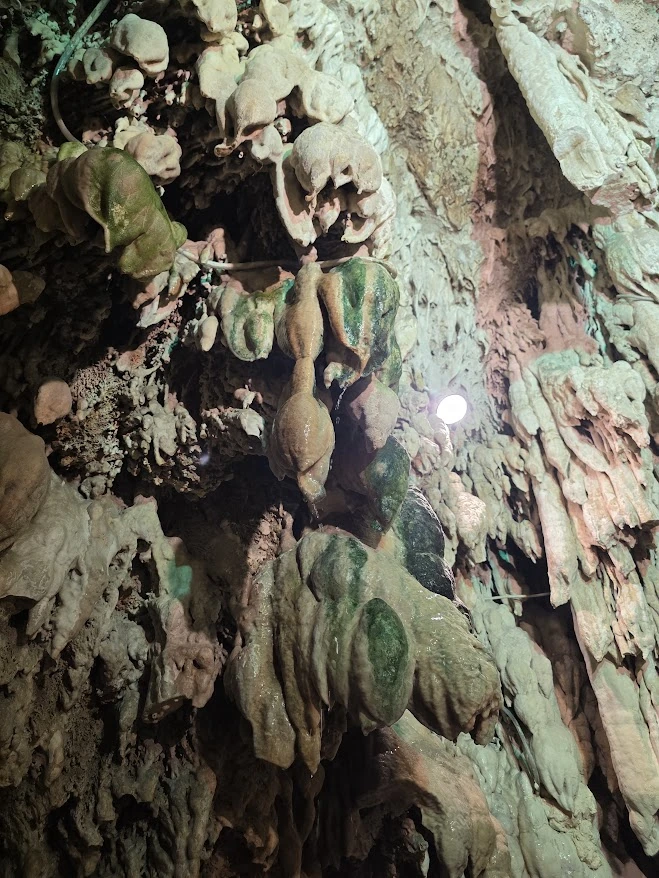
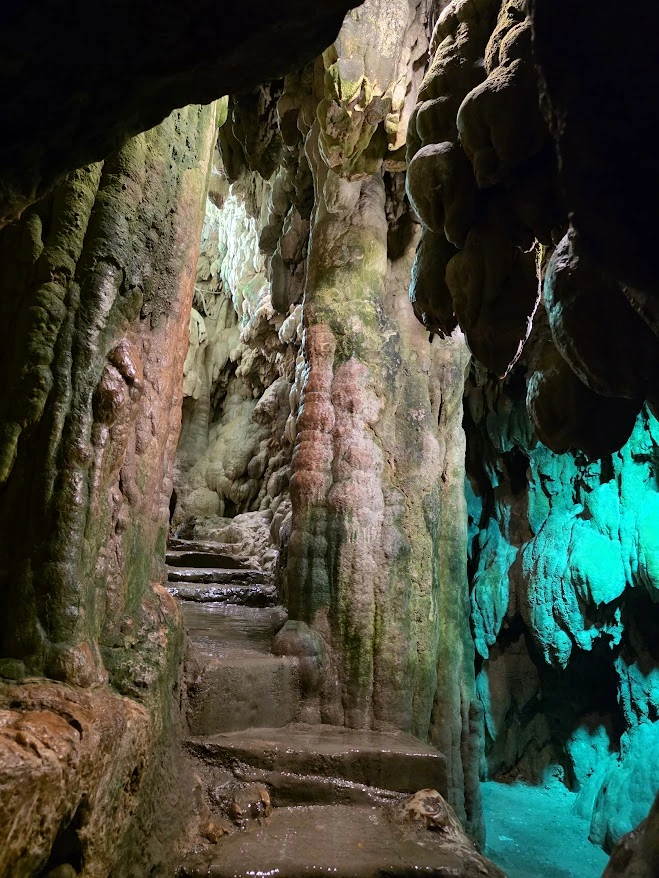
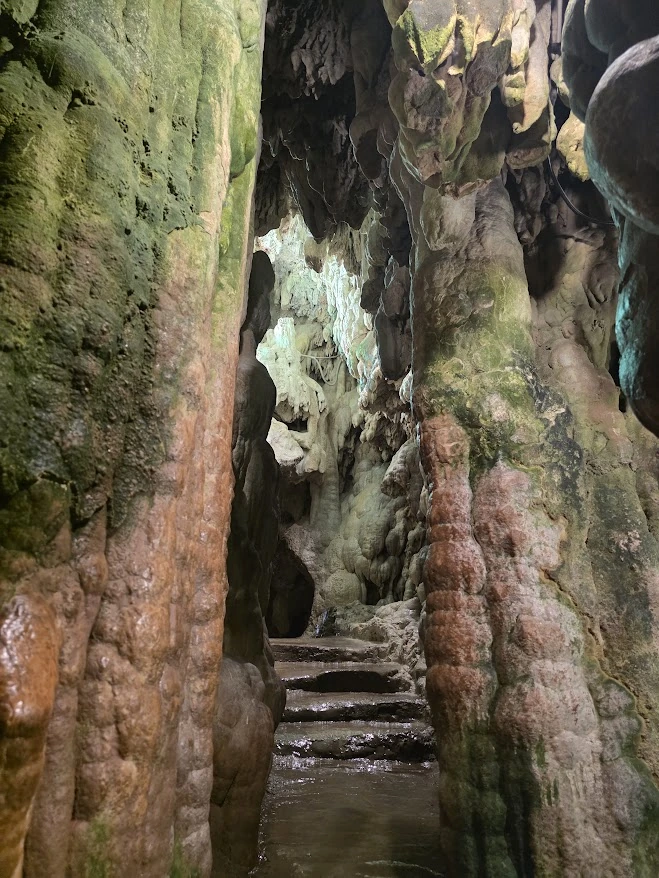
Close by, a small primary travertine cave sits within the rock. Mineral-rich water deposited calcium carbonate around vegetation and other material, gradually building the rock while leaving cavities inside it.
Inside, the feeling changes completely because the rock curves around you while the waterfall thunders only a short distance away. Despite being surrounded by so much water and noise, we felt surprisingly sheltered in what seems at first like an almost impossible setting.
The lower viewing level: Karanos at full force
Continue after leaving the cave and you reach the part of the route that made the strongest impression on us. At the lower viewing level beneath Karanos, the waterfall fills your field of vision and the experience becomes far more physical than it is from the viewpoints above.
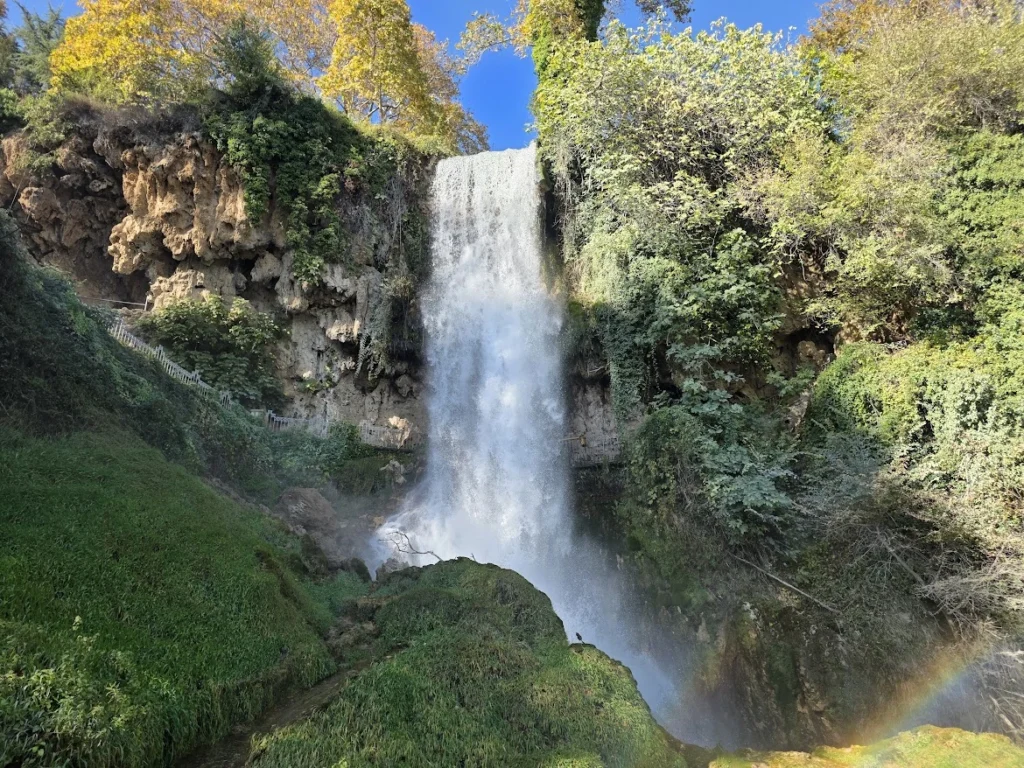
The cascade runs at full force almost directly behind you, with spray reaching the viewing area and the roar remaining constant. This is where we stopped, got pleasantly wet and took photographs with Karanos rising behind us.
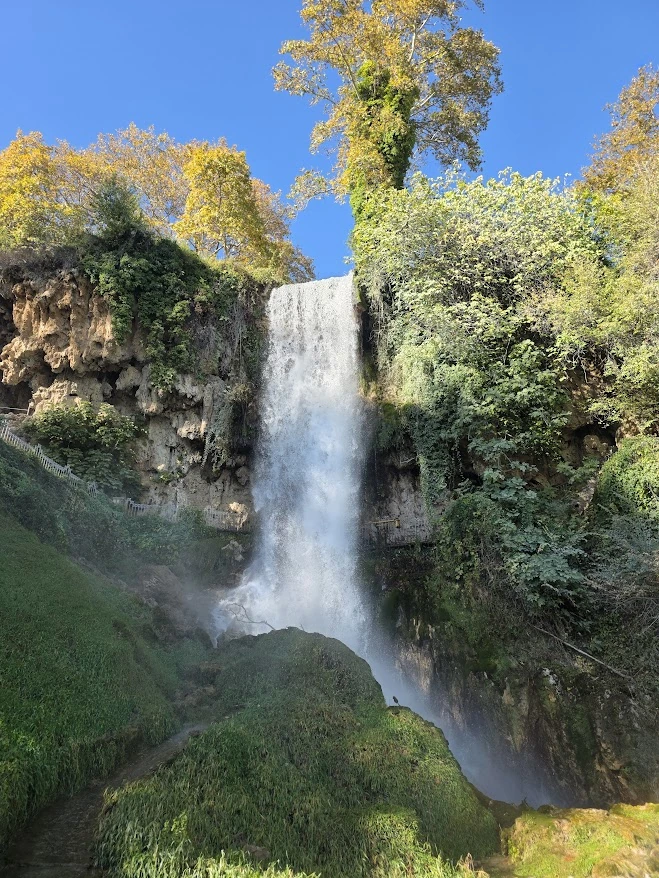
Balcony-style viewing platforms sit at the edge of the rock, so facing Karanos places you among the roar, spray and sheer cliff face while turning in the opposite direction reveals an entirely different scene across the Macedonian plain.
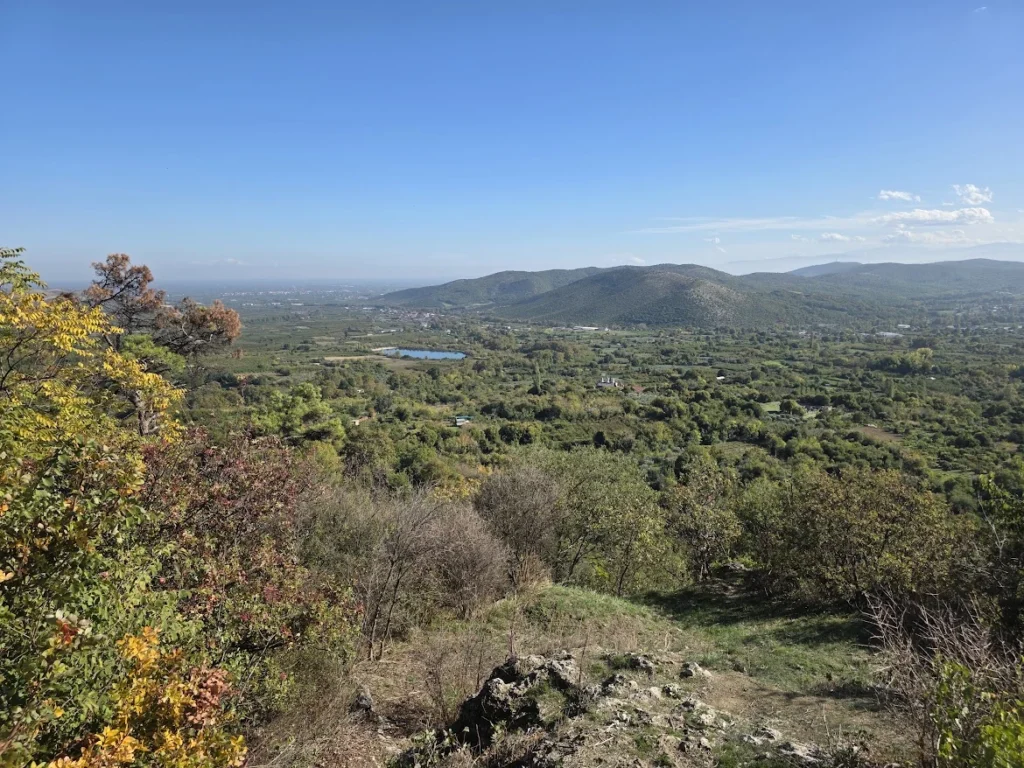
Longos lies directly below, where the lower city of Ancient Edessa once spread across the plain beneath the rock, while fields and low hills continue towards the horizon. The contrast between the narrow, roaring space beside the waterfall and the open countryside in front of you is one of the defining experiences of the visit.
Double Waterfall of Edessa: continue down to Lambda
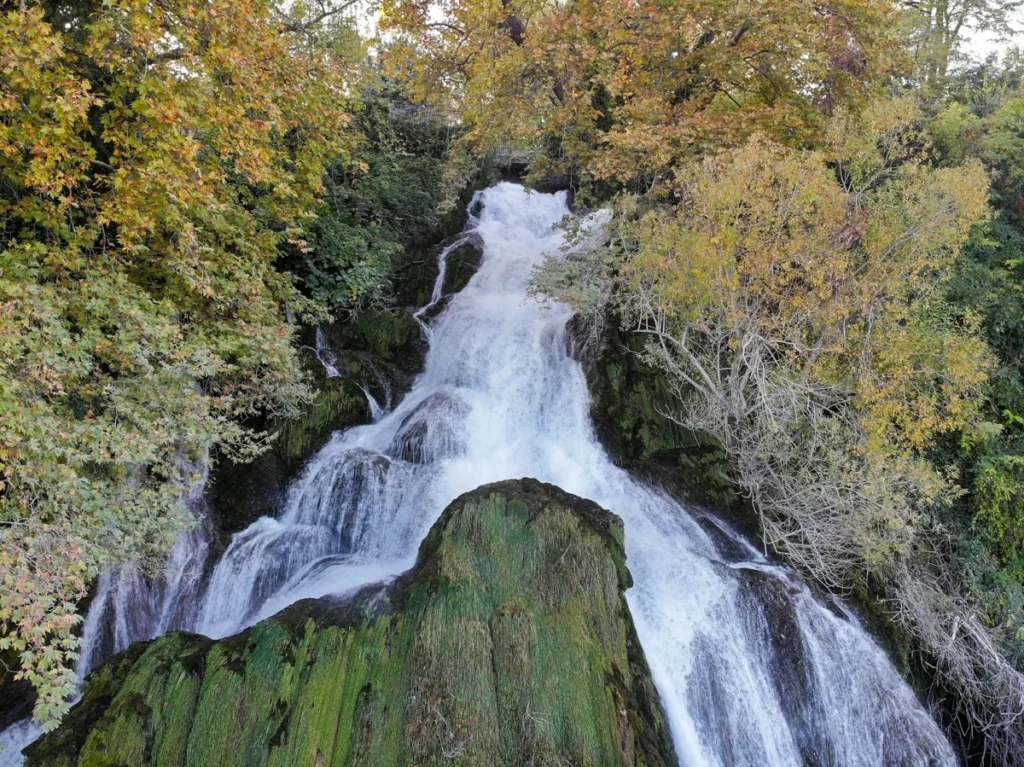
There is another reason to keep going after Karanos if you do not mind getting wet. Continue down the stone-paved path and the route enters a more wooded and enclosed part of the gorge, where you reach the Double Waterfall of Edessa, also known as Lambda (Λάμδα, Lámda) because of the shape created as the water divides.
It is only a short distance from Karanos, yet the setting feels quite different because trees and rock close around the path while the sound of rushing water builds as you approach. The waterfall remains partly hidden until you come closer, which makes the final reveal more dramatic.
The water bursts through the rocks and separates into two distinct flows before continuing towards two bluish-green pools below. Instead of the single great curtain of Karanos, Lambda feels more enclosed and immediate, with the water breaking through the gorge at close range.
The cobbled path brings you very close to the flow, so expect spray and take care on the damp stone underfoot. Getting a little wet becomes part of the experience here because you are no longer simply looking at the waterfall from a distance, but walking beside it as the water crashes through the rocks.
After visiting Lambda, retrace the route uphill towards the upper waterfall district, where the character of the walk gradually changes as the natural force of the water gives way to Edessa’s former water-powered industrial quarter.
Open-Air Water Museum of Edessa: where water became power
As you climb back towards the old mill district, the roar of the waterfalls gradually fades while the water itself remains beside you. Here its role changes from natural spectacle to working power.
The Open-Air Water Museum occupies the former mill and industrial quarter between the waterfalls and Varosi. Restored stone buildings, channels and surviving machinery show how the force of the Edessaios was harnessed first by traditional watermills and later by larger industrial installations.
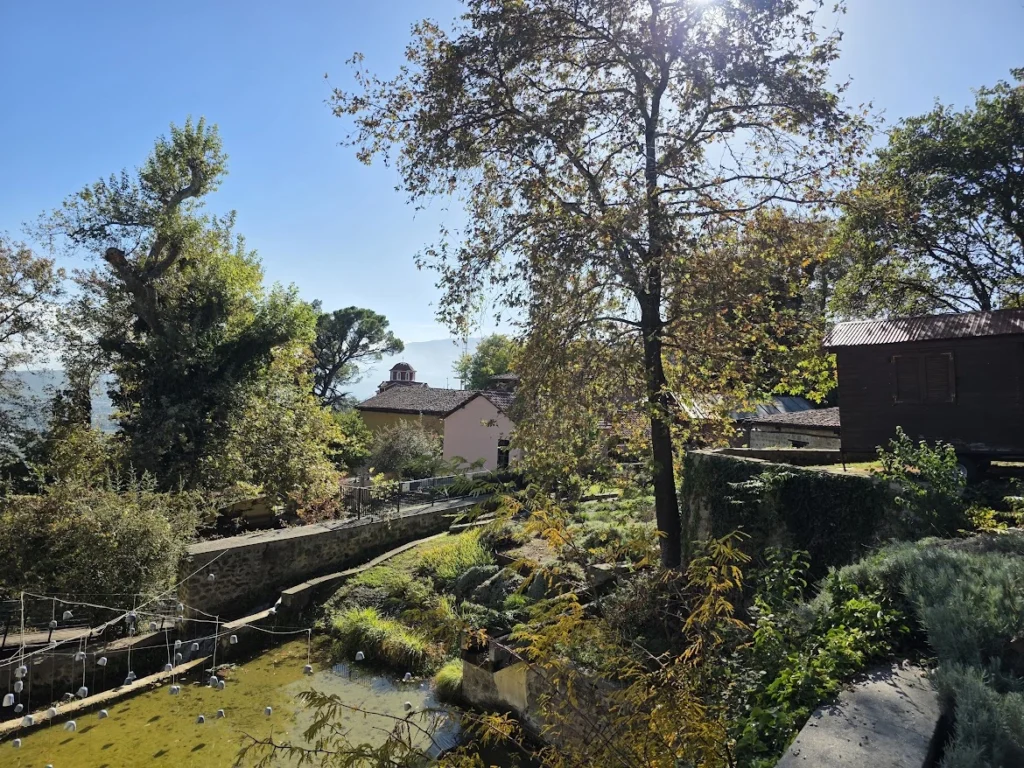
What surprised us most was the scale, with huge iron components and wheels standing beside channels where the water still runs quickly. Seeing them together makes it easy to understand how the same river that now draws visitors once powered a working industrial district.
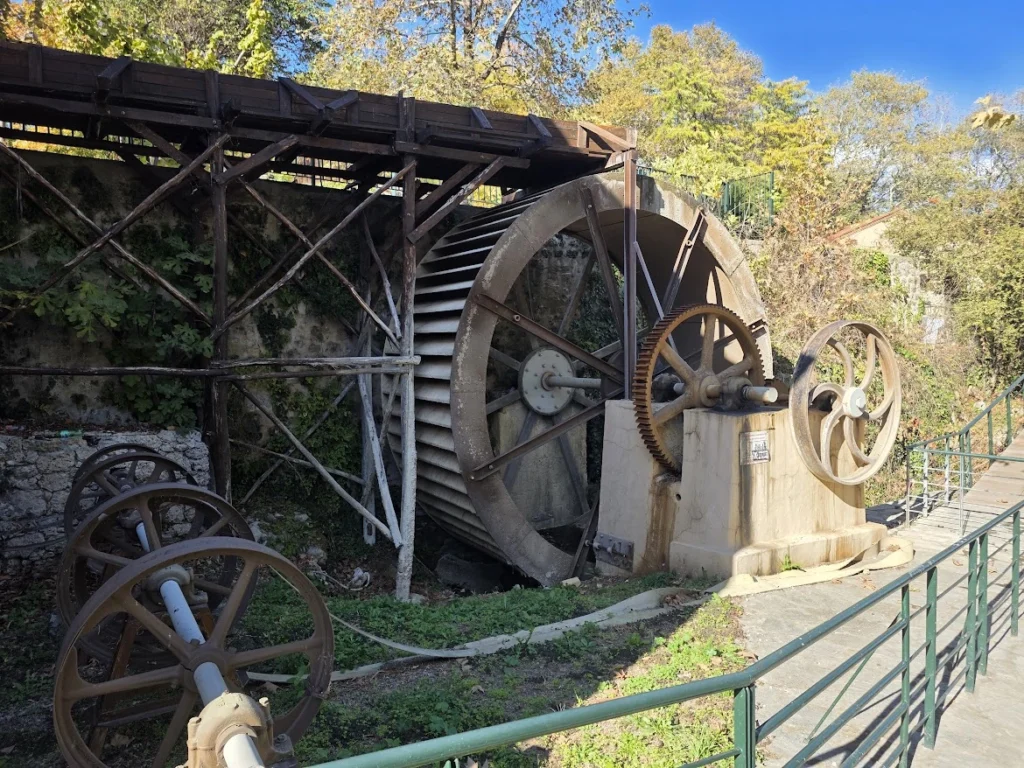
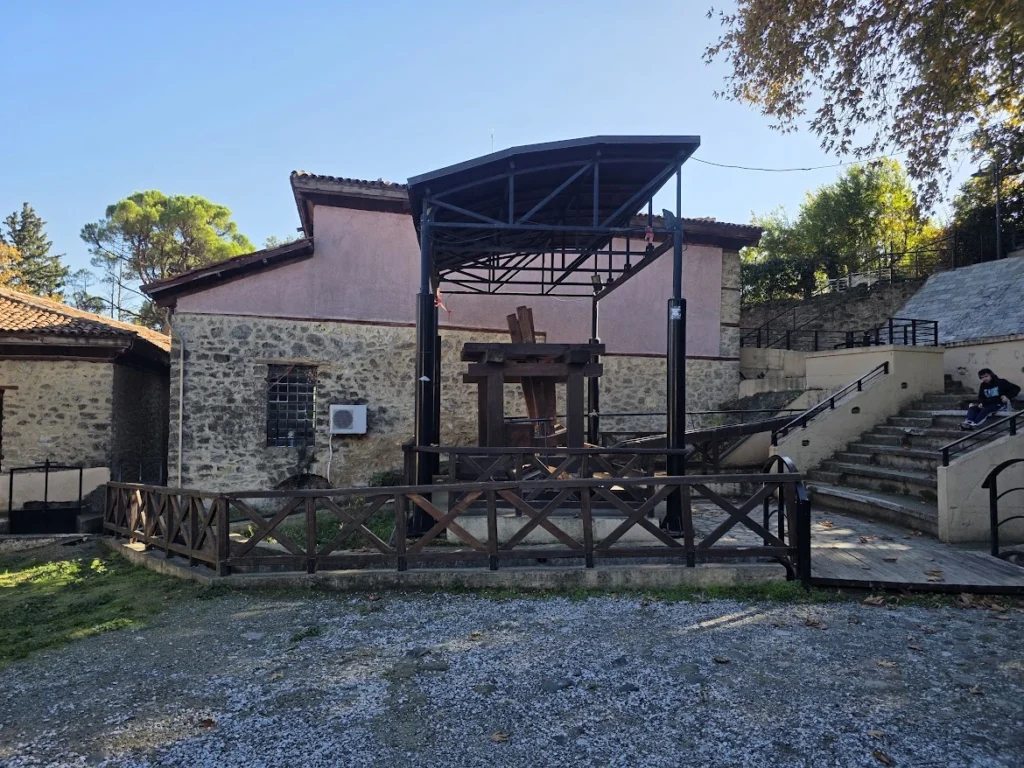
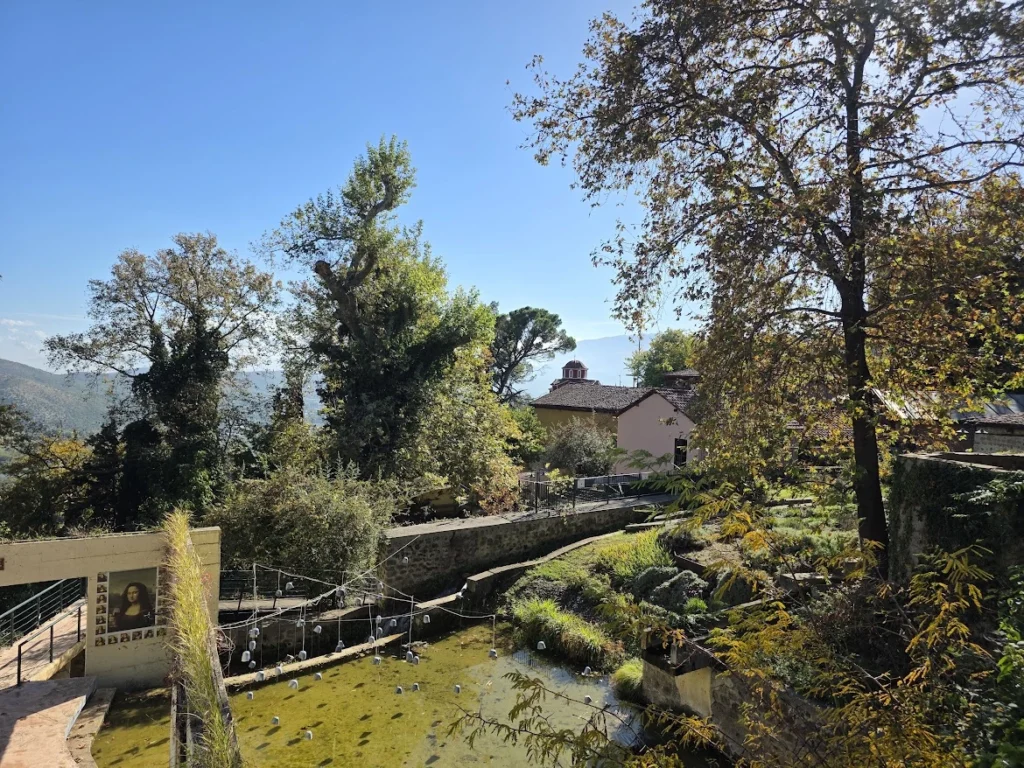
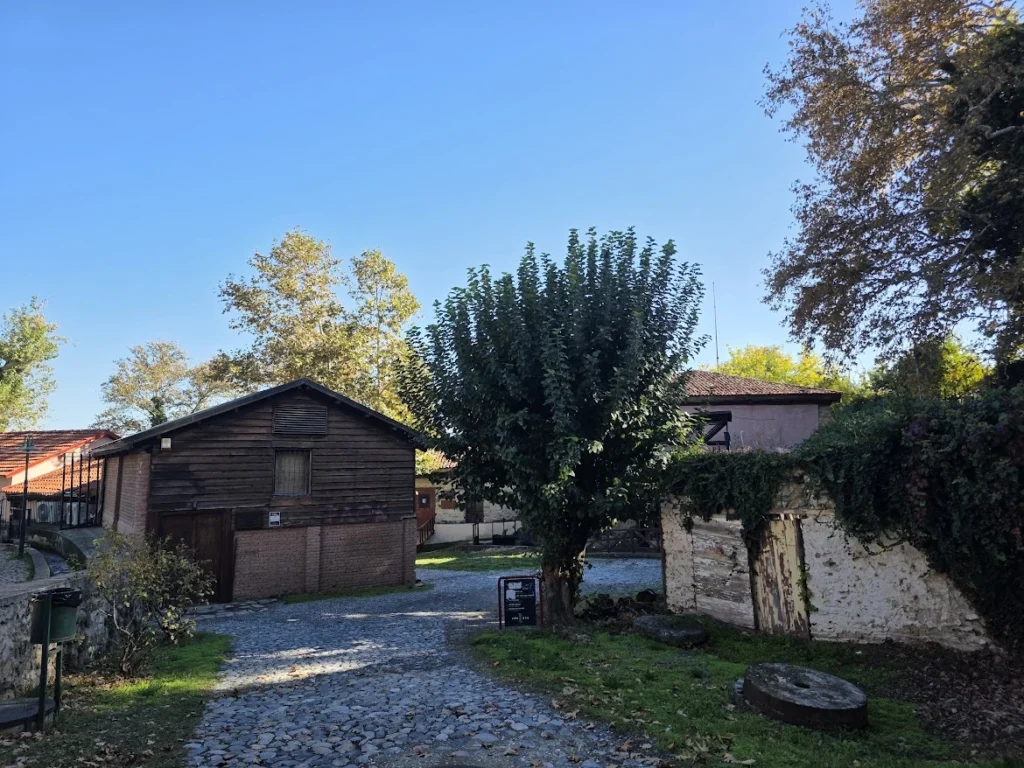
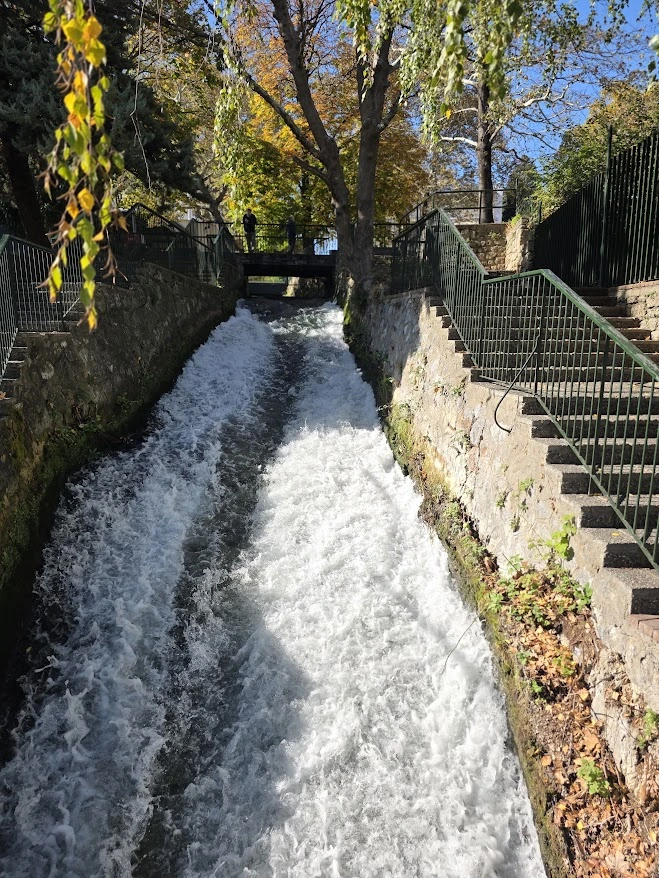
The walk through this part of Edessa is rewarding in its own right because it crosses a broad plateau with gentle rises and dips on the way towards Varosi, passing old waterways, machinery and restored buildings along the way.
The edge of the plateau remains close on your left, with views of the Macedonian plain repeatedly opening between the trees. The combination of industrial remains, rushing channels and open countryside gives this part of the walk a character quite different from the gorge below.
Inside the restored watermills
Several of the restored mills have found new uses, including the Mill of Taste, which occupies the former Pertsemli sesame mill and presents local food traditions, products and the Mediterranean diet while preserving the story of the old water-powered building.
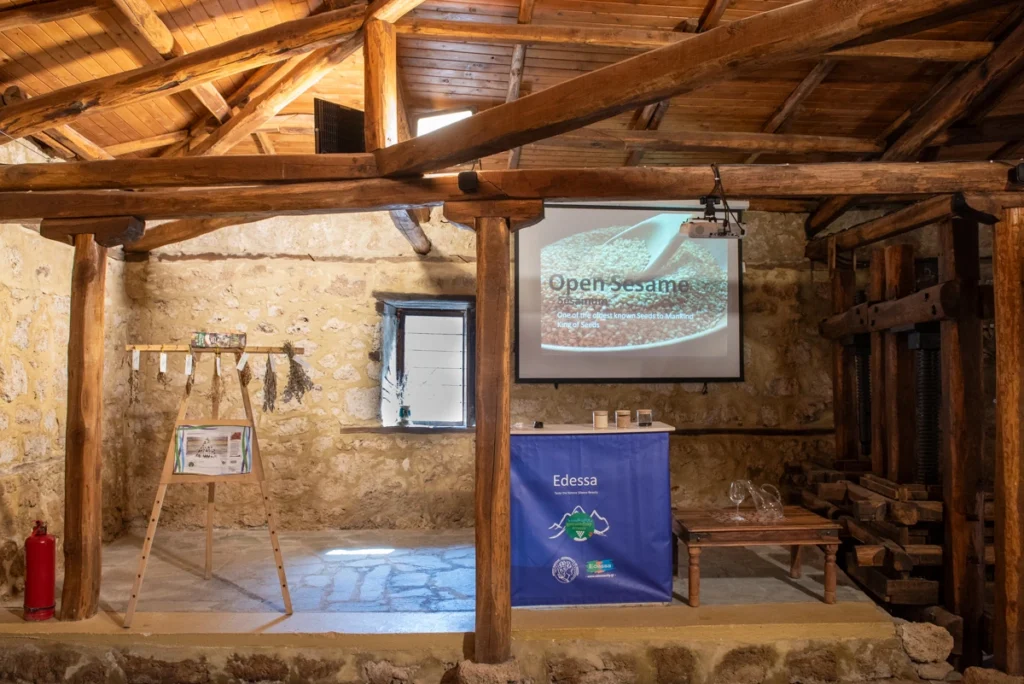
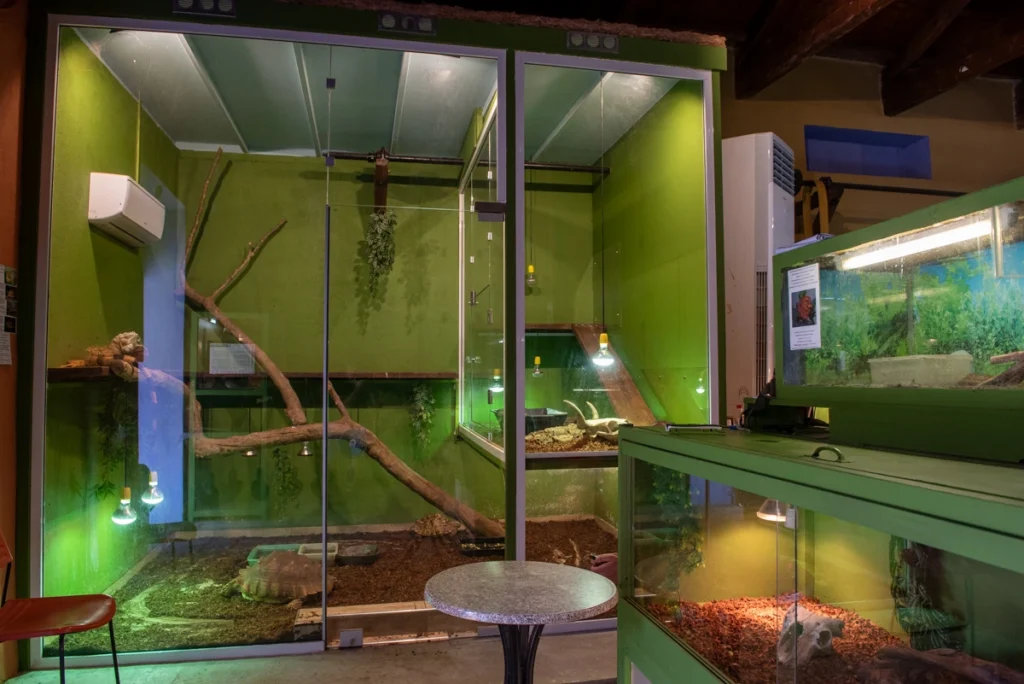
The restored Giannaki watermill houses the Aquarium-Reptile House, which began as an aquarium in 2001 and later expanded to include reptiles, making it an additional stop for families travelling with children.
The historic Kannavourgio hemp factory also forms part of Edessa’s industrial heritage, although the municipal Water Museum website currently lists it as temporarily closed, so it is worth checking before including it in your plans.
Varosi, Edessa: the old quarter beyond the mills
Continue across the plateau and Varosi (Βαρόσι, Varósi) arrives almost without announcement at the end of the mill district. Its position immediately stands out because the historic quarter sits close to the edge of the plateau, with the land dropping sharply towards the Macedonian plain.
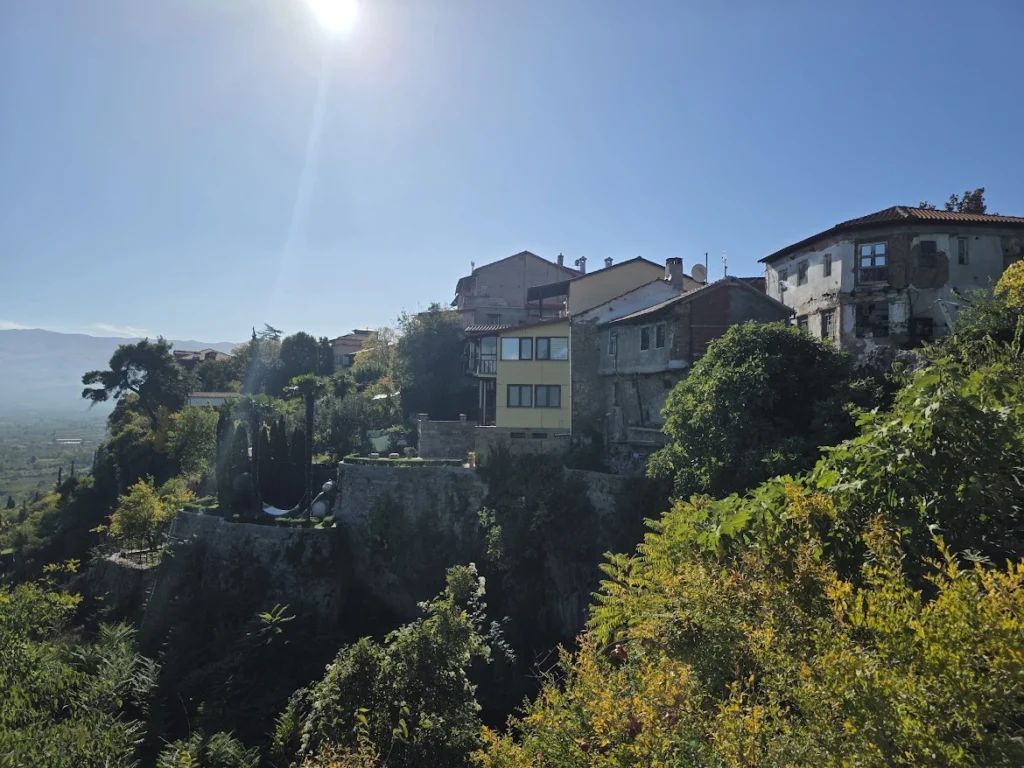
Varosi provides a quieter continuation of the walk after the noise of Karanos and the heavy machinery of the mill district. Cobbled lanes, paved paths, traditional buildings and glimpses of the plain make it an easy and pleasant area to explore on foot.
The quarter grew out of Edessa’s former fortified upper town and later developed into the Christian neighbourhood that became known as Varosi as the settlement’s medieval defensive role declined.
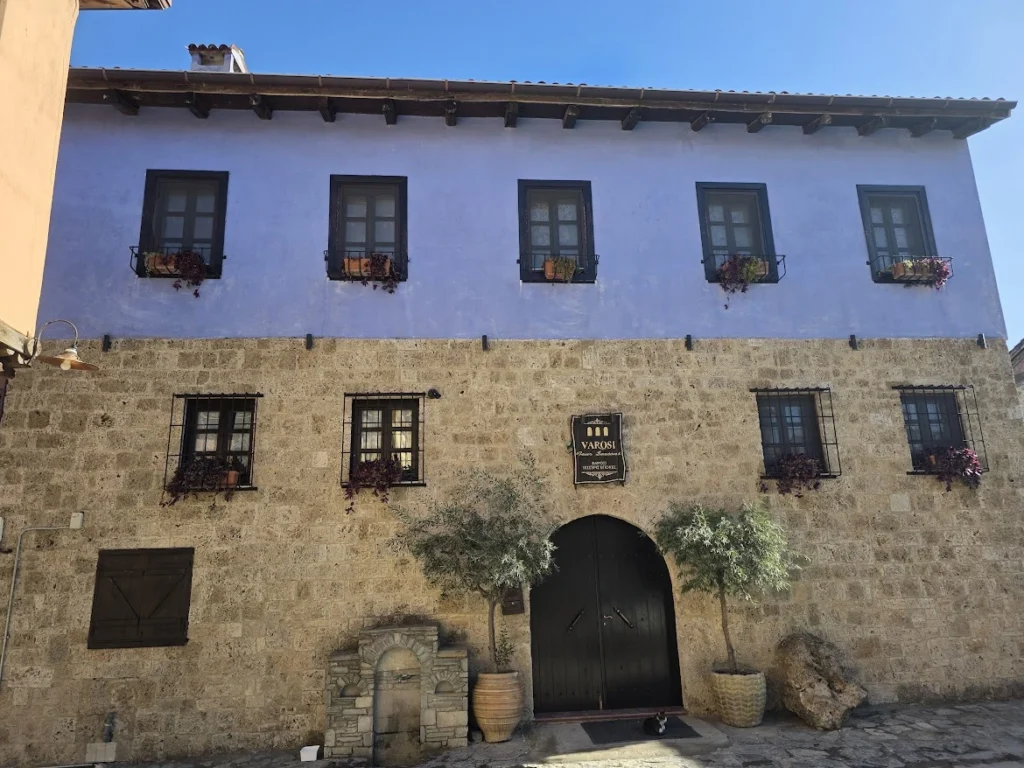
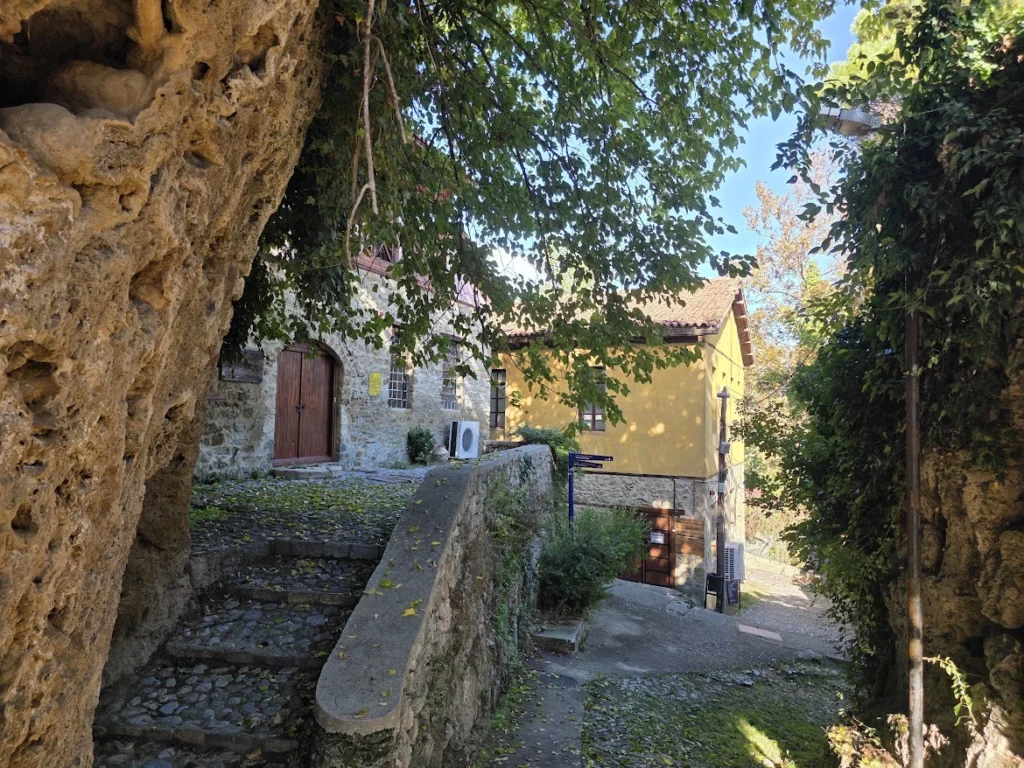
Two Byzantine churches survive in the quarter, the Church of the Dormition of the Virgin, also known as the Old Metropolis, and the Church of the Apostles Peter and Paul.
Varosi also carries traces of much more recent history because German forces burned a large part of the quarter in September 1944, destroying around 250 houses.
The Folklore Museum of Edessa
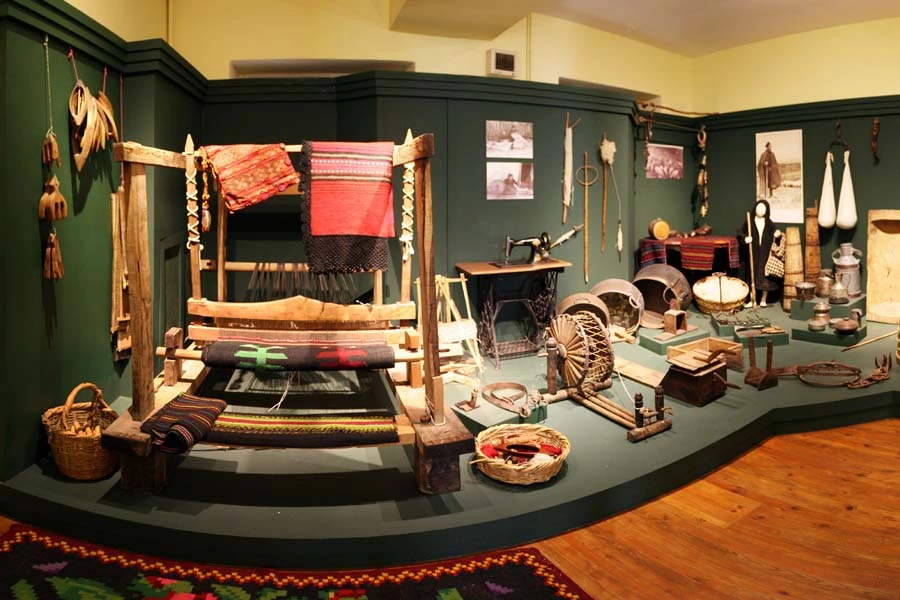
The Folklore Museum of Edessa occupies a two-storey building dating from 1932 and offers a closer look at everyday life in the city and the surrounding region through collections devoted to weaving, sericulture, farming, traditional trades and domestic life.
Its clothing collection includes men’s and women’s dress from around 1880 to 1920 and illustrates differences between clothing in an increasingly industrial town and in the surrounding countryside.
Where we stopped for food and coffee
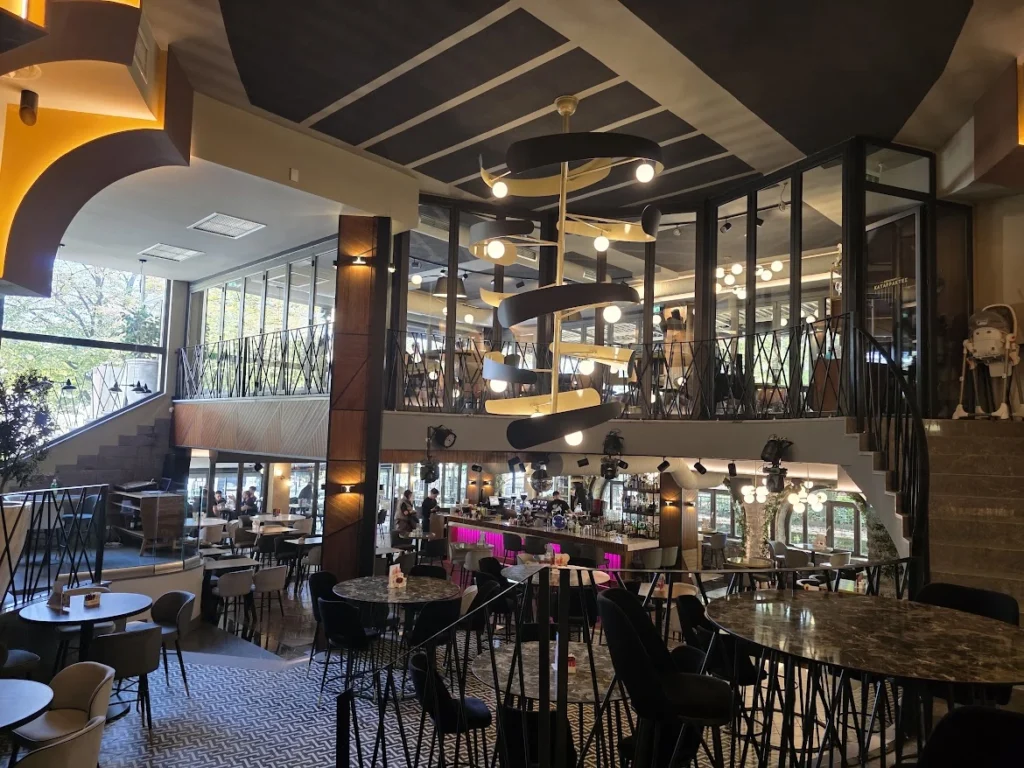
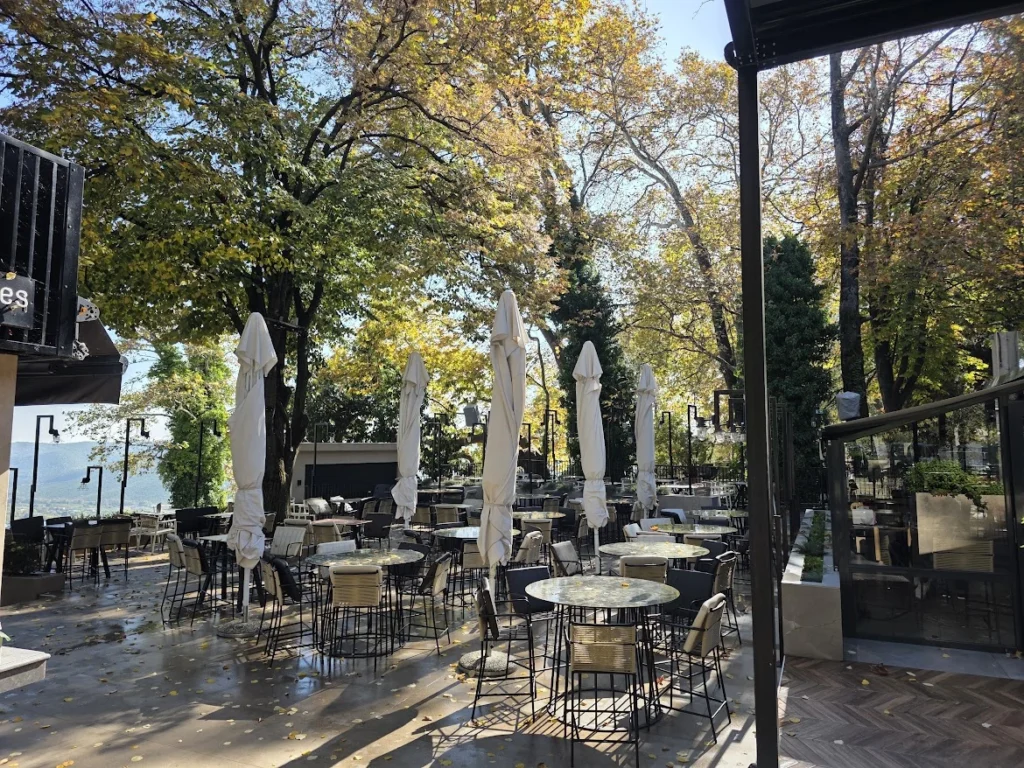
After the falls, the mill district and Varosi, we stopped at Katarraktes Estiatorio-Kafe near the entrance to Waterfall Park. It is clean, spacious and modern, with a large indoor dining room and a tree-shaded terrace, while the menu offers plenty of choice for food, coffee and drinks after several hours on foot.
When is the best time to visit the Edessa Waterfalls?
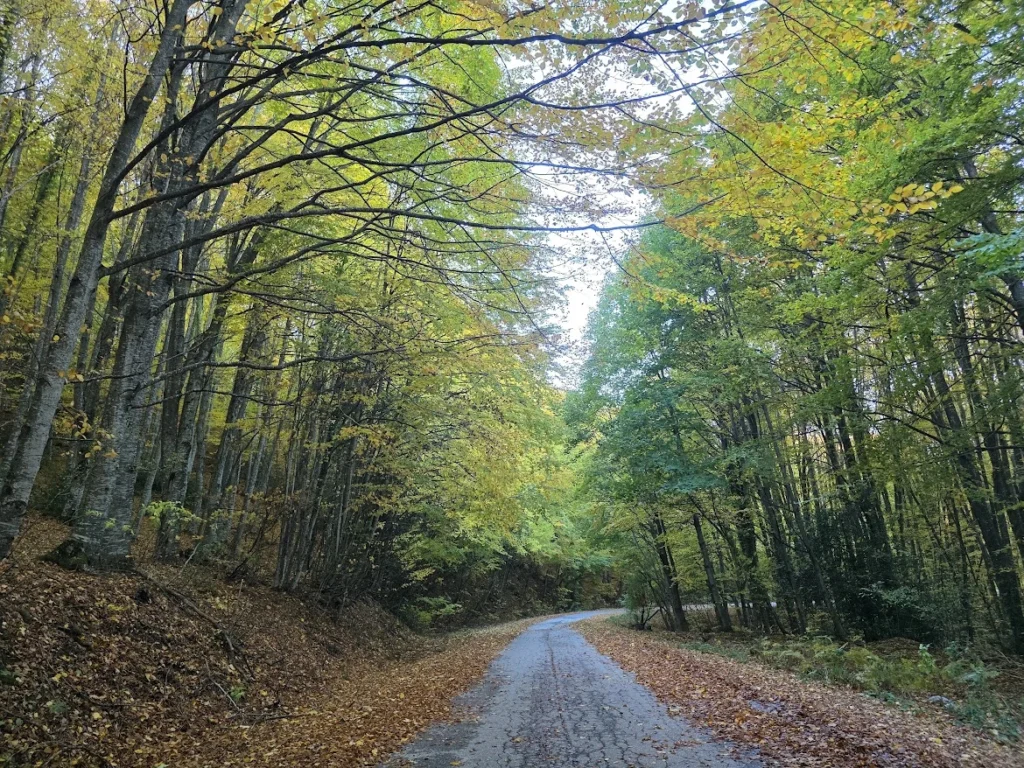
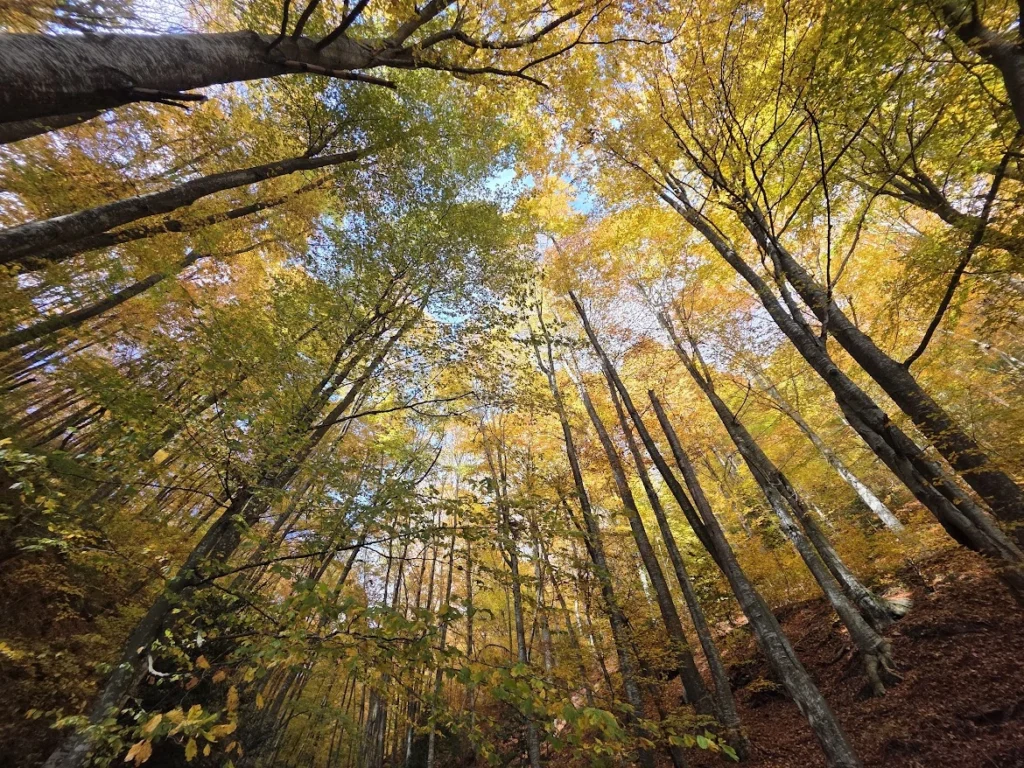
The falls can be visited throughout the year, but autumn was especially rewarding for us because late October brought the first seasonal colour around the city while the cooler weather made the descent to Karanos and the walk through the Water Museum and Varosi comfortable.
The timing of the autumn colour varies from year to year, although late October is a good period to consider if you want cooler temperatures and the possibility of changing foliage around the waterfalls.
What else to see in Edessa
Ancient Edessa at Longos
If you have more time, the archaeological site of Ancient Edessa on the Longos (Λόγγος, Lóngos) plain adds another layer to the city’s story and helps explain the relationship between the settlement on the plateau and the lower city below.
Ancient Edessa developed on two levels, with an acropolis on the edge of the plateau and a lower city spread across the plain. Its urban organisation had been established by the 4th century BC, and the settlement remained important during the Roman period.
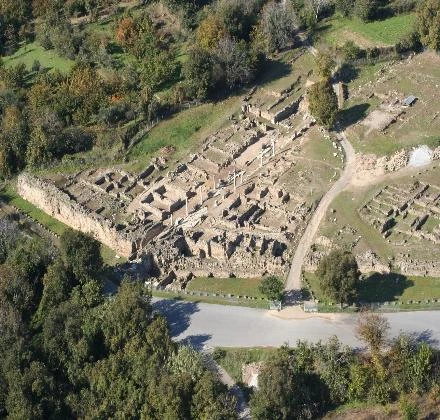
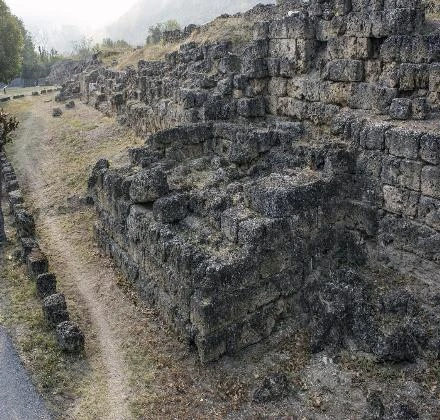
The archaeological site makes a useful follow-up to the waterfall district because it explains Edessa vertically, showing how people lived both on the plain and on the plateau before settlement became increasingly concentrated on the more defensible upper level.
Kiupri Bridge
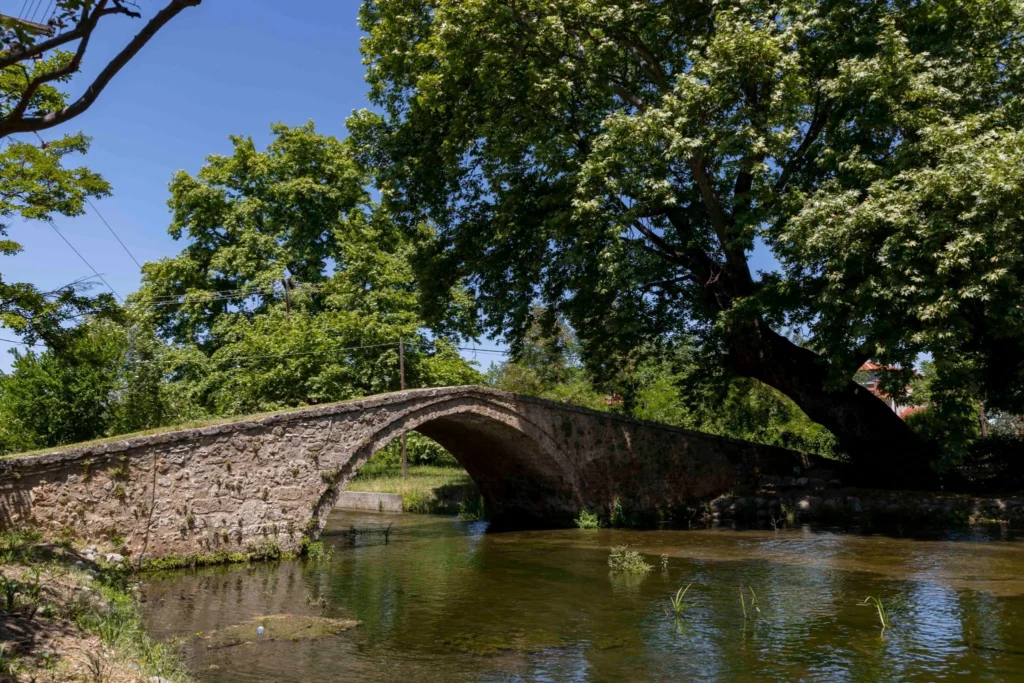
For a quieter encounter with the Edessaios, walk to Kiupri Bridge, a stone arch beneath mature plane trees whose present structure dates to the 18th or 19th century, although it is often described locally as Byzantine.
The bridge once helped residents reach fields across the river, and its name comes from the Turkish word köprü, meaning bridge. Today it offers a calm view of the same water that becomes so dramatic farther downstream in the waterfall district.
Edessa Waterfalls: opening hours, access and practical tips
How long should you allow?
Allow at least 3–4 hours for Waterfall Park, Karanos, the Double Waterfall, the Open-Air Water Museum and Varosi, with extra time if you want to visit several indoor attractions, stop frequently for photographs or sit down for lunch.
What shoes should you wear?
Ordinary comfortable walking shoes are sufficient for the upper park, the Water Museum and Varosi, while the descent beneath Karanos and the path towards Lambda are better tackled in shoes with good grip and, ideally, some water resistance because spray can leave the steps and stone paving wet.
Is Waterfall Park accessible?
The upper park and parts of the Water Museum and Varosi route are considerably easier to negotiate than the lower waterfall paths. The descent towards Karanos and Lambda involves numerous steps, so visitors with limited mobility should check current access arrangements before travelling.
Do the Edessa Waterfalls have opening hours?
Waterfall Park is an outdoor public area, while the restored mills, Aquarium-Reptile House, Folklore Museum, cave and other indoor attractions can follow their own schedules. Opening arrangements can change, so check the official Edessa visitor information shortly before travelling if one particular attraction is important to your visit.
Is there an entrance fee for the Edessa Waterfalls?
No admission ticket is needed to walk through Waterfall Park and see Karanos from the outdoor paths and viewpoints, while individual indoor attractions may charge separately. Check current prices before travelling rather than relying on older online listings.