
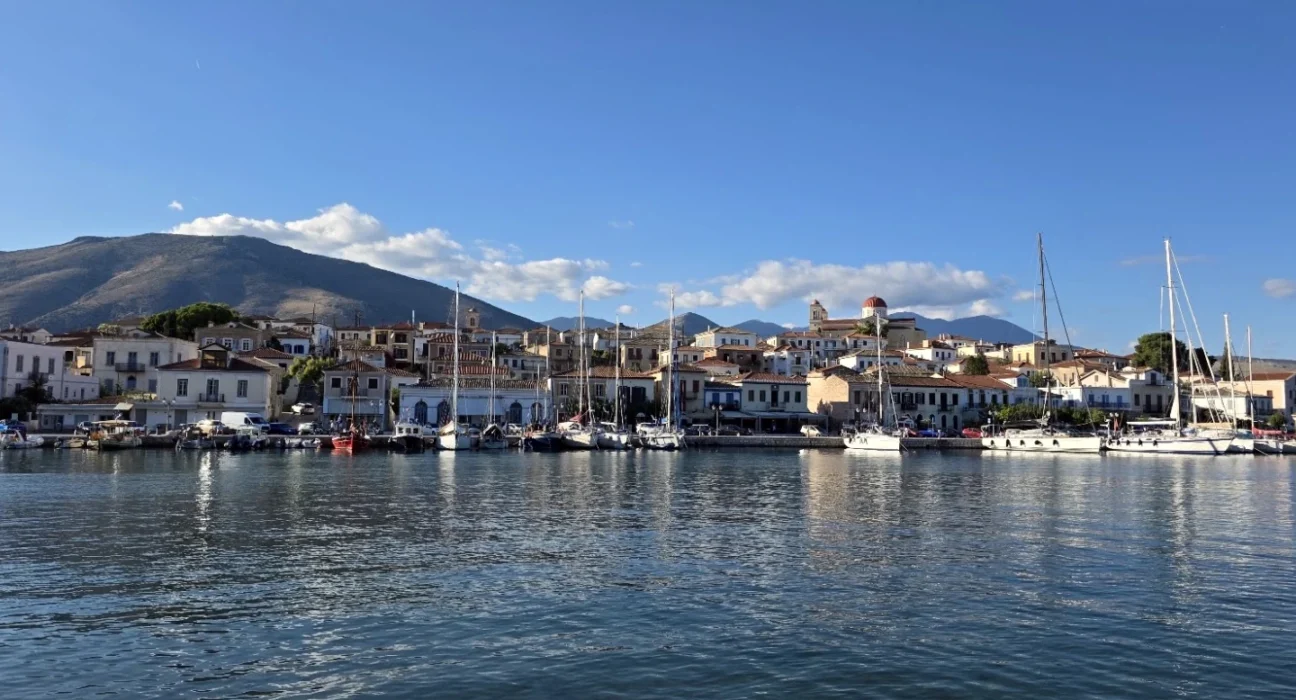
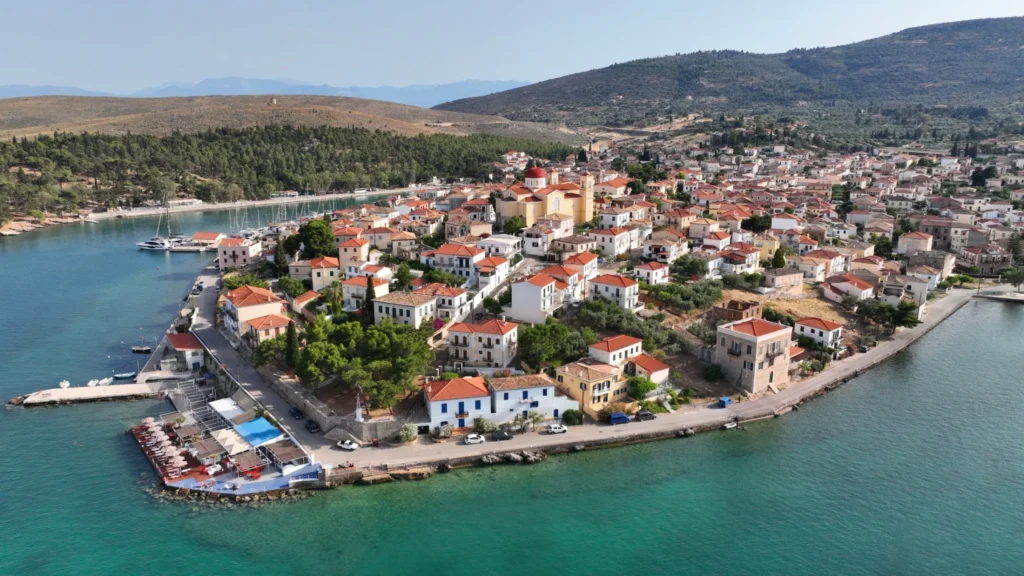
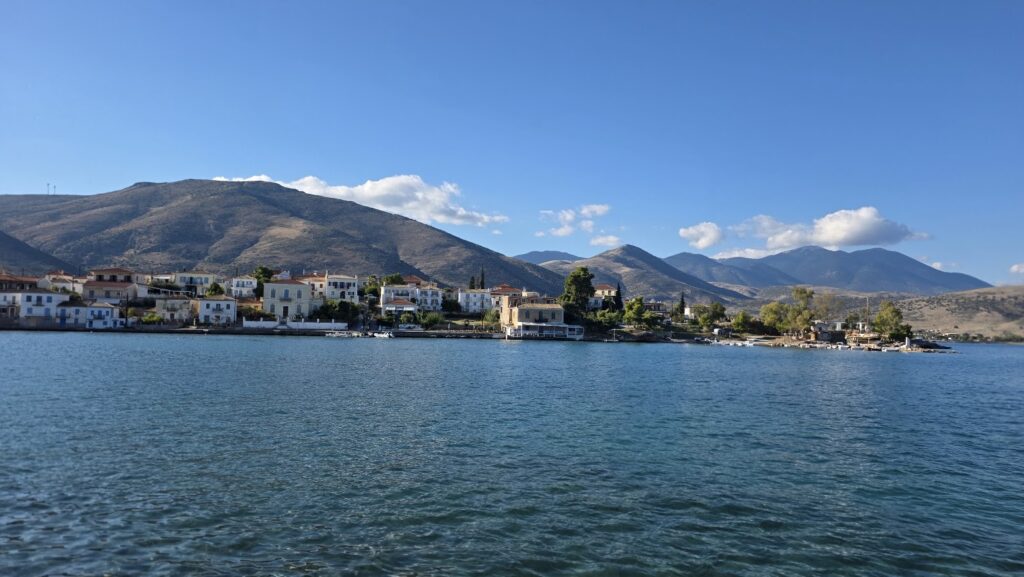
Almost every street in Galaxidi ends at the sea. Fishing boats rest against the quay, captains’ houses look over the water, and the red dome of Agios Nikolaos rises above a spread of terracotta roofs. Behind the harbour, narrow lanes lead past stone mansions, shuttered windows and quiet courtyards. From the pine-covered shore across the bay, the town looks much as it might have appeared to the sailors’ families who once watched the horizon from here.
Galaxidi is a historic coastal town on the northern shore of the Gulf of Corinth in Fokida, Central Greece, about three hours from Athens by car. Its waterfront tavernas, sheltered harbours and traditional houses give it the character of an island town. Yet Galaxidi is far from a summer-only destination. Throughout the year, it attracts weekend visitors, travellers exploring nearby Delphi and, in winter, skiers returning from the slopes of Mount Parnassus for an evening by the sea.
In the nineteenth century, Galaxidi built one of Greece’s great merchant sailing fleets. Its ships carried cargo around the Mediterranean and into the Black Sea, bringing home the wealth that transformed a small coastal settlement into a prosperous maritime town. For generations, the sea remained its main connection to the wider world, and the completion of the Itea–Nafpaktos road in 1963 marked an important improvement in overland access.
That maritime history is still visible in the captains’ houses (kapetanospita), the churches, the Nautical and Historical Museum and the old boatbuilding quarter. Allow two nights to walk the lanes, discover the stories behind the buildings, enjoy the waterfront restaurants and settle into the pace of a small Greek town.
Discover Galaxidi
| The two harbours | Where Galaxidi’s story begins |
| Maritime history | Merchant ships, revolution and prosperity |
| Galaxidi’s historic sights | Captains’ mansions, churches, the Girls’ School and the maritime museum |
| Chirolakas and the Carnagio | Wooden boats, shipbuilding and a sailors’ memorial |
| Pera Panta | The pine grove, coastal walk and Sailor’s Wife memorial |
| What to eat | Fresh seafood and kelemia, Galaxidi’s stuffed onions |
| Where to swim | Kalafatis, Kentri and nearby beaches |
| Galaxidi’s Flour War | The Clean Monday Carnival custom |
| A weekend or longer | Where to stay and nearby excursions |
Begin at the Harbour: A Town That Has Always Faced the Sea
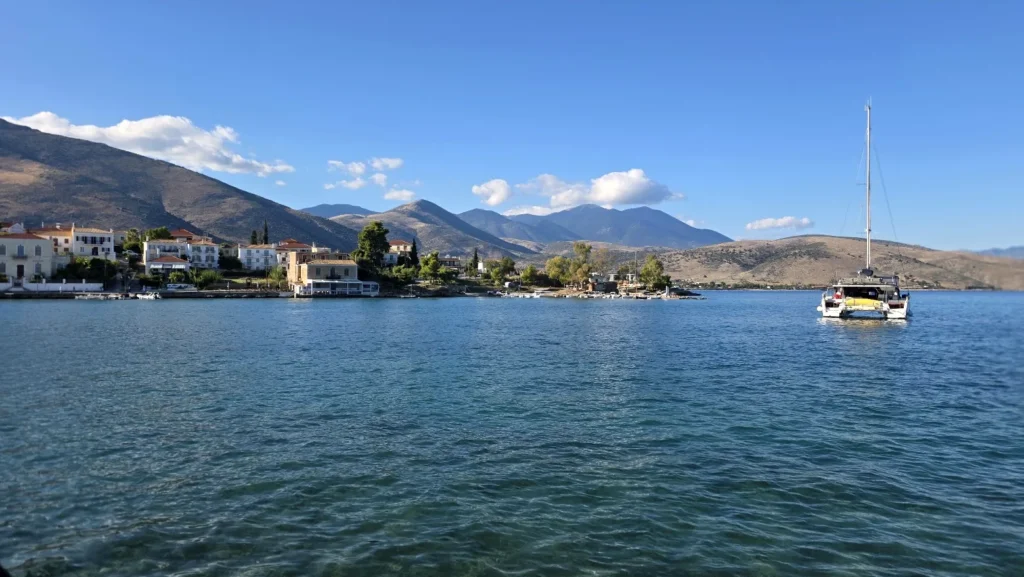
The main harbour is the best introduction to Galaxidi. Fishing boats, small pleasure craft and sailing yachts line the quay, and restaurants and cafés fill the waterfront. Old merchants’ houses with tiled roofs, balconies and shuttered windows stand behind them, and the Church of Agios Nikolaos crowns the hill above.
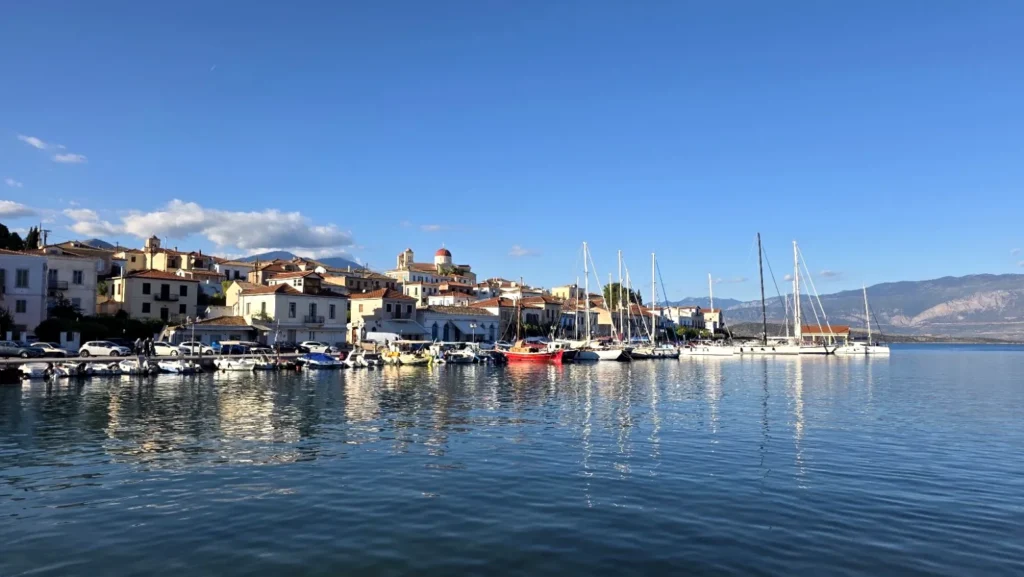
The town has two natural harbours, Agora and Chirolakas. Their sheltered waters provided anchorage for the merchant ships that connected Galaxidi with ports across the Mediterranean.
Walk along Akti Oianthis, the main waterfront, and lift your eyes from the boats to the buildings. Shipping families built many of these houses on the income of voyages that lasted months. Their façades now look over cafés, tavernas and the harbour.
Across the peninsula, Chirolakas offers a quieter view of Galaxidi’s maritime past, with small boats moored below the historic centre.
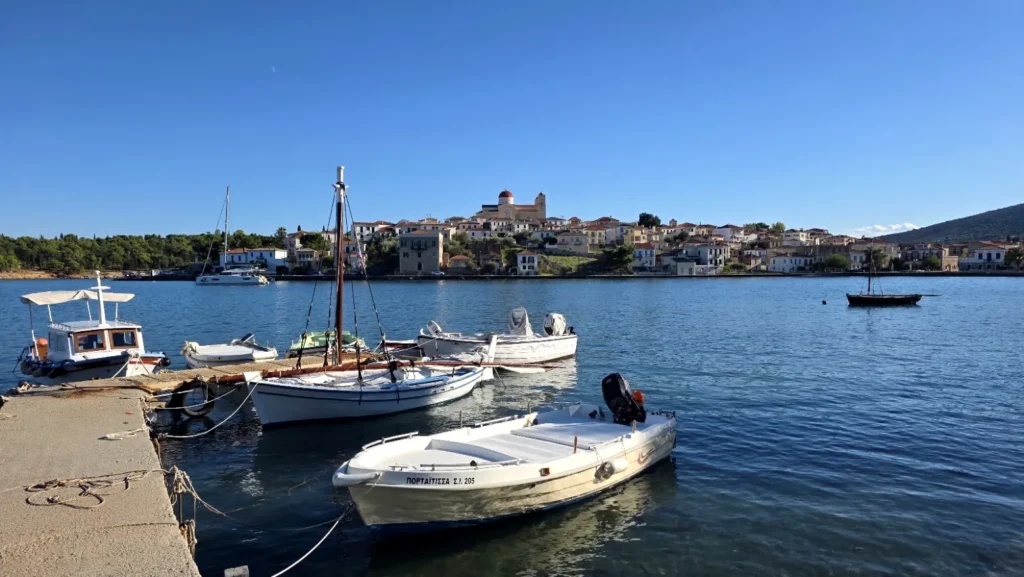
From the opposite shore, Galaxidi opens into a panorama of terracotta roofs, church towers and mountains. Return at different hours to see how the changing light transforms the houses and their reflections in the harbour.
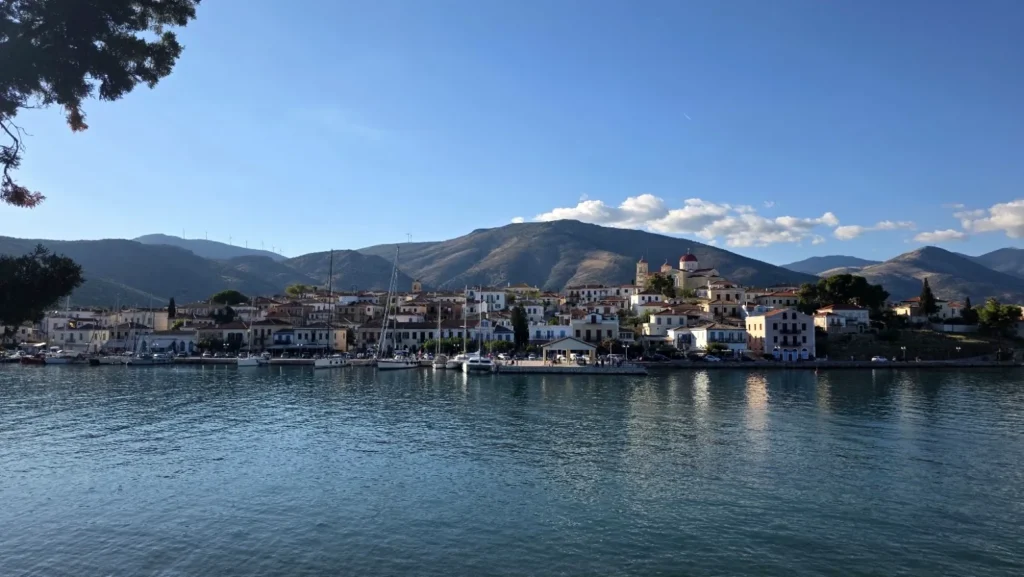
From a Small Coastal Settlement to a Maritime Power
Galaxidi’s story begins long before its sailing fleet. The town is linked to ancient Chaleion, a settlement of the Locrians, and its position on the Gulf of Corinth tied its fortunes to the sea over many centuries.
Shipping expanded rapidly from the early eighteenth century. By 1803, the town owned around 50 vessels, and its captains and merchants traded with Venice, Livorno, Marseille, Odessa and other ports of the Mediterranean and Black Sea.
The Greek War of Independence brought devastation. Galaxidi’s sailors and ships took part in the struggle, and the town was destroyed three times, most recently in 1825. After independence, its shipowners rebuilt their fleets and the local shipyards resumed building wooden sailing vessels.
By around 1860, the fleet numbered about 300 ships, an extraordinary achievement for a town of its size.
The rise of steamships gradually transformed international trade, and Galaxidi’s wooden sailing economy went into decline. The wealth of those decades stayed behind in stone, and the streets still show the ambitions of the nineteenth century.
Galaxidi’s Historic Sights
The Captains’ Mansions (Kapetanospita)
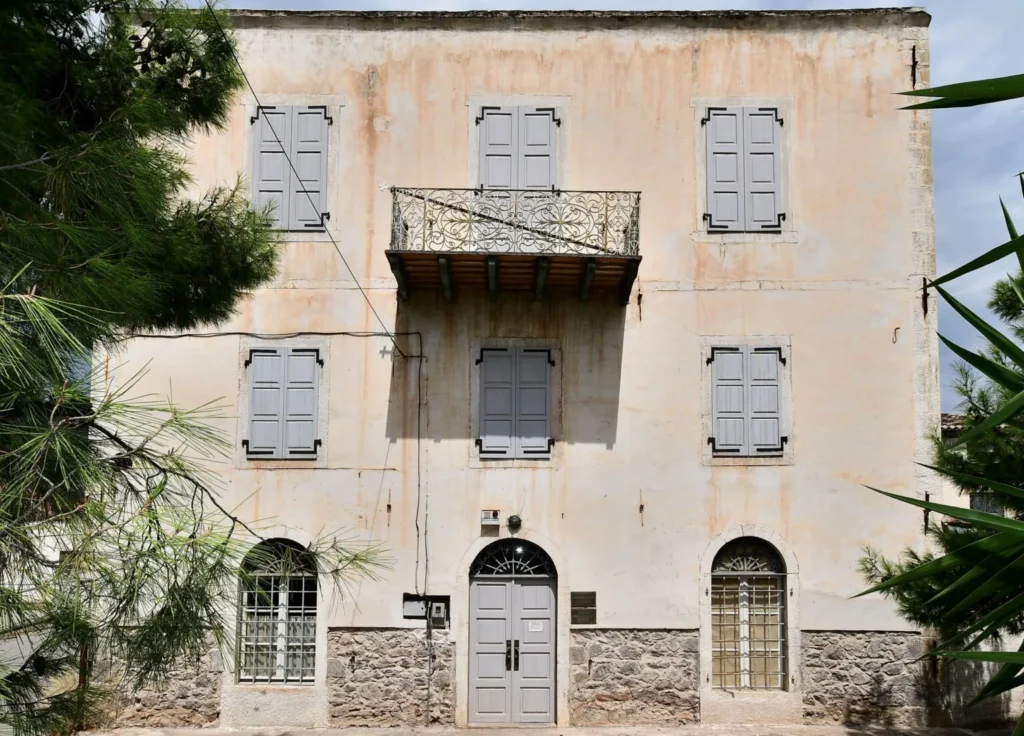
The grander houses are known as kapetanospita, captains’ houses. Shipowners, merchants and seafaring families built them as their fortunes grew, combining local building traditions with neoclassical style: stone façades, balanced proportions, decorated entrances and finely worked balconies.
Galaxidi was designated a protected traditional settlement in 1978, helping preserve its historic architecture and distinctive character. Some captains’ houses remain private homes, while others have become guesthouses and hotels.
Some of the finest houses stand directly on the waterfront, reflecting the close relationship between the town’s maritime trade and the lives of its shipowning families.
Bourzeiko: A Fortified House at the Water’s Edge
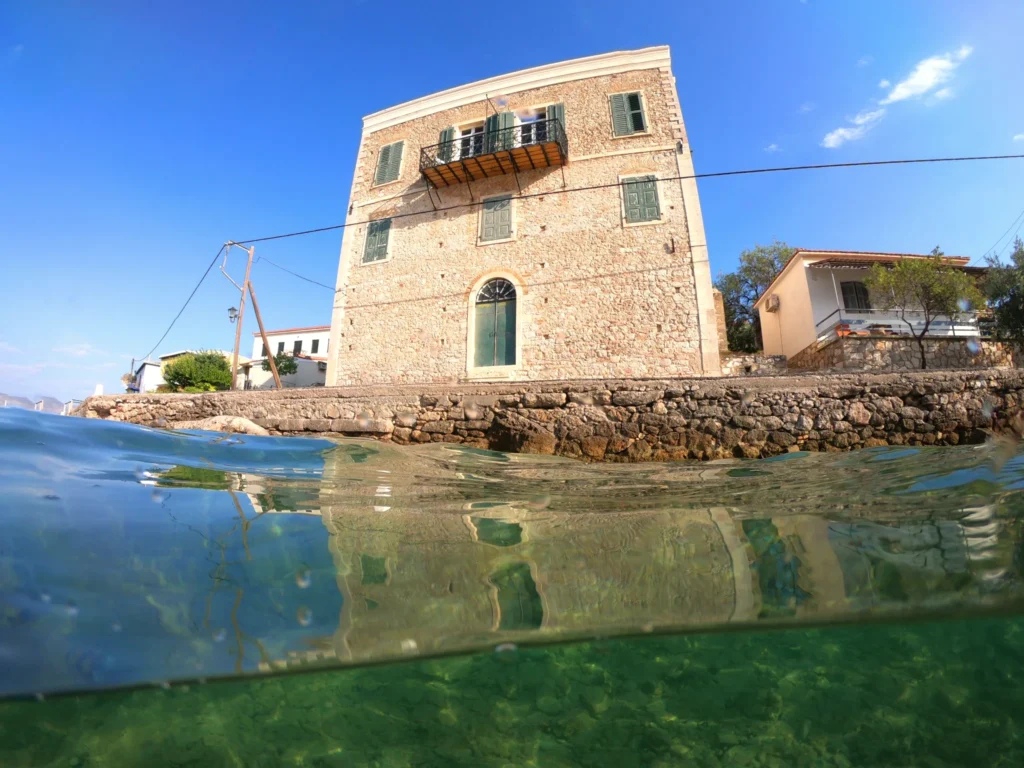
One of Galaxidi’s most remarkable surviving captains’ houses is Bourzeiko, built in 1855 by shipowner Efthymios D. Katsoulis on the southern side of Chirolakas harbour. Its imposing stone walls and narrow defensive openings reflect a time when protection against robbers was a concern. The ground floor stored ships’ equipment, while the open upper floor was used for sewing and storing sails. Before the waterfront road was built, the sea reached the house, allowing the captain to moor his vessel directly outside.
Angeléiko: From Shipowner’s Mansion to Folklore Museum
Near Chirolakas Square stands Angeléiko, one of Galaxidi’s grandest surviving captains’ mansions. Originally owned by shipowner Stavros Angelis, who supported the Greek War of Independence and served as the town’s mayor from 1837 to 1841, the three-storey house reflects the wealth of the early post-independence period. Its elaborate wrought-iron balconies are among the finest in Galaxidi.
Donated to the community in 1955, the mansion later served as a secondary school, including a period as a maritime school. Since 1989, it has housed the Folklore Museum of Galaxidi, whose collection of clothing, embroidery, furniture and household objects offers a glimpse into domestic life during the town’s sailing-ship heyday.
Roxani: A Ship’s Figurehead on a Captain’s House
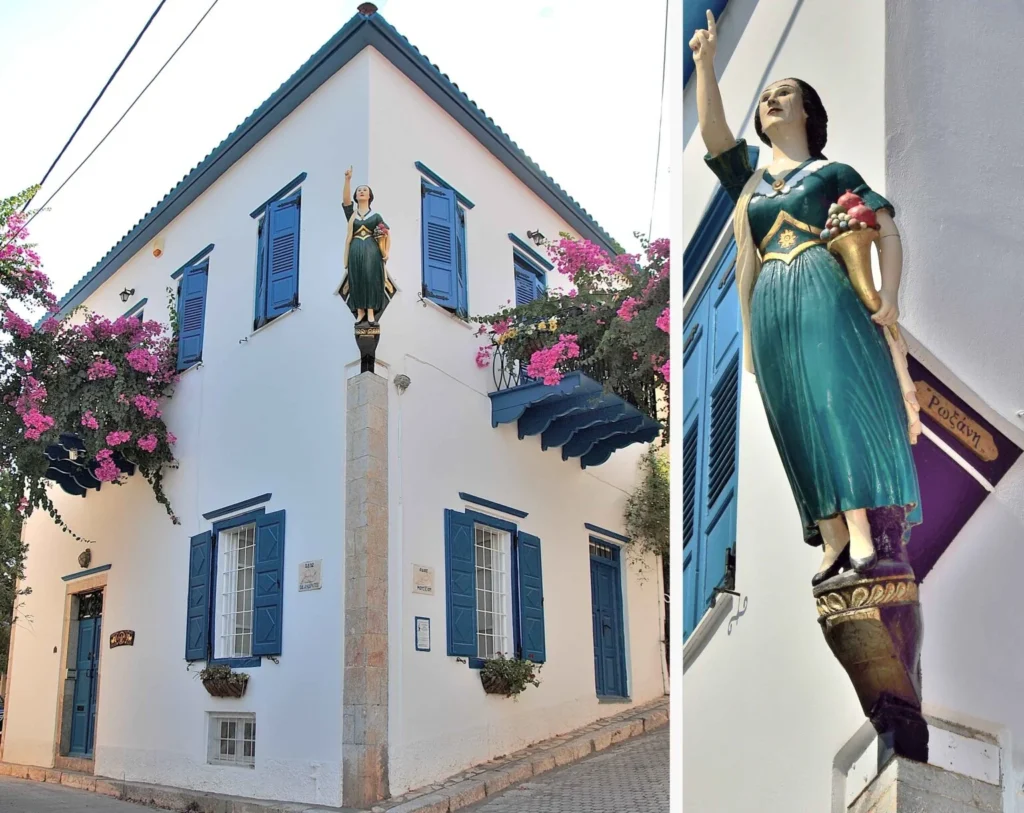
The captain’s house known as Roxani stands in the lane of Agia Paraskevi, below the Nautical Museum. According to signs visible on the building, it dates to 1870. Its most distinctive feature is a female ship’s figurehead mounted on the corner. Traditionally placed on the bows of sailing ships, these carved figures were regarded by sailors as protective symbols.
The figurehead is a replica created by the house’s owner, Captain A. Limnios, from an original preserved in the Nautical and Historical Museum of Galaxidi. Believed to represent a young woman carrying the Horn of Amalthea, a symbol of abundance and prosperity, it is a striking reminder of the connection between Galaxidi’s maritime heritage and its architecture.
The Historic Lanes
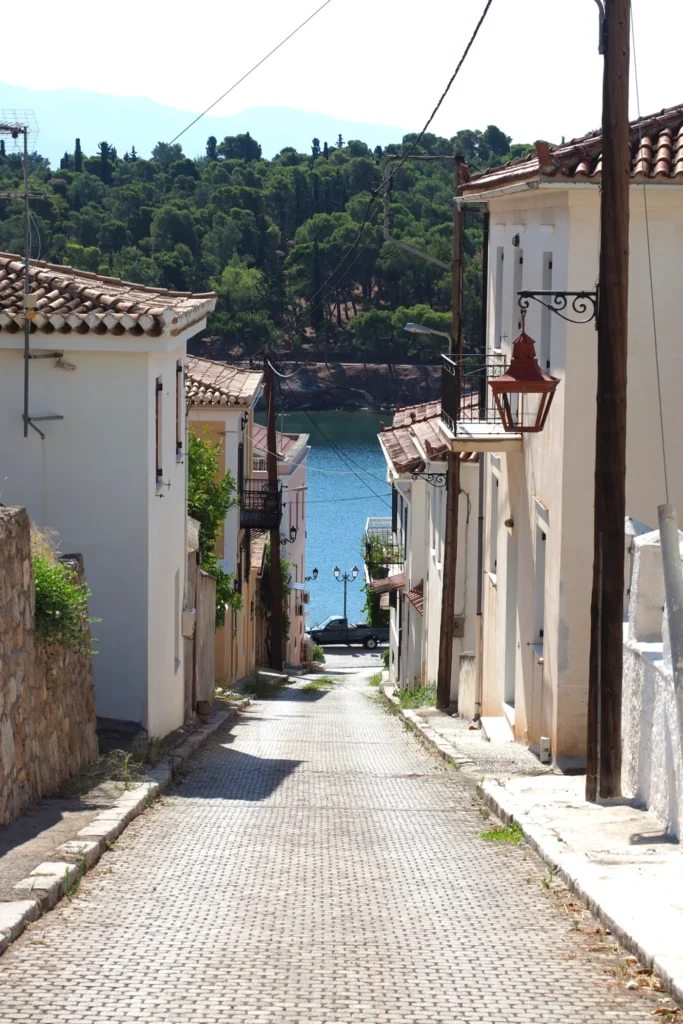
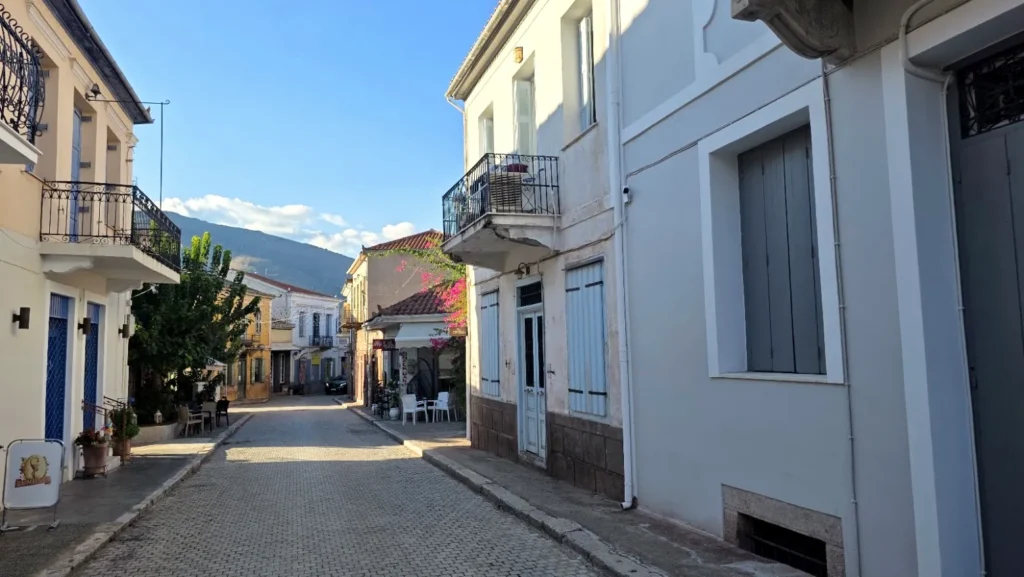
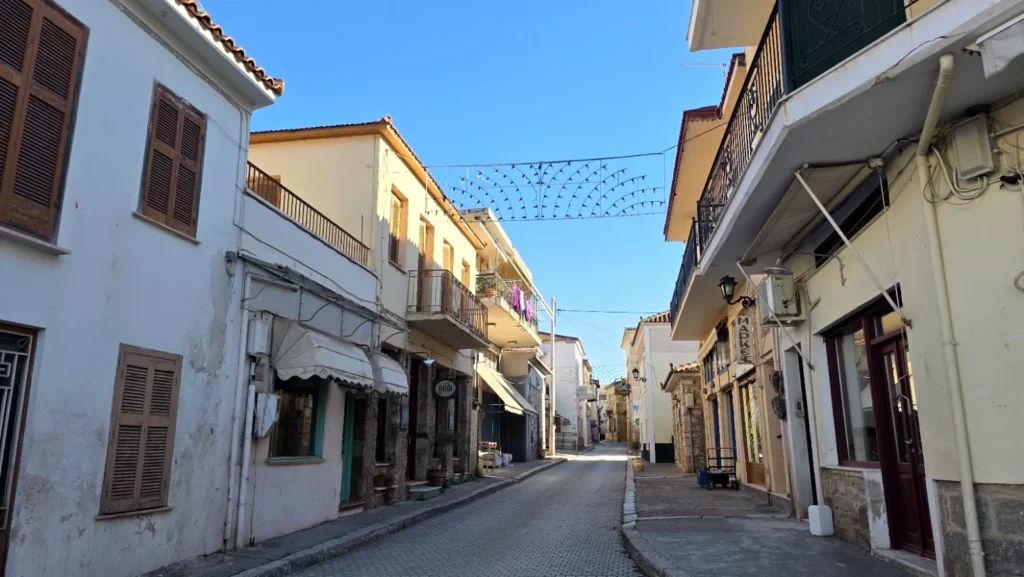
Leave the waterfront and the streets behind it reward every turn. Narrow paved lanes climb towards the upper neighbourhoods past houses with wooden shutters, iron balconies, tiled roofs and carved stonework. Bougainvillea spills over walls and doorways, and glimpses of the harbour open between the buildings.
Look closely at the details. Wrought-iron railings reach out over the street, shutters are painted in muted colours, and old stone walls stand beside later neoclassical façades. The mix of styles records generations of trade, travel and changing fortunes.
Agios Nikolaos: The Church Above the Two Harbours
Agios Nikolaos is the landmark of Galaxidi. It is dedicated to Saint Nicholas, patron saint of sailors, and it stands on the highest part of the old settlement between the two harbours. Its large red dome and twin bell towers can be seen from the waterfront and across the gulf.
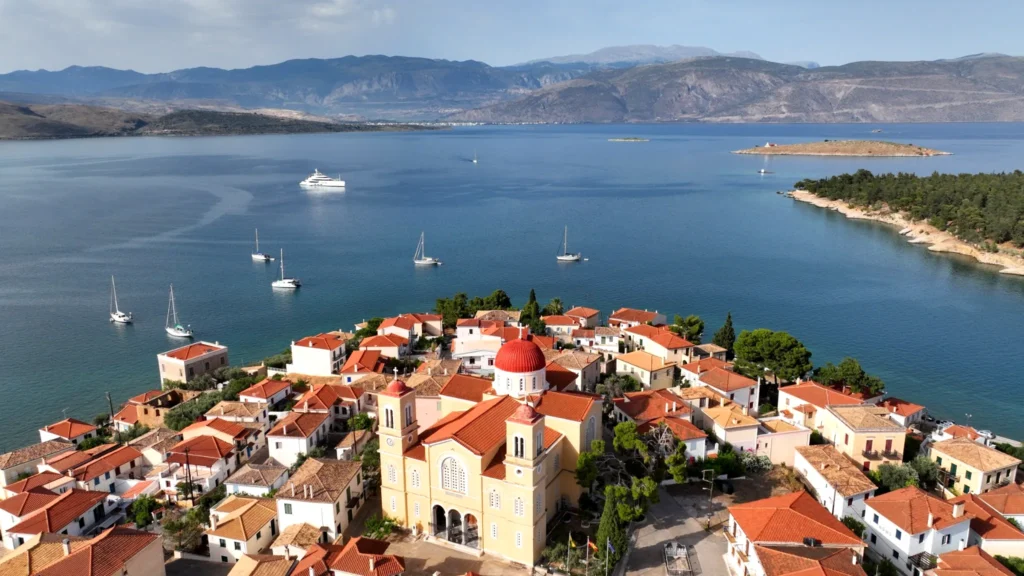
The present church was completed in 1902 on the foundations of earlier churches. It is a three-aisled basilica with a dome and two bell towers in Byzantine-inspired style. Inside, the hand-carved wooden iconostasis is the finest piece of religious craftsmanship in the building.
For generations, Galaxidi’s sailors turned to Saint Nicholas, their patron saint, praying for protection and a safe return from their voyages. The church’s prominent position above the two harbours reflects the importance of seafaring to the town’s history.
Agia Paraskevi: The Church with a Calendar in Its Floor
Agia Paraskevi stands near Chirolakas harbour and is one of Galaxidi’s oldest churches. Its carved wooden iconostasis was completed in 1848, and its floor holds the church’s greatest surprise.
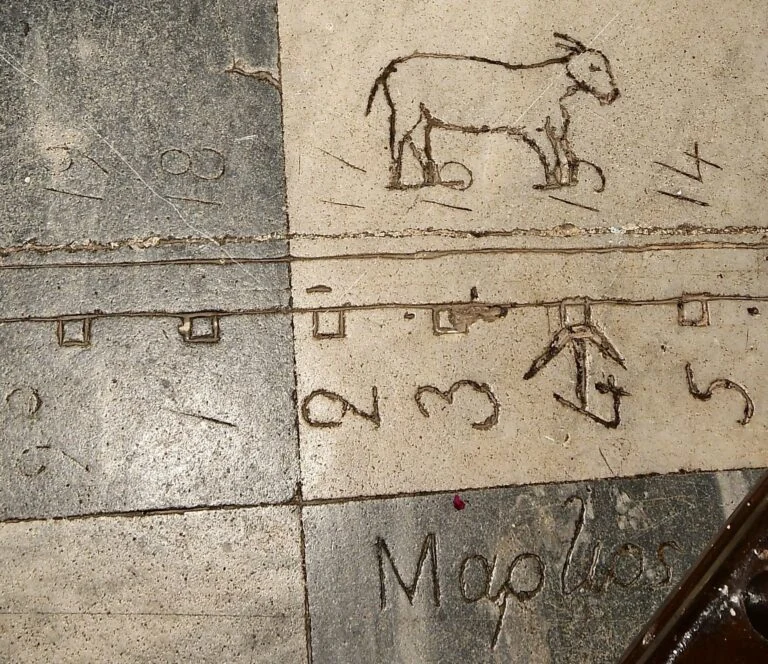
In 1911, Captain Ilias Skourtis, a shipowner with a passion for astronomy, carved a zodiac circle into the marble floor to create a solar calendar known as the Heliotropio. Every day at noon, a ray of sunlight passes through a small opening in the roof and falls on the corresponding marking, indicating the date.
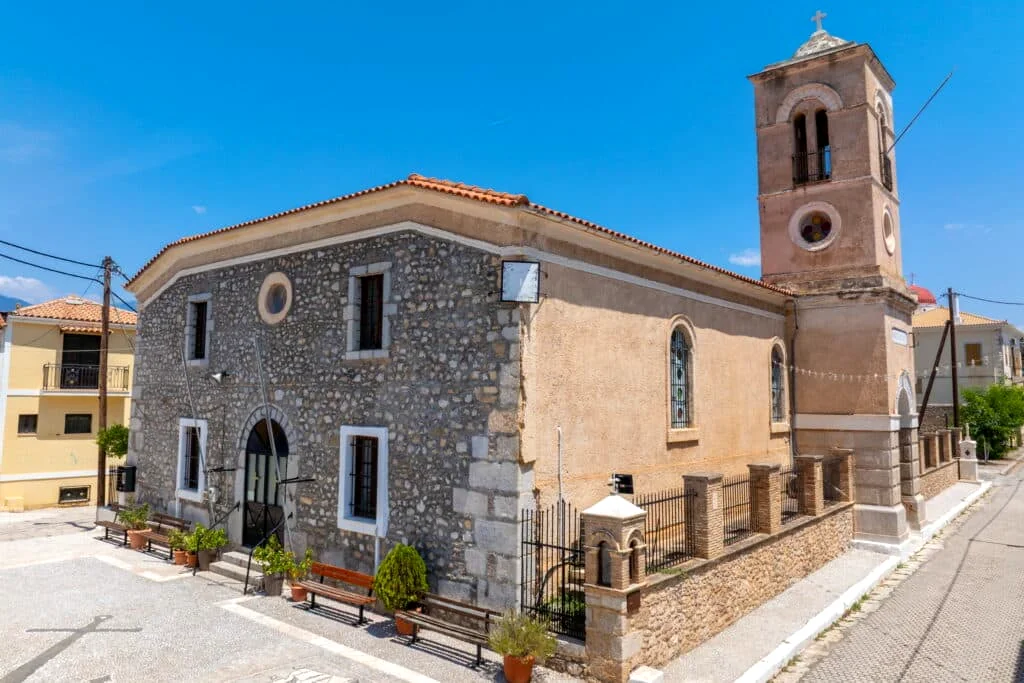
Skourtis also constructed a separate sundial on the church’s exterior wall, with hour markings and a projecting metal gnomon. While the calendar inside indicates the date, the sundial outside shows the time of day. Together, they make the church a stop for anyone curious about how earlier generations measured time.

The Parthenagogeio: Galaxidi’s Historic Girls’ School
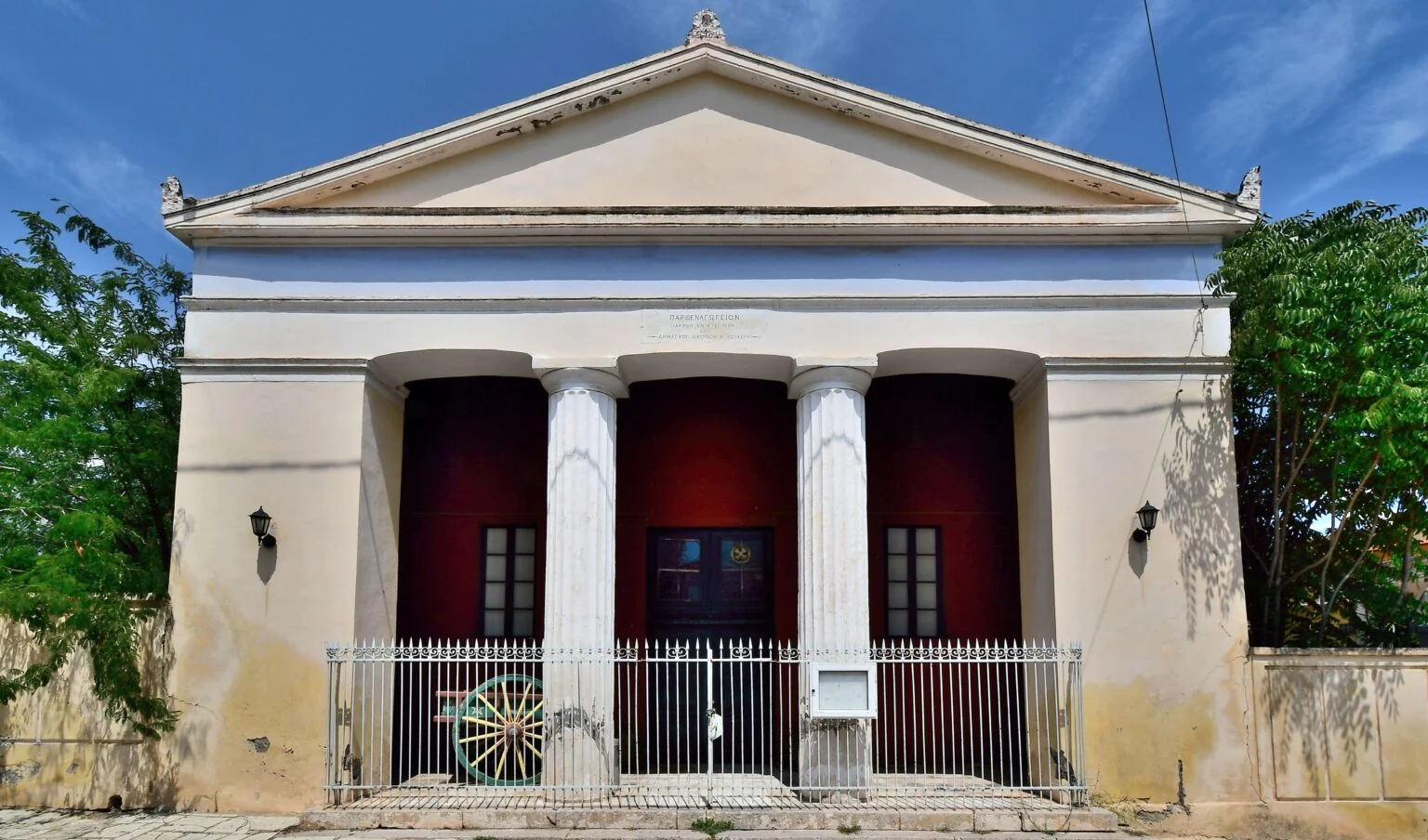
Built in 1880, Galaxidi’s former Girls’ School, known as the Parthenagogeio, is a fine example of neoclassical architecture. Its imposing entrance, with two Doric columns and a triangular pediment, reflects the importance of education in the prosperous maritime town.
The building housed the girls’ primary school until 1928–1929, when primary education became coeducational. It subsequently served as a venue for theatrical performances and community events. Its courtyard has also hosted an open-air summer cinema in recent years.
Inside the Nautical and Historical Museum of Galaxidi
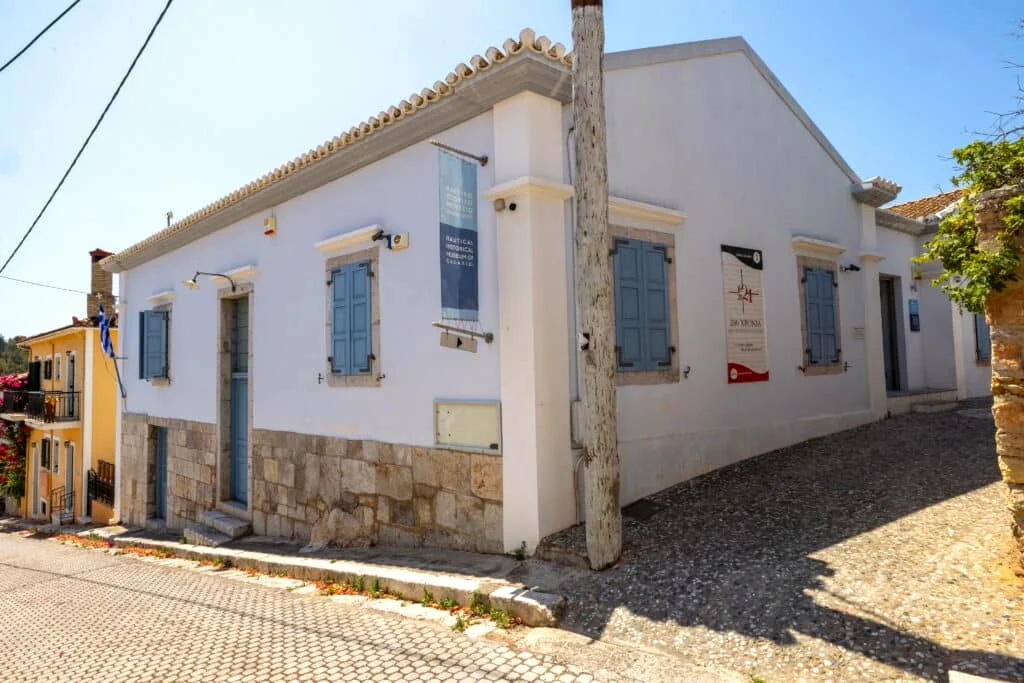
The Nautical and Historical Museum is the best place to understand Galaxidi’s maritime past. Established in 1928, it is regarded as Greece’s first maritime museum. It occupies a neoclassical building constructed between 1868 and 1870, which previously housed the town hall, the girls’ primary school and municipal offices.
The museum began through the efforts of local physician and community leader Efthymios K. Vlamis, who encouraged residents to donate portraits of the merchant ships their families had owned, along with navigation instruments and other maritime objects. Those donations became the foundation of a collection documenting Galaxidi’s seafaring history.
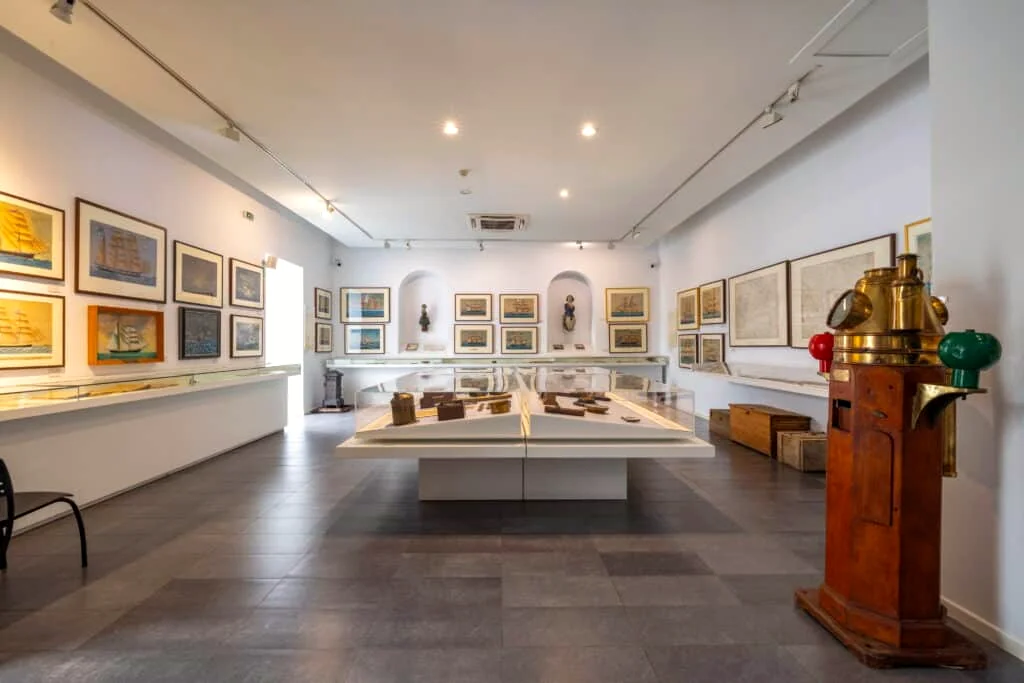
The ship portraits are among the museum’s most distinctive exhibits. Commissioned by shipowners, often from specialist painters working in Mediterranean ports, each painting records an individual vessel, from its hull and sails to the details of its rigging. Together, they provide a remarkable visual record of the fleet that made Galaxidi’s fortune.
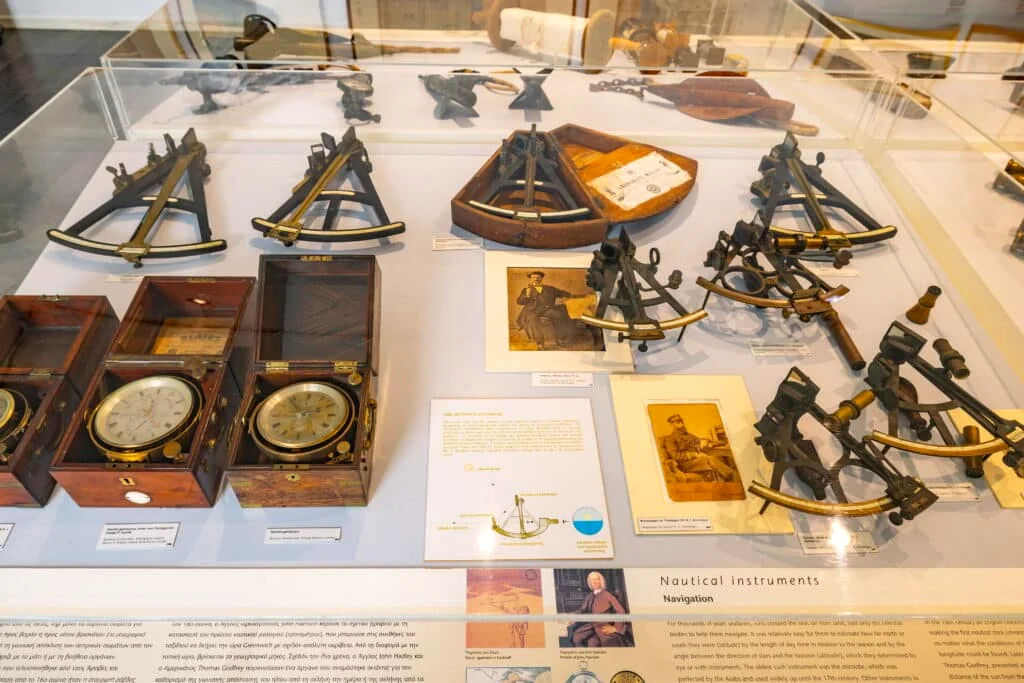
The navigation collection reveals the tools used by generations of captains. Sextants, chronometers, compasses and charts illustrate how sailors navigated long voyages before modern electronic equipment. Other displays explore shipbuilding, trade routes, the Greek War of Independence and the lives of Galaxidi’s merchant families.
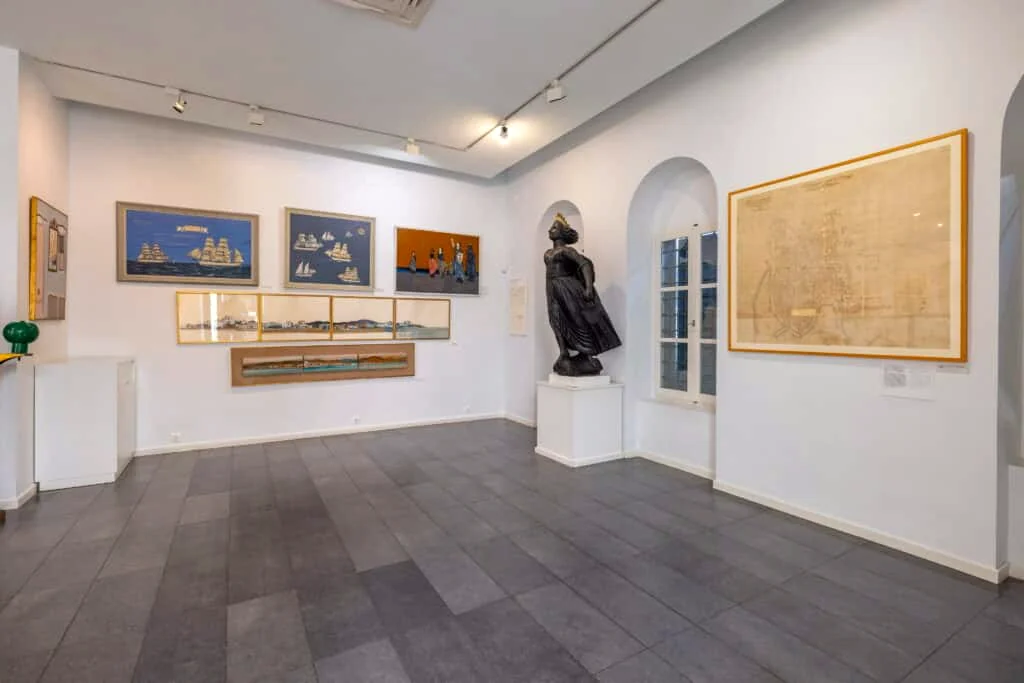
The museum also has an archaeological collection, established in 1932, with finds from ancient Chaleion and the surrounding region. Another important exhibit is the Chronicle of Galaxidi, a manuscript written in 1703 that records the town’s history from the tenth to the seventeenth century.
Visiting: Opening hours vary by season, so check the museum’s official website before your visit.
Chirolakas and the Carnagio: Where the Ships Were Built
Chirolakas, Galaxidi’s second natural harbour, is the quieter of the two and the home of its boatbuilding tradition. The historic Carnagio area on its northern side was where wooden boats were built, maintained and repaired.
In the age of sail, a ship needed skilled hands at every stage: shipwrights to construct the hull, carpenters to shape timber and riggers to fit masts, sails and ropes. Galaxidi’s yards supplied the fleet that supported the local economy and carried the town’s name abroad.
Wooden boats still tie up here, while others are hauled ashore for maintenance. Their curved hulls and working gear recall the generations of craftsmen who worked along this waterfront.
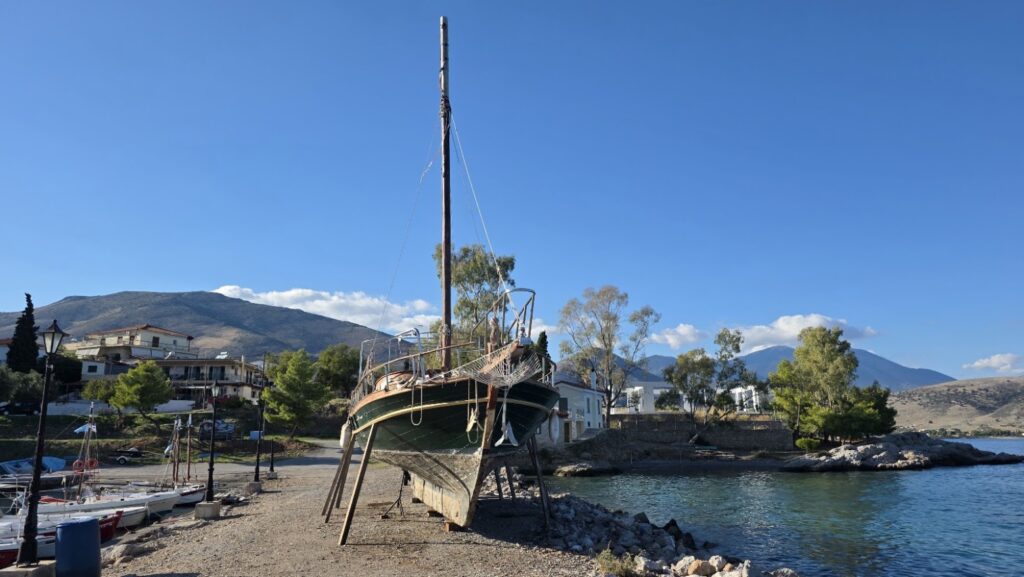
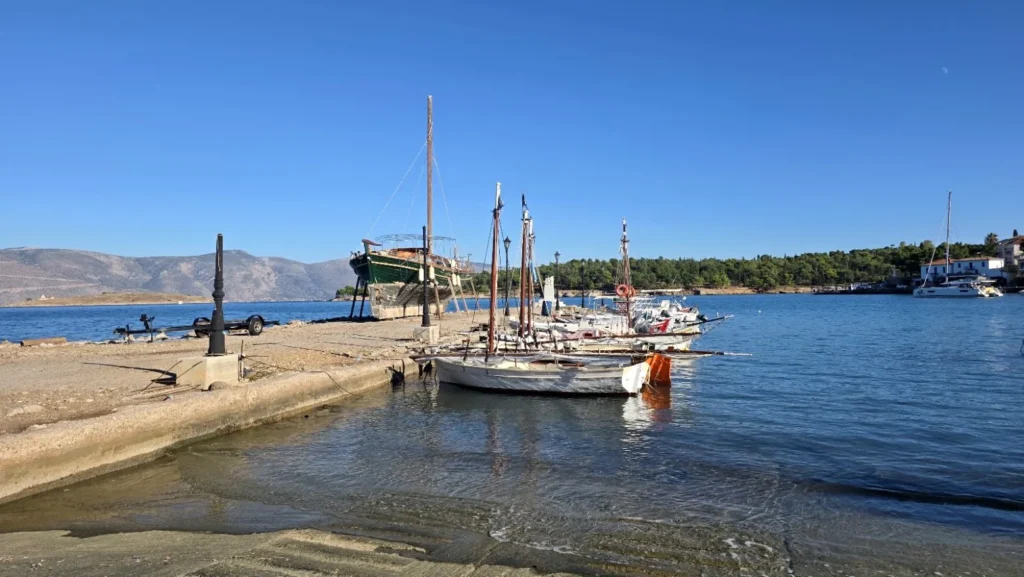
The waterfront also has memorials to its seafaring community. At Carnagio, on the northern shore of Chirolakas, stands the Monument to the Unknown Sailor, dedicated to Galaxidi sailors who lost their lives at sea. It was created in 2001 by sculptor Nikos I. Georgiou.
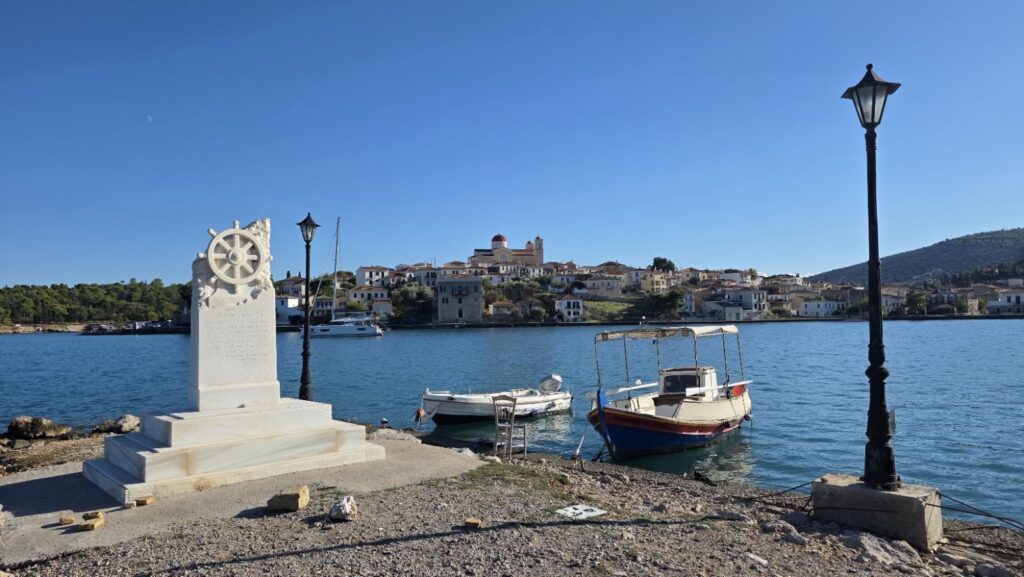
Pera Panta: The Pine Grove and Kentri
Opposite Galaxidi’s main harbour, Pera Panta is a pine-covered peninsula offering panoramic views of the town’s colourful captains’ mansions and their reflections in the water. Developed through a local tree-planting initiative that began in 1929, the grove has a shaded coastal walking route through pine trees towards a small beach.
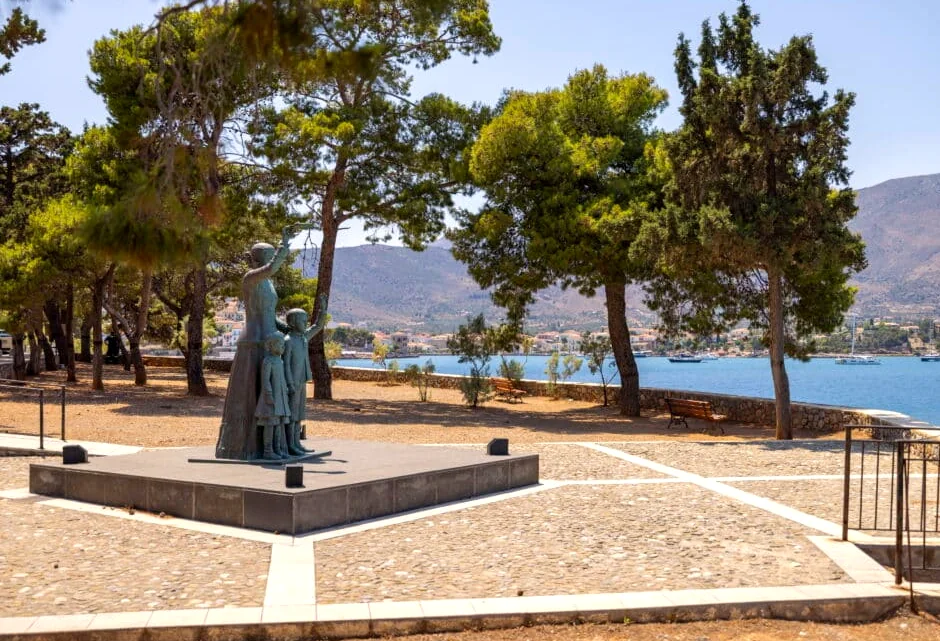
At Kentri, on the edge of the grove, stands the International Memorial to the Wife of the Seafarer. Created by sculptor Kostas Ananidas and unveiled in 2008, it depicts a woman with two children looking out to sea, honouring the families who waited for Galaxidi’s sailors to return.
What to Eat in Galaxidi: Fresh Seafood and Stuffed Onions
Meals are a highlight of a weekend in Galaxidi. The waterfront restaurants make a fine setting for a long lunch, and the local dishes draw on both the sea and the farmland of Central Greece.
Fresh fish, grilled octopus, calamari, mussels and seafood meze feature on local menus. Fresh fish is often sold by weight, so ask the price before ordering. For a relaxed lunch, take a table facing the harbour and give it time.
The Local Speciality: Kelemia
Kelemia is the signature dish of Galaxidi. Cooks peel large red onions into layers, fill each one with a mix of minced meat, rice and fresh herbs, roll them tight and bake them in a sauce of tomato and olive oil. The result is sweet, savoury and fragrant, and it is the dish to order for a taste of home cooking in Galaxidi.
Where to Eat
Bebelis: A family-run taverna tucked away in Galaxidi’s narrow streets, serving traditional Greek cooking and local specialities, including kelemia.
View this post on InstagramA post shared by O Bebelis (@bebelis_galaxidi)
Skeletovrachos: A waterfront seafood restaurant on Akti Oianthis, with tables overlooking the harbour. Its menu combines traditional Greek seafood with contemporary preparations.
View this post on InstagramA post shared by Skeletovrachos (@skeletovrachos)
Ab oVo: A contemporary Mediterranean restaurant on the waterfront, serving seafood, pasta and Italian-inspired dishes for diners looking beyond the traditional taverna menu.
View this post on InstagramA post shared by AboVo Restaurant & More (@abovorestaurant)
Menus and hours shift with the season. Book ahead on busy weekends and ask for the day’s fresh fish. If you’re unfamiliar with Greek seafood, our Guide to Greek Fish and Seafood explains the different varieties, how they’re prepared and what to look for when ordering.
Where to Swim
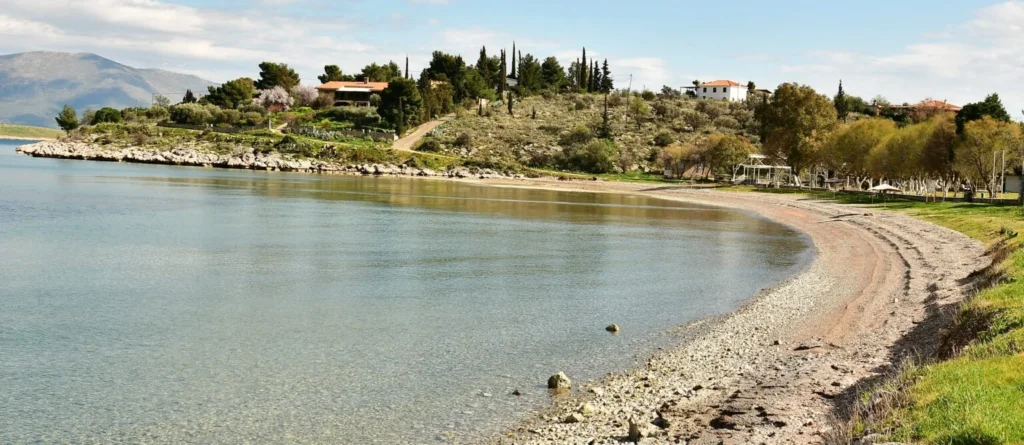
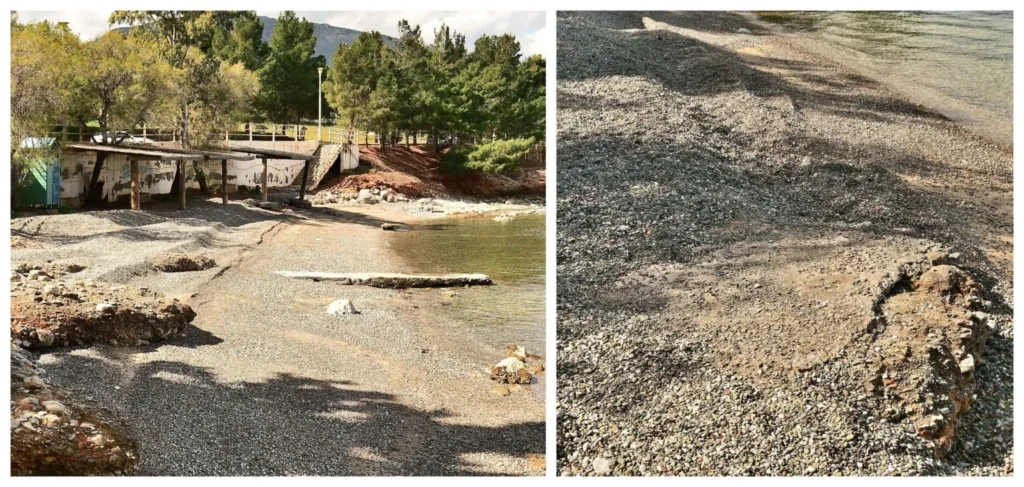
Galaxidi has several small beaches and coves within easy reach of the centre. Kentri, beside the Pera Panta pine grove, offers a sheltered pebble shoreline. Kalafatis, at the northern approach to town, has a broader curve of sand and pebbles. There is also a swimming area near the Nautical Club.
Other swimming options include Profitis Ilias and Arapis, while Agioi Pantes (Vidavi) and Agios Vasilios are farther along the coast. Smaller coves such as Ammouda and Voidakas can require more planning; check access conditions and take water and supplies.
Galaxidi’s Famous Flour War
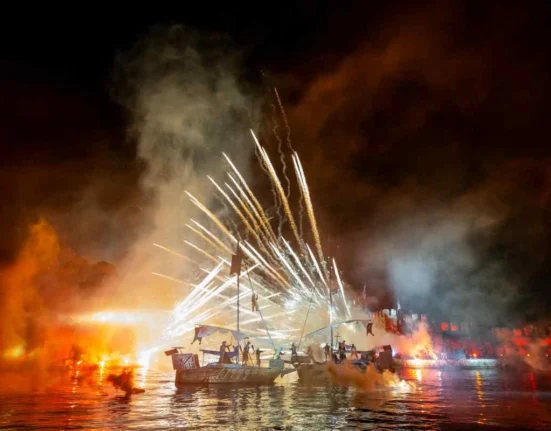
Every Clean Monday, Galaxidi’s waterfront becomes the scene of Alevromoutzouromata, the town’s famous Flour War. Residents and visitors gather to throw flour and coloured powder at one another, filling the streets with music, laughter and clouds of colour.
The custom has deep roots in Galaxidi’s maritime history. During the nineteenth century, Carnival was an occasion for sailors and their families to celebrate together before the men departed on voyages that could keep them away for months.
The next Clean Monday falls on 15 March 2027. For information about the celebrations, visit the Alevromoutzouroma website.

A Weekend in Galaxidi — or a Little Longer
Galaxidi is an ideal destination for a weekend away, particularly for visitors travelling from Athens. Two nights give you time to explore the historic streets, visit the Nautical and Historical Museum, enjoy the waterfront restaurants and take a leisurely walk through the Pera Panta pine grove.
Accommodation ranges from restored captains’ houses to small, family-run hotels. Options include Ganimede Hotel, housed in a nineteenth-century captain’s mansion and known for its homemade breakfast; Nostos Hotel, offering traditional accommodation in the town centre; Archontiko Art Hotel, a family-run boutique hotel close to the sea; and Hotel Galaxidi, conveniently located near the main harbour.
But there is plenty of reason to stay longer. Galaxidi makes an excellent base for exploring Central Greece. Delphi, one of Greece’s most important archaeological sites, is a short drive away. Nearby Arachova offers mountain scenery and traditional tavernas, while Itea provides another stretch of coastline. Beyond them, the villages and landscapes of Fokida reward visitors with a car and a little more time.
Sources and Further Information
Association of Galaxidi Residents (Syngalax)
Nautical and Historical Museum of Galaxidi
You May Also Like
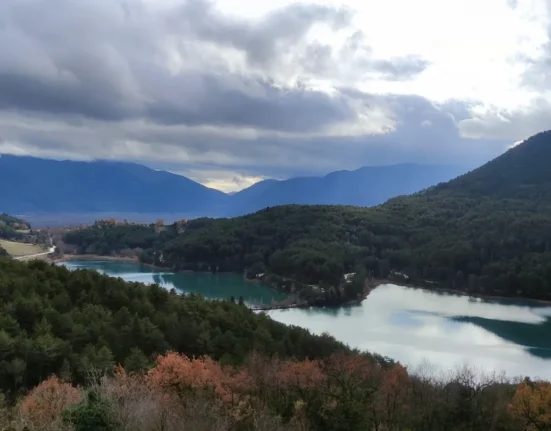
Lake Doxa, Agios Georgios and Goura: A Day in Feneos – A scenic mountain escape through forest and traditional villages.
Mystras: A Complete Guide to Byzantium’s Last Great City – Explore its Byzantine palaces, churches and monasteries.
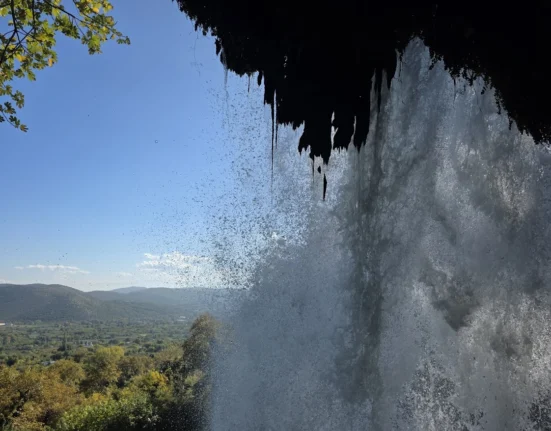
Edessa Waterfalls: Karanos, Lambda, Water Museum and Varosi – Waterfalls, historic neighbourhoods and water-powered heritage.
Aegina: Pistachio Heritage, Fistiki Fest and Island Sights – An island escape with local food, ancient sites and maritime life.
Underwater Museums in Greece – Discover ancient shipwrecks and maritime archaeology.
Greek History Explained for Foreign Residents – Historical context for exploring Greece.