
Aegina, one of the largest islands in the Argo-Saronic Gulf, is famous for its pistachios, known in Greek as φιστίκια Αιγίνης (fistikia Aeginis). Along the harbour, Aegina pistachios fill shop displays, find their way into pastries and accompany travellers on the ferry home.
The island’s name has become inseparable from the nut. To understand that connection, follow the harvest back to the orchards, where generations of families have learned to tend the trees, gather their fruit and prepare it for the table.
These skills form part of Aegina’s living cultural heritage. They are passed on through shared work, from grafting branches and judging when the crop is ripe to drying and roasting the nuts. Each September, Aegina Fistiki Fest, the island’s pistachio festival, celebrates this tradition, bringing growers, cooks, artists and visitors together along the waterfront.
The festival is also a reason to explore the island that made the pistachio famous. Beyond the harbour are the columns of Aphaia, hillside chapels, a sculptor’s workshops and fishing villages facing the Saronic Gulf. A weekend allows time for the food and its history, with a swim or a long lunch along the way.
In this article
Aegina Fistiki Fest
The pistachio as living cultural heritage
How pistachios took root in Aegina
Harvesting, roasting and the protected name
What to taste
Aegina Town and Kolona
The Temple of Aphaia
Paleochora and Agios Nektarios
The Christos Kapralos Museum
Perdika and Moni
Where to swim
Planning a visit from Athens
Fistiki Fest: the harvest comes to the waterfront
Each September, Aegina Fistiki Fest brings the island’s agricultural identity into its streets and public spaces. Producers meet customers at the waterfront exhibition, while cooking demonstrations, music, art and children’s activities draw a wider audience into the celebration.
At the heart of the festival is its waterfront exhibition. From 17 to 20 September, exhibitors line the quay with Aegina pistachios, spreads, sweets and other delicacies made from the island’s signature crop. The stalls also present a wider selection of local produce and crafts, including agricultural products, handmade ceramics, jewellery and embroidery. It is a chance to discover both the harvest and the makers who give it a place in contemporary island life.
For a visitor, the pleasure lies in meeting the people behind the products and seeing how widely the pistachio enters island life. Spend time at the stalls, try a preparation you have never tasted and leave room for a walk through town between events. The festival makes a useful starting point for a longer stay, with the island’s sights close enough to build into the same weekend.
Aegina Fistiki Fest 2026: at a glance
When: Thursday 17 to Sunday 20 September 2026.
Where: the agricultural and commercial exhibition is on Aegina Town’s waterfront. Other events take place around town.
Exhibition hours: 10:00–14:00 and 17:00–00:30.
The 17th festival includes concerts, live cooking, exhibitions, face painting, children’s art workshops and introductory sailing activities.
Thursday 17 September, 21:30: Aegina Estudiantina opens the musical programme at Agios Nikolaos Thalassinos.
Friday 18 September, 22:00: Polina, Kostas Bigalis, Sofia Vossou and Manto perform an 80s and 90s live party at Agios Nikolaos Thalassinos.
Saturday 19 September: chef Giorgos Tsoulis presents live cooking at the Old Pier at 19:30. Eleonora Zouganeli performs at Agios Nikolaos Thalassinos at 22:00.
Sunday 20 September, 21:15: the Trashformers closing party takes place at the Old Pier.
Check the published programme for the full schedule and participation arrangements. Confirm your return ferry before choosing an evening concert. An overnight stay gives you more time for the late performances.
The pistachio as living cultural heritage
Aegina’s pistachio tradition begins with the growing year. Pruning, grafting and caring for the trees require close attention to the weather, the soil and the behaviour of individual plants. On small family holdings, this knowledge has often been learned beside parents and grandparents, through work repeated season after season.
The orchard is only one part of the story. Harvesting, removing the outer hull, drying and roasting bring their own techniques. In kitchens and workshops, the crop becomes spoon sweets, confectionery and other preparations. Producers, processors, shopkeepers and cooks all contribute to the relationship between the island and its best-known food.
In 2023, the practices and knowledge surrounding the pistachio tree and its fruit in Aegina entered Greece’s National Inventory of Intangible Cultural Heritage. The recognition embraces the human skills and customs that keep the tradition alive. For visitors, it gives an ordinary purchase at the harbour a wider meaning, connecting a bag of nuts with the people and agricultural life behind it.
How pistachios took root in Aegina
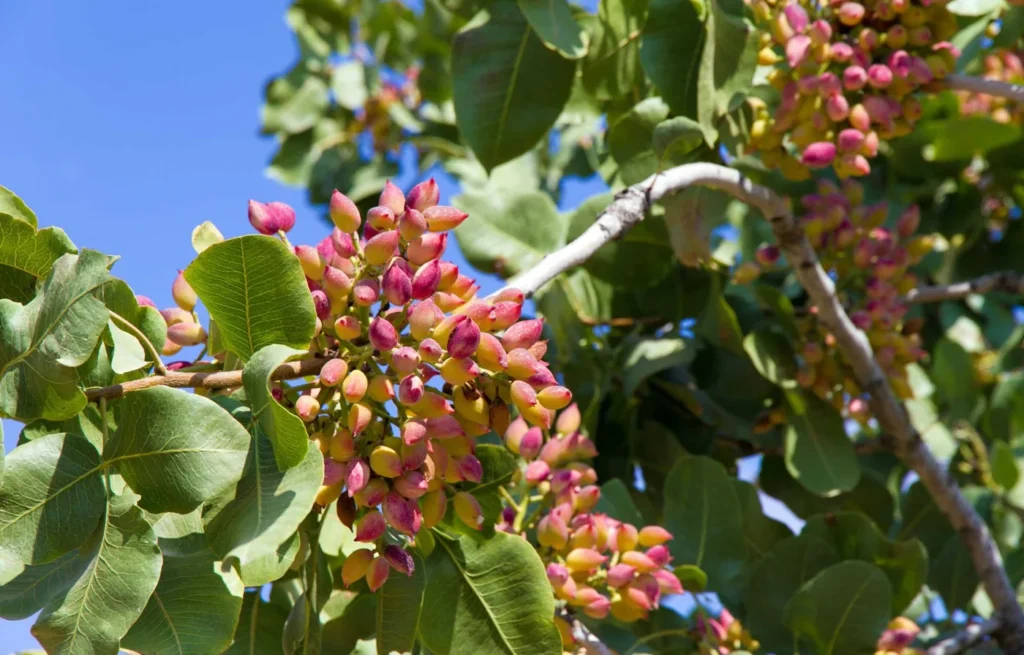
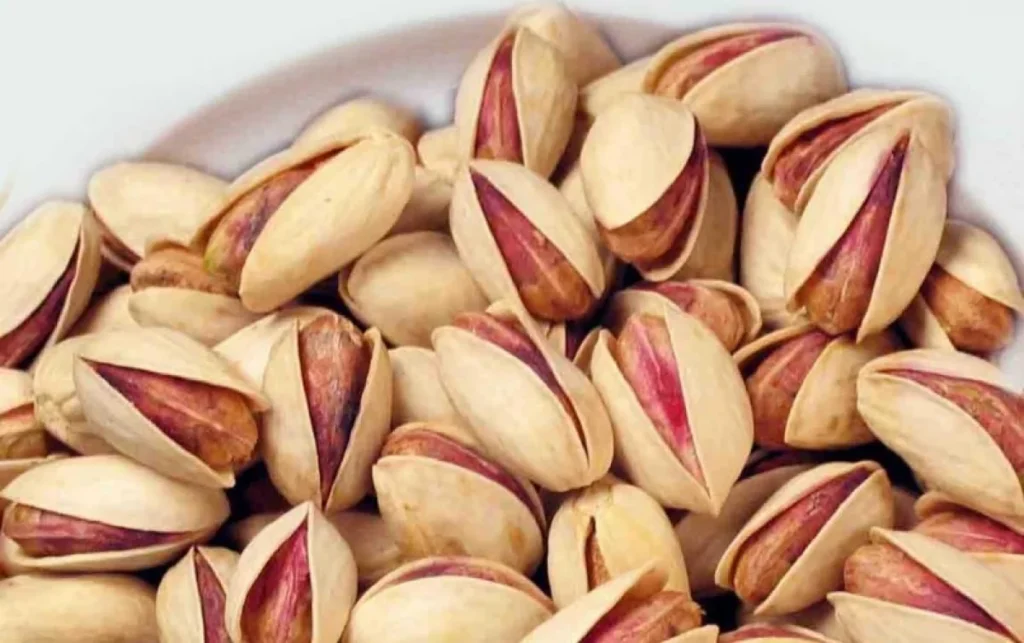
The pistachio tree, Pistacia vera, has a long history of cultivation in western and central Asia. The part we eat is its seed, protected by a hard shell and, while growing, a fleshy outer hull. As many of the nuts mature, the shell splits to reveal the green kernel and its purple skin.
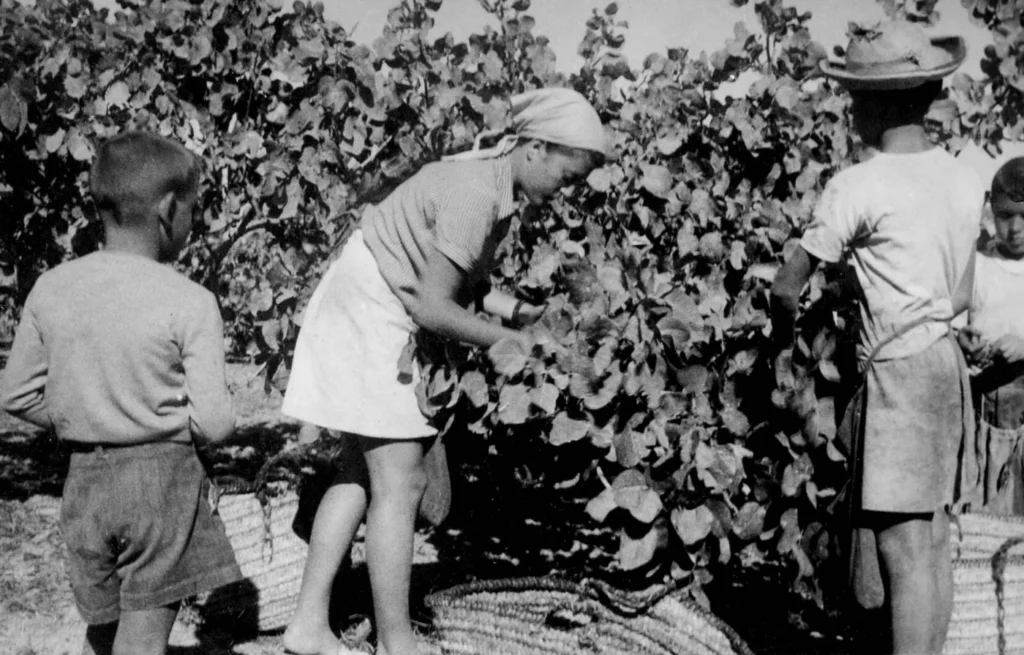
Its connection with Aegina grew towards the end of the 19th century. In 1896, Nikolaos Peroglou established a pistachio plantation on the island. He studied the trees, shared practical advice and encouraged others to cultivate them. Nurseries subsequently supplied planting material, helping the crop spread from one holding to another.
Growers developed their methods around Aegina’s dry summers and limited water supplies. The crop gradually became part of the island’s economy and everyday identity. Sellers took roasted nuts to Piraeus and Athens, while visitors carried them home, extending the association between the island and its flavour.
Founded in 1947 as the Agricultural Cooperative of Aegina and renamed the Aegina Pistachio Producers’ Cooperative in 1977, the organisation gave growers a shared base for production and trade. Behind the familiar name on a packet lies this longer story of cultivation, cooperation and the work of successive generations.
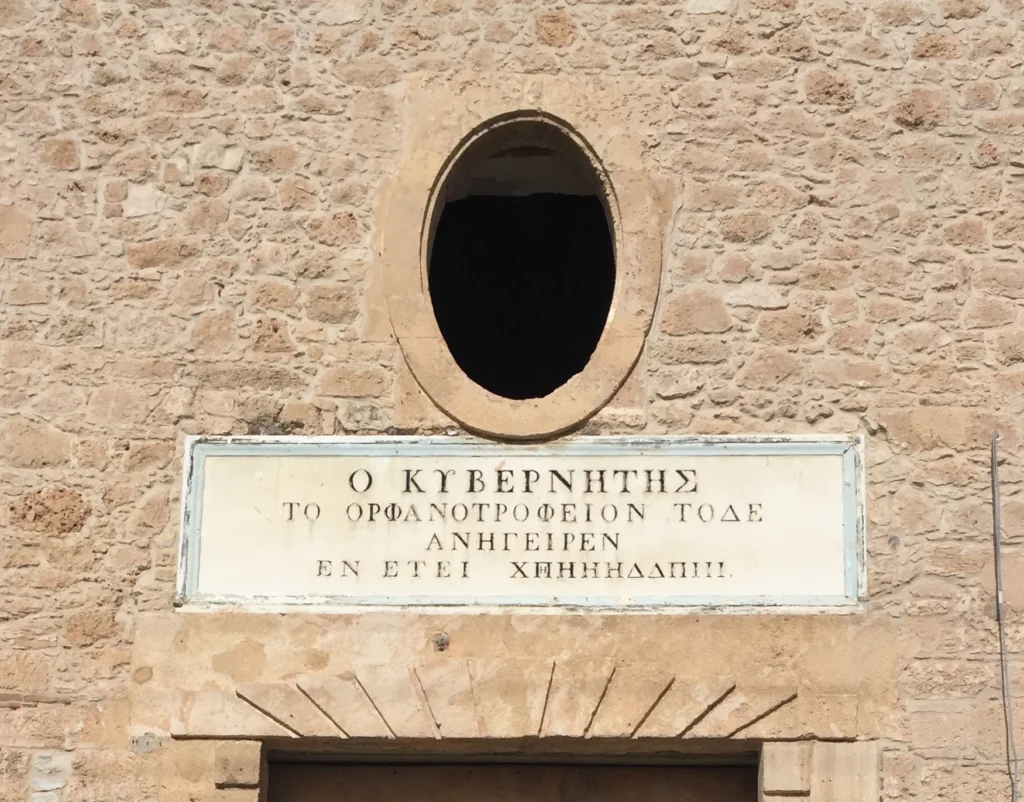
That history will soon have a dedicated home. The Aegina Pistachio Museum, due to open later in 2026, will trace the crop’s story through archival material, photographs, objects and personal testimonies. Housed in part of the historic Kapodistrian Orphanage in Aegina Town, the museum will explore not only cultivation, but also the people, knowledge and traditions that made the pistachio part of the island’s identity.
From the branches to the roasting oven
The main harvest usually falls in late August and early September, giving the September festival a direct connection with the agricultural calendar. Traditionally, nets are spread beneath the trees and wooden sticks, known locally as koukles, are used to tap the branches. The fruit falls onto the nets to be gathered.
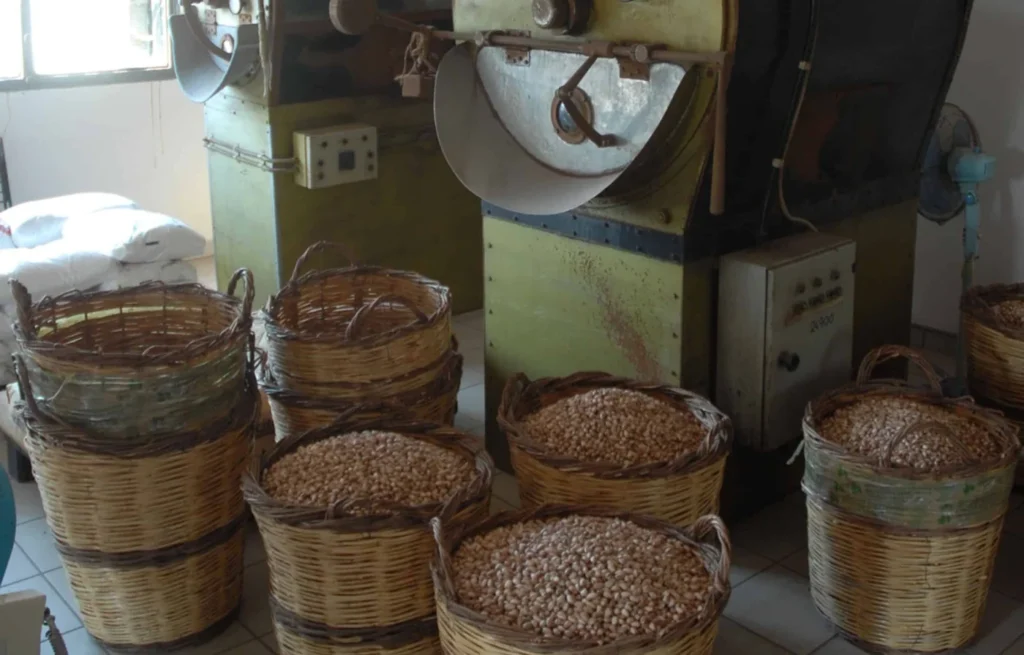
Once collected, the crop needs prompt handling. The soft outer hull is removed and the nuts are dried, either in the sun or with drying equipment, before storage and further processing. Each stage affects what reaches the customer, making careful preparation as important as the work in the orchard.
Roasting adds another layer of experience. Traditional preparations use water, salt and citric acid before controlled roasting develops the familiar flavour and crunch. Judging heat and timing is part of the processor’s craft, learned through repeated batches and close attention to the nuts.
What the protected name means
“Fistiki Aiginis” (Aegina Pistachio) received European Union Protected Designation of Origin (PDO) recognition in 1996. The designation, known as ΠΟΠ in Greek, links the registered name to a defined geographical origin and specific production requirements. When buying Aegina pistachios, look for the PDO logo and check the origin stated on the packaging.
What to taste, from roasted nuts to spoon sweets
Start with the nuts themselves. Dried, unroasted pistachios have a gentle sweetness, while roasted and salted nuts bring a crisper texture. Nuts sold as “raw” have usually been dried and left unroasted. Fresh fruit straight from the tree still carries its soft outer hull.
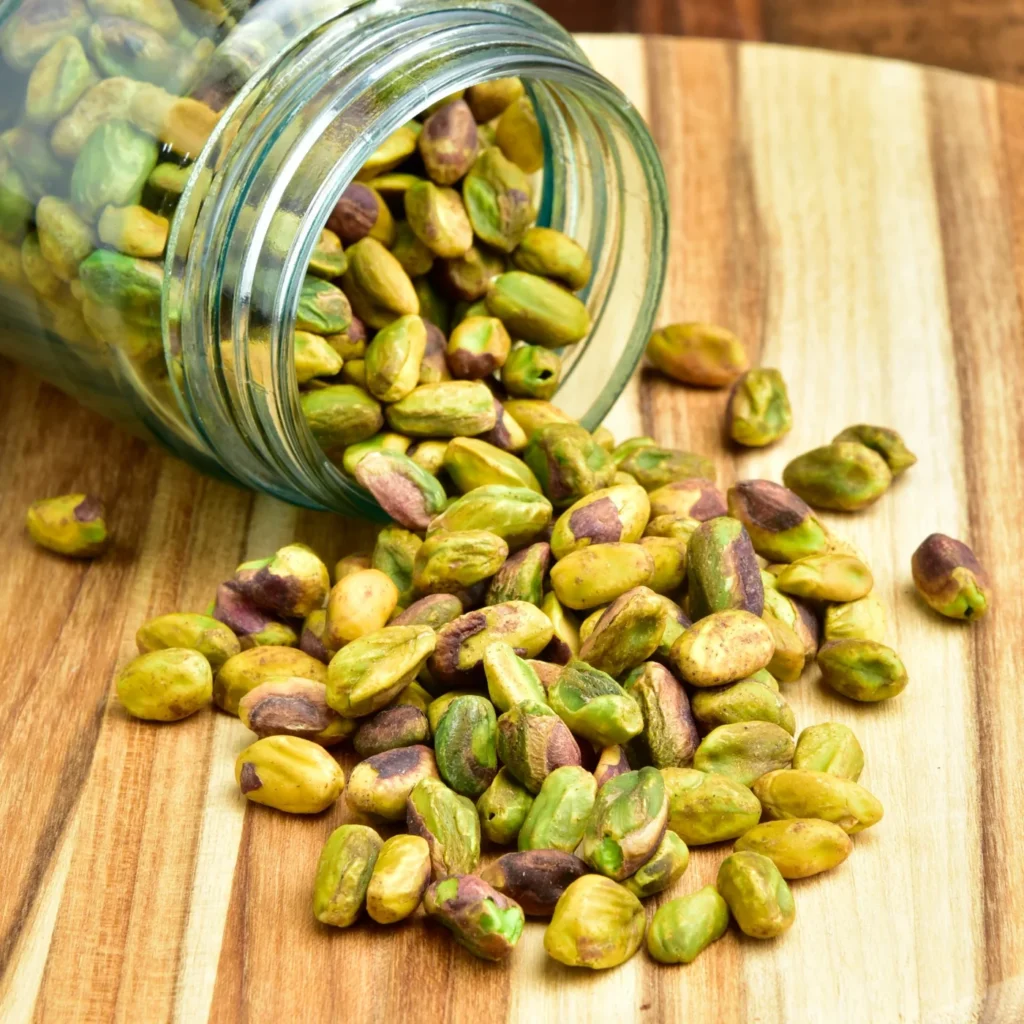
Look beyond the paper bag and the crop takes many forms. Pistachio butter and paste concentrate the kernel’s flavour. Honey with whole kernels combines sweetness with a firmer bite, while pasteli brings pistachios together with sesame in a compact confection. Each offers a different way of carrying the island’s produce home.
Pistachio spoon sweet offers another way to taste the crop. Served in syrup, it belongs to the Greek tradition of offering a small spoonful of sweetness to a guest. Its appearance and texture reveal a side of the crop that a roasted nut alone cannot show.
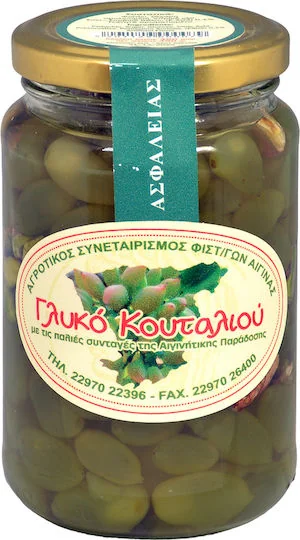
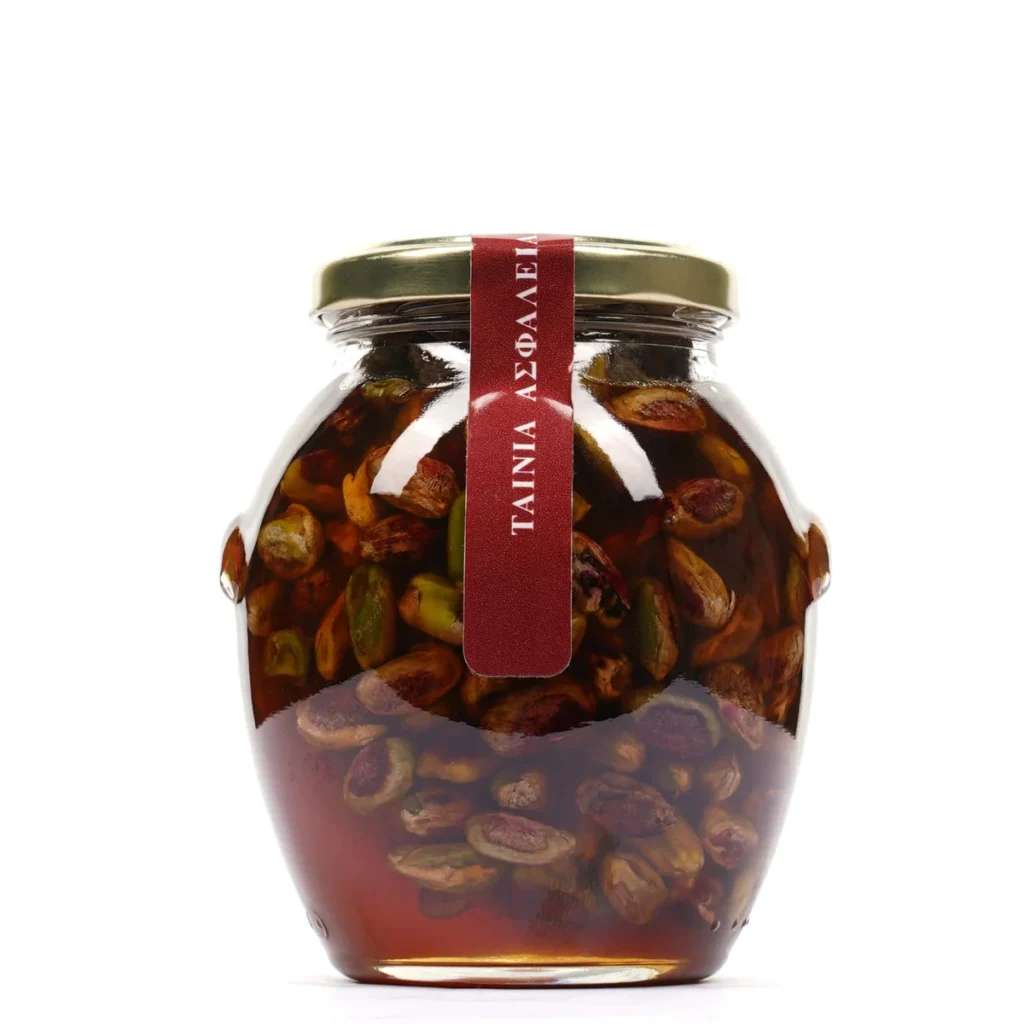
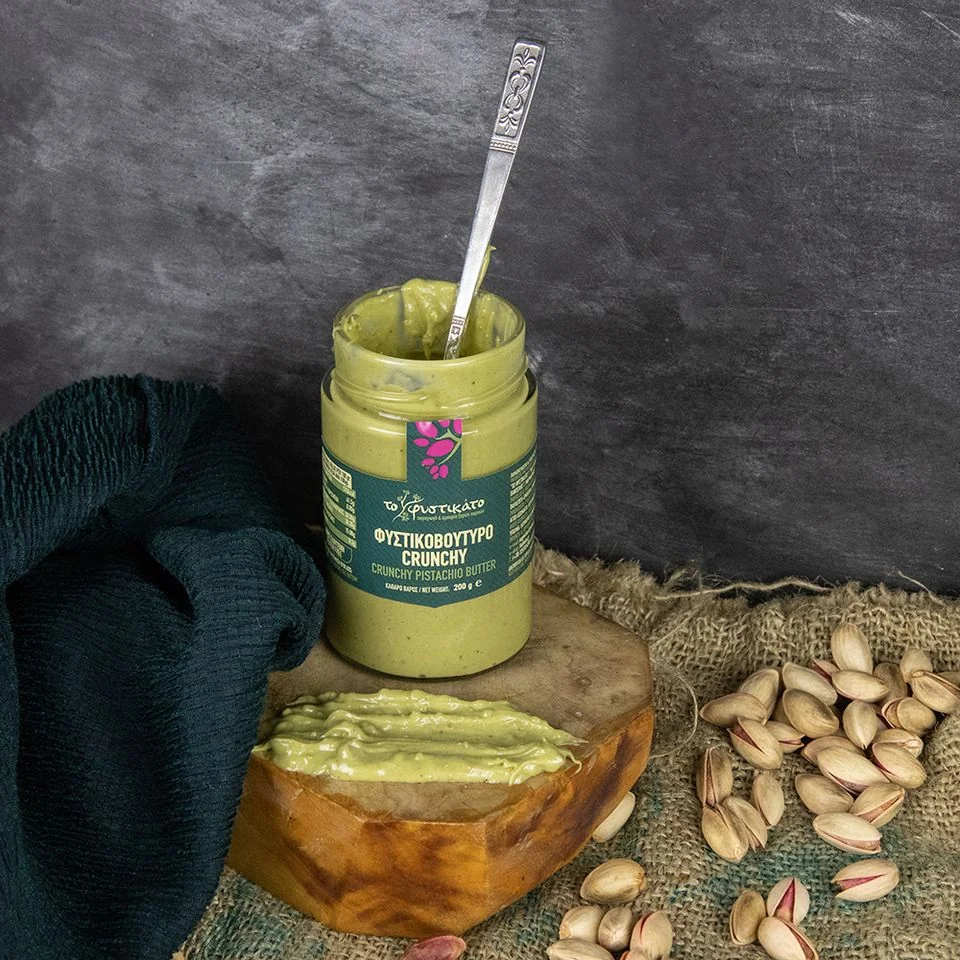
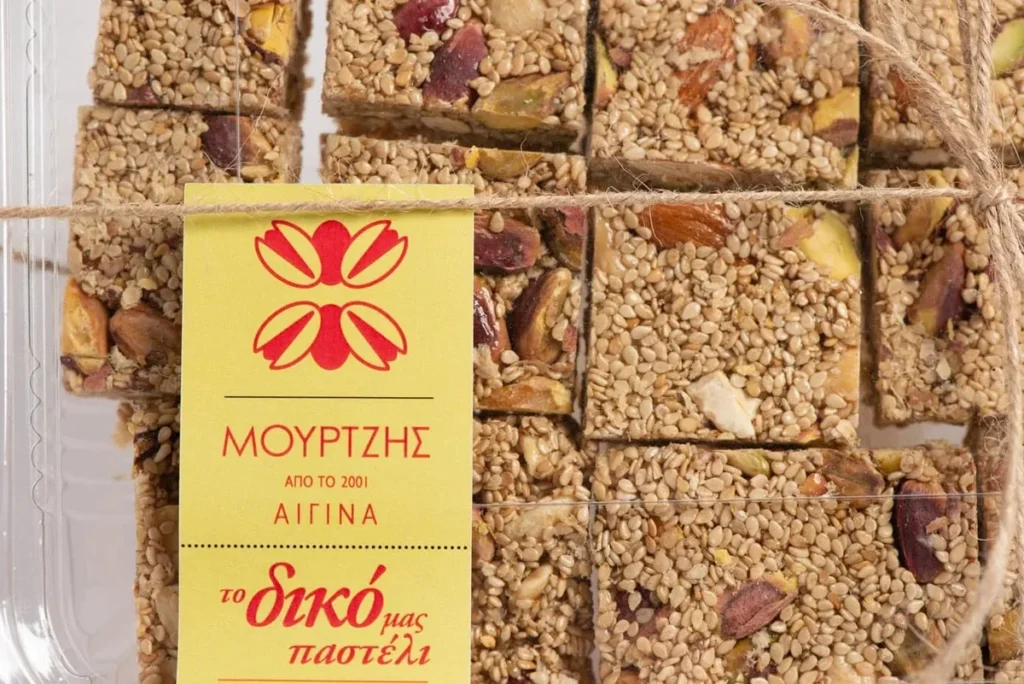
Pastries and ice cream offer further possibilities, from a scattering of chopped kernels to a filling made with pistachio paste. Ask about the ingredients and where the nuts were grown, particularly when choosing spreads and confectionery. The proportion of pistachio varies between products and makes a difference to both flavour and price.
Beyond its pistachios, Aegina has plenty to explore, from the historic streets of its harbour town to ancient temples and seaside villages.
Aegina Town: the harbour and the making of modern Greece
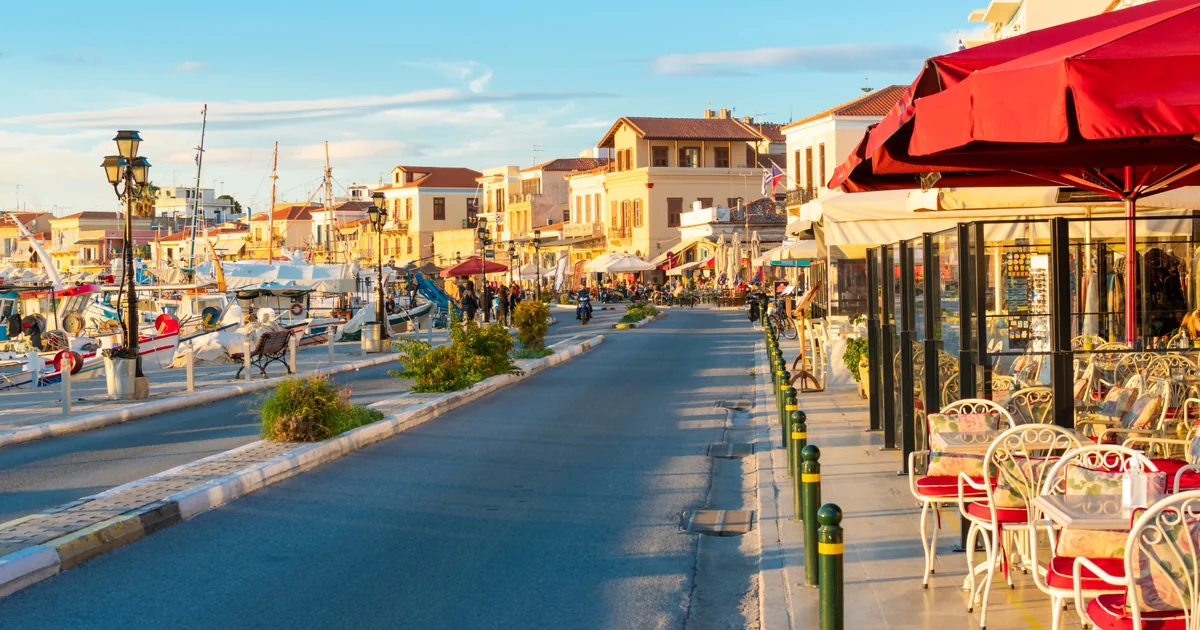
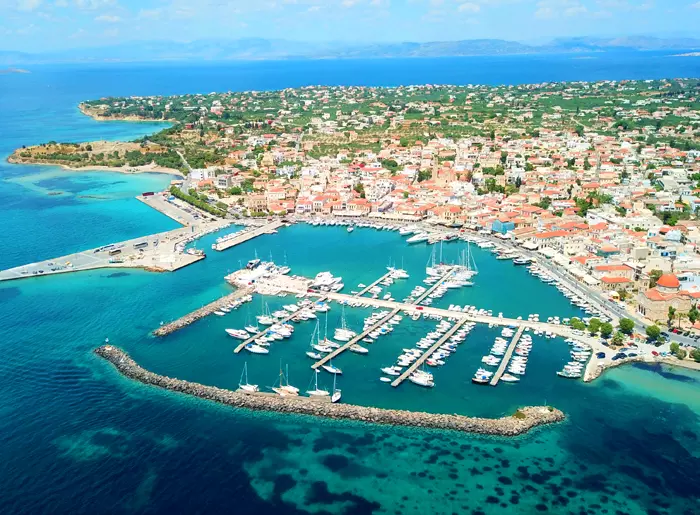
The ferry arrives beside the town’s daily life. Fishing boats and leisure craft share the harbour, cafés face the water and pistachio shops serve the stream of arriving visitors. Behind the seafront, shopping streets, small squares and churches reward a walk without a rigid route. Turn inland from the promenade and the town quickly becomes more intimate.
Aegina’s buildings also preserve a chapter of modern Greek history. In 1828, the island became the seat of government under Ioannis Kapodistrias, before the administration moved to Nafplio. Establishing schools, public services and institutions was part of the work of building the new state.
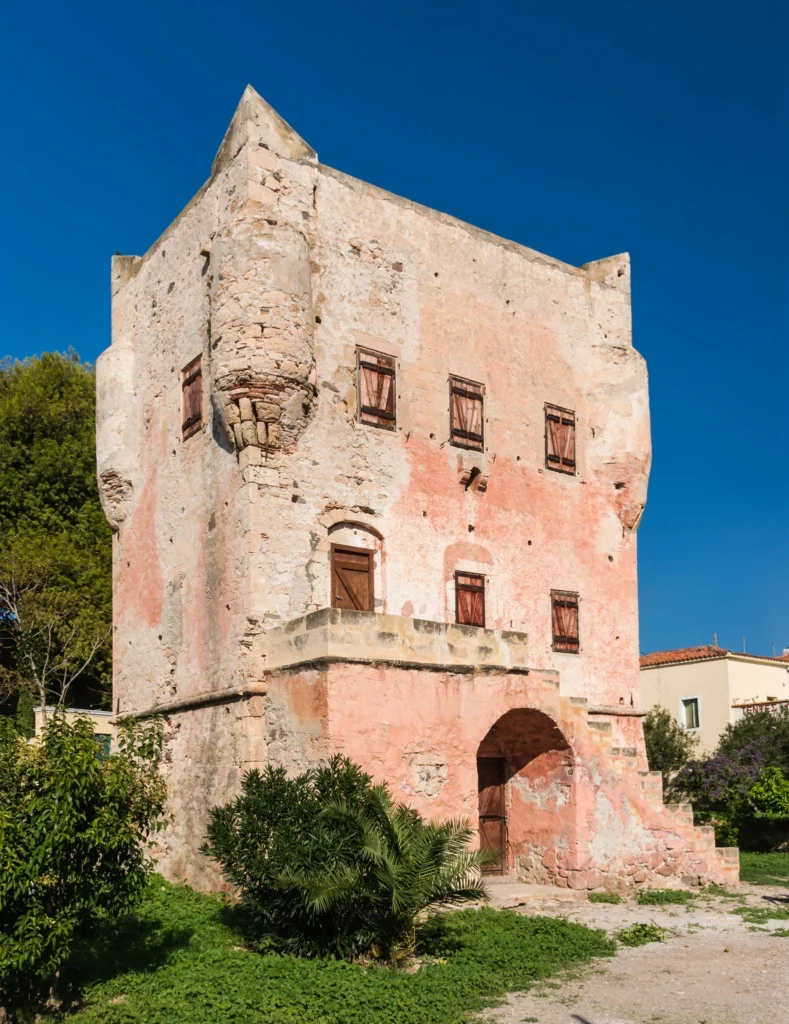
The Kapodistrian Orphanage belongs to that period and reflects early efforts to provide education and care for children orphaned by the War of Independence. The Markellos Tower, with its pink exterior and fortified appearance, is another distinctive landmark associated with the political life of the era. Around the harbour and in the streets behind it, neoclassical buildings add another layer to Aegina Town’s architectural character, linking its waterfront with the island’s role in the early history of the Greek state.
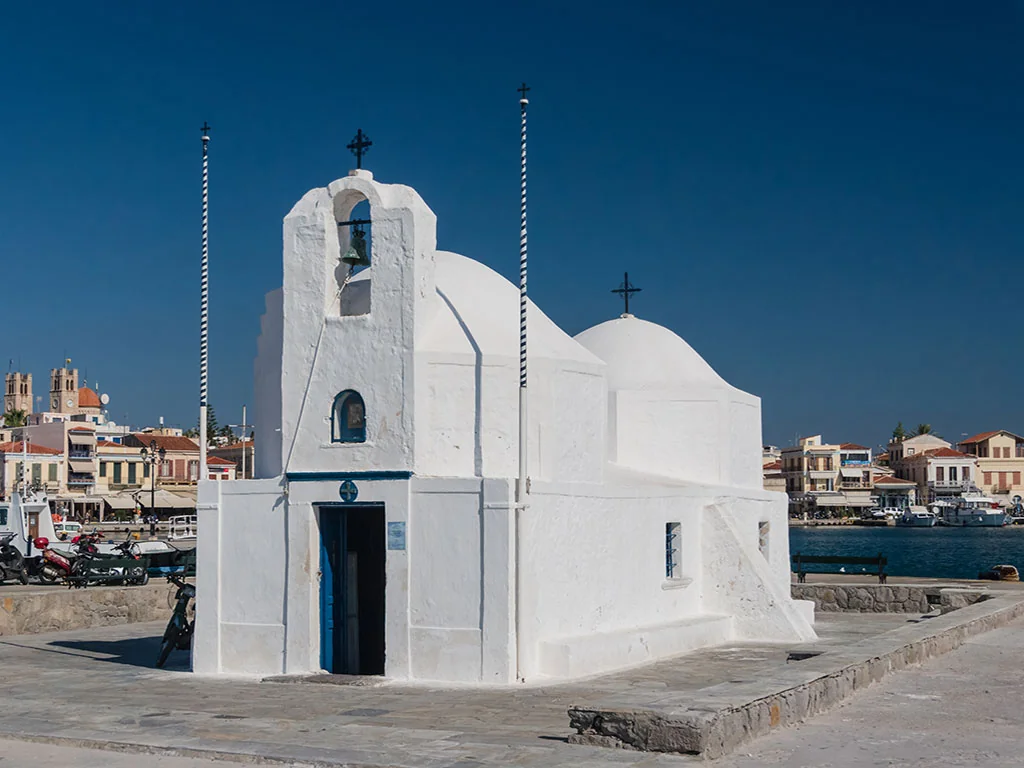
At the harbour entrance, the small church of Agios Nikolaos Thalassinos provides a more compact landmark. Its position beside the boats makes it a fitting introduction to an island whose fortunes have long depended on the sea. Return to the waterfront towards evening, when the façades catch the warmer light and the tables fill again.
Kolona: a column above several thousand years of history
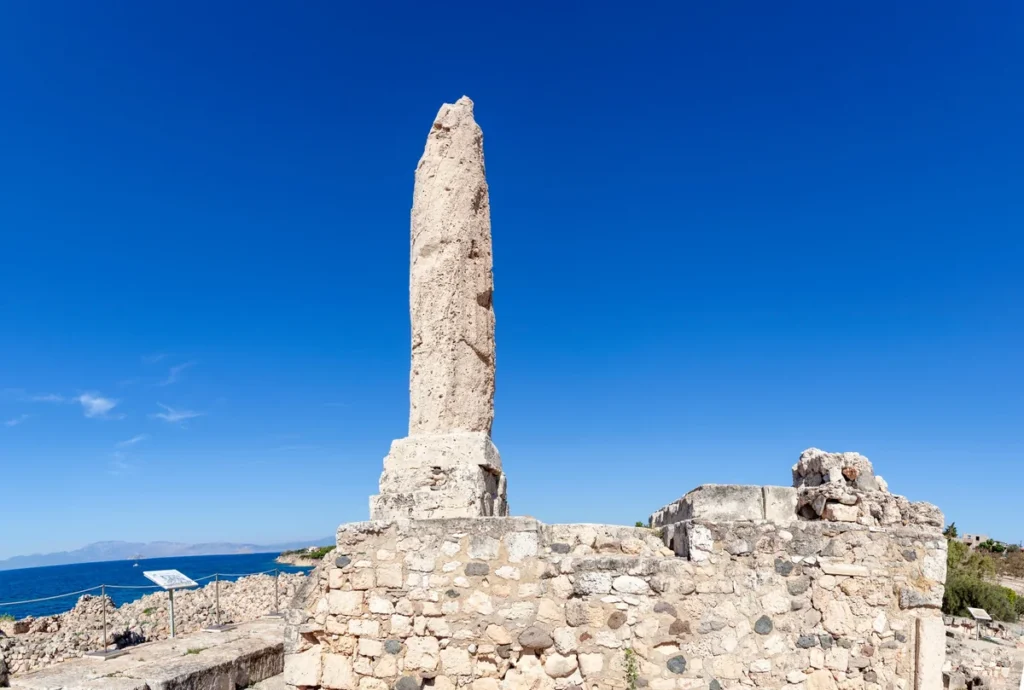
A short walk north of the harbour brings you to Kolona. The surviving column of the Temple of Apollo rises above low stone remains, with the sea immediately beyond. It supplies both the site’s name and a memorable outline against the sky.
The temple belongs to the late sixth century BCE, but the hill’s history reaches much further back. Excavations have revealed successive prehistoric settlements, their buildings and defences layered over one another. Walking through the remains means looking at a place repeatedly occupied and reshaped over many centuries.
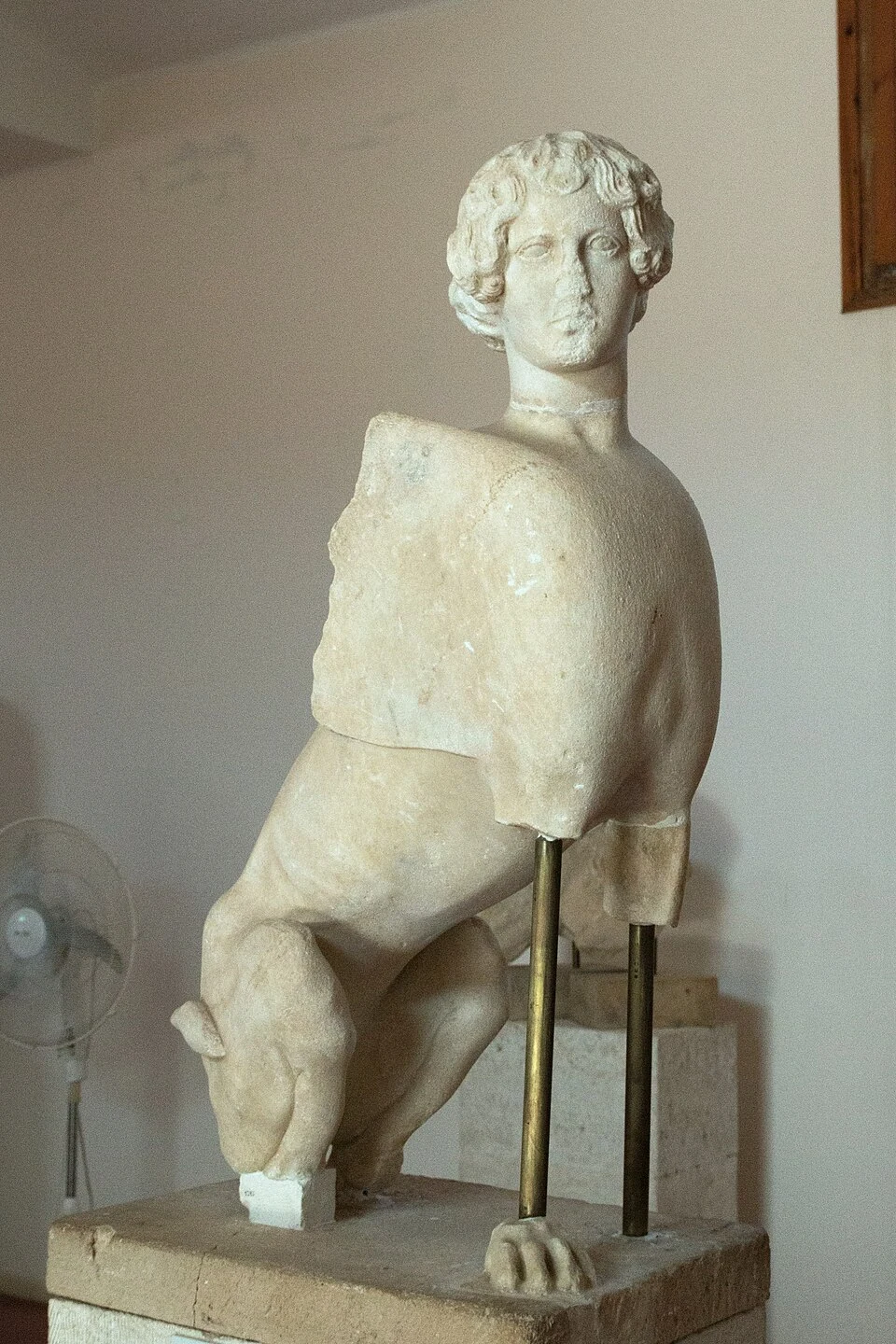
The adjoining Archaeological Museum of Aegina brings some of that history into focus through pottery and sculpture. A marble sphinx from the sanctuary is among its distinctive exhibits. Objects from the site help give scale and texture to the foundations outside, connecting the monumental remains with the lives and beliefs of the people who used them.
Kolona works particularly well on a short visit because it sits close to the town and port. Allow time for the museum as well as the ruins, then continue along the coast or return for lunch. The open site offers little shelter from the sun, so an earlier visit is comfortable in warm weather.
The Temple of Aphaia: an island goddess and warriors of Troy
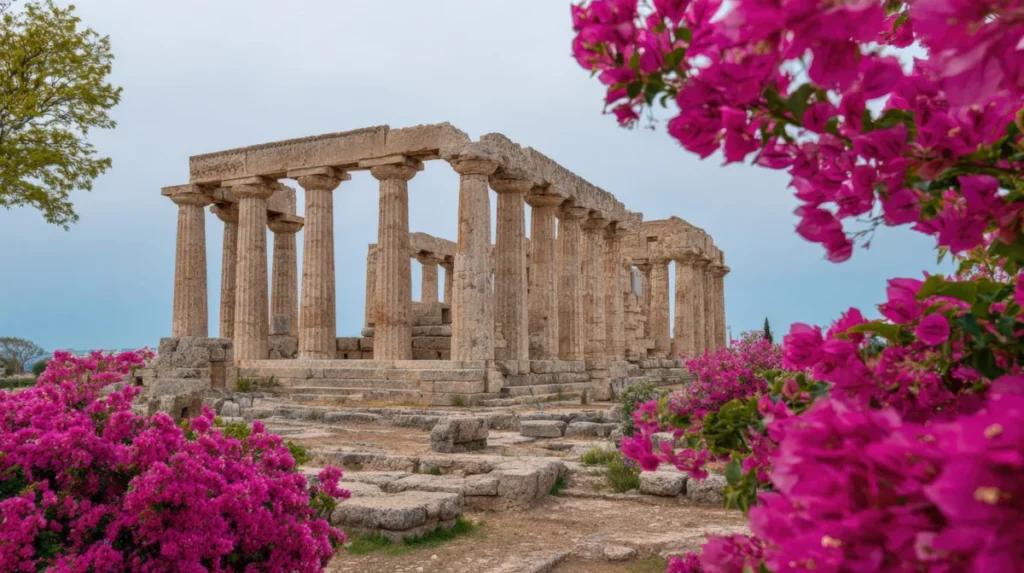
On a pine-covered hill above the eastern coast, the Temple of Aphaia gives Aegina its most commanding ancient monument. Enough of the colonnade and upper structure survives to make the building’s proportions immediately readable. The surrounding trees and views across the gulf are part of the experience, placing the sanctuary within the island rather than isolating it from its setting.
Built around the beginning of the fifth century BCE, the surviving Doric temple was dedicated to Aphaia, a local goddess worshipped almost exclusively on Aegina and associated with fertility and nature. Worship on the hill had begun much earlier, giving the sanctuary a history that stretched back for centuries.
Its pedimental sculptures once formed marble scenes of the Trojan Wars, with Athena at the centre and fighting or fallen warriors arranged across the sloping spaces. The figures are especially important for the changes they reveal in Greek representations of the human body during the transition from the Archaic to the Early Classical period. Excavated in 1811, the principal groups have been part of Munich’s Glyptothek collection since 1827.
Walk around the temple to appreciate how the rows of columns frame one another, and how the structure changes against the trees and sky. Afterwards, Agia Marina offers a convenient coastal stop for lunch or swimming. Combining the two gives the excursion a natural rhythm, with the sanctuary in the morning and the sea later in the day.
Paleochora: chapels on the hillside of a former town
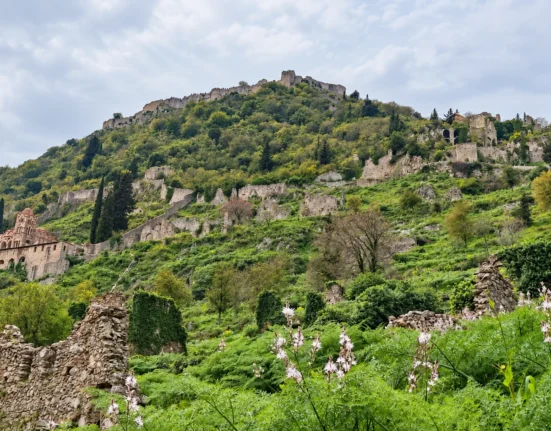
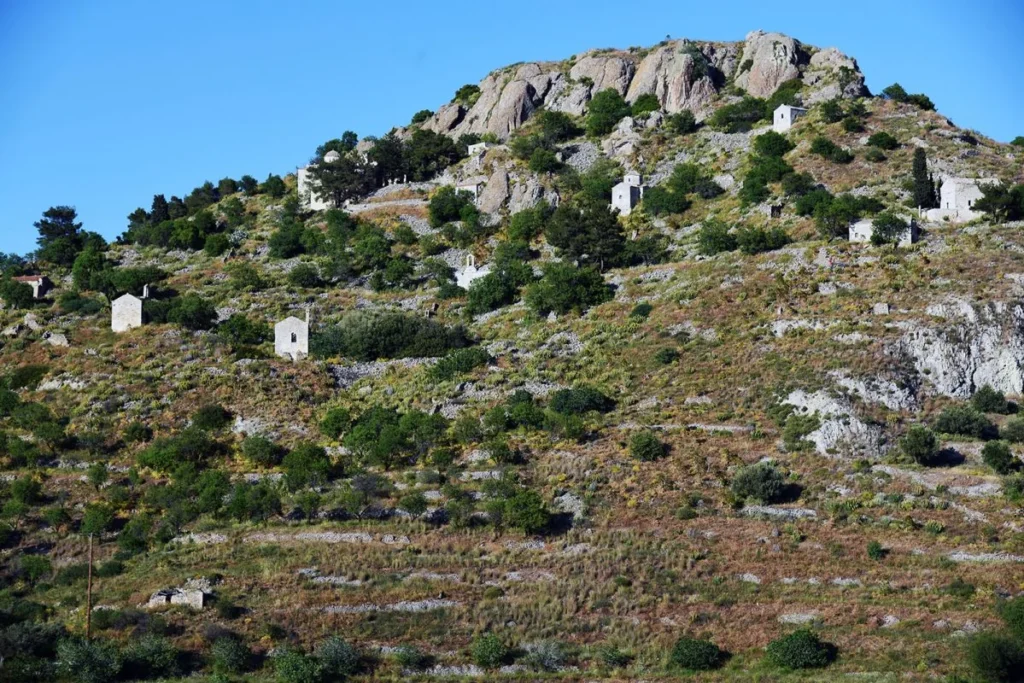
Paleochora introduces a different period of island life. On the hillside near Agios Nektarios, small surviving churches mark the site of Aegina’s former inland settlement. Living away from the exposed coast offered greater security during periods of raids, and the hill became a centre of community and religious life.
Today, the paths link chapels rather than streets of occupied houses. Stone walls, low doorways and modest interiors give the visit a human scale. Where churches are accessible, surviving wall paintings bring you closer to the devotional world of the people who worshipped here.
Take the walk slowly. Individual buildings are easily overlooked when the aim becomes reaching the top, yet their differences are much of the site’s interest. The arrangement of churches across the slope also helps you imagine the settlement that once surrounded them. Wear shoes with a good grip, carry water and allow for uneven ground.
Agios Nektarios: a living place of pilgrimage
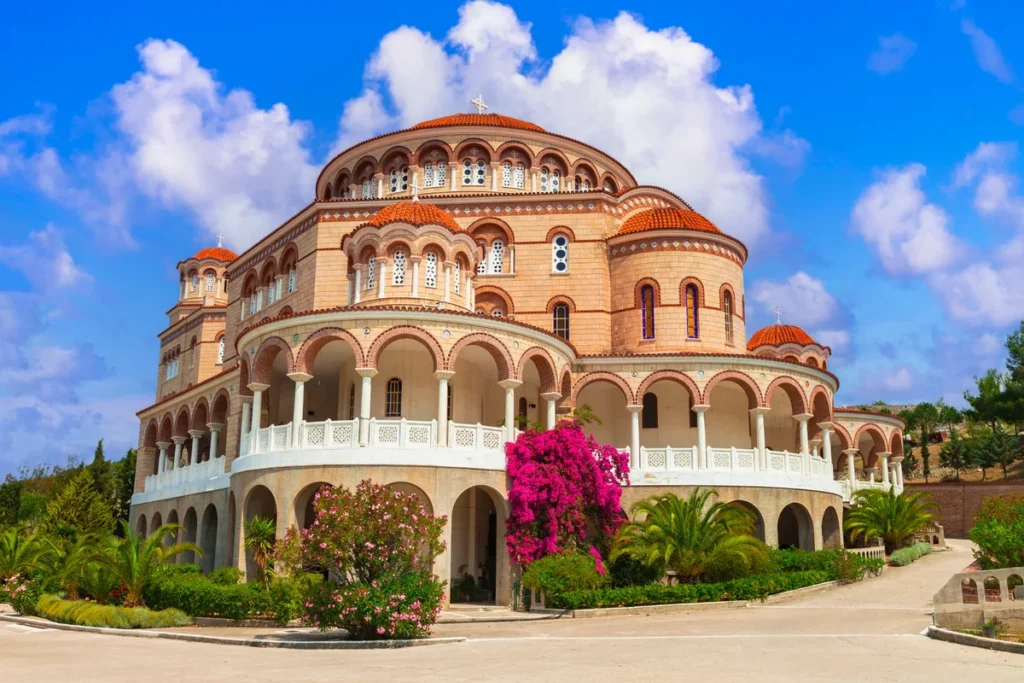
Close to Paleochora, the Agios Nektarios complex remains an active centre of Orthodox pilgrimage. Its large domed church is the building most visitors recognise, but the religious life of the place extends to the monastery above it. Allow time to appreciate both parts of the complex where visitor access permits.
The monastery is closely associated with Saint Nektarios of Aegina, whose life and memory continue to draw worshippers to the island. Pilgrims arrive with a purpose that differs from sightseeing, and that ongoing use shapes the atmosphere of the visit.
The church’s broad arches, tiled domes and galleries create a striking exterior, while the monastery introduces a quieter scale. Combined with Paleochora, the visit brings together an earlier settlement’s surviving chapels and a religious community that remains in use. Dress respectfully and follow the arrangements for worship and visitors.
Christos Kapralos: sculpture in the artist’s working spaces
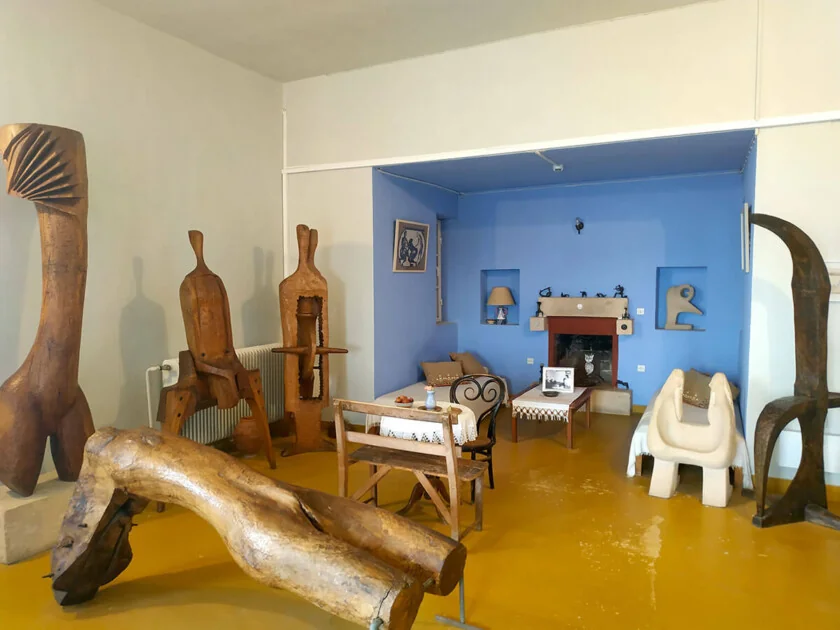
At Plakakia, north of Aegina Town, the Christos Kapralos Museum brings modern art into an island itinerary. Christos Kapralos (1909–1993) was one of the significant Greek sculptors of the 20th century. He studied in Athens and Paris, represented Greece at the Venice Biennale and settled on Aegina in 1962, where he spent much of the rest of his working life.
Its six halls occupy the sculptor’s former workshops and opened as a museum in 1995. The museum now operates as an annex of the National Gallery. Works in wood, stone and marble sit alongside paintings, terracotta and bronze pieces, showing the range of Kapralos’s practice. His work remained strongly centred on the human figure, while drawing on ancient Greek sculpture as well as more modern, increasingly abstract forms.
The setting adds another dimension. These were working rooms, and seeing the art here makes it easier to understand how closely Kapralos’s sculpture was connected to material and place. Many of the works displayed here were created on Aegina itself.
Perdika and Moni: fishing boats, tavernas and a short crossing
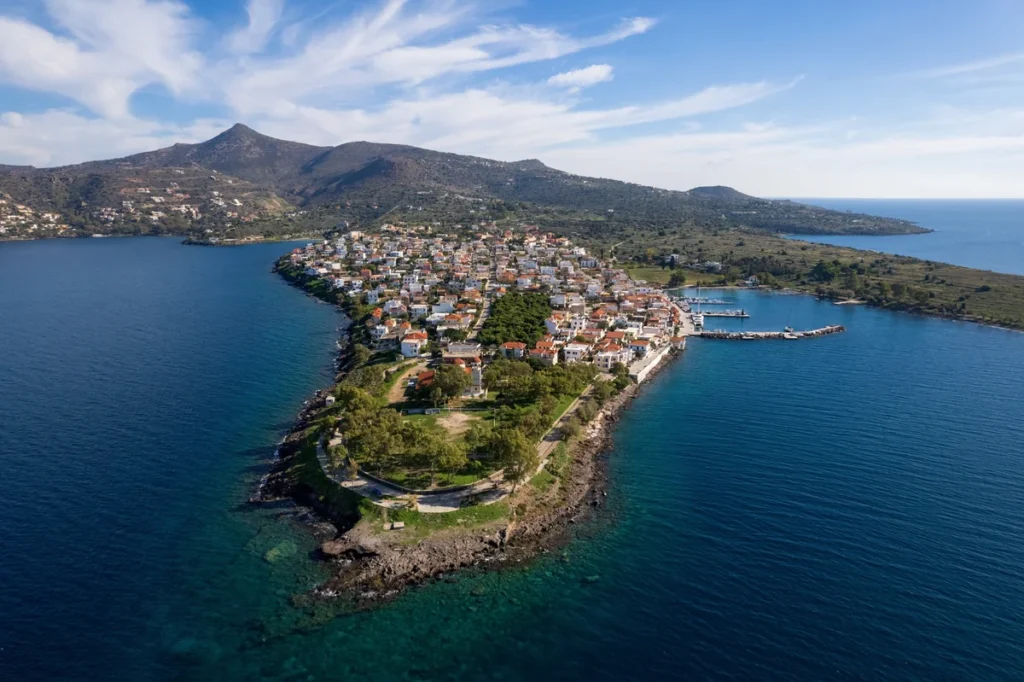
South of the main town, Perdika occupies a coastal peninsula with houses clustered behind its harbour. The village’s waterfront tavernas overlook fishing boats and the small craft that arrive through the day. Walk along the harbour before choosing a table, then allow the meal to take its time.
The village makes a satisfying destination in its own right, particularly for an afternoon that leaves room for the water. Its compact streets and sea-facing edge offer a different pace from the ferry port, while the drive south introduces another part of Aegina’s coastline.
Opposite lies Moni, a small wooded island known for its deer and peacocks as well as swimming. Local boats run from Perdika when services and sea conditions allow. Confirm the outward and return arrangements locally, especially later in the season, and leave the animals space as you explore.
Where to swim
Choose a beach around the places you want to see. Agia Marina, on the eastern coast, has a sandy shoreline and fits naturally after the Temple of Aphaia. Marathonas, on the route south from Aegina Town, combines time by the sea with an excursion towards Perdika.
For a day centred on the main town, Avra and the beach beside Kolona keep a swim within walking distance of the harbour. They are practical choices when the return ferry sets the shape of the afternoon. On the northern coast, Souvala and Vagia offer further possibilities for visitors exploring that side of the island.
Wind and sea conditions can make one coast more inviting than another. Ask locally on the day and give yourself enough time to enjoy a single stop, particularly if swimming is being fitted between a museum visit and an evening event.
Planning a visit from Athens
Ferries connect Piraeus with Aegina, with journey times depending on the vessel and service. For the town, Kolona and Fistiki Fest, select an arrival at Aegina Town’s main port. Check the current ferry timetable and book around the time you want to spend on the island.
For a day trip, the town and Kolona give you a manageable introduction, with room for lunch, shopping and a swim. If Aphaia is your priority, make it the main excursion and combine it with Agia Marina. Bus services, taxis and hired vehicles make wider trips possible, but their availability and timings need checking before you set out.
An overnight stay gives the island more room. Spend one day around the town and festival, then choose an inland route through Paleochora and Agios Nektarios, a coastal outing to Perdika, or a visit to the Kapralos Museum. Evening festival performances often run later than a day visitor’s return ferry, making accommodation a useful part of that plan.
Before heading home, return to the pistachio shops with a little more understanding of what you are buying. The bag now carries a connection to orchards, family knowledge and the island’s working year, alongside memories of its temples, villages and sea.
Sources
Ministry of Culture: intangible cultural heritage · Fistiki Fest programme · National Gallery: Kapralos Museum · Greek National Tourism Organisation · Ministry of Culture: Kolona Museum · Ministry of Culture: Temple of Aphaia · EU registration of Aegina pistachios as PDO · Municipality of Aegina.